PM to inaugurate National Conference of Environment Ministers of all States on 23rd September Conference to create further synergy amongst the Central and State Governments on issues related to LiFE, Climate Change, tackling Plastic Waste, Wildlife & Forest Management
Posted On: 21 SEP 2022 4:29PM by PIB Delhi
Prime Minister Shri Narendra Modi will inaugurate the National Conference of Environment Ministers in Ekta Nagar, Gujarat on 23rd September, 2022 at 10:30 AM via video conferencing. He will also address the gathering on the occasion.
Taking forward the spirit of cooperative federalism, Conference is being convened to create further synergy amongst the Central and State Governments in formulating better policies on issues such as Elimination of Plastic Pollution through multi-pronged approach, State Action Plans to effectively combat Climate Change with focus on LiFE- Lifestyle for Environment. It will also focus on increasing the forest cover with special emphasis on restoration of degraded land and wildlife conservation.
The two day Conference being organised on 23rd and 24th September will have six thematic sessions with topics focusing on LiFE, Combating Climate Change (Updating State Action Plans on Climate Change for Mitigation of Emissions and Adaptation to Climate Impacts) ; PARIVESH (Single Window System for Integrated Green Clearances) ; Forestry Management ; Prevention and Control of Pollution; Wildlife Management ; Plastics and Waste Management.
Amid an evolving food crisis and in line with environmental goals, the fertilizer industry is helping to reduce agriculture’s carbon footprint while contributing to global food security. From the fertilizer factory to the farm, the industry is committed to playing its part in curbing greenhouse gas (GHG) emissions and making food systems more resilient.
What are fertilizers?
Fertilizers are food for plants: they provide nutrients for plants to grow and thrive.
A mineral plant nutrient is an element which is essential or beneficial for plant growth and development or for the quality attributes of the harvested product of a given plant species grown in its natural or cultivated environment.
In addition to carbon, hydrogen and oxygen, which they get from the atmosphere and water, plants need numerous essential nutrients for their growth and health, which fertilizers provide:
Nitrogen (N), phosphorus (P) and potassium (K) are the primary nutrients in commercial fertilizers.
Other plant nutrients are sulphur (S), magnesium (Mg), calcium (Ca), zinc (Zn), iron (Fe), boron (B), manganese (Mn), copper (Cu), molybdenum (Mo), chlorine (Cl), nickel (Ni), iodine (I). Additional plant nutrients are required by a few plant species, e.g., sodium (Na) and cobalt (Co).
Why are mineral fertilizers so essential to food systems around the world?
Mineral fertilizer plays an essential role in our food systems: it increases the volume of food that can be grown on a fixed amount of land. Approximately half the food we eat today has been produced thanks to mineral fertilizer
What is the problem that this report is addressing?
Farming around the world relies on fertilizers and particularly nitrogen, phosphorus and potassium – the three nutrients required in largest quantities for plant growth.
In some regions farmers use too much fertilizer while, in others, they use too little. In other places, they use the right amount, but not necessarily efficiently. When nitrogen fertilizer is overused, it can result in large losses to the environment and related negative impacts. When too much fertilizer is applied, plants can’t take it all up. Instead, it will be lost to the environment in various forms, including ammonia, nitrates, nitrogen oxides and nitrous oxide – a greenhouse gas with a global warming potential about 300 times that of carbon dioxide.
Greenhouse gas emissions associated with fertilizer use totalled an estimated 720 million tonnes of carbon dioxide equivalent a year in 2019; these are primarily nitrous oxide.
Who’s involved in solving this, according to the report?
The term ‘scope 3’ covers all the indirect emissions that occur in a company’s value chain. So, before companies can confidently define themselves as ‘sustainable’ or ‘net-zero,’ they need to factor in these emissions – or help to eliminate them.
Emissions from fertilizer use form the majority of fertilizer companies’ scope 3 emissions and a significant proportion of their total emissions footprint. These emissions are also part of the food manufacturers, retailers and traders’ upstream scope 3.
Farmers will be key to realizing opportunities to reduce emissions and solutions must be farmer centric. The fertilizer sector needs to scale up its work with farmers to create the right environment for more efficient and effective fertilizer use. An opportunity exists for fertilizer companies and the downstream food chain to work together with farmers to use fertilizer better and reduce food’s greenhouse gas footprint.
What does the report recommend?
This report serves as an important resource for fertilizer companies and other stakeholders interested in working with the industry to help feed the world sustainably. It outlines how fertilizer companies acting now to apply existing fertilizer technologies and management practices could more than halve GHG emissions from mineral nitrogen use, with a potential 70% emissions reduction by 2050. Many of the recommendations in the report build on existing activity but also require new initiatives.
By now, we are used to the idea that the cheapest, greenest energy is the energy we don’t use. The same is true of fertilizers – but the key is more efficient and more effective use.
The main way to reduce GHG emissions is to apply best farm management practices more consistently.
The industry’s 4R Nutrient Stewardship Framework – applying the right nutrient source, at the right rate, at the right time, in the right place – is in widespread use and could go further. It involves, among other things, matching mineral fertilizer applications more closely to the needs of a particular crop and local soil properties and ensuring a balanced supply of all nutrients. This means the crop is more likely to absorb the fertilizer before it can escape as a GHG.
Further emissions savings can be achieved by using products that slow the release of nutrients and hence reduce GHG losses, e.g., nitrification and urease inhibitors or controlled-release fertilizers. More research and product development are needed to make these technologies more affordable, and to better understand how they work.
Promoting wider changes in the agri-food system would also reduce the need for mineral nitrogen fertilizer and lower emissions. This includes farmers growing more legumes, such as soybeans, that need less nitrogen fertilizer, and populations reducing their animal product consumption in countries where it makes sense to do so.
What about the emissions that cannot be eliminated?
Not all emissions from fertilizer use can be eliminated because, due to soil microbial activity, some nutrients will inevitably escape before they can be absorbed by crops. Fertilizer companies and partners in the food value chain can help neutralize these remaining emissions by working with farmers to absorb carbon dioxide from the atmosphere and store it in agricultural soils.
What should fertilizer companies scale up, according to the report?
Achieving these emissions reductions will require close work with farmers to try to overcome some of the reasons many farmers are not able to adopt the required management practices, for example lack of knowledge.
It will also require engagement with the wider value chain to further strengthen the commercial incentives for implementing good fertilizer management practices.
More widespread work with the public sector and wider industry could support increased product development activity to further bring down emissions.
Finally, the fertilizer sector should engage with policymakers to develop policies consistent with emissions reductions.
How does this report fit into the industry’s overall strategy?
The fertilizer sector is developing a sectoral decarbonization approach to enable fertilizer companies to set science-based emissions reduction targets. This report will act as an important resource to guide industry’s long-term sustainability strategy. In 2021, the International Energy Agency’s Ammonia Technology Roadmap showed pathways to lower emissions in fertilizer production (IFA and the European Bank for Reconstruction and Development provided support). The Reducing Emissions from Fertilizer Use report highlights actions to scale up to cut scope 3 emissions – the indirect emission that occur in companies’ value chains.
The fertilizer industry recognizes that an efficient transition to economy-wide, net-zero emissions is the only way to limit global warming. Around the world, fertilizer companies are already implementing measures to reduce GHG emissions from their operations and adopt near-zero-emission technologies. Setting out a deliverable decarbonization program for the sector will help the leading companies press ahead while demonstrating potential models for other companies.
Ultimately, it’s about making progress on environmental goals while helping to feed a growing world.
GHG EMISSIONS CUTS OF UP TO 70% FROM NITROGEN FERTILIZER USE POSSIBLE
Paris, France, September 15, 2022
Greenhouse gas (GHG) emissions from mineral nitrogen fertilizer use can be reduced by 70% by 2050, according to a new report released today by the International Fertilizer Association (IFA) and Systemiq, the system-change company.
Amid an evolving food crisis, Reducing Emissions from Fertilizer Use provides recommendations to fertilizer companies, farmers, their advisers and policy makers on how to cut GHG emissions and meet other environmental goals while feeding a global population of nearly 10 billion by 2050.
Fertilizer plays an essential role in food systems: it increases the volume of food that can be grown on a fixed amount of land, playing a critical role in feeding around half the global population. Yet its use is associated with GHG emissions estimated at 720 million tonnes of carbon dioxide equivalent a year, primarily nitrous oxide, a GHG 300 times more powerful than carbon dioxide and an ozone depleting substance.
Along with emissions from mineral fertilizer production, mineral fertilizer accounts for 6% of all GHG emissions from the food sector, which is in turn responsible for around a third of all global GHG emissions. This report highlights the opportunity for the fertilizer sector and the wider food system to address these emissions, helping to limit global warming to 1.5°C, while continuing to support food production.
“It is critical for the fertilizer industry to help feed the world with fewer or more limited resources, which is why this report’s recommendations for what we can do today to scale up those activities that reduce GHG emissions, working with farmers and others, are so relevant,” said Alzbeta Klein, CEO/Director General of IFA.
The report presents analysis of actions that would lower emissions over the next 30 years. It finds that fertilizer companies acting now to apply existing knowledge and technologies could more than halve emissions from mineral nitrogen fertilizer use, with a potential 70% reduction by 2050.
“The new IFA/Systemiq report provides clear recommendations on measures that can reduce emissions from the use of mineral fertilizer by up to 70%. Many of these measures are well-known, affordable and good farming practice. When implemented at scale, they would enable more sustainable, more resilient food production around the world,” said Jeremy Oppenheim, Founder and Senior Partner, Systemiq.
Much of the approximately 70% reduction in GHG emissions by 2050 can be achieved by focusing efforts within the sector’s current value chains and business models, including applying the following strategies:
Improving nitrogen use efficiency (NUE): Using fertilizer more efficiently so that a higher proportion of nutrients are taken up by the crops and less escapes as GHGs and other forms of pollution. The industry’s 4R framework (applying the right nutrient source, at the right rate and time and in the right place) provides examples of the sorts of actions farmers can take to achieve these improvements.
Developing and applying existing technologies and producing new ones. Additional products such as urease and nitrification inhibitors and controlled-release fertilizers have the potential to further help reduce emissions. More research and product development are needed to make these technologies more affordable, and to better understand how they work together and their wider environment impacts.
Promoting wider changes in the agri-food system. This includes farmers growing more legumes (e.g., soybeans) that need less fertilizer, and populations reducing their animal product consumption in countries where it makes sense to do so.
In addition to reducing emissions, fertilizer companies can support more farmers with techniques to sequester carbon in their soils. This also improves soil health and can be a source of income for farmers.
The report also presents an analysis of six global agricultural regions and the opportunities for emissions reductions in these systems. Around a quarter of the emissions reductions identified are cost savings for farmers as more efficient fertilizer use saves money, and in some cases also leads to increased yields.
In some regions such as sub-Saharan Africa, additional fertilizer will need to be applied – in a climate-smart way – to protect soil health and improve food production while minimizing land use changes and GHG emissions.
The challenge of transforming how we grow food to meet climate goals becomes more urgent by the day, and the fertilizer sector has a core role in delivering solutions. Implementing the recommendations in this report, and meeting the decarbonization challenge head-on, will help secure the long-term economic and environmental sustainability of the entire food system and create a plant nutrition sector for the future.
PM releases wild Cheetahs - which had become extinct from India - in Kuno National Park Interacts with Cheetah Mitras, Cheetah Rehabilitation Management Group and students
Cheetahs - brought from Namibia - are being introduced in India under Project Cheetah, which is world's first inter-continental large wild carnivore translocation project
Bringing Cheetahs back to India will help in the restoration of open forest and grassland ecosystems and also lead to enhanced livelihood opportunities for the local community
Posted On: 17 SEP 2022 12:21PM by PIB Delhi
The Prime Minister, Shri Narendra Modi today released wild Cheetahs - which had become extinct from India - in Kuno National Park. Cheetahs - brought from Namibia - are being introduced in India under Project Cheetah, which is world's first inter-continental large wild carnivore translocation project. Out of the eight Cheetahs there are five female and three male Cheetahs.
The Prime Minister released Cheetahs at two release points in Kuno National Park. The Prime Minister also interacted with Cheetah Mitras, Cheetah Rehabilitation Management Group and students at the venue. The Prime Minister addressed the Nation on this historic occasion.
The release of wild Cheetahs by the Prime Minister in Kuno National Park is part of his efforts to revitalise and diversify India’s wildlife and its habitat. The cheetah was declared extinct from India in 1952. The Cheetahs that would be released are from Namibia and have been brought under an MoU signed earlier this year. The introduction of Cheetah in India is being done under Project Cheetah, the world’s first inter-continental large wild carnivore translocation project.
Cheetahs will help restore open forest and grassland ecosystems in India. This will help conserve biodiversity and enhance the ecosystem services like water security, carbon sequestration and soil moisture conservation, benefiting society at large. This effort, in line with the Prime Minister’s commitment to environmental protection and wildlife conservation, will also lead to enhanced livelihood opportunities for the local community through eco-development and ecotourism activities.
The historic reintroduction of Cheetahs in India is part of a long series of measures for ensuring sustainability and environment protection in the last eight years which has resulted in significant achievements in the area of environment protection and sustainability. . The coverage of Protected Areas which was 4.90% of the country's geographical area in 2014 has now increased to 5.03%. This includes an increase in Protected Areas in the country from 740 with an area of 1,61,081.62 sq.kms. in 2014 to present 981 with an area of 1,71,921 sq.kms.
Forest and tree cover has increased by 16,000 square kms in the last four years. India is among few countries in the world where forest cover is consistently increasing
There has also been an increase in the number of community reserves. From just 43 in 2014 their numbers are more than 100 in 2019.
India is home to 52 Tiger Reserves covering approximately 75,000 Sq Km area in 18 States with approximately 75% population of the wild tiger at global level. India achieved the goal of doubling the tiger numbers in 2018 itself, four years in advance from the targeted year 2022. The Tiger Population in India has increased from 2,226 in 2014 to 2,967 in 2018.
The budgetary allocation for tiger conservation has increased from Rs 185 crore in 2014 to Rs 300 crore in 2022.
The population of Asiatic Lions has shown a steady increase with a population of 674 individuals with an increase rate of 28.87 per cent (one of the highest growth rates so far) from the 523 lions in 2015.
India now (2020) has 12,852 leopards as compared to the previous estimate of 7910 conducted in 2014. More than 60% increase in population has been recorded.
Governor, Madhya Pradesh Shri Mangubhai Patel; Chief Minister, Shri Shivraj Singh Chouhan; Union Ministers, Shri Narendra Singh Tomar, Shri Bhupender Yadav, Shri Jyotiraditya M Scindia and Shri Ashwini Chobey were among those present on the occasion.
India observes 28th World Ozone Day India has played a proactive role in the phase-out of production and consumption of Ozone Depleting Substances: Environment Minister Bhupender Yadav
Ministry of Environment, Forests and Climate Change to collaborate with eight IITs for research and development of chemicals with low global warming potential
Action Plan for implementing the recommendations of the India Cooling Action Plan (ICAP) for the Space Cooling in Buildings Released
Posted On: 16 SEP 2022 4:13PM by PIB Mumbai
Mumbai, September 16, 2022
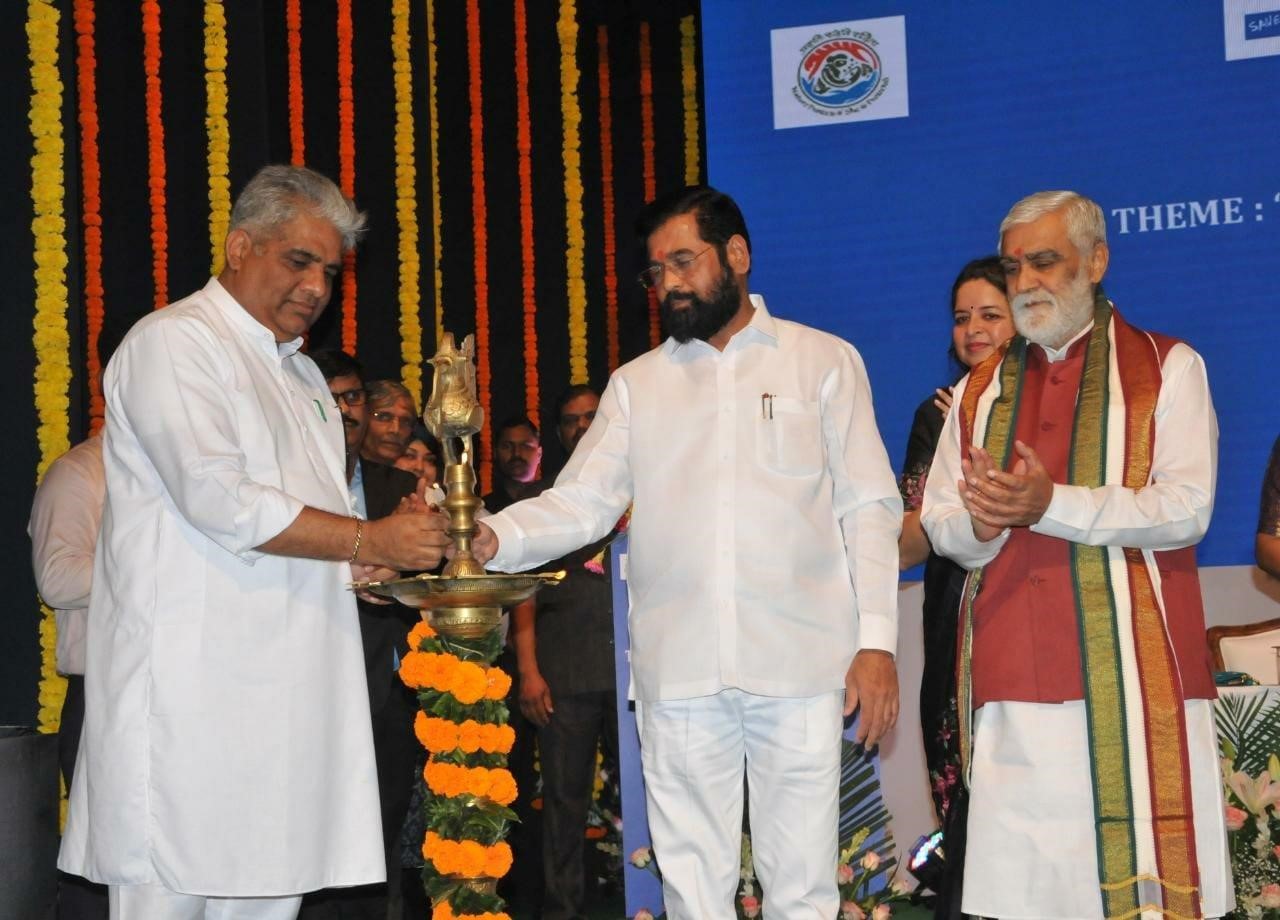
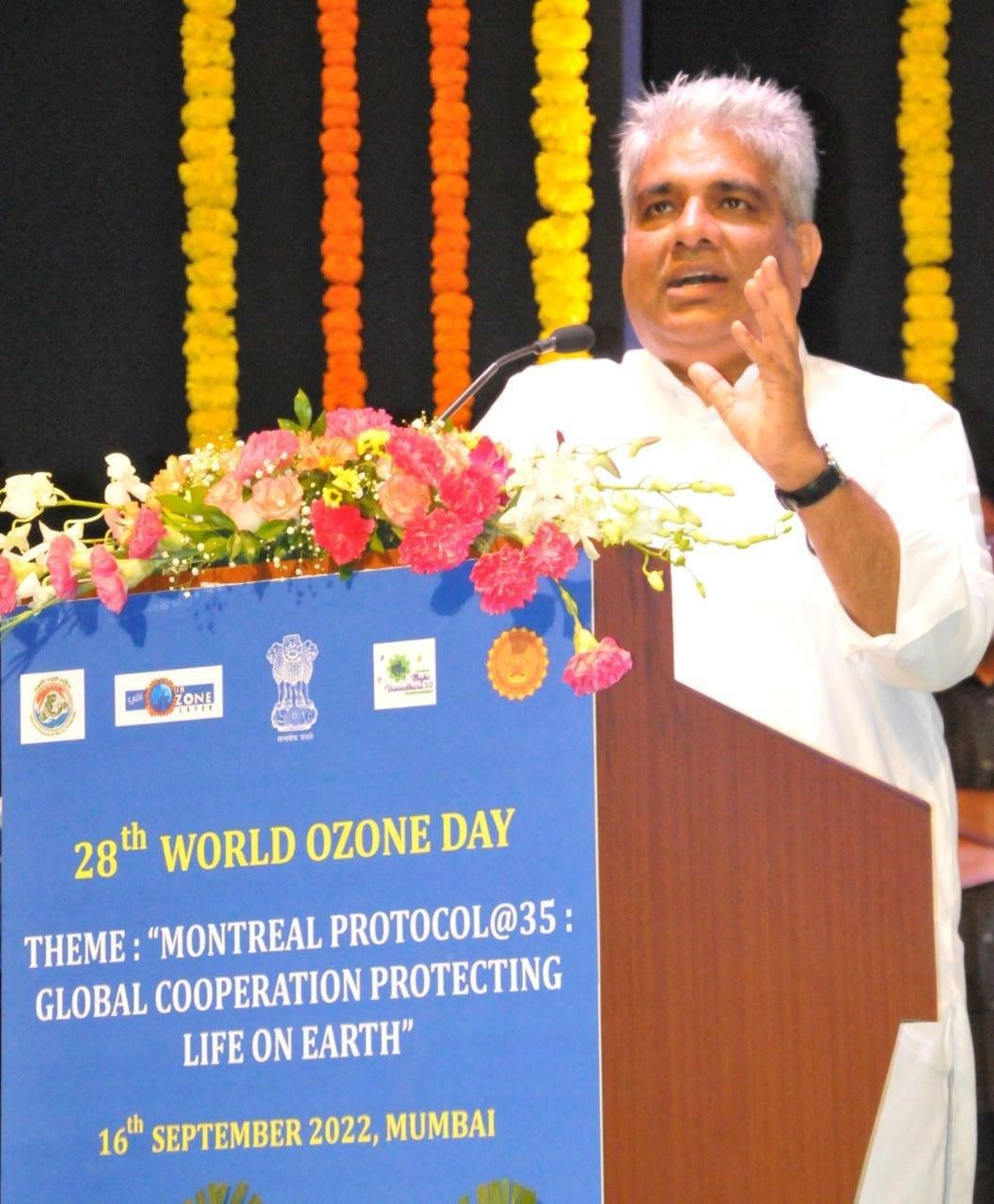
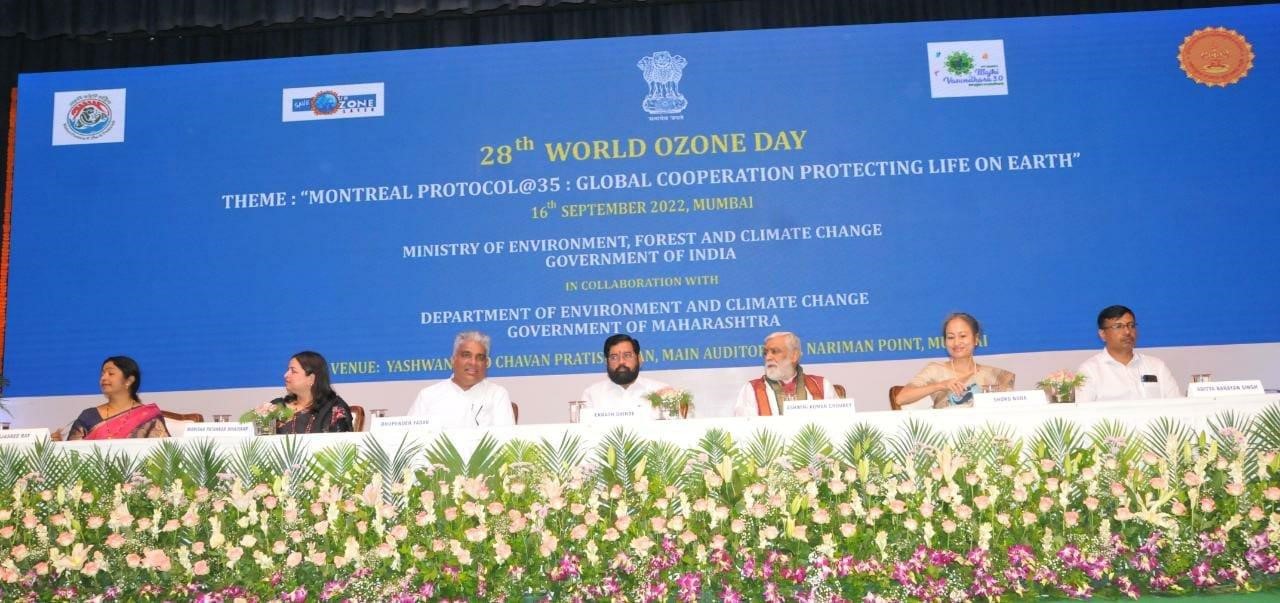
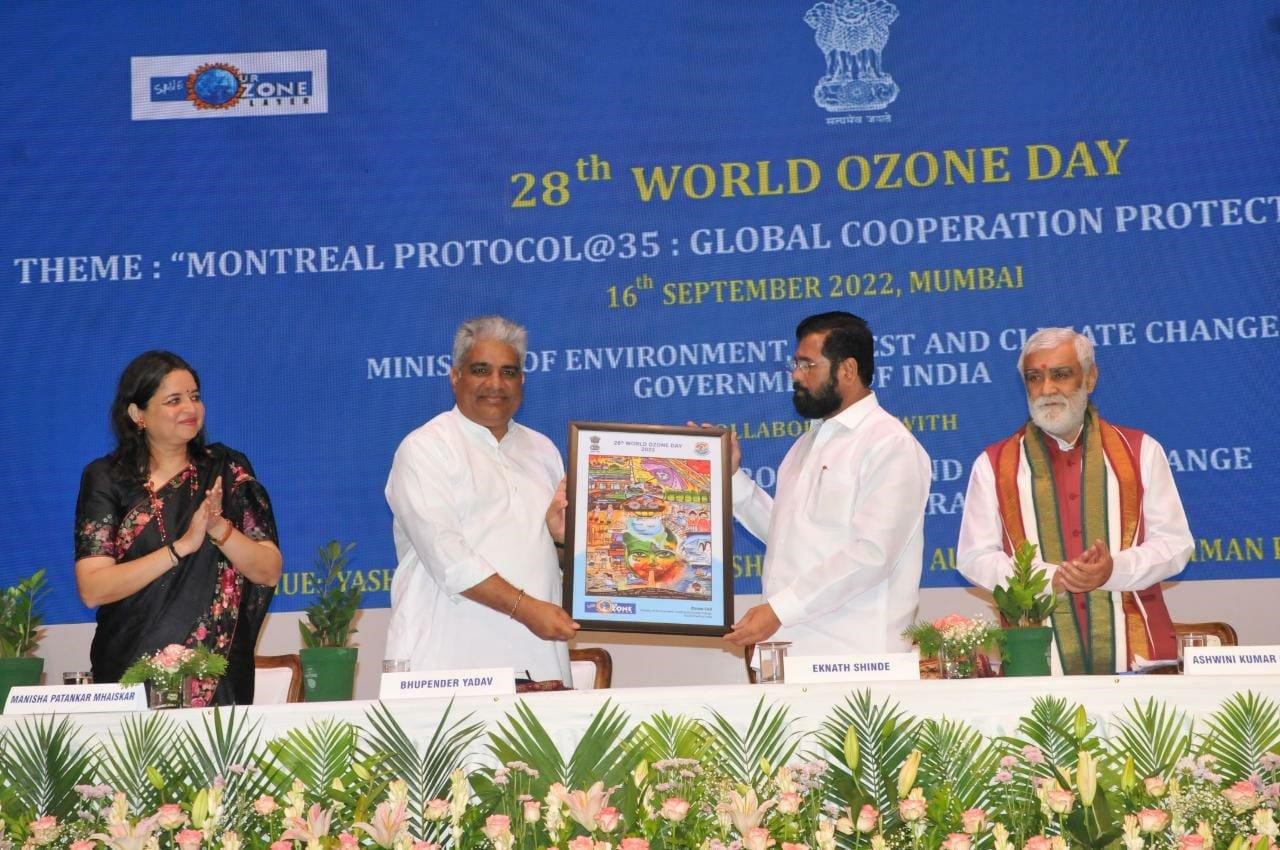
India’s contribution to the Montreal Protocol in terms of policy formulation is noteworthy, India has played a proactive role in the phase-out of production and consumption of Ozone Depleting Substances. This was stated by the Union Minister for Environment, Forest and Climate Change and Labour and Employment Bhupendra Yadav at a programme organized to observe the 28th World Ozone Day in Mumbai today. The Maharsahtra Chief Minister Eknath Shinde and Minister of State for Environment, Forest and Climate Change and Consumer Affairs, Food and Public Distribution Ashwini Kumar Choubey were also present on the occasion. The event was organized by the Ministry of Environment, Forest and Climate Change in collaboration with the Department of Environment and Climate Change, Government of Maharashtra.
Speaking on the occasion, the Union Environment Minister said that India has not been a traditional contributor to global emissions, but that in our actions, we are showing the intent to be a problem solver. Stating that the world is facing climate crisis because of wasteful use of energy, the Minister called for adopting the mantra of L.I.F.E (Lifestyle for Environment) which was coined by Prime Minister Narendra Modi, in line with the concept of sustainable lifestyle, encouraging us to adopt mindful and not mindless consumption and utilization of resources.
The Union Minister said that the Prime Minister has again and again focused on mindful consumption, for instance, how to economically use energy in warehouses and refrigeration, which are in line with our fight against climate change. India is among the countries which has stated that the country's sustainable development will be such that net zero is achieved by 2070, stated Shri Yadav. The Minister also said that India played a key role in the finalization of the Kigali Amendment. After ratifying the same in September 2021, the central government is working towards developing a national strategy, in close consultation with the industry stakeholders, for phasing down Hydrofluorocarbons (HFCs).
The Minister informed that the Ministry will soon be entering into collaboration with eight Indian Institutes of Technology (Bombay, Roorkee, Hyderabad, Kanpur, Guwahati, Banaras, Madras and Delhi) to promote research and development of chemicals with low global warming potential, including blends. These can be used as alternatives to substances controlled under the Montreal Protocol. The collaborative research will be done in line with industry requirements through engagement of research scholars, leading to the development of a robust R&D ecosystem in this area, and will also help promote the Make in India initiative of the Government. The Minister also highlighted the goals of the India Cooling Action Plan (ICAP), which is a vision document developed by the MoEFCC to provide socio-economic and environmental benefits related to reduced refrigerant use, climate change mitigation and Sustainable Development Goals over the period 2037-38. He highlighted the progress on the implementation of the recommendations. The Union Minister released the 23rd edition of “The Montreal Protocol: India’s Success Story”. The other publications of the Ozone Cell of the MoEFCC released on the occasion include: i) Action Plan for implementing the recommendations of the India Cooling Action Plan (ICAP) for the thematic Area Space Cooling in Buildings ii) Study Report on Public Procurement Policies for Refrigeration and Air-Conditioning (RAC) Equipment using non-ODS based refrigerants iii) Study Report on Cold Chain sector in India for Promoting non-ODS and Low-GWP Refrigerants iv) Booklet on Good Servicing Practices for Energy Efficient operation of Room Air conditioners The winning entries were announced for a national level poster making and slogan writing competition for school children on ‘Save Our Ozone Layer’, which was jointly organized by the National Museum of Natural History and the Ozone Cell of MoEFCC. The Union Minister also released the first prize winning poster on the occasion. A short video film on India Cooling Action Plan and an animated message on energy-efficient cooling have also been released.
United Nation Development Programme (UNDP)’s India Representative Ms. Shoko Noda and Principal Secretary, Department of Environment & Climate Change, Government of Maharashtra Smt. Manisha Mhaiskar were also present on the occasion. The Regional Director of United Nations Environment Programme (Asia Pacific) Dechen Tsering in a video message said that India has been successful in implementing the programme for Ozone Depleting Substances.
About World Ozone Day
World Ozone Day is celebrated on 16th September each year to commemorate the signing of the Montreal Protocol that came into force on this day in 1987. World Ozone Day is celebrated every year to spread awareness among people about the depletion of Ozone Layer and the measures taken and to be taken to preserve it. The theme of World Ozone Day 2022 is “Montreal Protocol@35: global cooperation protecting life on earth”.
India’s achievements in Implementation of the Montreal Protocol
India, as Party to the Montreal Protocol since June 1992, has been successfully implementing the Montreal Protocol and projects and activities for phasing out of ozone depleting substances, in line with the phase out schedule of the Protocol.
India phased out Chlorofluorocarbons, Carbon tetrachloride, Halons, Methyl Bromide and Methyl Chloroform for controlled uses as on 1 January 2010, in line with the Montreal Protocol schedule. Currently, Hydrochlorofluorocarbons are being phased out as per the accelerated schedule of the Montreal Protocol.
Hydrochlorofluorocarbons Phase-out Management Plan (HPMP) Stage - I has been successfully implemented from 2012 to 2016 and Hydrochlorofluorocarbons Phase-out Management Plan (HPMP) Stage - II is under implementation since 2017 and will be completed by 2023. Stage III of the HPMP, the last of the HPMPs to phase out remaining HCFCs, will be implemented from 2023 - 2030. The phase-out of HCFCs in all manufacturing sectors, comprising refrigeration and air-conditioning manufacturing sectors, will be completed by 1.1.2025 and the activities relating to the servicing sector will be continued till 2030.
The study on reduction of Greenhouse Gas (GHG) emissions through phase-out of Ozone Depleting Substances (ODS) under the Montreal Protocol implementation in India. The study carried out by the Ministry of Environment, Forest and Climate Change estimates that the reduction of GHG emissions due to phase-out of ODS till 2022 is 465 million tonne C02 equivalent, while it is expected that the reduction of GHG emissions till 2030 is expected to be 778 million tonnes of C02 equivalent.
Implementation of actions emerging from India Cooling Action Plan (ICAP) will supplement efforts in adopting climate-friendly alternatives and promotion of energy efficiency during the implementation of HFC phase-out under the Kigali Amendment. This will significantly contribute to India’s climate action in achieving the net zero emissions by 2070, through the ‘Panchamrits’, committed by the Prime Minister of India, at the Climate Change Conference of Parties in 2021.
Affordable Sitagliptin combinations for diabetics to be sold at Janaushadhi Kendras New variant of Diabetes medicines introduced by PMBI at Affordable Prices under Pradhan Mantri Bhartiya Janaushadhi Pariyojana
Posted On: 16 SEP 2022 4:02PM by PIB Delhi
Chief Executive Officer of Pharmaceuticals & Medical Devices Bureau of India (PMBI) Shri Ravi Dadhich launched Sitagliptin a new variant of medicines for diabetes today at affordable prices for all under the Pradhan Mantri Bhartiya Janaushadhi Pariyojana. PMBI included new variants of medicines Sitagliptin and its combination in its all Jan Aushdhi Kendras viz.
Name of the Product MRP for Pack of 10
(1) Sitagliptin Phosphate Tablet IP 50mg Rs. 60/-
(2) Sitagliptin Phosphate Tablet IP 100mg Rs. 100/-
Sitagliptin is indicated as an adjunct to diet and exercise to improve glycemic control in adults with type 2 diabetes mellitus. All these variants are available at 60% to 70% lesser prices than branded variants as they are available in price band of Rs. 162/- to Rs. 258/- at other medical stores.
Under the Pradhan Mantri Bhartiya Janaushadhi Pariyojana, more than 8700 Pradhan Mantri Bhartiya Janaushadhi Kendras have been opened across the country. These Kendras are selling quality generic medicines, surgical equipment, nutraceuticals and other products. At present, these Kendras make available more than 1600 medicines and 250 surgical devices including Suvidha Sanitary pads which are sold at Rs. 1/- per pad.
PMBI is committed to ensure regular and sufficient availability of essential medicines at the Jan Aushadhi Kendras and that too with assurance of good quality and affordable prices for citizens.
World Ozone Day 2021: About Ozone Pollution and how it affects health
World Ozone Day 2021: We all know that ozone protects us from UV rays coming from the sun. What is ozone pollution, how is it harmful to health and the environment? Let us find out!
What is Ozone Pollution and how it affects health?
World Ozone Day 2021: It is observed on September 16 and is also known as International Day for the Preservation of the Ozone Layer. The day focuses on global attention for the preservation of the ozone layer.
According to the United Nations, Ozone layer is 'a fragile shield of gas that protects the Earth from the harmful portion of the rays of the sun, thus helping preserve life on the planet.'
When pollutants contaminate the natural surroundings pollution occurs due to which lifestyle is adversely affected. Or we can say that pollution is the process of making land, water, air dirty and not safe to use. Pollution is increasing day by day and it is necessary to take some measures. Due to global warming UV rays from the sun started penetrating the earth which further affects life and causes serious damage to the skin. It happens due to the hole in the Ozone which is a layer or a blanket around 6-30 miles above the surface of the Earth.
Ozone is made up of three atoms of oxygen. It is a highly reactive gas and is represented as O3. It occurs naturally as well as a man-made product in the Earth's upper atmosphere i.e. stratosphere and lower atmosphere i.e. troposphere.
Naturally, it is formed through the interactions of solar ultraviolet (UV) radiation with molecular oxygen O2. It reduces the harmful UV radiation reaching the Earth's surface.
But at the ground level ozone is considered a major air pollutant. We all know that ozone protects us from harmful UV radiation but ozone at ground level is dangerous and causes pollution. Let us study Ozone pollution and how it affects health.
Types of ozone
As discussed above ozone occurs both in the upper atmosphere of the Earth and at ground level. It can be good or bad depending on where it is found.
Source: www.deq.state.ok.us.com
Good Ozone: Occurs naturally in the upper atmosphere of the Earth and is also known as stratospheric ozone. Here, it forms protective shields that protect us from the sun's harmful UV radiation. Due to various manmade chemicals, it is partially destroyed and causes a hole in the ozone.
Bad Ozone: It is ground-level ozone that is not directly emitted into the air and is known as Tropospheric ozone. It is generated by the chemical reactions of nitrogen oxides and volatile organic compounds (VOC). This happens when the pollutants are emitted by cars, power plants, industrial boilers; chemical plants, etc. and these chemicals react in the presence of sunlight. Do you know that at ground level it is harmful to air pollutants because it affects people and the environment and also is the main ingredient in smog?
In urban areas on hot sunny days, ozone reaches unhealthy levels and can reach high levels during cold weather. Now, you may be thinking that in rural areas this ozone reaches or not? Yes in rural areas also ground-level ozone is transported by the wind and can experience high ozone levels.
Now let us study from where Ozone comes?
In the atmosphere, ozone develops from the gases coming out of smokestacks, tailpipes, etc. When these gases come in contact with the sunlight, they react and form smog (ozone).
When nitrous oxide and hydrocarbons i.e. VOCs react with the sunlight ozone is formed. From power plants, motor vehicles, and other high-heat combustion sources, NOx is emitted. And VOx is emitted from motor vehicles, chemical plants, refineries, factories, paint, etc. Carbon monoxide is also emitted from motor vehicles. If the ingredients are present under the right conditions, they react to form ozone. In addition, winds can carry ozone far from where it began, even internationally across borders and even the oceans.
From ozone pollution who is at risk?
People suffering from lung diseases like asthma and chronic obstructive pulmonary disease also known as COPD, which includes emphysema and chronic bronchitis, outdoor workers, children, older adults, etc. are more at risk. Some evidence suggests that other groups including women, people who suffer from obesity, and people with low incomes may also face a higher risk from ozone. People with certain genetic characteristics and people with reduced intake of certain nutrients such as vitamin C and E are at greater risk from ozone exposure.
Effects of ozone on health and environment
- Breathing ozone can cause chest pain, coughing, throat irritation, and airway inflammation.
- Reduced the functioning of the lung.
- Ozone worsens bronchitis, emphysema, asthma, etc.
- Increases the risk of respiratory infection and susceptibility to pulmonary inflammation (COPD).
- Breathing ozone can shorten your life that is premature death.
- It can cause cardiovascular diseases i.e. inhaling ozone may affect the heart.
- Air pollutants present in the air make the lungs more responsive to ozone and when you breathe ozone increases your body to respond to other pollutants. For example, a study published in 2009 found that children were more likely to suffer from hay fever and respiratory allergies when ozone and PM2.5 levels were high.
- Continue to damage the lungs even when the symptoms have disappeared.
- Ozone causes harm to vegetation and ecosystems including forests, parks, wildlife refuges, etc.
So, now we have come to know about the ozone and pollution caused by it. Also, what are the harmful effects of ozone on health and the environment?
World Ozone Day 2022, Theme, History & Significance
Know about History, Significance, and Theme for World Ozone Day 2022 in the article discussed below.
Table of Contents
World Ozone Day 2022: Every year World Ozone Day or the International Day for the preservation of the Ozone Layer is observed on the 16th ofSeptember. World Ozone Day is marked to create awareness among the people that the ozone layer is depleting gradually and we should take certain measures to preserve it. International Day for the preservation of the Ozone Layer signifies that Ozone Depletion is being caused due to the formation of Ozone Holes which are occurring because of Ozone Depleting Substances(ODS). Some of the Ozone Depleting Substances include chlorofluorocarbons (CFCs), HCFCs, and halons. The ozone layer is found in the earth’s stratosphere and protects the earth from the harmful rays of the sun by absorbing 97-99% of medium-frequency radiation. In this article, we have mentioned the History, Significance, and Theme of World Ozone Day 2022.
World Ozone Day 2022: History
The United Nations General Assembly proclaimed in 1994 that the 16th of September will be observed as World Ozone Day or International Day to preserve the Ozone Layer. On September 16, 1987, the “Montreal Protocol on Substances that Deplete the Ozone Layer” was signed by the Governments of 46 countries. To mark this particular event 16th September was chosen as the Day to observe World Ozone Day. For the first time, the International Day for the Preservation of Ozone Layer was marked on September 16, 1995.
World Ozone Day 2022: Significance
World Ozone Day is commemorated to highlight the significance of Ozone Layer and the necessity to preserve it from getting depleted. First time in 1970s the scientists found out that the ozone layer is getting depleted. In the polar regions around the north and south pole the ozone shield has become thin. The presence of Ozone Layer reduces the harmful UV radiation especially the radiation of UV-B variant from reaching the surface of the Earth. The Radiation is very harmful and is responsible for causing sunburn, skin cancer and cataracts among many other diseases. The ozone layer will get depleted at its minimum extent if we practice certain activities:
Use Air Conditioners only when required and at regular time intervals have a proper maintenance of ACs.
Use minimum vehicles and prefer sharing them because they release large amount of greenhouse gases that ultimately leads to ozone depletion.
The cleaning products used in homes must be eco-friendly.
Avoid the use of pesticides because they somehow get into the atmosphere and affect the ozone layer.