Thursday, 28 September 2023

India is committed to achieve the Net Zero emissions target by 2070 as announced by PM Modi, says Dr. Jitendra Singh

 Ministry of Science & Technology

azadi ka amrit mahotsavg20-india-2023

India is committed to achieve the Net Zero emissions target by 2070 as announced by PM Modi, says Dr. Jitendra Singh


“India has remained steadfast in its transition towards clean energy achieving the fastest pace of renewable capacity addition amongst all major economies and ambitious transition goals articulated by Prime Minister Modi, in India’s Panchamrit declaration at COP26”: Dr Jitendra Singh

India’s energy-mix strategies include a larger shift toward clean energy alternatives, increased manufacturing capacities, energy use efficiency and a policy push for Hydrogen including production-linked incentives, says Dr Jitendra Singh

Posted On: 28 SEP 2023 6:38PM by PIB Delhi

Union Minister of State (Independent Charge) Science & Technology; MoS PMO, Personnel, Public Grievances, Pensions, Space and Atomic Energy, Dr. Jitendra Singh, has said India is committed  to achieve the Net Zero emission target by 2070, as announced by Prime Minister Shri Narendra Modi.

“We are fully committed to contribute in attaining the United Nations Sustainable Development Goals (SDGs) -  by way of Research and Innovation through international collaboration and partnerships,” he said, participating in the ‘Green Ribbon Champions’ programme in New Delhi today.
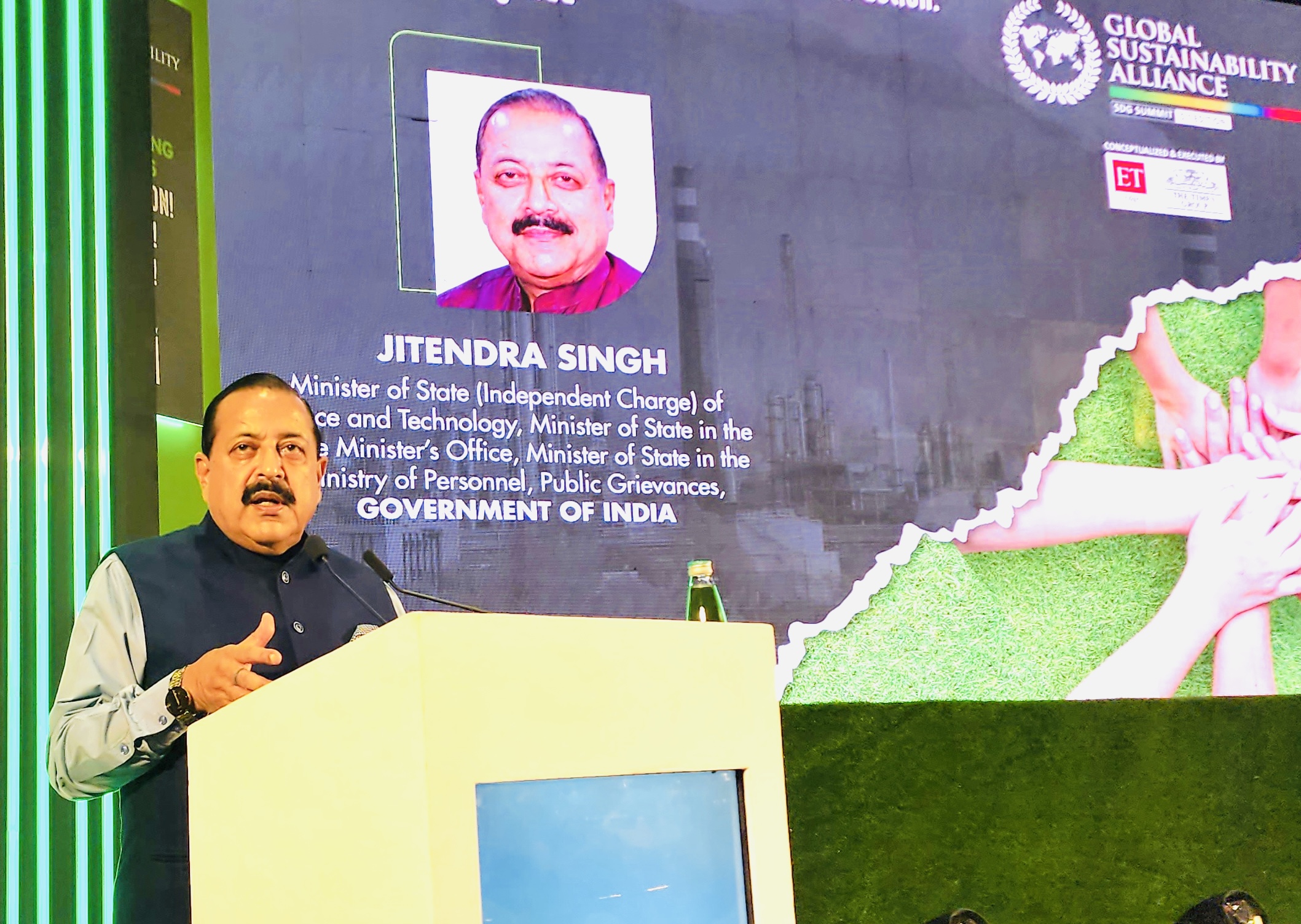
Dr Jitendra Singh said, India is set to achieve its short term and long term targets under the Panchamrit action plan, like- reaching a non-fossil fuel energy capacity of 500 GW by 2030; fulfilling at least half of its energy requirements via renewable energy by 2030; reducing CO2 emissions by 1 billion tons by 2030; reducing carbon intensity below 45 percent by 2030; and finally pave the way for achieving a Net-Zero emission target by 2070.

Dr Jitendra Singh said, PM Modi had at the 26th session of the Conference of the Parties (COP26) to the United Nations Framework Convention on Climate Change (UNFCCC) held in Glasgow, United Kingdom in November, 2021, expressed to intensify India’s Climate Action Plan (CAP) by presenting to the world five nectar elements (Panchamrit) of India’s climate action plan. He said, apart from a five-pronged target for India and its commitment to Net-Zero emissions by 2070, PM Modi also asserted the need to follow a sustainable lifestyle and emphasised on the idea of making ‘Lifestyle for Environment’ (LiFE) a global mission through bolder steps by the global clean energy fraternity.

Dr Jitendra Singh said, the Mission Innovation (MI) and International Solar Alliance, spearheaded by PM Modi, were announced at COP21 in 2015, when the United Nations conferred on him the ‘Champions of Earth Award 2018.’

The term ‘Mission Innovation’ was coined by PM Modi. Mission Innovation (MI) is a global initiative of 23 countries and the European Commission (on behalf of the European Union) to accelerate the Clean Energy revolution and progress towards the Paris Agreement goals and pathways to net zero. India is a founding member of Mission Innovation.

The first phase of Mission Innovation (MI) (2015-2020) was announced at COP21 on November 30, 2015. In the first phase of Mission Innovation, India led three MI Innovation Challenges, such as Smart Grids, Off Grid Access to Electricity and Sustainable Biofuels, and hosted many workshops. 

Dr Jitendra Singh said, Government of India through Public-Private Partnerships is ensuring the funding for clean energy innovations as envisioned under Mission Innovation 2.0. He said that the Clean Energy Ministerial (CEM) setup has been able to provide a unique opportunity for India to showcase its contribution to clean energy development nationally & internationally and quoted some major CEM initiatives which includes CEM’s Global Lighting Challenge (GLC) campaign, Street Lighting National Programme, Unnat Jyoti by Affordable LEDs for All (UJALA) programme and the ‘One Sun-One World-One Grid’ Initiative which was first floated by the Prime Minister to harness tremendous potential of solar energy.
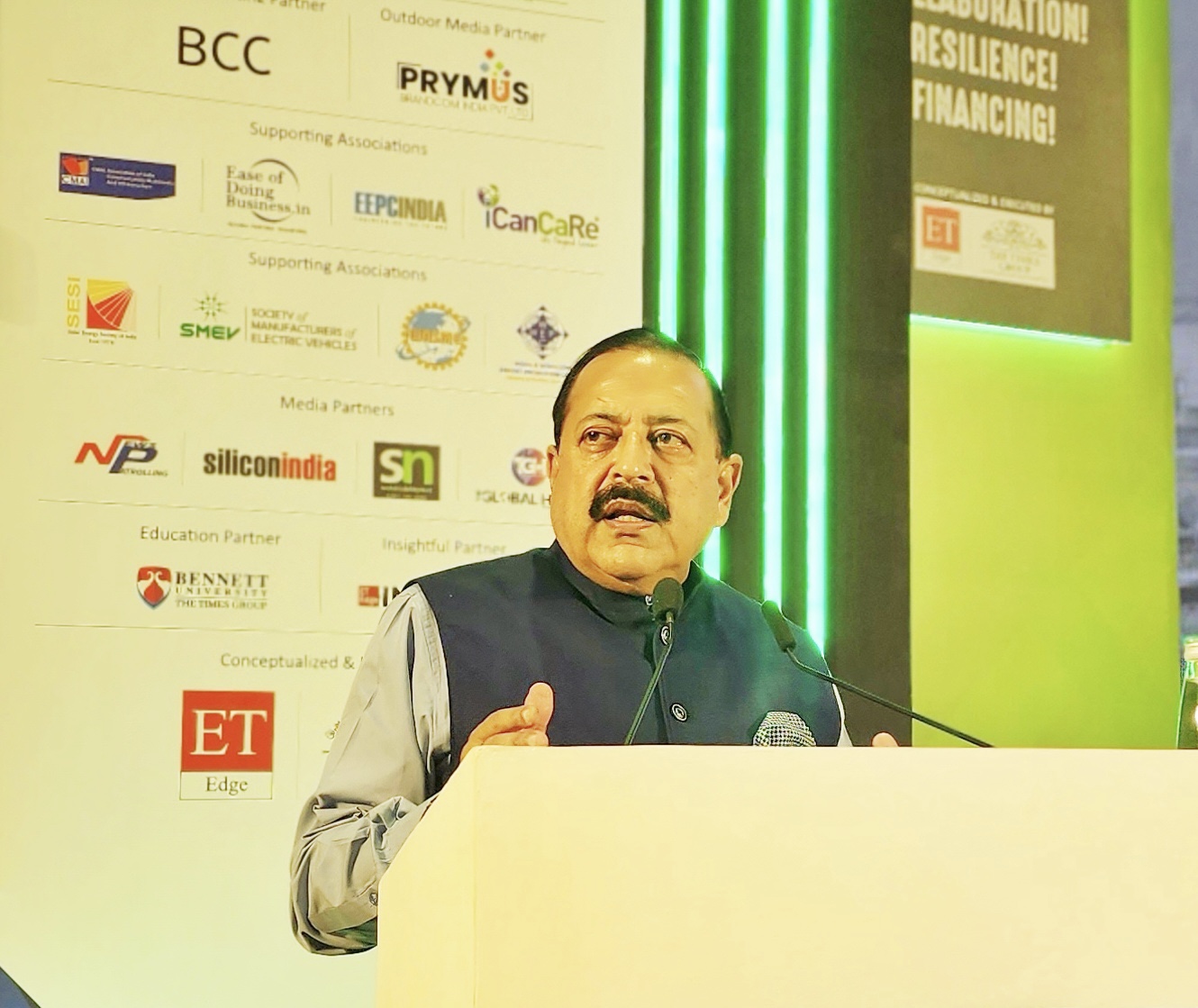
Referring to the G20 Summit earlier this month, Dr Jitendra Singh said the New Delhi Declaration committed itself to implement India’s initiative of 'Lifestyle for Environment Mission’ (LiFE) and promote Artificial Intelligence towards achieving the UN SDGs. By adopting the 'Green Development Pact,' G-20 has also reaffirmed its commitments to sustainable and green growth.

The Union Minister said that the Global Biofuels Alliance (GBA) to be led by India, Brazil and the United States, as leading biofuel producers and consumers, will greatly help achieve the MDG Goals of India turning Net Zero by 2070.

“GBA is a landmark achievement agreed to by the leaders of Singapore, Bangladesh, Italy, USA, Brazil, Argentina, Mauritius and UAE, at the initiative of PM Modi on the sidelines of the G20 Summit. GBA aims to serve as a catalytic platform, fostering global collaboration for the advancement and widespread adoption of biofuels,” he said.

Dr Jitendra Singh said India stands at the forefront of addressing the global challenge of Climate Change and has committed to an ambitious Nationally Determined Contributions (NDCs) of reducing emission intensity by 33-35% in 2030 against the levels of year 2005.

“India has remained steadfast in its transition towards clean energy, achieving the fastest pace of renewable capacity addition amongst all major economies and ambitious transition goals articulated by Prime Minister Modi, in India’s Panchamrit declaration at COP26,” he said.

The Union Minister said that the last nine years have witnessed the Indian crusade against climate change. “We have already achieved our commitment of 40% energy production from renewable sources, way ahead of the 2030 Paris Agreement target,” he said.

The Minister reiterated India is implementing the largest Renewable Energy (RE) expansion program in the world, envisaging a 5-fold increase in the overall RE capacity.

He added that apart from the thrust on renewable energy from solar and hydel, the Prime Minister announced major strides in Hydrogen energy in his Independence Day Address from the ramparts of the Red Fort on 15th August 2021. India also launched the National Hydrogen Energy Mission to enable cost competitive green hydrogen production.

“India’s energy-mix strategies include a larger shift toward clean energy alternatives, increased manufacturing capacities, energy use efficiency and a policy push for Hydrogen including production-linked incentives. In addition, the emerging technologies like 2G Ethanol Pilot, Comfort climate box for tropical regions, Hydrogen Valleys, Heating and cooling virtual repository, are all on the table,” he said.

Dr Jitendra Singh said India has developed a roadmap and a strategy for a Bio-based economy which is inching towards 150 billion USD by the year 2025. Department of Biotechnology has been supporting R&D innovations in Advanced Biofuels and ‘Waste to Energy’ technologies. India has established 5 Bioenergy Centers with an interdisciplinary team working on advanced sustainable biofuels using modern biotechnology tools.

“This will facilitate infrastructure for Bio-manufacturing of low-carbon bio-based products. Sustainable biofuels play a key role in reducing Green House Gas (GHG) emissions from the transport sector,” he said.

Dr Jitendra Singh said, India is among the few countries in the world to design a Cooling Action Plan (CAP) with a long-term vision (spanning a 20-year period from 2017-18 to 2037-38) that addresses cooling requirements across sectors.

“CAP identifies possible actions to reduce cooling demand arising from residential and commercial buildings, cold chains, etc., covering aspects of building design and technological innovations that do not compromise on energy efficiency,” he said.

Recalling that he launched India’s first truly indigenously developed Hydrogen Fuel Cell Bus developed by KPIT-CSIR in Pune on 21 Aug 2022, Dr Jitendra Singh said the painstaking efforts undertaken over the last two years since the Prime Minister had announced India’s intention to create a dedicated mission for Green Hydrogen, culminated in the announcement of the National Green Hydrogen Mission with a budgetary outlay of about 2.4 billion dollars in January this year.

He said that a draft R&D Roadmap for Green Hydrogen Ecosystem in India has been released. A PPP framework for R&D called the Strategic Hydrogen Innovation Partnership or SHIP will be facilitated under the Mission. 

“India is uniquely poised to emerge as a prominent global leader in production of Green Hydrogen not just on the basis of its abundant renewable energy resources and the benefits of one of the world’s lowest costs of regeneration, but also because of its R&D ecosystem and the framework designed for R&D in cross-cutting sectors of hydrogen production, transport, electrolyze manufacturing, support infrastructure, fuel cell EVs, storage and utilization,” he said.

Dr Jitendra Singh further said that nearly 9% share of electricity is likely to be contributed from India’s nuclear sources by the year 2047. The Department of Atomic Energy aims to achieve 20 GW capacity of nuclear power generation by the year 2030 which will be a major milestone placing India as the third largest producer of atomic energy in the world after the USA and France.

“Credit for this rapid stride goes to Prime Minister Narendra Modi, who for the first time after Independence took the decision of approving 10 reactors in fleet mode in a single order and allowed nuclear installations to be developed under joint ventures with PSUs. As a result, today India is sixth largest in the world in the number of reactors that are functional and second largest in the total number of reactors including those under construction,” he said.
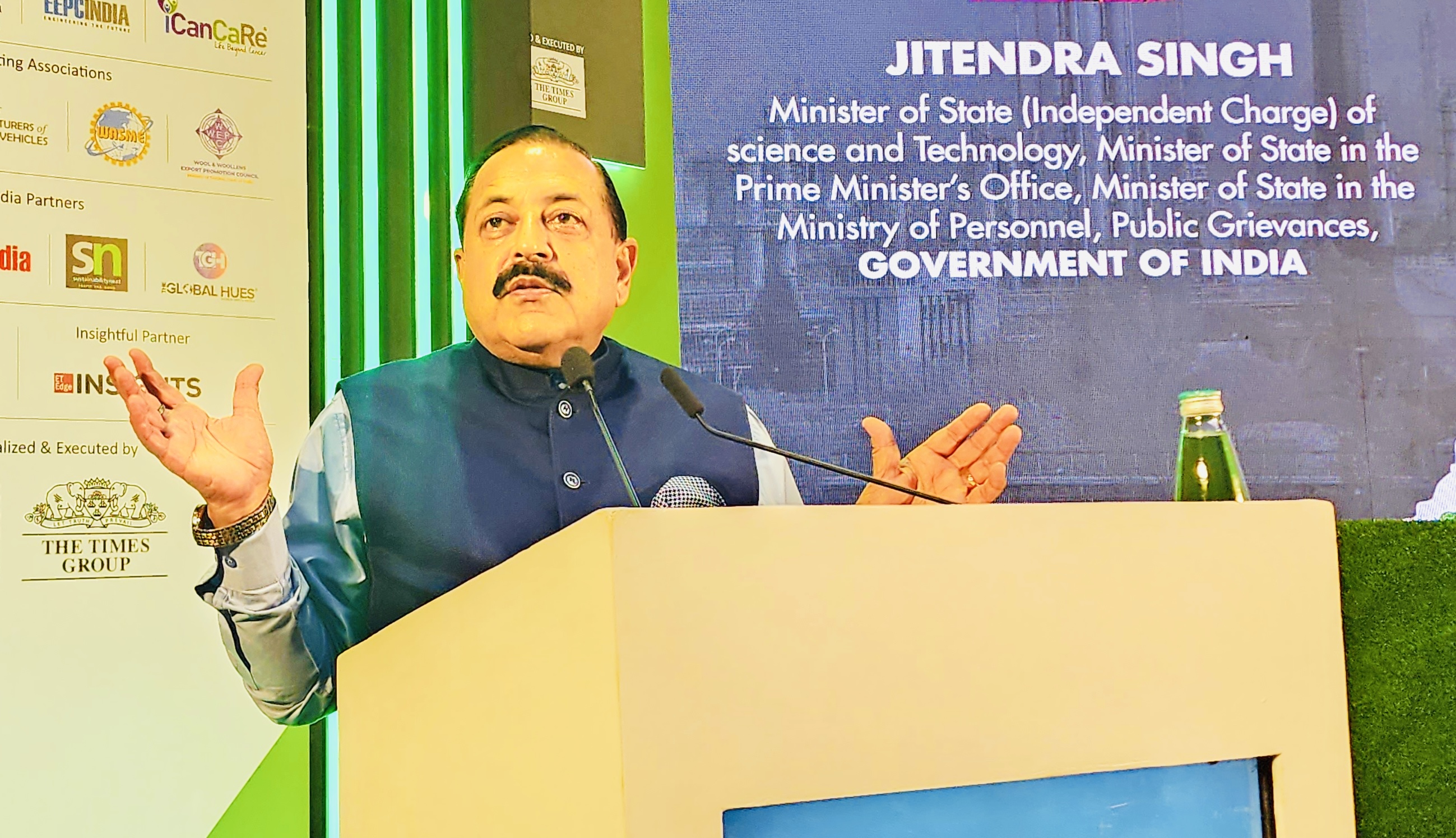
Dr Jitendra Singh mentioned sustainable practices in fisheries, marine research, coastal tourism and renewable energy generation. He said, by harnessing the potential of the Blue Economy, we can ensure the well-being of our oceans while driving economic development in a sustainable and responsible manner. We are also concerned about increased plastics and microplastics in our oceans, another important area to focus as it enters into our food chain as several marine organisms consume them.

Dr Jitendra Singh said, the National Research Foundation (NRF) Bill, 2023, passed by the Parliament in the last monsoon session, will promote the culture of research and innovation throughout India’s universities, colleges, research institutions, and R&D laboratories at a total estimated cost of Rs. 50,000 crores during five years and this will give further impetus to Clean energy research in India and Mission Innovation. As much as 70% of its funding will come from non-governmental sources, he said.

Dr Jitendra Singh said, despite efforts by countries to check and reduce emission of greenhouse gases, the global average temperature in 2100 is expected to rise to around 2.1°C above pre-industrial levels. The Minister pointed out that this falls short of the goals stipulated in the Paris Agreement, which calls for limiting the global temperature to 1.5°C above pre-industrial-era levels by the end of the century.

Dr Jitendra Singh said, Precision irrigation, Innovative clean water technologies, such as water purification systems, desalination techniques, and wastewater treatment technologies are to be further augmented and implemented. 


Tuesday, 26 September 2023

Fertilizer Policy in India - Constitutional Provisions, Challenges, Important Terms & More

 The Fertilizer Policy in India plays a significant role in the Indian Economy. Since the inception of the New Economic Policy in 1991, many attempts have been made to reform the fertilizer sector in India. The issue of agricultural subsidies in India should be viewed in the context of the country’s overall economic condition, the importance of farmers and the agricultural industry to the country’s political economy, and current trends in the country’s agricultural economy.


Recent Update

A new DAP Subsidy has been approved by the government of India for the year 2022 (Kharif season). The price of DAP has increased from Rs 1,200 a bag to almost Rs 1,350 per 50 kg bag, which denotes an increase of 12.5 per cent.

Fertilizer Policy in India

India is the second biggest consumer of fertilizer in the world, next only to China. The fertilizer industry is essential to the Indian Economy because agriculture is a crucial sector. India’s fertilizer business is extremely important since it produces some of the most important raw ingredients for agricultural production.

  • The main goal of fertilizer sector is to guarantee the entry of primary and secondary elements in the quantities required for agricultural production.
  • In India, the fertilizer business is largely responsible for the agricultural sector’s success. India’s food business has become a global leader in this sector largely due to the number of technically skilled fertilizer manufacturers there.
  • During the projected period, the Indian fertilizers market is anticipated to increase at a compound yearly growth rate of 11.9 percent (2021-2026).
  • In 2020, the Indian fertilizer market had a worth of INR 887 billion. The rise has significantly aided the country’s sustainable production of food grains in fertilizer consumption.
  • Numerous world-class government and private fertilizer firms are based in India. The numerous fertilizer firms in India, which produce everything from seeds to fungicides, are the main factor in the sector’s development in India.

City Compost Policy

City Compost Policy involves the process and uses city waste as compost. This policy was approved in 2016. Under the policy, the assistance of Rs 1,500 per tonne of city compost was to be provided to fertilizer companies for marketing and promotion of city compost. The Ministry of Chemicals and Fertilizers introduced it. In 2021 the policy on the promotion of city compost was discontinued.

Phosphatic and Potassic (P&K) Policy

nutrient Based Subsidy Scheme was announced in 2009 for Phosphatic & Potassic fertilizers to ensure the Nation’s food security, improve agricultural productivity, and ensure the balanced application of fertilizers. According to the NBS Policy, the government annually announces a fixed rate of subsidy (in Rs per Kg) for the nutrients nitrogen (N), phosphate (P), potassium (K), and Asulphur (S). basis. The per Kg subsidy rates on the nutrients N, P, K, and S are converted into per Tonne subsidy on the various P&K fertilizers covered under NBS Policy.

Urea Policy (Pricing and Administration)

Under urea policy, there are 32 urea units in the country, of which 31 urea units use Natural Gas (domestic gas/LNG/CBM), and the remaining urea unit uses Gas & Naphtha as feedstock. 

Fertilizer Subsidy in India

The subsidy offered to farmers for using fertilizers is known as a fertilizer subsidy. Farmers purchase fertilizers at MRPs (Maximum Retail Prices), less expensive than the market rates determined by supply and demand or the cost of production or importation. The farmer, who pays MRPs less than the market-determined rates, is the true subsidy recipient, even though fertilizer businesses receive it. Until recently, businesses earned payment only after their bagged goods were sent and retrieved at a district’s railhead point or authorized godown.

Direct Benefit Transfer

  • A new Direct Benefit Transfer (DBT) system, which went into effect in March 2018, requires that corporations only receive subsidies after making actual sales to farmers.
  • Over 2.3 lakh retailers operate in India, each with a Point of Sale (PoS) system connected to the Department of Fertilizers’ e-Urvarak DBT portal.
  • Anyone purchasing fertilizers on a subsidized basis must provide their Kisan Credit Card number or unique Aadhaar identity.
  • The PoS device must record the quantities of the fertilizers purchased, the buyer’s identity, and biometric authentication.
  • A company can only apply for a subsidy after registering the sale on the e-Urvarak platform; payments are processed weekly and sent electronically to the company’s bank account.
  • Recent Fertilizer Policy in India

    The fertilizer Policy in India is significant for Indian culture, and since India’s independence, the government has regulated fertilizer sales, prices, and quality. The Indian government has introduced several Fertilizer Policies to regulate the sector.

    New Pricing Scheme

    The Concession Scheme for urea units in India is based on the feedstock prices and the plants' age. This scheme has been implemented in various phases, such as NPS-I (2003-2004), NPS-II (2004-2006), and NPS-III (2006 onwards). Under this scheme, the difference between the cost of production and the selling price or Maximum Retail Price (MRP) is provided as a subsidy or concession to the manufacturers. Urea is the only fertilizer subject to price control, and it is sold at a specified uniform sale price determined by the government. On the other hand, Phosphatic and Potassic fertilizers are not subject to price control and are sold at indicative maximum retail prices (MRPs).

    Objective

    The objective is to assist urea units in attaining internationally competitive efficiency levels. This entails promoting transparency and simplifying the administration of subsidies.

    Effects

    The policy of fixed urea prices in India resulted in market distortions. Fertilizer companies faced financial difficulties due to the fixed prices, while the costs of inputs like natural gas and naptha continued to rise. Since a significant portion (80%) of urea production in India relies on gas-based methods, this further exacerbated the issue. Another consequence of this policy was an imbalance in the utilization of fertilizers. Some sectors may have misused the availability of subsidized urea, leading to illegal exports and the improper use of urea in activities like the preparation of adulterated milk.


    Nutrient Based Subsidy (NBS) Policy, 2010

    • Nutrient Based Subsidy (NBS) Programme for Fertilizers was initiated by the Ministry of Chemicals & Fertilizers’ Department of Fertilizers in April 2010.
    • With the exception of urea, each grade of subsidized phosphoric and potassium (P&K) fertilizers receives a fixed level of subsidy under NBS based on the number of nutrients they contain.
    • It is primarily done for secondary nutrients like N, P, K, and S, which are crucial for crop growth and development.
    • Since the retail pricing of these non-urea fertilizers is deregulated and set by manufacturers, it attempts to ensure they are accessible to farmers at a reasonable cost.

    Neem Coated Urea Policy, 2015

    Domestic fertilizer companies are legally required to “Neem coat” at least 75% of their urea production, which can even go up to 100 percent. There used to be a 35 percent cap on this. Additionally, the government has permitted businesses to increase the price of urea coated with neem by just 5%.

    Objective

    The objective is to ensure sustainable agriculture, preserve soil health, and optimize crop yields while reducing reliance on imported urea and minimizing environmental impact.

    Advantages

    Reduction in the subsidy. As a result, rationalizing the subsidy burden on the Government of India. Prevention of diversion of urea for industrial use

    Limitations

    The amount of subsidy savings resulting from these efforts is relatively small compared to the significant financial and political magnitude of the fertilizer subsidy paid on the three major fertilizers - nitrogen (N), phosphorus (P), and potassium (K).

    Gas Pooling Policy, 2015

    The ‘Gas price pooling’ mechanism was introduced on 1 July 2015 in place in India. This policy creates a standard rate for fertilizer plants by averaging or pooling the costs of domestic and imported LNG. Natural gas is the same price for all fertilizer factories across the nation as the raw material used to create urea. By setting gas prices at the same level for all participants, the Gas Price Pooling aims to alter the dynamics of the urea industry. In the past, every plant had to develop its agreements or contracts on unique costs with various suppliers.

    New Urea Policy, 2015

    The New Urea Policy was introduced in May 2015. The Policy aims to boost domestic urea output, encourage urea production that uses less energy, and lighten the central government’s subsidy load. The purpose of this policy is to encourage domestic producers and provide free shipping of phosphorus and potassium fertilizers.

  • Role of Fertilizer Association of India (FAI)

    The Fertiliser Association of India (FAI) is a non-profit and non-trading company that represents majorly the fertilizer manufacturers, distributors, importers, and equipment. Fertilizer Association of India was established in 1955 to bring together everyone involved in fertilizer manufacturing, marketing, and consumption with the goal of :

    • Assisting the industry in improving its operative efficiency
    •  Finding solutions to the problems facing the fertilizer industry and agriculture
    • Encourage the wise and effective use of fertiliser.
    • Promote the consumption of more nutritious plant foods.
    • Encourage research and conversation about all issues that affect good agriculture practices.
    • Ensuring Food Security through the balanced and efficient use of plant nutrients is the prime objective of the Association.


Environmental Legislation Concerning Fertiliser Industry

ENERGY & ENVIRONMENT

Environmental Legislation Concerning Fertiliser Industry

Although provisions for environmental regulation and legal action have existed in India for some time in the form of the Factories Act and the Indian Forests Act, rapid industrialization and urbanization found these Acts to be inadequate.  It was, therefore, necessary to have a uniform national law covering broad environmental problems endangering the health and safety of people as well as the protection of flora and fauna.  Consequently, India, which participated in the 1972 United Nations’ Stockholm Conference on Human Environment, decided to implement the decisions of the Conference related to pollution, preservation, and protection of the environment. 

Pollution control to preserve the environment is universally practiced mainly through the development of environmental protection standards, their implementation, and taking legal action against violators.  The environmental protection standards are essential to ensure that the pollutants discharged from the industry into the environment are within the capacity of the environment to assimilate them through natural purification processes. 

In India, the first organization that attended to the need for developing and promoting standards for environmental protection was the Bureau of Indian Standards (BIS).  The BIS laid down environmental protection (EP) standards even before any legislation in this regard was conceived.  However, the BIS standards are only recommendations and are not legally binding. 

The first legislation came into existence in 1974 specifically to protect the water component of the environment.  This legislation, referred to as the Water (Pollution Prevention and Control) Act, was followed in 1981 by the Air (Pollution Prevention and Control) Act.  The Environment (Protection) Act of 1986, an umbrella Act covers all facets of the environment, which the Public Liability Insurance Act of 1991 has been designed to provide immediate relief to the person(s) affected by accidents occurring while handling hazardous substances.  A discussion of these Acts follows.


Maintenance Practices and Case Studies


Maintenance Practices and Case Studies

https://www.faidelhi.org/info/maintenance-practices-case-studies

PROMOTIONAL WORK BY FERTILISER INDUSTRY


Monday, 25 September 2023

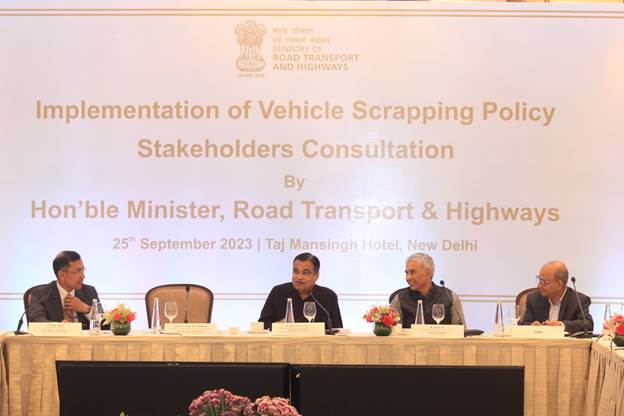
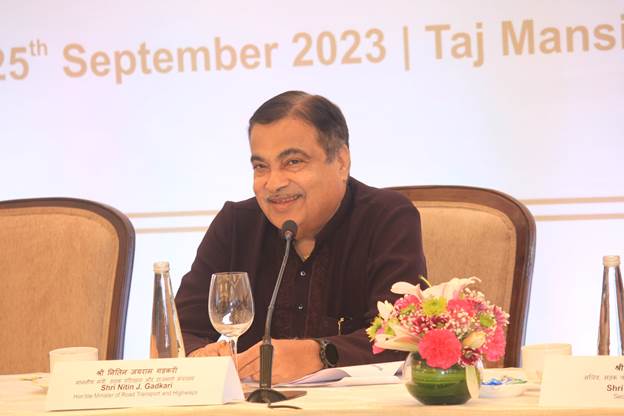
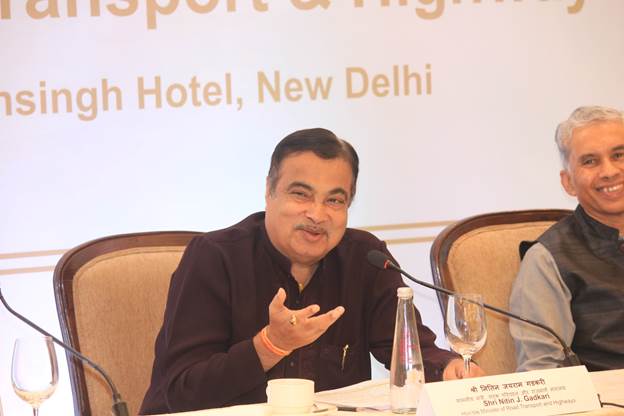
Shri Nitin Gadkari calls upon all stakeholders to come forward and support the Vehicle Scrapping policy describing it is a win-win situation for all


Shri Nitin Gadkari calls upon all stakeholders to come forward and support the Vehicle Scrapping policy describing it is a win-win situation for all

Posted On: 25 SEP 2023 5:41PM by PIB Delhi

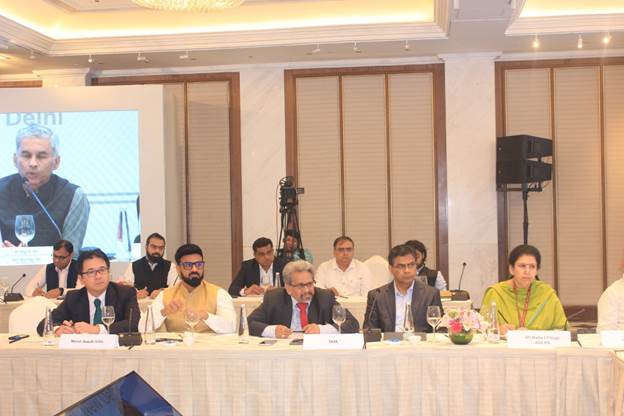
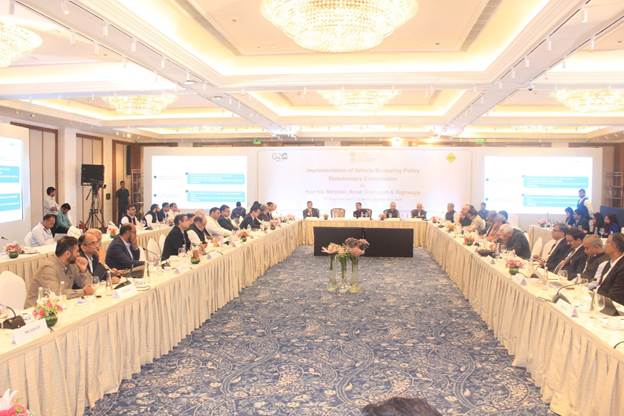
Union Minister for Road Transport and Highways Shri Nitin Gadkari called upon all stakeholders to come forward and support the Vehicle Scrapping policy. Addressing a Stakeholder Consultation in New Delhi today he said it is a win-win situation for all.The Union Minister said the Ministry has undertaken multiple initiatives to build resilient demand for vehicles such as building a world-class network of Highways, Electrification of buses, and mandatory automated fitness testing of vehicles. He said the Auto OEMs should work towards increasing their production capacity and support the nation to become the largest auto industry in the world.

Shri Gadkari emphasized that since the Auto industry is the biggest beneficiary of this policy, they must come forward and support on 3 main pillars of more investment in setting up Automated Testing Stations (ATSs) and Registered Vehicle Scrapping Facilities (RVSFs), more awareness amongst citizens about the policy benefits through their dealer network and a finalized discount % against certificate of deposit obtained by citizens on scrapping vehicles.

Secretary Shri Anurag Jain encouraged the auto industry to set up scrap centers and automated testing stations across the country. It was emphasized that Vehicle Scrapping Policy is expected to increase auto sales by about 8% and contribute about 0.5% to the country’s GDP and hence, Auto OEMs must extend unconstrained support to the policy.

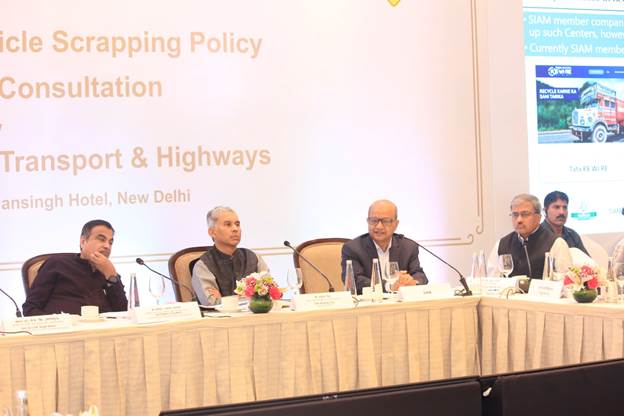
This stakeholder consultation aimed to seek support from the automobile industry to expedite the implementation of vehicle scrapping policy in the form of investment in vehicle scrapping infrastructure of Registered Vehicle Scrapping Facilities (RVSFs) and Automated Testing Stations (ATSs), generation of awareness among citizens and extension of discounts to vehicle owners for scrapping vehicles at RVSFs. Representatives from all major automotive OEMs (including Tata, Mahindra, Maruti, Kia, Hyundai, etc.), auto dealers and used car aggregators (including Car Dekho, Cars24) attended the event and shared their perspectives on the challenges and actions required to expedite implementation of the vehicle scrapping policy.

Additional Secretary Shri Mahmood Ahmed welcomed the dignitaries and industry participants and highlighted key benefits of V-VMP. This was followed by a presentation on status of V-VMP and support required from auto industry by Director Shri Paresh Goel.

SIAM also presented their views on the incentives for citizens through this policy and good inputs were provided by all other auto industry stakeholders.

The Ministry of Road Transport and Highways (MoRTH) launched the Voluntary Vehicle-Fleet Modernization Program (Vehicle Scrapping Policy) in 2021. This Policy is aimed at creating an ecosystem for phasing out old, unsafe, polluting vehicles and replacing them with newer, safer, and fuel-efficient vehicles.