Wednesday, 24 December 2014

Report of the High Level Committee headed by Shri T.S.R. Subramanian to review various Acts administered by Ministry of Environment, Forest & Climate Change

Report of the High Level Committee headed by Shri T.S.R. Subramanian to review various Acts administered by Ministry of Environment, Forest & Climate Change
The Department-related Parliamentary Standing Committee on Science & Technology, Environment & Forests, headed by Shri Ashwani Kumar, M.P., Rajya Sabha proposed to consider the above cited Report and invited views/suggestions/comments thereon from individuals/experts/Non Governmental Organisation/Stake-holders interested in the subject matter.

Some of the major recommendations of the Committee provide for economic incentives for increased community participation in farm and social forestry by way of promoting and proving statutory safeguards to ‘treelands’ as distinct from ‘forest’; making preparation of Wildlife Management plans mandatory and inserting a provision to this effect in the Wild Life Protection Act; creation of National Environment Management Authority (NEMA) at Central Level and State Environment Management Authority (SEMA) at the State level as full time processing/clearance/monitoring agencies; special treatment for linear projects, power/mining and strategic border projects; incorporation of noise pollution as an offence in Environmental Protection Act, etc. The report is available on the website of Ministry of Environment, Forests and Climate Change.


Those desirous of submitting their views and suggestions to the Committee may send their written memoranda (either in English or Hindi) to Shri M.K. Khan, Joint Secretary, Rajya Sabha Secretariat, 240, Second Floor, Parliament House Annexe, New Delhi-110001 (Tel.: 23034047) or e-mail at mkhan@sansad.nic.in upto 31st December 2014. Those willing to appear before the Committee for oral evidence, besides sending Memoranda, are requested to indicate so. The Memoranda submitted to the Committee would form part of the records of the Committee and would be treated as confidential. Website:- rajyasabha.nic.in. E-mail: rsc-st@sansad.nic.in.

Cyclone Centres in Various Coastal States

Cyclone Centres in Various Coastal States
Under the oversight mechanism of Earth System Science Organization (ESSO), an integrated cyclone and associated storm surge warning system is made functional all along the coastal and island regions. Such an effort has resulted into the considerable demonstrated improvement of cyclone forecast in respect of the Phailin cyclone during 08-14 October 2013 and the Hudhud cyclone during 06-14 October 2014.

For effective operational cyclone activities, an appropriate institutional mechanism comprising cyclone warning division at ESSO-India Meteorological Department (ESSO-IMD), New Delhi and three Area Cyclone Warning Centers (ACWCs) at Kolkata, Chennai, Mumbai and Cyclone Warning Centers (CWCs) at Bhubaneswar, Vishakhapatnam and Ahmadabad are made functional on 24X7 basis.

ESSO-IMD operates 24X7 monitoring of satellite based weather monitoring over the potential cyclogenic zones of the Bay of Bengal and Arabian Sea for detecting the cyclogenesis. Commissioning of the high performance computing (HPC) system has provided opportunity to assimilate satellite radiance, Doppler Weather Radar (DWR), OCEANSAT (scatterometer, total precipitable water content) data etc. of global oceans in to the global (22Km grid scale)/meso-scale (9Km grid scale) forecast systems. The performance evaluation of the updated global/meso-scale forecast systems in continuation with adoption of improved local forecast systems for the past 5-7 years have demonstrated enhanced forecast skill by about 18% quantitatively as far as the track and landfall forecasts of the tropical cyclones are concerned.
As and when the cyclone systems move in to the 500Km surveillance range of DWRs, identification of strong wind zones and pockets of heavy rainfall within the core cyclone area is carried out and their rapid changes are monitored on continuous basis. ESSO-IMD currently operates 5-Doppler Weather Radars (DWR) at Chennai, Machilipatnam, Visakhapatnam, Kolkata, Sriharikota on the east coast, 675 Automatic Weather Stations (AWS) and 1210 Automatic Rain Gauges (ARG) have been commissioned covering all districts of India. With the commissioning of the state-of-the-art observing, monitoring/ early warning and data visualization/information processing and communication technologies, several manual operations have been fully automated.

By leveraging all available modeling and observing systems along with persistent efforts, ESSO-IMD is able to increase the lead time forecast of cyclones upto 5-7 days and to reduce the track and landfall errors of cyclones by about 7% over the last 3-4 years. ESSO continuously guides the expansion, planning and augmentation of land, ocean and satellite based observing systems and implementation of advanced data assimilation forecast systems along with augmentation of high end computing, network, data reception and warning dissemination infrastructure.

This information was given by Minister of Science and Technology and Earth Sciences Dr. Harsh Vardhan in a written reply in Rajya Sabha today

Mechanism of Quality Check for Fertilizers

Mechanism of Quality Check for Fertilizers
Fertiliser (Control) Order, 1985 has been promulgated for regulation of quality of fertilisers. Samples of fertilisers are drawn periodically by fertiliser inspectors of State Governments to check their quality as per the parameters prescribed in the said Order. In case of imported fertilisers, the fertiliser inspectors of the Central Government draw samples from ships/containers. There are 78 notified Fertiliser Quality Control Laboratories in the country at present. No person shall manufacture/import for sale, sell, offer for sale, stock or exhibit for sale or distribute any fertiliser which is not notified in the Fertiliser (Control) Order or not of standard prescribed in the said Order. State Governments are empowered under the said Order to take appropriate administrative and legal action against those not complying with the provisions prescribed in the Order.

Government also provides assistance for setting up of new Fertiliser Quality Control Laboratories and strengthening/upgradation of existing State Fertiliser Quality Control Laboratories.

This information was given today by the Minister of State for Agriculture, Shri Mohanbhai Kundaria in the Lok Sabha.

GG: SB:CP : quality (lok) 23.12.2014
(Release ID :113965)

Fertilizer Plant at Talcher, Odisha to be Revived Based on Gasification of Coal Technology

Fertilizer Plant at Talcher, Odisha to be Revived Based on Gasification of Coal Technology

The Chemicals & Fertilisers Minister Shri Ananth Kumar has said that he expects the fertilizer plant at Talcher, Odisha will again be re-opened by the Prime Minister by 2019 as being proposed. He was speaking at a function where a Joint Ventures Agreement was signed in the presence Minster of State for Petroleum & Natural Gas (Independent Charge) Shri Dharmendra Pradhan, Minister of State for Power, Coal and New and Renewable Energy (Independent Charge) Shri Piyush Goyal, and Shri Minister of State for Chemicals & Fertilizers Hansraj Gangaram Ahir, in New Delhi today. He said that Shri Ahir had proposed that similar coal gasification plants for urea production can also be thought of to be located at Gorakhpur, Sindri, Barauni, Ramagundam and other such places. Shri Kumar hoped that such revival packages should make the country surplus in fertilizers by 2019 and we should be able to export fertilizers.

Today’s Joint Venture fructified after a meeting was held by all the Ministers present in today’s function only a week back on 17th Dec.2014. It was decided at that meeting under the Chairmanship of the Shri Ananth Kumar to immediately go in for this joint venture and work towards opening of this fertilizer plant. Thereafter all the concerned Ministries quickly processed the required documents for signing of today’s joint venture. The plant at Talcher when re-commissioned is expected to produce 1.3 MT of urea and other fertilizers besides giving several industrial by-products. 


 GAIL, RCF, CIL and FCIL sign JVAs to revive fertilizer plant at Talcher, Odisha

In a significant step towards augmenting the domestic urea capacity, four PSUs – GAIL (India) Limited, Coal India Limited (CIL), Rashtriya Chemicals and Fertilizers (RCF) and Fertilizer Corporation of India Limited (FCIL) – today signed Joint Ventures Agreements (JVAs) to set up an Integrated Coal Gasification cum Fertilizer and Ammonium Nitrate complex at Talcher in Odisha.

The JVAs were signed in the presence of Shri Ananth Kumar, Hon’ble Union Minister for Chemicals and Fertilisers, Shri Dharmendra Pradhan, Hon’ble Union Minster of State for Petroleum & Natural Gas (Independent Charge), Shri Piyush Goyal, Hon’ble Union Minister of State for Power, Coal and New and Renewable Energy (Independent Charge) and Shri HansrajGangaramAhir, Hon’ble Union Minister of State for Chemicals & Fertilizers.

GAIL, RCF, CIL and FCIL on 5th September, 2013 signed a Memorandum of Understanding for jointly setting up Fertilizer and Ammonium Nitrate complex at Talcher.JV1, GAIL Coal Gas (India) Limitedshall be led by GAIL and will be primarily responsible for setting up the Upstream Coal Gasification and Gas Purification section for production of Ammonia Syn Gas for downstream fertilizer unit at an estimated investment of Rs 3000 Cr. GAIL had floated an Expression of Interest for Technology selection for coal gasification and shall be finalized by end of January, 2015 which is critical for the success of the project.

JV-2, Talcher Chemicals & Fertilizers Limited,shall be led by RCF and will be primarily responsible for setting up Ammonia-Urea, Nitric Acid-Ammonium Nitrate plants at an estimated investment of Rs 6000 Cr with majority stake held by RCF & CIL. Pre-project activities are also been undertaken by respective RCF and CIL.

  The project comprises of 3850 MTPD Urea plant, 2700 MTPD Ammonia plant, 850 MTPD Nitric Acid plant and 1000 MTPD Ammonium Nitrate plant. GAIL will put up the Coal gasification plant and RCF and CIL will put up the other downstream plants of Ammonia, Urea, Nitric Acid and Ammonium Nitrate.

Subsequent to Detailed Feasibility Study, execution of construction activities is likely to start in year 2015-16 and expected to complete by the year 2019.

A suitable coal block for supplying coal to the project in the vicinity of the complex is being identified on priority basis by the Government of India. The process for allocation of the block is being initiated by Ministry of Coal.

The project is of strategic importance for the country as it aims to make breakthrough for an alternative source of feedstock in the form of abundantly available coal from domestic sources. As per the available statistics, the total coal reserves in the country are around 300 billion ton with recoverable reserve of 173 billion ton. Thus the potential exists for converting these reserves into value added products like syn gas for use by fertilizer and power plants at affordable price.

Revival of the Talcher unit will trigger a great economic boom in Odisha and eastern part of the country as it will generate opportunities in the form of direct and indirect employment for the people in the region.Besides, the project will give the much needed urea fertilizer to the farmers of the country.

Success of this project is expected to be a game changer and shall pave a way forward to the production of fertilizer from abundantly available coal resulting in less dependency on imports.

Sunday, 21 December 2014

INDUSTRIAL MIXED BED DEIONISER

INDUSTRIAL MIXED BED DEIONISER
Product Description
INDION Industrial Mixed Bed Deionisers are designed to produce high purity treated water required by the pharmaceuticals and electronic industries. These deionisers can be used as polishing units after two bed deionisers or directly to obtain high purity water. Mixed Bed Deionisers are single column units, filled with strongly acidic cation and strongly basic anion exchange resins mixed together evenly. Dissolved solids in the water are thus removed, producing water of very high quality - confirming to IP specifications of purified water. The treated water, however is not free from bacteria and pyrogen.
Working principle
There are four distinct stages in the operation of an industrial mixed-bed deioniser:
  • Service/exhaustion
  • Backwashing
  • Regeneration
  • Rinse/remix
Service/exhaustion

Backwashing

Once the resins are exhausted, the bed is backwashed. Backwashing is initiated by introducing a uniform upward flow of water through the resin bed. The backwash step serves two important functions:
Firstly, it expands the resin bed releasing any entrapped particulate matter and resin fines.
Secondly, the backwash flow separates the denser cation resin from the lighter anion resin, forming two distinct layers in the vessel.

 Regeneration

The first stage in the process of regeneration involves passing a dilute solution of acid, usually hydrochloric, through the cation bed. After the cation resin has been regenerated,the anion resin is regenerated by passing a dilute solution of caustic (sodium hydroxide) through the anion resin bed. As a result, the cation resin is reconverted to the hydrogen form and the anion resin to the hydroxyl form.
 In-situ Regeneration


Rinse / Remix
The final stage of regeneration is to rinse the resins of excess regenerant and then remix with air.
Advantages

  • Easy to install
  • Simple to operate
  • Complete with regeneration equipment and control
  • Produces deionised water of very high purity, confirming to IP specifications.

CONDENSATE POLISHING UNIT


Introduction
The Condensate Polishing Unit removes 'crud' - corrosion products consisting mostly of oxide of iron, copper or nickel, dissolved solids - mostly consisting of sodium, chloride and silica and carbon dioxide. Condensate polishing units are typically installed for super thermal power station with the main objective of improving the boiler water quality. The benefits of condensate polishing is quicker start up and as a result full load conditions are reached early giving economic benefits. Orderly shut down is possible in the case of condenser tube leak conditions.
Process Description
The condensate polishers are located in the turbine hall and the exhausted resins are hydro pneumatically transferred to the water treatment plant areas where they are regenerated and transferred back to the polisher.
It is normal to operate the polisher initially in the hydrogen cycle in which the cation resin is in hydrogen form and the anion resin is in the hydroxide form. The process typically takes around 7 -8 days after which the cation resin gets converted into ammonium form and the polisher is then operated in the ammonia cycle. Experience has shown that the hydrogen cycle operation is almost always problem free and produces condensate of the required quality. Boiler drum sodium, chloride and silica increases within 2 - 3 days of operation of the polisher in ammonium cycle.
Separation of ion exchange resin in a mixed bed is done by backwashing the unit with water when cation resin settles at the bottom and the light anion resin is at the top. However, the process almost always results in presence of a small percentage of cation resins in the anion portion and vise versa - a phenomenon called cross contamination. On regeneration of the anion resin with alkali, the cation resin presents in the anion portion gets converted into sodium form and simillarly, the anion resin present in the cation portion gets converted into chloride form.
Fig-1 shows the location of the condensate polisher in the boiler turbine circuit.
 
 Benefits

  • Improvement in the quality of condensate and "cycle" clean up.
  • Reduced blow down and make up requirements
  • Improvement in boiler water quality for drum type boilers
  • Quick start up and as a result, full load conditions are reached early giving economics benefits.
  • Orderly shutdown possible in case of condenser tube leak conditions.
  • Improvement in quality of steam which results in enhanced turbine life.
Appplications

  • Condensate polishing units are typically used in nuclear (pressurised water reactor ) and fossil power plants.

 INDUSTRIAL MIXED BED DEIONISER
Product Description
INDION Industrial Mixed Bed Deionisers are designed to produce high purity treated water required by the pharmaceuticals and electronic industries. These deionisers can be used as polishing units after two bed deionisers or directly to obtain high purity water. Mixed Bed Deionisers are single column units, filled with strongly acidic cation and strongly basic anion exchange resins mixed together evenly. Dissolved solids in the water are thus removed, producing water of very high quality - confirming to IP specifications of purified water. The treated water, however is not free from bacteria and pyrogen.
Working principle
There are four distinct stages in the operation of an industrial mixed-bed deioniser:
  • Service/exhaustion
  • Backwashing
  • Regeneration
  • Rinse/remix
Service/exhaustion


Backwashing
Once the resins are exhausted, the bed is backwashed. Backwashing is initiated by introducing a uniform upward flow of water through the resin bed. The backwash step serves two important functions:
Firstly, it expands the resin bed releasing any entrapped particulate matter and resin fines.
Secondly, the backwash flow separates the denser cation resin from the lighter anion resin, forming two distinct layers in the vessel.

 Regeneration
The first stage in the process of regeneration involves passing a dilute solution of acid, usually hydrochloric, through the cation bed. After the cation resin has been regenerated,the anion resin is regenerated by passing a dilute solution of caustic (sodium hydroxide) through the anion resin bed. As a result, the cation resin is reconverted to the hydrogen form and the anion resin to the hydroxyl form.
 In-situ Regeneration
Rinse / Remix
The final stage of regeneration is to rinse the resins of excess regenerant and then remix with air.
Advantages
  • Easy to install
  • Simple to operate
  • Complete with regeneration equipment and control
  • Produces deionised water of very high purity, confirming to IP specifications.

Soil Testing

Soil Testing
Soil Testing and distribution of soil health cards is a dynamic process carried out by the State Governments.

The State Governments are advised time to time to enhance their soil testing capacity by seeking assistance under existing schemes namely; National Mission for Sustainable Agriculture (NMSA) and Rashtriya Krishi Vikas Yojana (RKVY) and also to employ skilled staff in their laboratories.

Alongwith details of soil fertility, farmers are advised on seed variety, irrigation,crop pest and disease management etc. in order to optimize production.

The Government proposes to launch ‘Soil Health Card’ scheme to provide farmers with information on soil analysis and recommendation on appropriate dosage of nutrients to be applied for cultivation of various crops. Soil health card for all farm holdings in the country is proposed at 3 years intervals so as to ensure that farmers apply the required amount of nutrients to their crops.

Decline in Production due to Pollution


Decline in Production due to Pollution
As a result of various Crop Development Schemes being implemented by Government of India through State Governments, production of agricultural crops has been generally increasing except in the years of bad monsoon, adverse weather/temperature conditions etc. However, the experiments conducted by Indian Council of Agricultural Research (ICAR) have shown that ozone pollution can potentially reduce the crop yields. Further, long term use of waste water for irrigation can also reduce crop yields due to higher pest incidence and disturbance in plant metabolism due to heavy metal contents.

Ministry of Environment, Forest & Climate Change (MoEF&CC) is administering various measures to prevent air pollution and environmental degradation across the country. The MOEF&CC is also undertaking large scale aforestation and forest development activities, enhancing carbon sequestration for reducing air pollution and addressing the issues of climate change.

Further, in order to curb crop residue burning which causes air pollution, the Government of India has finalized National Policy for Management of Crop Residues (NPMCR) – 2014. The Policy envisages adoption of technical measures including diversified uses of crop residue, capacity building & training along with formulation of suitable law/legislation. The above Policy also envisages extending central financial assistance for various interventions proposed by States under the ongoing Schemes/Programmes/Missions of Department of Agriculture & Cooperation.

This information was given by the Minister of State for Agriculture Shri Mohanbhai Kundaria in the Rajya Sabha today.

GG: SB:CP: pollution (rajya) 5.12.2014
(Release ID :112714)
As a result of various Crop Development Schemes being implemented by Government of India through State Governments, production of agricultural crops has been generally increasing except in the years of bad monsoon, adverse weather/temperature conditions etc. However, the experiments conducted by Indian Council of Agricultural Research (ICAR) have shown that ozone pollution can potentially reduce the crop yields. Further, long term use of waste water for irrigation can also reduce crop yields due to higher pest incidence and disturbance in plant metabolism due to heavy metal contents.

Ministry of Environment, Forest & Climate Change (MoEF&CC) is administering various measures to prevent air pollution and environmental degradation across the country. The MOEF&CC is also undertaking large scale aforestation and forest development activities, enhancing carbon sequestration for reducing air pollution and addressing the issues of climate change.

Further, in order to curb crop residue burning which causes air pollution, the Government of India has finalized National Policy for Management of Crop Residues (NPMCR) – 2014. The Policy envisages adoption of technical measures including diversified uses of crop residue, capacity building & training along with formulation of suitable law/legislation. The above Policy also envisages extending central financial assistance for various interventions proposed by States under the ongoing Schemes/Programmes/Missions of Department of Agriculture & Cooperation.

This information was given by the Minister of State for Agriculture Shri Mohanbhai Kundaria in the Rajya Sabha today.

GG: SB:CP: pollution (rajya) 5.12.2014
(Release ID :112714)

Neem Coated Urea

Neem Coated Urea

             Sales of neem coated urea has increased during last three years. Details of sales of neem-coated urea during the years 2011-12, 2012-13 and 2013-14 are given below:

                                                                  (Figures in Lakh MT)
2011-12
2012-13
2013-14
36.23
50.50
63.41

             Sixteen fertilizer companies namely Brahmaputra Valley Fertilizer Corporation Limited, Chambal Fertilizers and Chemicals Limited, Gujarat Narmada Valley Fertilizers & Chemicals Limited, Gujarat State Fertilizer & Chemicals Limited, Indian Farmers Fertilizer Cooperative Limited, Indo Gulf Fertilizers, Kanpur Fertilizer & Cements Limited, Krishak Bharati Cooperative Limited, KRIBHCO Shyam Fertilizers Limited, Madras Fertilizers Limited, Nagarjuna Fertilizers and Chemicals Limited, National Fertilizers Limited, Rashtriya Chemicals & Fertilizers, Shriram Fertilizers & Chemicals, SPIC and Tata Chemicals Limited have started production and sale of neem coated urea.


This information was given today by the Minister of State for Agriculture, Shri Mohanbhai Kundaria in the Lok Sabha.

Maximizing Compressor Performance

Abstract
Maximizing Compressor Performance
Process engineering services monitoring compressor performance is vital to successful maintenance of plant efficiency and
energy use.  Process gas compression equipment is key in moving process fluids through chemical equipment as well as
providing the necessary pressure to promote chemical reactions.  An Ammonia plant Process Air compressor was upgraded
with high efficiency impellers, diffusers and improved seal technology with resultant performance improvement monitored for
three years.  The compressor originally was designed employing 1970's technology, and the upgrade improved capacity
about 15%, while improving stage efficiencies by about 6% Polytropic efficiency gain.  The article highlights the benefits of
monitoring, improving and preserving compressor efficiency.


Process gas compression equipment is essentially the "Heart" of plants, moving process fluids through chemical equipment
as well as providing the necessary pressure to promote chemical reactions.  This article highlights maintaining and
improving the performance of centrifugal compressors.  Centrifugal compressors by their design have inherent aerodynamic
and thermodynamic performance and efficiency characteristics, dependent on size, shape and the number of impellers as
well as the condition of shaft and inter-stage seals.

Recent improvements over the past 10-15 years include new impeller shapes incorporating complex 3-D enhanced curve
shapes for blading and the use of new materials and designs for shaft end and inter-stage seals.  These vendor
improvements have boosted compressor efficiencies by 5-7 percentage points, reducing energy consumption while
improving compressor capacity.

An Ammonia plant Process Air compressor was upgraded with high efficiency impellers, diffusers and improved seal
technology with resultant performance improvement monitored for three years.  The compressor originally was designed
employing 1970's technology, and the upgrade improved capacity about 15%, while improving stage efficiencies by about
6% Polytropic efficiency gain.  The design basis and actual performance data is illustrated as Table 1, Process Air
Compressor Data, with graphical representation of efficiencies shown in Figure 1.  The compressor equipment arrangement
is illustrated in Figure 2, Compressor Flow Diagram.  The prior performance before retrofit is not shown, however, the
compressor did achieve the capacity and efficiency improvements previously noted.


Analyzing Compressor Performance
"Performance" thus involves several characteristics, most notably energy consumption of the compressor in this current age of
energy short supply.  Performance is largely achieved by the equipment vendors, but fully maintained by the plant site.
Damage to performance occurs naturally in normal "wear and tear" from long term running of the equipment, as well as from
accidental or inadvertent damage from incidents such as compressor surge and vibration, due to speed or flow control
problems and rotor/impeller imbalances.

From the air compressor performance data shown, several points can be noted.  First, the compressor did fairly closely
perform, but did not exactly perform according to design efficiencies at initial start-up.  A lot of considerations can come into
play in analysis of these differences, including ambient conditions, required final discharge pressure, the condition of
inter-coolers, etc.  The biggest point would be that the 4th stage never met design efficiency expectations.  (This was true of
the original equipment before revamp too, thus the incremental efficiency improvement was achieved with the compressor
retrofit project.)

There are mild "inconsistencies" in the compressor performance data.  Efficiency of stages should not increase over time.
Sometimes this appears to occur, particularly for two reasons.  First, of course, there may be slight error in the temperature
and pressure test data that represents the operating efficiency of the machine.  Second, the compressor can operate in an
"envelope" of varying efficiencies, dependent upon the operating capacity and impeller speed through individual sections of the
machine.  (Example, Stage 2 at 1 service month)  The loss of compressor efficiency from normal wear and tear due to
continuous operation, typically can amount to approximately 1 percentage point efficiency decrease per year.

Tuesday, 16 December 2014

THE ENVIRONMENT PROTECTION ACT, 1986 (IN INDIA)

INTRODUCTION…..
In 1980, the Deptt. of Environment was established in India. Later on it became the Ministry of Environment and Forests in 1985. EPA,1986 came into force soon after the Bhopal Gas Tragedy.


OBJECTIVE……
Objective is, to provide the protection and improvement of environment. In EPA, article 48A, specify that the State shall protect and improve the environment.
Also, to safeguard the forests and wildlife of the country. Acc. to sec 51(A) every citizen shall protect the environment. EPA is applicable to whole India, including J&K.
IMPORTANT TERMINOLOGY….
“Environment” It includes water, air, and land and the interrelationship which exists among and between water, air and land and human beings, other living creatures, plants, microorganism and property. “Environmental Pollutant” means any solid, liquid or gaseous substance present in such concentration as may be, or tend to be injurious to environment.


“Environmental pollutant” means any solid, liquid or gaseous substances present in such concentration as may be or tend to be injurious to environment and human being. “Hazardous Substance” means any substance or preparation which, by reasons of its chemical or physico-chemical properties, is liable to cause harm to human beings or other living creatures. “Handling” In relation to any substance, it means the manufacturing, processing, treatment, packaging, storage, transportation, use, collection, destruction, conversion, offering for sale, etc
“Environmental pollution” means imbalance in environment. The materials or substances when after mixing in air, water or land alters their properties in such manner, that the very use of all or any of the air water and land by man and any other living organism becomes lethal and dangerous for health. “Occupier” It means a person who has control over the affairs of the factory or the premises, and includes, in relation to any substance, the person in possession of the substance.
“Hazardous substance” means any substance or preparation which, by reason of its chemical or physico-chemical properties or handling, is liable to cause harm to human beings, other living creatures, plant, micro-organism, property or the environment.


POWERS PROVIDED BY THE ACT TO CENTRAL GOVTT.….
To make rules to regulate environmental pollution; To notify standards and maximum limits of pollutants of air, water, and soil for various areas and purposes; Prohibition and restriction on the handling of hazardous substances, and location of industries (Sections 3-6).

Under Sec (3): may constitute authority or authorities for the purpose of exercising of performing such of the powers and functions; Under Sec (4): may appoint a person for inspection; Under Sec (5): may issue directions in writing to any officers or any authority to comply; Under Sec (6): it empower the government to make rules to achieve the object of the Act.
Under Sec (7): persons carrying on industry, operation etc. not to allow emission or discharge of environmental pollutants in excess of the standards; Under Sec (8): persons handling hazardous substances must comply with procedural safeguards.
PENALITY….
Whoever Person found to be the cause of pollution, may be liable for punishment for a term which may extend to five years or with fine which may extend to one lakh rupees or both (Sec 15, 16, 17). If not comply fine of Rs. 5000 per day extra, still if not comply for more than one year, then imprisonment may extend up to 7 years.
Section 17 specifies that Head of the department/ incharge of small unit may be liable for punishment if the owner /occupier produce enough evidence of innocence. The state govtt. have power to close or cancel or deny the authorization to run the factory/institution/hospital whichever is causing pollution.


ENVIRONMENTAL LAWS….
Following is a list of the environmental legislations that have come into effect: General, Forest and wildlife, Water, Air etc.
General….
1986 – The Environment (Protection) Act; 1986 – The Environment (Protection) Rules; 1989 – The objective of Hazardous Waste (Management and Handling) Rules; 1989 – The Manufacture, Storage, and Import of Hazardous Rules; 1989 – The Manufacture, Use, Import, Export, and Storage of hazardous Micro-organisms/ Genetically Engineered Organisms or Cells Rules; 1991 – The Public Liability Insurance Act and Rules and Amendment, 1992

FOREST AND WILDLIFE….
1927 – The Indian Forest Act and Amendment, 1984; 1972 – The Wildlife Protection Act, Rules 1973 and Amendment 1991; 1980 – The Forest (Conservation) Act and Rules, 1981.

WATER….
1882 – The Easement Act ; 1897 – The Indian Fisheries Act ; 1956 – The River Boards Act ; 1970 – The Merchant Shipping Act ; 1974 – The Water (Prevention and Control of Pollution) Act ; 1991 – The Coastal Regulation Zone Notification.
AIR….
1948 – The Factories Act and Amendment in 1987 ; 1981 – The Air (Prevention and Control of Pollution) Act ; 1982 – The Air (Prevention and Control of Pollution) Rules ; 1982 – The Atomic Energy Act ; 1987 – The Air (Prevention and Control of Pollution) Amendment Act ; 1988 – The Motor Vehicles Act.

Sewage Treatment

Sewage Treatment – For recycling of waste water, use of biosolids and to generate renewable energy for cleaner, safer and greener environment:
Introduction - In urban areas sewage is created by residences, institutions, hospitals and commercial and industrial establishments. Sewage treatment and disposal system is an important function for any city planner, in order to recycle the used water. It is the ultimate return of used water to the environment. Discharge to the environment must be accomplished without transmitting diseases, endangering aquatic organisms, impairing the soil.
Sewage treatment is an artificial process to which sewage is subjected in order to remove or alter its objectionable constituents and to render it less dangerous from the standpoint of public health. Wastewater is treated to remove contaminants or pollutants that affect water quality. The treated wastewater is recycled / reused for gardening, irrigation, flushing etc. Disposal system has arrangements to distribute the used water either to aquatic bodies such as oceans, rivers, lakes, ponds, or lagoons or to land by absorption systems, groundwater recharge, and irrigation. Waste water must be mixed, diluted and absorbed before it is discharged to the general body of water, so that the receiving environments do not lose its beneficial usable characteristics; such as drinking, bathing, recreation, aquaculture, irrigation, groundwater recharge, industry etc. Water quality standards relate to the esthetics and use of the receiving environment for public water supply, recreation, maintenance of aquatic life and wildlife, or agriculture. The parameters of water quality, which define the physical, chemical, and biological limits, include floating and settleable solids, turbidity, color, temperature, pH, dissolved oxygen, biochemical oxygen demand (BOD), toxic materials, heavy metals, and nutrients.
Sewage can be treated close to where it is created (in septic tanks, bio-filters or aerobic treatment systems), or may be collected and transported via a network of pipes and pump stations to a municipal treatment plant.
Sewage treatment, as mentioned earlier, is the physical, chemical and biological processes used to clean industrial and domestic wastewater and has improved significantly over the past 20 years. However, the energy requirement to treat sewage to the highest standard has been quite large. Further tightening of water quality standards, especially in developed nations; suggest energy costs will increase substantially in future. We will discuss here about possibility of renewable energy generation from sewage, to offset the extra energy requirement for sewage treatment and also to use surplus energy for domestic purpose. In fact, the actual energy used will depend on the quality of sewage and intensity of treatment required.
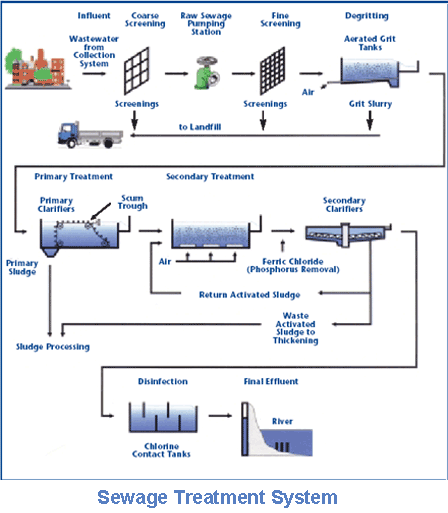
image2A. Typically, sewage treatment involves three stages, called (a) primary, (b) secondary and (c) tertiary treatment:
(a) Primary – Broadly, solids are physically settled out. Primary sewage treatment removes larger floating objects through screening and sedimentation. The incoming wastewater flows through one or more screens and then enters a grit chamber where it slows down enough to allow sand, gravel, and other inorganic matter to settle out. In treatment plants where only primary treatment occurs, the effluent is chlorinated and discharged into circulation in a water source. The sludge, or sedimentation of larger solids, is removed, dried, and disposed of. Primary treatment removes 50 to 65 percent of suspended solids and decreases biological oxygen demand (BOD) by 25 to 40 percent. Primary treatment alone is not considered adequate for protection of the environment or people’s health.
(b) Secondary - Bacteria convert organic matter to a carbon-rich sludge. Secondary treatment relates to processes similar to natural biological decomposition. Aerobic bacteria and other microorganisms are used to break down organic materials into inorganic carbon dioxide, water, and minerals. Trickling filters, which are made from a bed of rocks with a microbial covering, are used to absorb the organic material present in the water. Activated sludge processes can be used in place of trickling filters. The level of suspended solids and BOD in wastewater after primary and secondary treatment has been decreased by 90 to 95 percent. This level of treatment is not effective in removing viruses, heavy metals, dissolved minerals, or certain chemicals.
(c) Tertiary (advanced treatment)- Further treatment may be used to remove more organic matter and/or disinfect the water. Tertiary treatment is an advanced level of treatment. This form of treatment can decrease the level of suspended solids and BOD to approximately 1 percent of what was present in the raw sewage prior to primary treatment. Advanced treatment processes consist of several biological, chemical or physical mechanisms. Sewage treatment aims to destroy pathogenic organisms. Since primary and secondary treatments do not destroy a significant number of organisms, chlorination, which is effective in killing bacteria, is used to disinfect treated effluent. Before the final effluent is released into the receiving waters, it may be disinfected to reduce the disease-causing microorganisms that remain in it. The most common processes use chlorine gas or a chlorine-based disinfectant such as sodium hypochlorite. To avoid excess chlorine escaping to the environment, the effluent may be dechlorinated prior to discharge.
Most advanced wastewater treatment systems include de-nitrification and ammonia stripping, carbon adsorption of trace organics, and chemical precipitation. Evaporation, distillation, electro-dialysis, ultra-filtration, reverse osmosis, freeze drying, freeze-thaw, floatation, and land application, with particular emphasis on the increased use of natural and constructed wetlands, are being studied and utilized as methods for advanced wastewater treatment to improve the quality of the treated discharge to reduce unwanted effects on the receiving environment. Other disinfection options include ultraviolet light and ozone.
The effluent is generally discharged to fresh, ground or coastal water. Sludge is applied to agricultural land, incinerated, used for land reclamation or used for other purposes, such as composting or landfill etc.
B. In order to increase energy efficiency of water treatment and reuse of treated water few points have been mentioned below. By implementing these measures energy savings and efficiency of about 40% may be achieved. These are:
(a) Choosing low-energy treatment options, if possible. However, local constraints may limit choice.
(b) Replacing machine parts, such as pumps and motors, with more efficient versions.
(c) Optimizing processes using sensor technology. For example, pumping can be adjusted according to flow.
(d) Reusing water. “Greywater” from bathing, laundry and washing dishes can be reused to flush WCs. This may provide savings of around a third of daily household water demand.
sewage-treatment-process_1biosolids-treatment-process_2C. Biosolids - Biosolids are treated sewage sludges. Sewage sludge is the solids that are collected from the wastewater treatment process but which have not undergone further treatment.  Sludge normally contains up to around 3 % solids.   Biosolids are a product of the sewage sludge once it has undergone further treatment to reduce disease causing pathogens and volatile organic matter significantly, producing a stabilised product suitable for beneficial use. Biosolids, normally contain between 15 % to 90 % solids.  Biosolids are carefully treated and monitored and they must be used in accordance with regulatory requirements.
Biosolids can be applied as a fertiliser to improve and maintain productive soils and stimulate plant growth.  They are also used to fertilise gardens and parks and reclaim mining sites. In many of the developed countries biosolids have been used for:
  • Co-generation/power production/energy recover
  • Land application in agriculture (vine, cereal, pasture, olive)
  • Road base
  • Land application in forestry operations
  • Land rehabilitation (including landfill capping)
  • Landscaping and topsoil
  • Composting
  • Incineration
  • Landfill
  • Oil from sludge (experimental).
D. Energy generation – There are mature, widely-practiced technologies for generating fuels from sewage treatment. Moreover, research has identified future methods for exploiting sewage as an energy resource as well.
1. Current Technologies for Energy Production
(a) Sludge Incineration - Most of the sewage sludge produced at sewage treatment plant is applied to agricultural land as a soil conditioner, reducing the need for fertilizer. Sludge may also be incinerated, with the option of energy recovery. However, to incinerate sludge, it must be dry enough to burn with no extra energy input other than that needed to fire up the incinerator. It therefore needs dewatering, using energy intensive processes such as centrifugation or thermal dehydration. Centrifugation requires less energy but surplus heat from incineration that can be used for thermal dehydration. There has been strong opposition from some sections of the public over incineration of wastes due to fears about impacts on human health. At present, reuse of sludge via application to land is generally considered a more acceptable option.
(b) Biogas – Biogas production from sewage sludge treatment, via a process called anaerobic digestion, is already a well established means of generating energy in many developed countries. Bacteria used to organic matter in sludge to produce a mixture of methane (CH4 of 60 – 65%), carbon dioxide (CO2 of 35 – 40%) and trace gases. Impurities, such as hydrogen sulfide and water, are removed and the resulting biogas is then commonly used in boilers or combined heat and power systems. Biogas may also be used for other applications, such as vehicle fuel, if CO2 is also removed. Anaerobic digestion also reduces the solids content of sludge by up to 30%, reducing the energy costs involved in its transport.
Please also refer : Energy from sewage
2. Future Technologies for Energy Production – There are several novel technologies that produce energy or fuel as a by-product of sewage treatment, although further work is needed to improve performance, reliability and cost-effectiveness.
(a) Conversion of sludge to oil and gas - Under carefully controlled conditions and extreme temperatures (450 – 1000 degree Celsius), sludge may undergo chemical reactions to produce fuels that may be used for energy production. Processes include gasification, which produces syngas (similar to natural gas), and pyrolysis, which produces bio-oil (similar to diesel oil). There is interest in these as potential alternatives to incineration of sludge. However, operational costs are high, particularly those of maintaining high temperatures, and conditions must be carefully controlled to prevent formation of harmful by-products, such as hydrogen cyanide.
(b) Biomass Crops - In some of the European countries, sewage sludge is applied as fertilizer to willow plantations. The trees are periodically coppiced and the wood used for fuel. Research into applying partially-treated, liquid sewage to biomass crops is also underway. Passage of the sewage through the soil acts as a final polishing step for treatment, degrading organic matter, reducing nitrogen and phosphorus and producing a cleaner effluent. Little energy is required and capital and operational costs are low. However, it is not yet known how efficient this system will be at removing pollution and there must be appropriate land available.
(c) Hydrogen from Sewage - There is much interest in hydrogen as a fuel, because it can be produced from a wide range of materials and provides power with minimal air pollution. Bacteria use organic matter to produce hydrogen by fermentation. However, applications for hydrogen, such as fuel cells, are not yet in widespread use.
(d) Microbial Fuel Cells - These devices offer the possibility of simultaneous sewage treatment and energy production, with water, CO2 and inorganic residue as by-products. Bacteria use organic matter to produce electricity. To date, only lab-scale microbial fuel cells have been developed in some of the developed countries that are able to power small devices.
E. Discussion on energy conservation and renewable energy in relation to sewage treatment system
(a) Energy conservation is possible through the twin practices of efficient water use by consumers and efficient energy use by the water industry.
(b) There are well-established renewable energy options, such as biogas, and novel technologies, such as gasification, for sewage treatment. Many need further investment and research.
(c) Economic and water quality considerations are key drivers for the water industry. Integration of energy related objectives into the existing regulatory framework will be necessary.
F. Methane from Biogas – A renewable source of green energy to be encouraged to generate –
Anaerobic digestion of wastes provides biogas. Biogas contains about 60% methane that can be used to generate electricity or used for heat or for fuel for vehicles. Any animal manure, human sewage or food waste will produce methane during anaerobic digestion. Natural gas is methane. Biogas can be “cleaned” to yield purified methane that can be used in the natural gas pipelines.
Methane from biogas is an excellent alternative energy source. Using methane for energy helps the environment by replacing the use of non-renewable fossil fuels with renewable energy. Methane is a greenhouse gas that has 21 times the heating effect as of carbon dioxide. Biogas methane is renewable unlike natural gas which is mined from underground wells and is a non-renewable fossil fuel. Methane biogas is about to become much more important as an energy source than it has been in the past, due to the ever rising cost of natural gas.
i) Some facts about methane biogas
(a) Millions of cubic metres of methane in the form of swamp gas or biogas are produced every year by the decomposition of organic matter, both animal and vegetable.
(b) It is almost identical to the natural gas pumped out of the ground by the oil companies and used by many of us for heating our houses and cooking our meals.
(c) Many countries have for years been steadily building anaerobic digestion facilities for generating electricity from methane produced from manure, sewage and garbage.
(d) Villagers in many undeveloped countries use very simple technology to convert animal and human wastes to biogas for cooking and heating.
(e) Recently hundreds of farms in India, Mexico and South America have installed anaerobic digesters to collect and use methane from manure to provide energy for farm use. Many of these digesters have been paid for by a company that aggregates and sells carbon credits to factories and utility companies in countries that signed agreements under the Kyoto protocol to reduce greenhouse emissions. Carbon credits are earned by reducing greenhouse gas emissions such as carbon dioxide and methane. These credits have considerable value.
(f) In the U.S., which rejected the Kyoto protocol, most of the methane from wastes is allowed to escape into the atmosphere where it contributes to global warming. However there are about a hundred or so dairy farms, a few pig farms, some landfills and a few municipal sewage treatment plants in the U.S. that are collecting methane from waste and using it for fuel.
ii) Unbelievable as it may seem, at this time of approaching energy crisis, most farmers can’t get utility companies to purchase their green, renewable electricity. Possible reasons for this reluctance on the part of electrical utilities range from lack of familiarity with connecting farm generators to pressure from coal and oil companies to maintain monopoly of the utility market. Without the ability to sell the excess power generated from methane farmers or others with sources of methane can’t afford to install the equipment for collecting methane and generating power as this usually means an investment of a million or more dollars.

iii) This kind of situation needs change. Countries where the production of methane from biogas is not practiced, realizing the seriousness of global warming and problems associated with fossil fuel usage, “green energy” generated from sources such as wind, biomass and, in a few cases, bio-methane are to be encouraged by law.  Moreover, consumer pressure will likely be needed to motivate more electric utilities to purchase electricity generated from renewable methane thus ensuring energy security.
iv) Biogas from manure or other wastes can be purified to yield pipeline grade methane. With the increase in price of natural gas it has become economically feasible in some cases to remove impurities from the methane and sell it to companies supplying natural gas (methane is chemically the same as natural gas). Due to the energy that must be used to clean, compress and transport the gas this is usually not as efficient a route for using methane as feeding it directly into a generator but, unless electric utility companies become willing to pay a fair price for electricity generated from farm methane, selling gas for pipeline use may become a more common practice.
[ For more refer ‘ Water Conservation – Need-of-the-day for our very survival ‘ ]
References:
  1. http://environmentengineering.blogspot.com/2008/06/methane-from-biogas-renewable-source-of.html
  2. http://environmentengineering.blogspot.com/2008/06/energy-from-sewage-renewable-energy-to.html

Sunday, 14 December 2014

National Energy Conservation Day 2014 December 14, 2014


Dear Sir,
National Energy Conservation Day 2014
December 14, 2014

National Energy Conservation Day in India
National energy conservation day is celebrated every year by the people all over the India on 14th of December. The Energy Conservation Act in India was executed by the Bureau of Energy Efficiency (BEE) in the year 2001. The Bureau of Energy Efficiency is a constitutional body which comes under Government of India and helps in the development of policies and strategies in order to reduce the energy use. Energy Conservation Act in India act aims to employ the professional, qualified and energetic managers as well as auditors who are with expertise in managing the energy, projects, policy analysis, finance or implementing the energy efficiency projects

Modi pledges commitment towards energy conservation

NEW DELHI: Prime Minister Narendra Modi ON Sunday pledged "wholehearted commitment" towards energy conservation on National Energy Conservation Day.

"On National Energy Conservation Day we pledge our wholehearted commitment towards energy conservation in our daily lives," he said in a tweet.
Significant Roles of Indian Citizens in Energy Security
Each and every citizens of the India must aware about how to use efficient energy, how to save the energy for their own future safety and many more ways. They should follow all the rules, regulations and policies implemented by the Government of India in order to support the energy efficiency. Citizens of India can pay their direct contribution to the campaign of reduce energy use throughout the 11th Five Year Plan period. Children are the big expectation and hope for the country to bring positive changes as well as to enhance the economic condition of the country.
What is the Energy Conservation?
National energy conservation day in India is celebrated to aware people about the importance of energy as well as saving or conserving the more energy by using less energy. The exact means of energy conservation is using less energy by avoiding the unnecessary uses of energy. Using energy efficiently is very necessary to save it for the future usage. Energy conservation should be rooted in the behavior of every human being to get more effect towards the plan of energy conservation.
One can save the energy by deeply taking care of it such as turning off the unnecessarily running fans, lights, submersible, heater, combining car trips or other electric things of daily usage. These are the more easier and efficient way to save extra uses of energy thus playing the great role towards the campaign of national energy conservation.
Fossil fuels, Crude oil, Coal, natural gas and etc generate sufficient energy for the use in daily life but increasing the demands of it day by day creates the fear of reducing or diminishing the natural resources. Energy conservation is the only way which helps in replacing the non-renewable resources of energy with the renewable energy.
In order to aware the energy users for less energy consumption as well as to make efficient energy conservation, energy or carbon taxes has been employed by the government in different countries. Tax on high energy consumption reduces the energy use by the users as well as promotes limited energy use among users.
People must aware that bright lighting at their work places leads to the variety of problems like stress, headache, blood pressure, fatigue and reduces work efficiency of workers. Whereas, natural day lighting enhances the productivity level of workers and reduces the energy consumption.
Petroleum Conservation Research Association was established by the Indian government in India in the year 1977 to promote energy efficiency and conservation among Indian people in their every walk of life. This is a big step taken by the government of India for energy conservation to a great level. Another government organization in India, Bureau of Energy Efficiency, has also been set up in 2001 for better energy efficiency and conservation.
What are the Energy Conservation Measures
  • Windows are the big energy conservation contributing factors other than thermal curtains, Smart windows or films.
  • A big amount of energy can be saved by the natural lightings and compact fluorescent lamp or CFL (15W and consumes only 1/4th of the energy consumed by other means), Fluorescent bulbs, Linear fluorescent retrofit, Solar charged flashlight, Sky lights, Smart windows, LED lighting and Solar lights.
  • Water conservation also leads to the better energy conservation. There is wastage of around thousands of gallons water per year by the people which can be prevented through various means of water saving solutions like 1.6 GPM or less low flow showerheads, Ultra low flush toilet, Faucet aerator, Composting toilets and etc.
  • Insulation also plays big role in energy conservation by decreasing the thermal losses in winter seasons as well as thermal gains in summer seasons. For example; natural wool insulation, house insulation, cotton insulation, VOCs in fiberglass insulation, thermal insulation, cellulose insulation and etc.
How National Energy Conservation Day is Celebrated
To make the campaign of national energy conservation more effective and special all over the India, variety of energy conservation competitions are organized by the government or other organizations around the living areas of normal people as they are the main target of the campaign. At many places the various painting competitions on energy conservation day is held by the student or member of the organizations at school, state, regional or national level.
The campaign of the national energy conservation is the national awareness campaign launched by the Ministry of Power to facilitate the process of energy conservation in India. Painting competitions organized for the students at many levels is one of the main activities of this campaign which helps in increasing the awareness of children about the importance of conserving energy as well as educating and involving their parents in the campaign. This competition helps the people of domestic sectors to be aware.
Every participant is provided a theme Topic such as the “More stars, more savings”, “Today’s energy wastage is tomorrow’s energy shortage”, “Energy saved is future save” and many more. Participants can make their painting more effective by using the Pencil Color, Crayons, Water Color and etc.
Students, who take part in the competition and win, get participation certificate, merit certificate or cash prizes which worth Rs 33,000 per State. This amount is distributed among all the winners of a state and awarded by the Ministry of Power at 14th of December at the celebration event of National Energy Conservation day.
Objectives of National Energy Conservation Day
National energy conservation day is celebrated every year using particular theme of the year by keeping in mind some goals and objectives to make more effective all over the country among people. Some of the important goals are:
  • It is celebrated to send the message of importance of conserving energy in the every walk of life among people.
  • Promoting the way of process of energy conservation by organizing a lot of events such as discussions, conferences, debates, workshops, competitions and etc all through the country.
  • Promote people for less energy usage by neglecting the excessive and wasteful uses.
  • Encourage people for efficient energy use in order to decrease the energy consumption and prevent the energy loss.