It’s easy to get distracted by shiny new tools and gadgets. But sometimes, it’s important to focus on fundamentals.
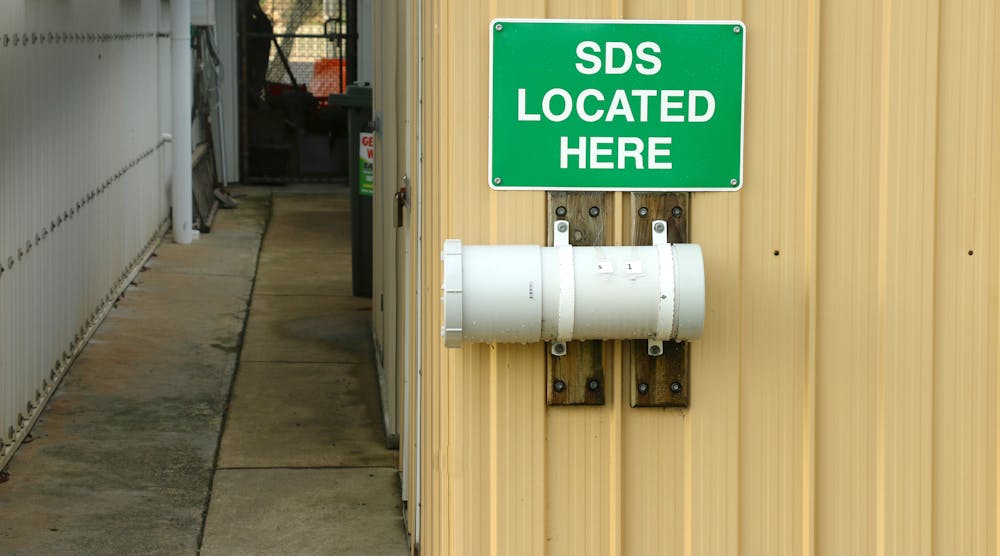
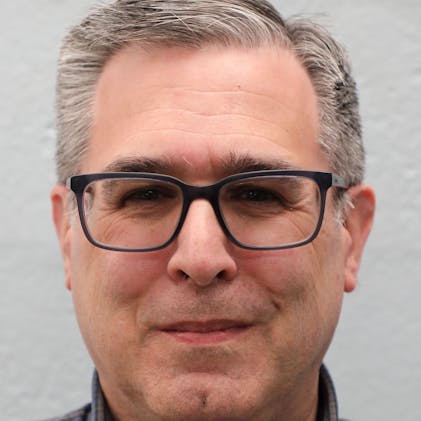
There’s no better place to start than on Safety Data Sheets (SDSs), says David Sousa, occupational safety and health manager at Pharmaron Manufacturing Services (US) LLC.
They may not be flashy, but SDSs are critical to ensuring several health and safety programs are up to date and workers know what to do in the event of an emergency. Plus, an accurate chemical inventory will help companies maintaining reporting and compliance with Emergency Planning and Community Right-to-Know Act (EPCRA), the U.S. Department of Transportation (DOT) and Occupational Safety and Health Administration (OSHA).
EHS Today caught up with Sousa, who will be speaking about SDSs and chemical hazards at the Safety Leadership Conference, which will be held Sept. 18-20 in Orlando, Florida.
EHS Today: Your session is about how SDSs are the driver of many EHS programs. Can you elaborate?
They let the user know: the different ingredients and amounts that makeup mixtures; the hazards they present and precautions to take; first aid instructions; how to clean up the material if it spills; storage requirements; what PPE to wear when handling; valuable physical and chemical property information, such as pH, LFL/UFL and viscosity incompatibilities; and DOT, EPCRA and National Fire Protection Association (NFPA) information.
I equate the SDS with a Swiss Army Knife. Each section helps the safety professional answer a question, just as the knife contains different tools to help a soldier or outdoorsman solve a problem.
SDSs have served an important historical role in keeping workers safe from hazardous chemicals. How can SDSs be adapted in today's modern workplace, especially as the safety industry goes digital and remote?
I believe all chemical inventories should be digitized, and workers should be able to access that information online. However, this is only sometimes possible for two reasons.
First, you have facilities that fall under the Process Safety Management standard, so standard cell phones are not allowed in covered process areas. Those employers would need to provide Intrinsically Safe (IS) cell phones, tablets or computer terminals to access the SDSs, which is expensive.
Next, you may have team members who would prefer to use computers, tablets or cell phones to access information. It is not a one-size fits all solution. Management would need to talk to their departments and see how they would respond to digitizing their chemical inventory.
Whichever method one picks, the goal should be to provide easy and understandable access to chemical hazard information.
For the past few years, COVID dominated all safety efforts. If professionals have paid less attention to SDSs lately, what's one thing they should now revisit or update?
Safety professionals should work with each department to conduct a current inventory of all existing chemicals. See what is on-site and if it is still needed. If so, ensure that it is properly stored and secured. If not, pull it out and dispose of it properly.
Also, create a new chemical approval process if one does not exist. One part of the HCS that I see companies violate is buying new chemicals and having no vetting process. They buy it and bring it on-site, forgetting that now that the chemical falls under the HCS. Users need to be trained on its hazards and address other safety and health concerns.
What messaging do you use to communicate the importance of SDSs when talking with frontline workers, executives and other safety professionals?
If an SDS exists for that chemical, we should have it—even if it isn’t legally required. You never know how someone will react when exposed to certain chemicals, so it’s better to have it and not need it than need it and not have it.
Also, the EHS department should have the final say if any chemical is brought on-site. For example, there is no need to buy over-the-counter cleaning products that contain harsh chemicals and fragrances when there are several other cleaners that cost the same and work just as well but don’t contain the same ingredients.
What is something that safety professionals need to know but is often overlooked regarding EPCRA reporting?
Extremely Hazardous Substances (EHS) have different reporting requirements on the EPA List of Lists than SARA 312 requirements. Extremely Hazardous Substances (EHS) fall under SARA 302 and are all different values. (Chemicals that fall under SARA 312 have the default reporting amount of 10,000 pounds at any time during the year.)
Also, have accurate conversion factor tables for liquids and gases. Remember, Tier II forms ask for weights in pounds and not gallons (liquids) of cubic feet (compressed gases).
Do you have one SDS best practice you can share with the EHS Today audience in advance of your presentation at the Safety Leadership Conference?
I have two! First, see why your company’s chemical approval process is and ensure that you are part of it. If they don’t have one, start collaborating with management to show why one is needed and work with them to create it.
My philosophy is that if you get everyone involved in creating the process that affects them, they have no excuse not to use it. Next, find out supplier points of contact who can provide you with annual usage information. In my experience, knowing who these people are and explaining to them what you need early on makes life much easier when calculating quantities for your Tier II reports.
Your presentation will discuss a workplace fatality as a result of improperly mixing chemicals. What are some other, possibly more common, concerns and results of inadequate hazard communications?
Again, know what’s on-site. Ask those in that department when it was used last and if they still need it. Is there an accurate SDS on-site for it, and have those who use it been trained on its hazards? Finally, don’t hesitate to say no to bringing certain chemicals on-site. If they pose too many risks, explain that to the requesting department and work with them to find an alternative.
Sometimes, our job is to say no; however, don’t stop there. Show that department you are willing to help them find what they need to do their job with less risk to human health, safety and the environment.
What's one thing you hope attendees learn from your session at the Safety Leadership Conference?
They will look at SDS not as just some pile of papers but as helpful tools to strengthen their chemical hazard program. And by reading them, they may be able to offer a less hazardous substation or prevent incompatible chemicals from being stored next to each other.
If I can get just one person to say to themselves, “I am going to update my inventory, digitize my inventory or create an approval process,” then all the effort I put into creating and presenting my information was well worth it.
Yes, you can lose weight by just walking provided you alter your diet and you finish the requisite number of steps or burn the required amount of calories.
30 minutes a day of brisk walking or power walking 5 days a week can help you reduce up to 10 kgs.
Although walking is essential and one of the best exercises, do not forget to engage your arms and exercise them too when you are walking.
There have been many studies conducted that have shown that morning walks energize you for the day, but evening walks ensure your cortisol levels lower causing you to relax and be stress-free.
When you are making a 28 day walking plan for weight loss here is a guiding format you can follow. You can change the format according to your requirements and limitations.
1st week –
2nd week –
3rd week –
4th week -
The Prime Minister, Shri Narendra Modi visited the ISRO Telemetry Tracking and Command Network (ISTRAC) in Bengaluru after his arrival from Greece and addressed Team ISRO on the success of Chandrayaan-3. The Prime Minister met and interacted with ISRO scientists involved in the Chandrayaan-3 mission where he was also briefed about the findings and progress in the Chandrayaan-3 Mission.
Addressing the scientists, the Prime Minister expressed great delight in being present at the ISRO Telemetry Tracking and Command Network (ISTRAC) in Bengaluru and said that such an occasion is extremely rare when the body and mind get filled with such happiness. Referring to the few special moments in everyone’s lives when impatience starts to dominate, the Prime Minister noted that he experienced the exact same emotions during his tour to South Africa and Greece and said that his mind was focussed on the Chandrayaan 3 Mission at all times. Observing the inconvenience caused to the scientists at ISRO due to his impromptu plans to visit the ISTRAC, a visibly emotional Prime Minister said that he was eager to visit and salute the scientists for their diligence, dedication, courage, devotion and passion.
The Prime Minister said that this is not a simple success. He said this achievement heralds India’s scientific power in infinite space. An elated Prime Minister exclaimed, “India is on the Moon, We have our national pride placed on the Moon”. Highlighting this unprecedented achievement, the Prime Minister said “This is today’s India that is fearless and relentless. This is an India that thinks new and in a novel way, the one that goes to the dark zone and spreads light in the world. This India will provide solutions to the big problems of the world in the 21st century.”
The Prime Minister said that the moment of the touchdown has become immortal in the consciousness of the nation. “The moment of touchdown is one of the most inspiring moments of this century. Every Indian took it as his or her own victory ”, he said. The Prime Minister credited the scientists for this grand success.
The Prime Minister, describing the photographs of the strong footings of the Moon lander said, “Our ‘Moon Lander’ has firmly set its foot on the Moon like 'Angad… On the one side is the valor of Vikram then there is bravery of Pragyan on the other”. He said these are pictures of the never seen parts of the moon and this has been done by India. “Entire world recognizes India’s scientific spirit, technology and temperament,” said Shri Modi.
“The success of Chandrayaan 3 is not just India’s alone but it belongs to all of humanity”, the Prime Minister remarked and underlined that the explorations of the mission will open new doors of possibilities for moon missions of every country. He stated that the mission would not only unravel the secrets of the moon but also contribute to overcoming the challenges on Earth. The Prime Minister once again congratulated every scientist, technician, engineer and all members associated with Chandrayaan 3 Mission.
The Prime Minister announced, “The point where the moon lander of Chandrayaan-3 landed will now be known as 'Shiv Shakti'”. “In Shiv, there is resolution for the welfare of humanity and Shakti gives us strength to fulfil those resolutions. This Shiv Shakti Point of the moon also gives a sense of connection with Himalaya to Kanyakumari”, he added.
Emphasizing the welfare core of the pursuit of science, the Prime Minister said that these pious resolutions need the blessings of Shakti and that Shakti is our Nari Shakti. In the success of Chandrayaan-3 lunar mission, our women scientists, the country's Nari Shakti have played a big role, he emphasized. Shri Modi remarked. “Shiv Shakti Point of the Moon will bear witness to this scientific and philosophical thinking of India”, he added.
The Prime Minister stated that the point where Chandrayaan 2 left its footprints will now be called ‘Tiranga’. This point, the Prime Minister said, will serve as an inspiration for every effort that India makes and remind us that failure is not the end. “Success is a guarantee where there is strong will power”, he said.
Emphasizing that India has become only the 4th nation to have a successful touchdown on the surface of the Moon, the Prime Minister said that the feat becomes more immense when we consider the humble beginnings of India’s space program. He recalled the times when India was considered a third-world country and did not have the required technology and support. Today, the Prime Minister said, India has become the 5th largest economy in the world and it is now among the first-world countries be it trees or technology. “In the journey from 'third row' to 'first row', institutions like our 'ISRO' have played a huge role”, the Prime Minister exclaimed as he highlighted its contributions and said that they have taken Make In India to the Moon today.
The Prime Minister took the occasion to convey the hard work of ISRO to the countrymen. “From Southern India to the South of the Moon, this was not an easy journey,” the Prime Minister said and informed that ISRO even created an artificial moon in its research facility. The Prime Minister credited the zeal for innovation and science among the youth of India to the successes of such space missions. “Successes of Mangalyaan and Chandrayaan and preparation for Gaganyaan have given a new attitude to the young generation of the country. Your big achievement is awakening a generation of Indians and energizing that”, Shri Modi said. Today, the name of Chandrayaan is resonating among children of India. Every child is seeing his or her future in the scientists, he said.
The Prime Minister declared that 23rd August, the day of the soft landing of Chandrayaan 3 on the Moon will be commemorated as ‘National Space Day’. He said that National Space Day will celebrate the spirit of Science, Technology and Innovation, and inspire us for an eternity.
The Prime Minister noted that the capabilities of the space sector are not limited to launching satellites and space explorations, and its strength can be seen in Ease of Living and Ease of Governance. He recalled the workshop that was organized for the Joint Secretary level officers in the central government with ISRO during the initial years of his Prime Ministership. He mentioned the tremendous progress made to link the space applications with Governance. He mentioned the role of Space technology in Swachh Bharat Abhiyan; education, communication and health services to far flung areas; tele-medicine and tele-education. He also talked about the role of the NAVIC system and support during natural calamities. “Space technology is also the basis of our PM Gatishakti National Master Plan. This is helping a lot in the planning, execution and monitoring of projects. This scope of space application, which is increasing with time, is also increasing opportunities for our youth”, the Prime Minister added.
The Prime Minister requested ISRO to organize national hackathons on ‘Space Technology in Governance’ in collaboration with various departments of center and state governments. “I am confident that this National Hackathon will make our governance more effective and provide modern solutions to the countrymen”, he said.
The Prime Minister also gave a task to the young generation of the country. He said “I want the new generation to come forward to scientifically prove the astronomical formulas in the scriptures of India, to study them anew. It is also important for our heritage and also important for science. In a way, this is a double responsibility for the students of schools, colleges and universities today. The treasure of scientific knowledge that India has, has been buried, hidden during the long period of slavery. In this Azadi ka Amrit Kaal, we have to explore this treasure too, do research on it and also tell the world about it.”
The Prime Minister referred to the estimates of the experts that India's space industry will reach 16 billion dollars from 8 billion dollars in the next few years. While the government is working relentlessly for space sector reforms, the youth of the country is also making efforts as, during the last 4 years, the number of space-related startups has gone up from 4 to about 150. The Prime Minister also urged students across the country to take part in a huge quiz competition on Chandrayaan mission organized by MyGov from 1st September.
Emphasizing the importance of taking the lead in science and technology in this period of the 21st century, the Prime Minister said that India has become the youngest talent factory in the world. “From the depths of the ocean to the heights of the sky, to the depths of space, there's a lot for the young generations to do”, the Prime Minister said as he highlighted opportunities ranging from ‘Deep Earth’ to ‘DeepSea’, and the next generation computer to genetic engineering. “New opportunities are constantly opening up for you in India”, he added.
The Prime Minister underlined that guidance for future generations is a necessity and it is them who will further the important missions of today. He said that scientists are their role models and their research and years of hard work have proved that anything can be accomplished if you set your mind to it. Concluding the address, the Prime Minister said that the people of the country have faith in the scientists, and when the blessings of the people are bestowed, India will become a global leader in science and technology with the dedication shown towards the country. “Our same spirit of innovation will make the dream of a developed India come true in 2047”, Shri Modi said.
Interacting with our @isro scientists in Bengaluru. The success of Chandrayaan-3 mission is an extraordinary moment in the history of India's space programme. https://t.co/PHUY3DQuzb
— Narendra Modi (@narendramodi) August 26, 2023
India is on the moon!
— PMO India (@PMOIndia) August 26, 2023
We have our national pride placed on the moon! pic.twitter.com/yzwlEWqOwo
Unforgettable moments as the Chandrayaan-3 touchdown was confirmed on the Moon, the way our space scientists rejoiced at the @isro centre, the way people celebrated all over the country: PM @narendramodi pic.twitter.com/QFfT5mzIYZ
— PMO India (@PMOIndia) August 26, 2023
Our 'Moon Lander' has firmly set its foot on the Moon like 'Angad'. pic.twitter.com/IykRwSzgdc
— PMO India (@PMOIndia) August 26, 2023
Today, the entire world is witnessing and accepting the strength of India's scientific spirit, our technology and our scientific temperament. pic.twitter.com/glYABIMc1K
— PMO India (@PMOIndia) August 26, 2023
The point where the moon lander of Chandrayaan-3 landed will now be known as 'Shiv Shakti'. pic.twitter.com/C4KAxLDk22
— PMO India (@PMOIndia) August 26, 2023
In the success of Chandrayaan-3 lunar mission, our women scientists, the country's Nari Shakti have played a big role. pic.twitter.com/iTD82erd9s
— PMO India (@PMOIndia) August 26, 2023
The point on the Moon where Chandrayaan 2 left its imprints will now be called 'Tiranga'. pic.twitter.com/lQENujwiyk
— PMO India (@PMOIndia) August 26, 2023
Today, from trade to technology, India is being counted among the countries standing in the first row.
— PMO India (@PMOIndia) August 26, 2023
In the journey from 'third row' to 'first row', institutions like our 'ISRO' have played a huge role. pic.twitter.com/9w7PHxyQhV
Today, the name of Chandrayaan is resonating among children of India. Every child is seeing his or her future in the scientists. pic.twitter.com/R42SIXIMRM
— PMO India (@PMOIndia) August 26, 2023
Now onwards, every year, 23rd August will be celebrated as the National Space Day. pic.twitter.com/R2sR56bvst
— PMO India (@PMOIndia) August 26, 2023
A task for the youngsters... pic.twitter.com/T27UkHzdoB
— PMO India (@PMOIndia) August 26, 2023
In this period of the 21st century, the country which takes the lead in science and technology, will move ahead. pic.twitter.com/IwOcBOPilP
— PMO India (@PMOIndia) August 26, 2023
*****
DS/TS