Thursday, 10 June 2021

House keeping -Good House Keeping Committee – NFCL, Kakinada. Constituted by our site incharge sir Shri GVS Anand Sir.

 May be an image of text that says 'HOUSE KEEPING A base for any improvement 0 Even before you plan the direction you need to take, you must remove any obstacles to get a clear view of the current situation. 0 House Keeping enhances the results of other activities and simplifies every day operations. 0 House Keeping must become a habit. It must be continuous, or at least continual activity.'

 May be an image of text that says 'WHAT IS HOUSE KEEPING 0 Systematic approach to better workplace. 0 Involves arrangement, cleanliness, discipline and maintenance of standards. 0 Assigns a place for every thing everything in its place. 0 Is everybody's responsibility 0 Is the starting point of any improvement activity. Means easy retrieval of information. and ensures'

 May be an image of text that says 'WHY HOUSE KEEPING 0 LESS EQUIPMENT DOWN TIME. 0 MORE USABLE SPACE 0 PASSAGE WAYS ARE NEAT AND CLEAN. 0 ABNORMALITIES NOTICED AT A GLANCE. 0 ELIMINATES ACCIDENTS. 0 PRODUCTIVITY IMPROVEMENT.'

 May be an image of text that says 'WHY HOUSE KEEPING 0 EMPLOYEES FEEL GOOD IF THE WORK PLACE IS CLEAN. 0 SEARCHING IS AVOIDED. 0 TIME WASTED IN HANDLING REDUCED. 0 NO UNNECESSARY SUPPLIES. 0 LESS REJECTION/REWORK. 0 BETTER PREVENTIVE MAINTENANCE.'

 May be an image of text that says '5"S"- House Keeping THE FOUNDATION OF COMPETITIVE SUCCESS. รจ'

 May be an image of text that says 'THE NEED FOR A "5S" STRATEGY RICE E SERVIC VIC QUALITY TY'

 May be an image of text that says 'THE FUNDAMENTAL TRUTH IF WE CANNOT KEEP OUR WORKPLACES CLEAN ORDERLY ACCIDENT FREE NOBODY WILL BELIEVE WE CAN PRODUCE QUALITY GOODS OR ATLEAST SERIOUS ABOUT PRODUCING QUALITY.'May be an image of text that says 'SIMPLE BUT IMPORTANT CONCEPT A NEAT AND CLEAN FACTORY HAS HIGHER PRODUCTIVITY. A NEAT AND CLEAN FACTORY PRODUCES FEWER DEFECTS. A NEAT AND CLEAN FACTORY MEETS DEADLINES BETTER. 0 A NEAT AND CLEAN FACTORY ISA IS MUCH SAFER PLACE TO WORK.'

 May be an image of text that says 'SEIR THE CONCEPT OF "5S" SORTOUT SORTOUT (ORGANIZATION) SEITON SET IN ORDER (ORDERLINESS) SEISO SPICK & SPAN (CLEANLINESS) SEIKETSU STANDARDIZE (CLEAN UP) SHITSUKE SUSTAIN (DISCIPLINE) 3 2'

 May be an image of text that says 'THE FIRST PILLAR SORT Sort Means That You Remove All Items From the Workplace That Are Not Needed for Current Production Operation. OUT'

 May be an image of text that says 'SEIRI SEGREGATION 0 THIS STEP DISTINGUISHES NECESSARY AND UNNECESSARY ITEMS AND ELIMINATES UNNECESSARY ITEMS. 0 SORT WHAT SORT THROUGH AND THEN SORT OUT THROUGH WHAT YOU HAVE. YOU NEED AND DISCARD UNNECESSARY 0 INDICATOR OF SUCCESS. AREA OR PERCENTAGE SPACE SAVED. IDENTIFY WHAT IS'

 May be an image of text that says '1.CLASSIFICATION SORT OUT. 2. ELIMINATION REMOVE UNNECESSARY ITEMS. 3.STORAGE :FREQUENT USE/ RARE USE. CLOSE/ DISTANT LOCATION. 4. FIX & SHARE RESPONSIBILITIES. IDENTIFICATION OF ITEMS & LOCATIONS. 5. USE RED TAG SYSTEM. 6. MONITOR PROGRESS.'

 May be an image of one or more people and text that says 'WHY SORT IS IMPORTANT?? WORK ENVIRONMENT IN WHICH 0 TIME 0 MONEY 0 SPACE 0 ENERGY & EFFECTIVE RESOURCESMANAGMENT PROBLEMS IN WORK FLOW ARE REDUCED, COMMUNICATION IS IMPROVED, PRODUCT QUALITY IS INCREASED & PRODUCTIVITY IS ENHANCED.'

 May be an image of one or more people and text that says 'W ASTE MUDA ELIMINATION ELIMINATION I EADS TO COST OPTIMIZATION & MANAGEMENT EXCELLENCE'

 May be an image of text that says 'THE WASTES IN THE SHOP FLOOR 0 INVENTORY RELATED COSTS TRANSPORTATION QUANTITY HARDER TO SORTOUT DESIGN OBSOLESCENCE QUALITY DEFECTS FROM WIP MACHINE BREAKDOWNS'

 May be an image of text that says 'SEIRI FACTORY OFFICE SCRAPPED MACHINES/ EQUIPMENTS REJECTED MATERIALS HOUSE USED/BROKEN PENS DROKEN TOYS EXPIRED GOODS USELESS PAPERS/FILES OLD DIARIES OLD CLOTHES SCRAPPED/BORKEN TOOLS, PALLETS, BINS, TROLLEYS, EXCESS PARTS BROKEN DR SUITCASE BROKEN FURNITURE OLD SHOES OLD NOTICES/ LEAFLETS OLD LETTERS/MAGAZINES UNUSED UTENSILS'

 May be an image of text that says 'SEIRI FREQUENCY NOT USED FOR A YEAR OR MORE ACTION CONSULT & DECIDE DISPOSAL. SEND TO SOME OTHER PLACE/SELL/SCRAP STORE AT A DISTANCE IN RECORDS ROOM USED ONLY ONCE IN LAST 6-12 MONTHS USED ONLY ONCE IN LAST 2-6 MONTHS USED MORE THAN ONCE A MONTH USED WEEKLY/ DAILY HOURLY STORE AT A CENTRAL PLACE IN THE WORK AREA STORE NEAR WORK PLACE STORE NEAR WORK PLACE'

 May be a cartoon of text that says 'CAUTION THE SECOND PILLAR: SET IN ORDER 0 Set in Order Can Be Defined As Arranging Needed Items So That They Are Easy to Use and Labelling Them So That They Are Easy to Find and Put away.'

 May be an image of text that says 'SEITON --ARRANGEMENT THIS STEP ENABLES DETERMINATION OF THE TYPE OF STORAGE SYSTEM AND LAYOUT THAT WILL GUARANTEE THAT REQUIRED AMOUNTS OF NECESSARY ITEMS WILL ACCESSIBLE. 0 SET THINGS IN ORDER BY CREATING PLACE FOR EVERYTHING. 0 PUT EVERYTHING IN IT'S PLACE BE EASILY'

 May be an image of text that says 'SEITON --ARRANGEMENT 0 KEEPING ACCESSIBILITY POSSIBLE. AS EASY AS 0 USE OF WIDE RANGE THE PRINCIPLE AND SHALLOW DEPTH FOR STORAGE. 0 TIME SAVED IN SEARCHING. 0 TIME SAVED IN HANDLING MATERIAL.'

 May be an image of one or more people and text that says 'PROBLEMS AVOIDED BY IMPLEMENTING SET IN ORDER WASTE OF MOTION SEARCHING HUMAN ENERGY EXCESS INVENTORY DEFECTIVE PRODUCTS UNSAFE CONDITIONS'

 May be an image of one or more people and text that says 'HOW TO IMPLEMENT SET IN ORDER IDING ATIONS LOCATE ITEMS IN THE WORKPLACE ACCORDING TO THEIR FREQUENCY OF USE PLACE FREQUENTLY USED ITEMS NEAR THE WORKPLACE STORE INFREQUENTLY USED ITEMS AWAY FROM THE PLACE OF USE. ALETGO ARRANGEMENT FOR TOOLS so THAT THEY GO BACK TO ORIGINAL PLACE OF STORAGE'

 May be an image of text that says 'HOW TO PROMOTE GOOD ORDER designated 0 Seldom used, enclose in a separate place. 0 THINGS NOT NEEDED: 0 No potential use, immediate disposal after careful analysis. 0 Potentially useful, move to a separate place. 0 Require special arrangement disposal. designated'

 May be an image of text that says 'THE THIRD PILLAR :SHINE 0 Shine Means Sweeping Floors, Whipping off Machinery, and Generally Making Sure That Everything in the Factory Stays Clean.'

 May be an image of text that says 'SEISO CLEANING 0 This step eliminates Dirt, Dust and other foreign matter to make the workplace clean. 0 Clean Equipment,Furniture,Notice Records Etc. Boards 0 Keep the workplace Spotless. Sweeping,wi Sweeping.wiping.polishing.painting Etc.'

 May be an image of text that says 'THE FOURTH PILLAR :STANDARDIZE 0 Standardize Is The Result That Exists When the First Three Pillars- Sort, Set in Order and Shine Are Properly Maintained.'

 May be an image of text that says 'STANDARDIZATION Where Things Are Kept Machinery Communication C GOAL Set in Order Inventory Critical Processes OPERATION'

 May be an image of text that says 'STANDARDIZATION PROVIDE OBJECTIVES AND INDICATE TRAINING GOALS. PROVIDE A BASIS FOR TRAINING CREATE BASIS FOR AUDIT AND DIAGNOSIS. PROVIDE A MEANS FOR PREVENTING RECURRENCE OF ERRORS AND MINIMIZING VARIABILITY.'

May be an image of text that says 'SEIKETSU- STANDARDISATION TO TO ESTABLISH STANDARDS MAINTAIN THE IMPROVEMENTS CREATING RULES FOR CHECKING & COUNTERMEASURES. VISUAL CONTROLS FOR STANDARDS AND ฮคฮŸ REVEAL ABNORMALITIES TO PREPARE CHECKLISTS ADHERE TO AVOID MISTAKES AND'   


C I R C U L A R

Sub: Good House Keeping Committee – NFCL, Kakinada.

In order to further uplift the Housekeeping and attain and maintain “Exemplary House Keeping Standards” in our complex, a Good House Keeping Committee is constituted. The duration of the committee will be 3 years. The committee will come into effect immediately. The following are the members of the committee.

                M/s         Sunny V John                                          Chairman
                                K Madhava Pradeep                        Vice chairman
                                G Srinivasa Rao                                    Member
                                  S Srinivasa Rao                                  Member
                                K Ramakrishnam Raju                          Member
                                V Naveen Verma                                 Member                                
                                S S Srivatsavaya Varma                 Member

The good house keeping Committee will make inspections once in four months (February, July & October) and submit their findings to the HOD or SH of concerned zone for necessary action. The Chairman / Vice chairman of the Good House Keeping Committee also will appraise his findings in the Central Safety Committee Meetings.

The Good House Keeping Committee finally will select two areas for Best House Keeping Award (Winners & Runners) for each financial year and the Trophy will be presented to the winners and runners on the National Safety Day of the year.

For this, the whole complex is geographically divided into Eleven (11) zones and to ensure ownership and accountability SH / Area in charge/s is made responsible for House Keeping in that zone. The SH / Area in charge and zone of his responsibility for Good House Keeping is given below:
Zone
Plant / Section
Team Responsible
1
Ammonia Plant -1 including Central Maint. Office, SS-1 & 2, Inst. Field Room etc.
SHs - Prodn., Mech.Maint., Elect. Maint., Inst. Maint.
2
Urea Plant  -1 including pipe rack connected to Offsites
SHs – Prodn., Mech.Maint., Elect. Maint., Inst. Maint.
3
Ammonia Plant – 2 including SS-22, SS-24,  Naphtha Tank Farm, CT-2 etc.
SHs – Prodn., Mech.Maint., Elect. Maint., Inst. Maint.
4
Urea Plant – 2 including pipe rack connected to Offsites, SS-23, Inst. Field Room
SHs – Prodn., Mech.Maint., Elect. Maint., Inst. Maint
5
PTP, DM W Plant, ETP, CT-1, IGP, Ammonia Storage, Aux. Boilers, GT-A, B & C, Flare Stack of Plant-2, Ammonia Unloading Stn., SS-4, SS-5, Inst. Field Room, Mech. Maint. Field Room, Contractor Shed etc.
SHs – Prodn., Mech.Maint., Elect. Maint., Inst. Maint
6
Bagging Plant, including Rly. Track, Silo, Transfer Towers, BC-1, BC-1A,
SS-6, Contractor shed
SHs – Bagging, Mech. Maint.
Elect. Maint., Inst. Maint
7
Mechanical W/S, Electrical W/S, Inst. W/S, Snam Bldg., Elect. Contractor Shed, MRSS etc.
SHs – Mech. Servs., Elect. W/S, Inst. W/S.
8
Main Stores including Steel Yard, Scrap Yard, Chemical Godown, GAIL area, Weigh Bridge etc.
SH – Stores
9
Fire & Safety & OHC
SH – F&S and Medical Officer
10
Laboratory & Air Monitoring Stations
SH – Lab & Env.
11
H-Block, Tech. Bldg., Canteen, Holding Pond, Security Gate, New Raw water storage tank, KVRKS Vanamu, Roads, Storm water drains etc.
SHs – Admin., House keeping & KVRKS Vanamu


Your cooperation is solicited to maintain “Exemplary House Keeping Standards” in our complex, which will also enhance safety performance.


G V S Anand
Sr. General Manager (Operation )


Saturday, 5 June 2021

WORLD ENVIRONMENT DAY-NFCL OBSERVED 2021 UNDER GUIDANCE OF SITE INCHARGE SHRI GVS ANAND SIR AND HOD TECH SERVICES SHRI P.C. MOHAN SIR


WORLD ENVIRONMENT DAY

In 1972, the UN General Assembly designated 5 June as World Environment Day (WED). The first celebration, under the slogan “Only One Earth” took place in 1974. In the following years, WED has developed as a platform to raise awareness on the problems facing our environment such as air pollution, plastic pollution, illegal wildlife trade, sustainable consumption, sea-level increase, and food security, among others. Furthermore, WED helps drive change in consumption patterns and in national and international environmental policy.

Since 1974, 5th June is being celebrated as World Environment Day is the most renowned day for environmental action. This year year Theme is,
“ECOSYSTEM RESTORATION”.
What is Ecosystem Restoration?

Ecosystem restoration means assisting in the recovery of ecosystems that have been degraded or destroyed, as well as conserving the ecosystems that are still intact. Healthier ecosystems, with richer biodiversity, yield greater benefits such as more fertile soils, bigger yields of timber and fish, and larger stores of greenhouse gases.

Restoration can happen in many ways – for example through actively planting or by removing pressures so that nature can recover on its own. It is not always possible – or desirable – to return an ecosystem to its original state. We still need farmland and infrastructure on land that was once forest, for instance, and ecosystems, like societies, need to adapt to a changing climate.

Between now and 2030, the restoration of 350 million hectares of degraded terrestrial and aquatic ecosystems could generate US$9 trillion in ecosystem services. Restoration could also remove 13 to 26 gigatons of greenhouse gases from the atmosphere. The economic benefits of such interventions exceed nine times the cost of investment, whereas inaction is at least three times more costly than ecosystem restoration.

All kinds of ecosystems can be restored, including forests, farmlands, cities, wetlands and oceans. Restoration initiatives can be launched by almost anyone, from governments and development agencies to businesses, communities and individuals. That is because the causes of degradation are many and varied, and can have an impact at different scales.

2021 Host Country: Pakistan

Every World Environment Day is hosted by a different country, in which official celebrations take place, and this year’s host is Pakistan.

UN Decade on Ecosystem Restoration (2021-2030)

The United Nations General Assembly has proclaimed the UN Decade on Ecosystem Restoration following a proposal and resolution for action by over 70 countries from all latitudes. It is a rallying call for the protection and revival of ecosystems all around the world, for the benefit of people and nature. It aims to halt the degradation of ecosystems, and restore them to achieve global goals. Only with healthy ecosystems can we enhance people’s livelihoods, counteract climate change, and stop the collapse of biodiversity.

The UN Decade runs from 2021 through 2030, which is also the deadline for the Sustainable Development Goals and the timeline scientists have identified as the last chance to prevent catastrophic climate change.

Restoring ecosystems means protecting their biodiversity and helping them to deliver benefits for people and nature. It means using ecosystems on land and in the oceans in ways that strengthen their natural resources and processes. Actions for restoration can also mean preventing degradation or reducing its extent.

On World Environment Day, we can take action and join Generation Restoration. There are three pathways to join the movement and improve the well-being of people and nature: taking action; making smart choices; and raising your voice for restoration.


Why not set off along one – or all – of these path-ways on World Environment Day? It could mark the start of our ambitious multi-year restoration, the day we kick un-sustainable products out of our lives.


Regards


Environment Section


PM addresses the World Environment Day event


PM addresses the World Environment Day event

Target of achieving 20 percent ethanol blending in petrol has been preponed to 2025 : PM

Government has identified 11 sectors which can make good use of resources by recycling : PM

Launches E-100 pilot project in Pune for the production and distribution of ethanol across the country

Posted On: 05 JUN 2021 1:18PM by PIB Delhi

Prime Minister Shri Narendra Modi addressed the World Environment Day event, jointly organized by the Ministry of Petroleum & Natural Gas and the Ministry of Environment, Forest and Climate Change today through a video conference. During the event the PM interacted with a farmer from Pune who shared his experience of organic farming and use of biofuel in agriculture.

The Prime Minister released the "Report of the Expert Committee on Road Map for ethanol blending in India 2020-2025". He also launched the ambitious E-100 pilot project in Pune for the production and distribution of ethanol across the country. The theme for this year’s event is ‘promotion of biofuels for a better environment’. Union Cabinet Ministers Shri Nitin Gadkari, Shri Narendra Singh Tomar, Shri Prakash Javadekar, Shri Piyush Goyal and Shri Dharmendra Pradhan were also present on the occasion.

Speaking on the occasion, the Prime Minister said that India has taken another leap by releasing a detailed roadmap for the development of the ethanol sector on the occasion of World Environment Day. He said that ethanol has become one of the major priorities of 21st century India. He added that the focus on ethanol is having a better impact on the environment as well as on the lives of farmers. He said that the Government has resolved to meet the target of 20 percent ethanol blending in petrol by 2025. Earlier the resolve was to achieve the target by 2030 which is now preponed by 5 years. He added that till 2014, on an average, only 1.5 percent of ethanol could be blended in India which has now reached about 8.5 percent. In 2013-14, about 38 crore liters of ethanol were purchased in the country which has now grown to more than 320 crore liters. He said that a large part of this eightfold increase in ethanol procurement has benefitted the sugarcane farmers of the country.

The Prime Minister remarked that the 21st century India can get energy only from the modern thinking and modern policies of the 21st century. With this thinking, the government is continuously taking policy decisions in every field. He said today, a lot of emphasis is being laid on building the necessary infrastructure for the production and purchase of ethanol in the country. Most of the ethanol manufacturing units are mostly concentrated in 4-5 states where sugar production is high but now Food Grain Based Distilleries are being established to expand this to the whole country. Modern technology based plants are also being set up in the country to make ethanol from agricultural waste.

The Prime Minister said that India is a strong proponent of climate justice and is moving ahead with a lofty global vision like the founding of International Solar Alliance for realizing the vision of One Sun, One World, One Grid and the Coalition for Disaster Resilient Infrastructure initiative. He noted India has been included in the top 10 countries of the world in the Climate Change Performance Index. He added that India is also aware of the challenges that are being faced due to climate change and is also working actively.

The Prime Minister spoke about the hard and soft approaches taken to fight climate change. On the hard approach, he noted that our capacity for renewable energy has increased by more than 250 percent in the last 6-7 years. India is today among the top 5 countries of the world in terms of installed renewable energy capacity. Especially the capacity of solar energy has increased by about 15 times in the last 6 years.

The Prime Minister said that the country has also taken historic steps with a soft approach, today the common man of the country has joined and leading the Pro-Environment Campaign like avoiding single use plastic, beach cleaning or Swachh Bharat. He added that the impact of giving more than 37 crore LED bulbs and more than 23 lakh Energy Efficient Fans are not discussed often. He said similarly, by providing free gas connections under the Ujjwala scheme, by providing electricity connections under the Saubhagya scheme, to crores of poor, their dependence on wood has greatly reduced. Apart from reducing pollution, it has also helped a lot in improving the health and strengthening environmental protection. He said India is setting an example to the world that it is not necessary to stop development for protecting the environment. He stressed that Economy and Ecology both can go together and move forward. And this is the path India has chosen. He said along with strengthening the economy, our forests have also increased by 15 thousand square kilometers in the last few years. The number of Tigers in our country has doubled and the number of leopards has also increased by about 60 percent in the last few years.

The Prime Minister said Clean and Efficient Energy Systems, Resilient Urban Infrastructure and Planned Eco-Restoration are a very important part of the AatmaNirbhar Bharat Campaign. He said due to all the efforts taken related to the environment, new investment opportunities are being created in the country, lakhs of youth are also getting employment. He said India is working with a holistic approach through the National Clean Air Plan to curb air pollution. He said the work on waterways and multimodal connectivity will not only strengthen the mission of green transport, but also improve the logistics efficiency of the country. Today, the service of metro rail in the country has increased from 5 cities to 18 cities which has helped in reducing the use of personal vehicles.

The Prime Minister said that today, a large part of the country's railway network has been electrified. Airports of the country are also made to use electricity from solar energy at a rapid pace. He elaborated that before 2014, only 7 airports had a solar power facility, whereas today this number has increased to more than 50. More than 80 airports have been installed with LED lights which would improve energy efficiency.

The Prime Minister spoke about a project which is underway to develop Kevadiya as an electric vehicle city. He said necessary infrastructure is being made available so that only battery based buses, two-wheeler, four-wheeler will run in Kevadiya in future. He said the water cycle is also directly related to climate change and imbalance in the water cycle will directly affect water security. He told that work is being done with a holistic approach from creation and conservation to use of water resources in the country through Jal Jeevan Mission. On one hand, every household is being connected with pipes, while on the other hand, the focus is on raising the ground water level through campaigns like Atal Bhujal Yojana and Catch the Rain.

The Prime Minister announced that the government has identified 11 sectors which can make good use of resources by recycling them through modern technology. He said a lot of work has been done in the last few years on the Kachra to Kanchan campaign and now it is being taken forward very fast in mission mode. The action plan related to this, which will have all the regulatory and development related aspects, will be implemented in the coming months. He stressed that to protect the climate, it is very important to organize our efforts to protect the environment. He urged that we will be able to give a safe environment to our coming generations only when every citizen of the country makes a united effort to maintain the balance of water, air and land.

Wednesday, 2 June 2021

What Restoration Can Look Like


http://

Graph: Ecosystem Restoration Playbook

Forests and Trees

Forests and trees provide us with clean air and water, capture vast amounts of climate-heating carbon and are home to most of Earth’s biodiversity. They supply food and fodder, fuel and materials, and support the livelihoods of billions of people.

  • Plant trees: Tree planting is a simple and hugely popular restoration activity. You can add trees to a garden, a public space, a farm, across a landscape or even a whole country. Selective planting can revitalize a forest degraded by overharvesting.
  • Assist natural regeneration: This low-cost restoration strategy involves creating the conditions for indigenous trees to germinate or re-sprout naturally.
  • Forest landscape restoration: Well-resourced projects can secure bigger restoration gains by looking at a whole landscape.
There is a crash course in tree planting on the UN Decade on Restoration’s website and FAO’s Forests and Landscapes Restoration Model provides an introduction to good practices for large-scale initiatives. In addition, the newly launched Restor platform enables you to access ecological insights at the site level, to show current and potential tree cover, which species of flora could exist, and how much potential carbon could be stored.

Rivers and Lakes

Freshwater ecosystems supply food, water and energy to billions of people, protect us from droughts and floods, and provide unique habitat for many plants and animals, including one-third of all vertebrate species.

  • Clean it up: Gather up all the trash and junk dumped or washed up so that people appreciate the landscape and take better care of it.
  • Regulate access: Create agreed and easy-to-use access points, for instance for animals to drink, boats to land, or people to swim and relax. This will spare fragile vegetation, bird habitat and fish spawning grounds and reduce erosion at the water’s edge.
  • Restore vegetation: Plant indigenous species to restore rich habitats along the banks of rivers and lakes, create wildlife corridors, and create a buffer zone between the water and sources of pollution, such as nearby industries or farms; remove invasive alien species.
  • Plan sustainably: Develop fishing and harvesting plans that don’t deplete the water, fish or other resources. Reduce and treat sewage, stop chemical pollutants, industrial waste or other effluent entering the water. Strike agreements or pay incentives to reduce the use of agricultural chemicals on adjacent land.
  • Protect and restore nature: On a landscape scale, seek wide agreement on the declaration of important freshwater ecosystems as protected areas. Remove dams or other infrastructure that are no longer needed and restore natural river flow. And campaign to keep residential development, dredging or mining out of sensitive areas.

Towns and Cities

Urban areas occupy less than 1 per cent of the Earth’s land surface but house more than half of its people. Despite their steel and concrete, crowds and traffic, cities and towns are still ecosystems whose condition profoundly marks the quality of our lives. Functioning urban ecosystems help clean our air and water, cool urban heat islands, shield us from hazards and provide opportunities for rest and play. They can also host a surprising amount of biodiversity.

  • Green public spaces: Design and support initiatives to restore waterways and wetlands, plant indigenous trees, and create urban woodland and other wildlife habitats along roads and railways and in public spaces. Get local businesses to help with funding and expertise. Sometimes, the best efforts come for free: Rewilding public spaces by mowing grass and cutting down plants attracts insects, birds, butterflies and even mammals to return to the city.
  • Citizens for sustainability: Campaign for sustainable urban planning, including the restoration of disused or contaminated sites, the inclusion of green spaces in new housing developments, and strong public transport networks. Faced with climate change, more citizens get involved in “adopt-a-tree” initiatives that help ensure trees – especially the young ones with shallow roots – are watered during dry spells. Digital tools, like apps, can support these efforts by tracking and coordinating individual contributions.
  • One micro-ecosystem at a time: Manage your own garden, yard, business premises or school, however big or small they are, in ways that boost nature, or care for a roadside tree. Plant indigenous species, start dense urban micro-forests and make compost.
There are hubs for ideas and initiatives for urban restoration, including the Urban Nature Atlas, the CitiesWithNature initiative and the Nature of Cities platform.

Oceans and Coasts

Oceans and seas cover more than 70 per cent of the Earth. These ecosystems regulate our climate and generate most of the oxygen we breathe. They underpin key economic sectors, such as tourism and fisheries. And they harbor biodiversity from, whales to plankton, in habitats from sun-lit reefs to polar oceans.

  • Clean up: Mobilize all ages to gather the masses of household waste and abandoned fishing gear that wash up on our beaches and shores. Recycle plastics and other materials to keep them out of landfill. Stop using avoidable and unnecessary plastic products. Watch out for microbeads and microplastics hidden in products! The more people take part, the more awareness grows of the need to reduce waste and dispose of it properly.
  • Restore vegetation above and below the water: Protect and restore coastal ecosystems including saltmarshes, mangroves, coral reefs, sea-grass meadows and shellfish beds to boost their diversity and the habitats and benefits they provide. All ecosystems are complex, so get expert advice for your location.
  • Use the ocean wisely: Bring together communities, authorities and other stakeholders to agree how to make coastal and ocean development and fishing sustainable, for instance by creating protected areas and deciding who can access which resources. If fishing communities come together and jointly decide on protected areas and fishing zones in their waters, people and nature benefit. Use citizen scientists to monitor the impact of degradation and the benefits of restoration.
Consult the International Coral Reef Initiative’s guidelines for restoring reefs and global restoration database and seek expert advice for your ecosystem and location from the Society for Ecological Restoration.

Farmlands and Grasslands

Farmlands and grasslands are perhaps our most vital ecosystems. As well as supplying food, fodder, and fibre, arable fields and grazing land host a bewildering variety of organisms from bats and birds to beetles and worms as well as considerable tree cover. Marked by centuries of human effort and ingenuity, these ecosystems are cultural treasures whose protection makes spiritual as well as economic sense.

  • Invest in nature: Reduce tillage and use natural pest control and organic fertilizer on arable land to build the health of your soil and the yields of your crops while reducing erosion and the need for farm chemicals.
  • Trust in diversity: Grow more trees and a greater variety of crops and integrate them with livestock keeping to further boost soil health, diversify your income and provide better wildlife habitat. Planting flowers along the borders of farmlands can provide valuable “feeding stations” for bees and other pollinators.
  • Keep grasslands whole: In extensive grasslands and savannahs, protect areas along rivers where nutrients are high from being converted to cropland. Without them, less productive areas are harder to use sustainably.
  • Graze sustainably: Agree on grazing regimes that prevent overuse, soil erosion and invasions of grasslands by shrubs and alien species. Restore already degraded areas by clearing woody vegetation and re-seeding native grasses.
  • Bring back indigenous species: Reintroduce eradicated plants, trees and animals and protect them from predation and hunting until they are established.

The Greener.LAND initiative has created a visual guide to techniques for restoring land and the World Overview of Conservation Approaches and Technologies has hundreds of methods to protect and restore farmlands, grasslands and other ecosystems in its Global Database on Sustainable Land Management. In addition, the PANORAMA platform brings together proven solutions for a range of ecosystems – including ideas on how to increase biodiversity in agriculture.

Mountains

Mountains harbor most of Earth’s biodiversity hotspots and supply fresh water to an estimated half of humanity. They include a multitude of ecosystems providing a home to unique species, such as snow leopards and mountain gorillas, as well as great cultural diversity among people adapted to the challenges of mountain life.

  • Restore forest shields: Restore and replant forests and trees to protect soil, safeguard water flows and guard against natural disasters, such as avalanches, landslides and floods.
  • Limit extraction and excavation: Our hunger for resources can have catastrophic consequences for mountains and hillsides. Make sure that landscapes are restored after mining operations have ended.
  • Let ecosystems migrate: Create or connect protected areas covering different altitudes so that species and ecosystems can migrate according to the shifting climate.
  • Farm for resilience: Promote and adopt sustainable farming techniques, such as agroforestry, that restore soils and biodiversity and can be more resilient in the face of climate change and extreme weather.
  • Learn from experience: Tap local and indigenous knowledge to keep the use of natural resources sustainable.

This overview of how healthy ecosystems reduce disaster risks in mountainous areas is helpful and many restoration techniques in this guide can also be applied in mountain ecosystems.

Peatlands

Though they cover only 3 per cent of the world’s land, peatlands store nearly 30 per cent of its soil carbon. They control water supplies and prevent floods and droughts and provide many people with food and fuel. They also house plants and animals unique to these watery environments.

  • Protect peatlands: Include these sensitive ecosystems in protected areas to prevent their drainage, conversion and overuse.
  • Dam the drains: Keep peatlands healthy by closing drainage channels and slowing water flows, for example by putting rocks in ditches and streams and growing trees along their banks.
  • Accelerate recovery: Plant and seed peatland plant species, such as native grasses and mosses, to boost their natural regeneration.
  • Limit pressures: Outside protected areas, work with stakeholders to establish sustainable use of peatlands, for instance as extensive grazing lands. Promote alternative energy sources to reduce demand for peat as a fuel.

World Environment Day 2021 Theme and Host Country | World Environment Day 2021


World Environment Day 2021 Theme and Host Country | World Environment Day 2021

World Environment Day is celebrated across the world on 5th June every year. Since 1974, World Environment Day is the most remarkable day for environmental action. The UN Environment Program (UNEP) organizes events for Environment Day every year to encourage worldwide awareness and action for the protection of environment.

Word Environment Day was established by UN General Assembly on the first day of the Stockholm Conference on Human Environment which was held in Stockholm Sweden from June 5- 6  in 1972. In 1974, the first Word Environment Day was celebrated with the theme "Only One Earth". Since then Word Environment Day is celebrated annually on 5th June and various activities for awareness and protection of Environment are carried out. In 1987, it is decided to rotate the host of Environment Day activities by selecting a host county for the Environment Day activities celebration.

World Environment Day 2021


World Environment Day 2021 will be celebrated on 5th June 2021 across the worldWorld Environment Day 2021 iconic activities are hosted by Pakistan. The theme of World Environment Day 2021 is 'Ecosystem Restoration'. Ecosystem Restoration denotes assisting in the recovery of ecosystems that have been degraded by activities like pollution and deforestation. Ecosystem Restoration can also be promoted by conserving the ecosystems that are still intact. Healthy ecosystem and rich biodiversity yield greater benefits such as more fertile soils, bigger yields of fish and timber.


World Environment Day 2021 | World Environment Day 2021 Theme and Host Country, Theme of World Environment Day 2021, Host Country of WED 2021


World Environment Day 2021 Theme: Ecosystem Restoration


The theme of World Environment Day 2021 is Ecosystem Restoration.  Ecosystem Restoration can happen by actively planting trees or by removing pressures on the ecosystem by protecting environment and reducing the increasing level of pollution.

World Environment Day 2020


World Environment Day 2020 celebrated on 5th June 2020 across the world. World Environment Day 2020 iconic activities are hosted by Colombia in partnership with Germany. The theme of World Environment Day 2020 is 'Time for Nature' explore nature around iconic spots with a focus on its role in providing the essential infrastructure that supports life on earth and human development with the message Celebrate Biodiversity.

World Environment Day 2020 | Time for Nature, Theme of World Environment Day 2020


Time for Nature | World Environment Day 2020 Theme


The theme of World Environment Day 2020 is 'Time for Nature' explore nature around iconic spots.

According to the IPCC, 2019: Climate Change and Land report, 75% of Land on the planet and 66% of oceans have severely altered by humans. Approx one million animal and plant species are threatened with extinction, due in large part to a loss of their natural habitat. Now we should take to safeguard the natural world and help restore ecosystems to be whole and functioning. We can only achieve ecological balance when the native species that have gone extinct are restored. Now it is time to help nature heal by rewinding the Earth. By healing the nature and ecosystems life-supporting functions they provide, including clean air, unpolluted water, and healthy soils can be reestablished.


Important Questions Related to World Environment Day

Q. When was world environment day observed for the first time?


Ans: On 5th June 1974 first World Environment Day observed after UN designated 5 June as World Environment Day in 1972.

Q. What is the theme of World Environment Day 2021 ?


Ans: The theme of the World Environment Day 2021 is 'Ecosystem Restoration'.

Q. Host Country for World Environment Day 2021?


Ans: Pakistan is the host country for World Environment Day 2021.

Q. What is the theme of World Environment Day 2020?


Ans: The theme of World Environment Day 2020 is 'Time for Nature' explore nature around iconic spots.

Q. What is the theme of World Environment Day 2019?


Ans: The theme of  the World Environment Day 2019 was "Air Pollution"

Tuesday, 25 May 2021

1.96 เฐฒเฐ•్เฐทเฐฒ เฐ•ేเฐธుเฐฒเฐคో 40 เฐฐోเฐœుเฐฒ เฐคเฐฐుเฐตాเฐค 2 เฐฒเฐ•్เฐทเฐฒ เฐฒోเฐชుเฐ•ు เฐชเฐกిเฐชోเฐฏిเฐจ เฐ•เฐฐోเฐจా เฐ•ొเฐค్เฐค เฐ•ేเฐธుเฐฒు


เฐ†เฐฐోเฐ—్เฐฏ, เฐ•ుเฐŸుంเฐฌ เฐธంเฐ•్เฐทేเฐฎ‌ เฐฎంเฐค్เฐฐిเฐค్เฐต เฐถాเฐ–

1.96 เฐฒเฐ•్เฐทเฐฒ เฐ•ేเฐธుเฐฒเฐคో 40 เฐฐోเฐœుเฐฒ เฐคเฐฐుเฐตాเฐค 2 เฐฒเฐ•్เฐทเฐฒ เฐฒోเฐชుเฐ•ు เฐชเฐกిเฐชోเฐฏిเฐจ เฐ•เฐฐోเฐจా เฐ•ొเฐค్เฐค เฐ•ేเฐธుเฐฒు

เฐšిเฐ•ిเฐค్เฐธเฐฒో เฐ‰เฐจ్เฐจเฐตాเฐฐి เฐธంเฐ–్เฐฏ 25,86,782 เฐ•ు เฐคเฐ—్เฐ—ుเฐฆเฐฒ
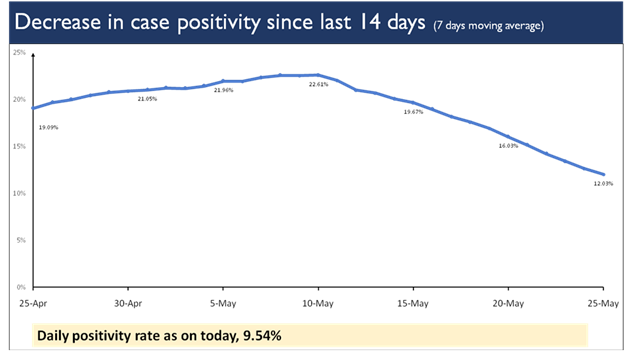
เฐช్เฐฐเฐธ్เฐคుเฐคం เฐฐోเฐœుเฐตాเฐฐీ เฐชాเฐœిเฐŸిเฐตిเฐŸీ 9.54%

เฐ‡เฐช్เฐชเฐŸిเฐฆాเฐ•ా เฐฆేเฐถเฐต్เฐฏాเฐช్เฐคంเฐ—ా เฐฆాเฐฆాเฐชు 20 เฐ•ోเฐŸ్เฐฒ เฐŸీเฐ•ా เฐกోเฐธుเฐฒు
18-44 เฐตเฐฏోเฐตเฐฐ్เฐ—ాเฐจిเฐ•ి เฐ—เฐค 24 เฐ—ంเฐŸเฐฒ్เฐฒో เฐฐిเฐ•ాเฐฐ్เฐกు เฐธ్เฐฅాเฐฏిเฐฒో 12.82 เฐฒเฐ•్เฐทเฐฒ เฐกోเฐธుเฐฒు

Posted On: 25 MAY 2021 11:27AM by PIB Hyderabad

เฐญాเฐฐเฐคเฐฆేเฐถం เฐ•ోเฐตిเฐก్ เฐฎీเฐฆ เฐšేเฐธ్เฐคుเฐจ్เฐจ เฐชొเฐฐుเฐฒో เฐช్เฐฐోเฐค్เฐธాเฐนเฐ•เฐฐเฐฎైเฐจ เฐธంเฐ•ేเฐคం เฐ•เฐจเฐฌเฐฐుเฐธ్เฐคూ เฐ—เฐค 40 เฐฐోเฐœుเฐฒ్เฐฒో เฐฎొเฐฆเฐŸి เฐธాเฐฐిเฐ—ా เฐ•เฐฐోเฐจా เฐ•ొเฐค్เฐค เฐ•ేเฐธుเฐฒు 2 เฐฒเฐ•్เฐทเฐฒ เฐฒోเฐชుเฐ•ు เฐคเฐ—్เฐ—ాเฐฏి. เฐ—เฐค 24 เฐ—ంเฐŸเฐฒเฐฒో 1,96,427 เฐ•ేเฐธుเฐฒు เฐจเฐฎోเฐฆเฐฏ్เฐฏాเฐฏి. เฐเฐช్เฐฐిเฐฒ్ 14เฐจాเฐกు เฐ‡เฐฆే เฐธ్เฐฅాเฐฏిเฐฒో 1,84,372 เฐ•ేเฐธుเฐฒు เฐจเฐฎోเฐฆเฐฏ్เฐฏాเฐฏి.


https://static.pib.gov.in/WriteReadData/userfiles/image/image0013Q26.png

เฐšిเฐ•ిเฐค్เฐธเฐฒో เฐ‰เฐจ్เฐจ เฐ•ోเฐตిเฐก్ เฐ•ేเฐธుเฐฒు เฐ•ూเฐกా เฐช్เฐฐเฐธ్เฐคుเฐคం  25,86,782 เฐ•ు เฐคเฐ—్เฐ—ాเฐฏి. เฐฎే10เฐจ เฐ—เฐฐిเฐท్เฐŸ เฐธ్เฐฅాเฐฏిเฐ•ి เฐšేเฐฐుเฐ•ోเฐ—ా เฐ—เฐค 24 เฐ—ంเฐŸเฐฒเฐฒో  1,33,934 เฐ•ేเฐธుเฐฒు เฐคเฐ—్เฐ—ాเฐฏి. เฐ‡เฐฆి เฐฆేเฐถం เฐฎొเฐค్เฐคంเฐฒో เฐจเฐฎోเฐฆైเฐจ เฐชాเฐœిเฐŸిเฐต్ เฐ•ేเฐธుเฐฒเฐฒో  9.60% 

https://static.pib.gov.in/WriteReadData/userfiles/image/image0029U5A.png

เฐฆేเฐถంเฐฒో เฐฐోเฐœుเฐตాเฐฐీ เฐ•ోเฐฒుเฐ•ుంเฐŸుเฐจ్เฐจเฐตాเฐฐి เฐธంเฐ–్เฐฏ เฐ•ొเฐค్เฐคเฐ—ా เฐตเฐธ్เฐคుเฐจ్เฐจ เฐ•ేเฐธుเฐฒเฐ•ంเฐŸే เฐŽเฐ•్เฐ•ుเฐตเฐ—ా เฐ‰ంเฐฆเฐŸం เฐตเฐฐుเฐธเฐ—ా 12 เฐฐోเฐœుเฐฒుเฐ—ా เฐ•ొเฐจเฐธాเฐ—ుเฐคోంเฐฆి. เฐ—เฐค 24 เฐ—ంเฐŸเฐฒ్เฐฒో  3,26,850 เฐฎంเฐฆి เฐ•ోเฐตిเฐก్ เฐจుంเฐšి เฐ•ోเฐฒుเฐ•ుเฐจ్เฐจాเฐฐు. เฐ‡เฐช్เฐชเฐŸిเฐฆాเฐ•ా เฐฆేเฐถเฐต్เฐฏాเฐช్เฐคంเฐ—ా เฐ•ొเฐตిเฐก్ เฐฌాเฐฐి เฐจుంเฐšి เฐฌైเฐŸเฐชเฐกిเฐจเฐตాเฐฐి เฐธంเฐ–్เฐฏ 2,40,54,861 เฐ•ు เฐšేเฐฐింเฐฆి. เฐœాเฐคీเฐฏ เฐธ్เฐฅాเฐฏిเฐฒొ เฐ•ోเฐฒుเฐ•ుเฐจ్เฐจเฐตాเฐฐి เฐถాเฐคం 89.26% เฐ•ు เฐšేเฐฐింเฐฆి. .

https://static.pib.gov.in/WriteReadData/userfiles/image/image003ARO9.png

https://static.pib.gov.in/WriteReadData/userfiles/image/image004FHRR.png

เฐ—เฐค 24 เฐ—ంเฐŸเฐฒเฐฒో เฐฎొเฐค్เฐคం 20,58,112 เฐ•ోเฐตిเฐก్ เฐจిเฐฐ్เฐฅాเฐฐเฐฃ เฐชเฐฐీเฐ•్เฐทเฐฒు เฐœเฐฐిเฐ—ాเฐฏి. เฐฆీంเฐคో เฐฆేเฐถเฐต్เฐฏాเฐช్เฐคంเฐ—ా เฐ‡เฐช్เฐชเฐŸిเฐฆాเฐ•ా เฐœเฐฐిเฐชిเฐจ เฐชเฐฐీเฐ•్เฐทเฐฒ เฐธంเฐ–్เฐฏ 33,25,94,176 เฐ•ు เฐšేเฐฐింเฐฆి. เฐฐోเฐœుเฐตాเฐฐీ เฐชాเฐœిเฐŸిเฐตిเฐŸీ เฐช్เฐฐเฐธ్เฐคుเฐคం 9.54% เฐ•ు เฐคเฐ—్เฐ—ింเฐฆి.   

https://static.pib.gov.in/WriteReadData/userfiles/image/image005FWKM.png

เฐ‡เฐช్เฐชเฐŸిเฐตเฐฐเฐ•ు  28,41,151  เฐถిเฐฌిเฐฐాเฐฒ เฐฆ్เฐตాเฐฐా 19,85,38,999 เฐŸీเฐ•ా เฐกోเฐธుเฐฒ เฐชంเฐชిเฐฃీ เฐœเฐฐిเฐ—ిเฐจเฐŸ్เฐŸు เฐˆ เฐ‰เฐฆเฐฏం 7 เฐ—ంเฐŸเฐฒเฐ•ు เฐ…ంเฐฆిเฐจ เฐธเฐฎాเฐšాเฐฐం เฐคెเฐฒిเฐฏเฐœేเฐธ్เฐคోంเฐฆి. เฐ…ంเฐฆుเฐฒో เฐ†เฐฐోเฐ—్เฐฏ เฐธిเฐฌ్เฐฌంเฐฆి เฐคీเฐธుเฐ•ుเฐจ్เฐจ 97,79,304 เฐฎొเฐฆเฐŸి เฐกోเฐธుเฐฒు, 67,18,723 เฐฐెంเฐกో เฐกోเฐธుเฐฒు, เฐ•ోเฐตిเฐก్ เฐฏోเฐงుเฐฒు เฐคీเฐธుเฐ•ుเฐจ్เฐจ 1,50,79,964 เฐฎొเฐฆเฐŸి เฐกోเฐธుเฐฒు,   83,55,982 เฐฐెంเฐกో เฐกోเฐธుเฐฒు, 18-44 เฐตเฐฏోเฐตเฐฐ్เฐ—ం เฐตాเฐฐు เฐคీเฐธుเฐ•ుเฐจ్เฐจ   1,19,11,759  เฐฎొเฐฆเฐŸి เฐกోเฐธుเฐฒు, 45-60 เฐตเฐฏోเฐตเฐฐ్เฐ—ం เฐตాเฐฐు เฐคీเฐธుเฐ•ుเฐจ్เฐจ 6,15,48,484 เฐฎొเฐฆเฐŸి เฐกోเฐธుเฐฒు,  99,15,278 เฐฐెంเฐกో เฐกోเฐธుเฐฒు, 60 เฐเฐณ్เฐณు เฐชైเฐฌเฐก్เฐกเฐตాเฐฐు เฐคీเฐธుเฐ•ుเฐจ్เฐจ 5,69,15,863 เฐฎొเฐฆเฐŸి เฐกోเฐธుเฐฒు,   1,83,13,642 เฐฐెంเฐกొ เฐกోเฐธుเฐฒు เฐ‰เฐจ్เฐจాเฐฏి.

เฐ†เฐฐోเฐ—్เฐฏ เฐธిเฐฌ్เฐฌంเฐฆి

เฐฎొเฐฆเฐŸి เฐกోเฐธ్

97,79,304

เฐฐెంเฐกเฐต เฐกోเฐธ్

67,18,723

เฐ•ోเฐตిเฐก్ เฐฏోเฐงుเฐฒు

เฐฎొเฐฆเฐŸి เฐกోเฐธ్

1,50,79,964

เฐฐెంเฐกเฐต เฐกోเฐธ్

83,55,982

18-44 เฐตเฐฏోเฐตเฐฐ్เฐ—ం

เฐฎొเฐฆเฐŸి เฐกోเฐธ్

1,19,11,759

45-60 เฐตเฐฏోเฐตเฐฐ్เฐ—ం

เฐฎొเฐฆเฐŸి เฐกోเฐธ్

6,15,48,484

เฐฐెంเฐกเฐต เฐกోเฐธ్

99,15,278

60 เฐชైเฐฌเฐก్เฐกเฐตాเฐฐు

เฐฎొเฐฆเฐŸి เฐกోเฐธ్

5,69,15,863

เฐฐెంเฐกเฐต เฐกోเฐธ్

1,83,13,642

เฐฎొเฐค్เฐคం

19,85,38,999


เฐ—เฐค 24 เฐ—ంเฐŸเฐฒเฐฒో 18-44 เฐตเฐฏోเฐตเฐฐ్เฐ—ాเฐจిเฐ•ి 12.82 เฐฒเฐ•్เฐทเฐฒ เฐ•ోเฐตిเฐก్ เฐŸీเฐ•ా เฐกోเฐธుเฐฒిเฐš్เฐšాเฐฐు. เฐฎే 1 เฐจ เฐˆ เฐตเฐฏోเฐตเฐฐ్เฐ—ాเฐจిเฐ•ి เฐŸీเฐ•ాเฐฒు เฐฎొเฐฆเฐฒు เฐ•ాเฐ—ా เฐ‡เฐช్เฐชเฐŸిเฐตเฐฐเฐ•ు เฐ‡เฐฆి เฐฐిเฐ•ాเฐฐ్เฐกు.  


‘Yaas’ very likely to move north-northwestwards, intensify further into a Very Severe Cyclonic Storm during next 12 hours


‘Yaas’ very likely to move north-northwestwards, intensify further into a Very Severe Cyclonic Storm during next 12 hours

Posted On: 25 MAY 2021 1:01PM by PIB Delhi

According to the National Weather Forecasting Centre of the India Meteorological Department (IMD): (TIME OF ISSUE: 1215 HOURS IST, DATED: 25.05.2021)

                The Severe Cyclonic Storm ‘Yaas’ (pronounced as ‘Yass’) over westcentral and adjoining eastcentral & north Bay of Bengal– (Cyclone Warning for Odisha – West Bengal coasts-Orange Message). 

              The Severe Cyclonic Storm ‘Yaas’ (pronounced as ‘Yass’) over Eastcentral & adjoining Westcentral Bay of Bengal moved northwestwards with a speed of about 17 kmph during past 6 hours, and lay centred at 0830 hrs IST of today, the 25th May, 2021 over Westcentral and adjoining Eastcentral & north Bay of Bengal near latitude 18.3°N and longitude 88.3°E, about 280 km south-southeast of Paradip (Odisha), 380 km south-southeast of Balasore (Odisha), 370 km south-southeast of Digha (West Bengal) and 370 kms south-southwest of Sagar Islands (West Bengal).

            It is very likely to move north-northwestwards, intensify further into a Very Severe Cyclonic Storm during next 12 hours. It would continue to move north-northwestwards, intensify further and reach Northwest Bay of Bengal near north Odisha and West Bengal coasts very close to Chandbali-Dhamra port by the early morning of Wednesday, the 26th May. It is very likely to cross north Odisha-West Bengal coasts between Paradip and Sagar Island close to north of Dhamra and south of Balasore, during noon of Wednesday, the 26th May as a Very Severe Cyclonic Storm.

Forecast track and intensity are given in the following table:

Date/Time(IST) Position(Lat. 0N/ long. 0E) Maximum sustained surface wind speed (Kmph) Category of cyclonic disturbance
25.05.21/0830 18.3/88.3 100-110 gusting to 120

Severe Cyclonic Storm

25.05.21/1130 18.7/88.0 105-115 gusting to 125

Severe Cyclonic Storm

25.05.21/1730 19.5/87.8 125-135 gusting to 150

Very Severe Cyclonic Storm

25.05.21/2330 20.1/87.6 145-155 gusting to 170

Very Severe Cyclonic Storm

26.05.21/0530 20.7/87.3 155-165 gusting to 185

Very Severe Cyclonic Storm

26.05.21/1730 21.8/86.3 115-125 gusting to 140

Very Severe Cyclonic Storm

27.05.21/0530 22.5/85.6 60-70 gusting to 80

Cyclonic Storm

27.05.21/1730 23.2/84.7 35-45 gusting to 55

Depression

 Warnings:(i)        

Rainfall:  North Coastal Andhra Pradesh: Light to moderate rainfall at many places with heavy to very heavy falls at isolated places on 25th May. 

Odisha: Light to moderate rainfall at many places with heavy to very heavy rainfall and extremely heavy rainfall in Jagatsinghpur, Kendrapara, Bhadrak, Balasore  districts, heavy to very heavy rainfall over Puri, Khurda, Cuttack, Jajpur, Mayurbhanj and heavy over Ganjam, Dhenkanal, Keonjhargarh districts on 25th, heavy to very heavy rains at a few places with extremely heavy falls at isolated places  in Jagatsinghpur, Kendrapara, Jajpur, Bhadrak, Balasore, Mayurbhanj, Cuttack,  Dhenkanal, Keonjhargarh and heavy falls at isolated places in Puri, Khurda, Angul, Deogarh, Sundergarh on 26th May and heavy falls  at isolated places in north interior Odisha on 27th May.

West Bengal: Light to moderate rainfall at most places with heavy to very heavy rainfall over Medinipur, South 24 Parganas and heavy rainfall at isolated places in Howrah, Hooghly,Kolkata & north 24 Parganas districts on 25th, extremely heavy rainfall at isolated places over Medinipur and heavy to very heavy rainfall at isolated places over Jhargram, Bankura, south 24 Parganas and heavy falls at isolated places over Purulia, Nadia, Murshidabad, east Bardhaman, Howrah, Hooghly, Kolkata, north 24 Parganas, Haldia, Darjeeling, Kalimpong Districts on 26th May and heavy rain at isolated places in Jhargram, west Medinipur, Bankura,  Purulia, west Bardhaman, Bhirbhum, Malda,  Darjeeling, Kalimpong, Jalpaiguri on 27th May. 

Jharkhand: Light to moderate rainfall at most places with heavy rainfall at isolated places on 25th May, heavy to very heavy rainfall and extremely heavy falls at isolated places on 26th & 27th May.  

Bihar: Light to moderate rainfall at most places with heavy to very heavy rainfall and extremely heavy falls at isolated places on 27th May and isolated heavy to very heavy falls on 28th May. 

Assam & Meghalaya: Light to moderate rainfall at most places with heavy to very heavy rainfall at isolated places on 25th & 26th May. 

(ii) Wind warning:·   Gale winds speed reaching 100-110 kmph gusting to 120 kmph is prevailing over major parts of central Bay of Bengal and adjoining north Bay of Bengal and would increase gradually becoming 125-135 gusting to 140 kmph from today evening. ·   Squally wind speed reaching 55-65 kmph gusting 75 kmph is prevailing over North Bay of Bengal  and along and off north Andhra Pradesh-Odisha–West Bengal–Bangladesh coasts. It would further increase becoming 65-75 kmph gusting to 85 kmph over northwest Bay of Bengal and along & off north Odisha and adjoining West Bengal coasts including Jagatsinghpur, Kendrapara, Puri, Bhadrak, Balasore of Odisha and east Medinipur, south 24 Parganas, Kolkata districts of West Bengal from  25th May evening. Squally wind speed reaching 40-50 kmph gusting 60 kmph would prevail over Ganjam, Khurda, Cuttack, Jajpur & Mayurbhanj Districts of Odisha and Howrah, Hooghly, north 24 Parganas Districts of West Bengal from 25th evening.·   It would further increase becoming gale wind speed 155-165 kmph gusting to 185 kmph over northwest Bay of Bengal and along & off north Odisha and adjoining West Bengal coasts including Jagatsinghpur, Kendrapara, Bhadrak, from early morning of 26th May and will extend to Balasore district of Odisha from the forenoon of 26th May, 120-130 kmph gusting to 145 kmph over Mayurbhanj district of Odisha from early morning of 26th May. Gale wind speed reaching 80-90 kmph gusting to 100 kmph would prevail over Puri, Cuttack, Khurda, Jajpur and Nayagarh districts of Odisha during same period. The wind speed reaching 60-80 kmph gusting to 90 kmph would prevail along and off Ganjam and remaining interior districts of north Odisha·    Squally wind speed reaching 60-80 kmph gusting to 90 kmph would prevail over Ganjam, Dhenkanal and Keonjhar districts of Odisha and Bankura, Purulia, Howrah, Hooghly, Nadia & Burdhaman districts of Wet Bengal from 26th early hours. Squally wind speed reaching 50-60 kmph gusting to 70 kmph would prevail over Angul, Deogarh & Sundergarh districts of Odisha, Birbhum & Murshidabad districts of West Bengal and Srikakulam, Vijayanagaram & Vishakhapatnam districts of Andhra Pradesh during same period.·   40-50 kmph gusting 60 kmph is very likely to prevail over south Jharkhand from 26th forenoon and increase gradually becoming 90-120 kmph gusting to 130 kmph over southeast Jharkhand and 70-80 kmph gusting to 90 kmph over southwest Jharkhand during 26th evening / night.·   Squally wind speed reaching 50-65 kmph gusting to 70 kmph would prevail over Kendrapara, Bhadrak, Balasore, Keonjhargarh, Mayurbhanj, Deogarh, Sundergarh Districts of Odisha and west Medinipur, Jhargram, Bankura, Purulia Districts of West Bengal on 27th

(iii) Sea condition·         Sea condition is High to Very High over Westcentral and adjoining eastcentral & north Bay of Bengal. It is very likely to become Very High to Phenomenal over northern parts of central Bay of Bengal, north Bay of Bengal and along & off north Andhra Pradesh-Odisha–West Bengal-Bangladesh coasts during 25th evening to 26th May evening.

(iv) Fishermen Warning·         The fishermen are advised not to venture into central Bay of Bengal till 26th May forenoon and into north Bay of Bengal and along & off north Andhra Pradesh-Odisha-West Bengal–Bangladesh coasts during 25th – 26th May.

(v) Storm surge warning. Tidal waves of height 2-4 meters above astronomical tide are likely to inundate low lying low laying areas of Medinipur, Balasore, Bhadrak and about 2 meters above astronomical tide are likely to inundate low lying low laying areas of South 24 Parganas, Kendrapara & Jagatsinghpur Districts around the time of landfall. 

Damage Expected for coastal districts of North Odisha, West Bengal and adjoining interior districts of these states:

  • Total destruction of thatched houses/ extensive damage to kutcha houses. Some damage to pucca houses.
  • Potential threat from flying objects.
  • Bending/ uprooting of power and communication poles.
  • Major damage to Kutcha and and Pucca roads.
  • Flooding of escape routes.
  • Disruption of railways, overhead power lines and signalling systems.
  • Widespread damage to standing crops, plantations, orchards, falling of green coconuts and tearing of palm fronds.
  • Blowing down of bushy trees like mango.
  • Small boats, country crafts may get detached from moorings.
  • Visibility severely affected

Action Suggested for coastal districts of North Odisha, West Bengal and adjoining interior districts of these states:

  • Suspension of fishing operation and movement of ships in disturbed areas.
  • Ports along the east coast of India may take necessary pre-cautions.
  • Naval base operations may maintain necessary pre-cautions
  • Tourism activities may be restricted over these areas. 
  • Mobilise evacuation from coastal areas of West Bengal & North Odisha.
  • Judicious regulation of rail and road traffic.
  • People in affected areas to remain indoors.
  • Preparatory action before the cyclones  

 (Please CLICK HERE for details in graphics)

Friday, 14 May 2021

Stay Safe from Mucormycosis - a Fungal Complication being Detected in COVID-19 Patients

Stay Safe from Mucormycosis - a Fungal Complication being Detected in COVID-19 Patients

Control Diabetes, Use Steroids Judiciously, Keep Good Hygiene, Don’t Self-Medicate

Posted On: 14 MAY 2021 10:42AM by PIB Mumbai

Even as we try our best to protect ourselves from and cope with COVID-19, there is another threat being posed by a fungus, which we must know and act upon. Mucormycosis, a fungal infection, is being reported in a few COVID-19 patients during or post recovery. As per a statement given by the Health Minister of Maharashtra two days ago, more than 2000 people had already been affected by this fungal infection in the state; 10 people had even succumbed to it. Some patients even lost their eyesight.


What causes Mucormycosis?


Mucormycosis or black fungus is a complication caused by fungal infection. People catch mucormycosis by coming in contact with the fungal spores in the environment. It can also develop on the skin after the fungus enters the skin through a cut, scrape, burn, or other type of skin trauma.


The disease is being detected among patients who are recovering or have recovered from COVID-19. Moreover, anyone who is diabetic and whose immune system is not functioning well needs to be on the guard against this.


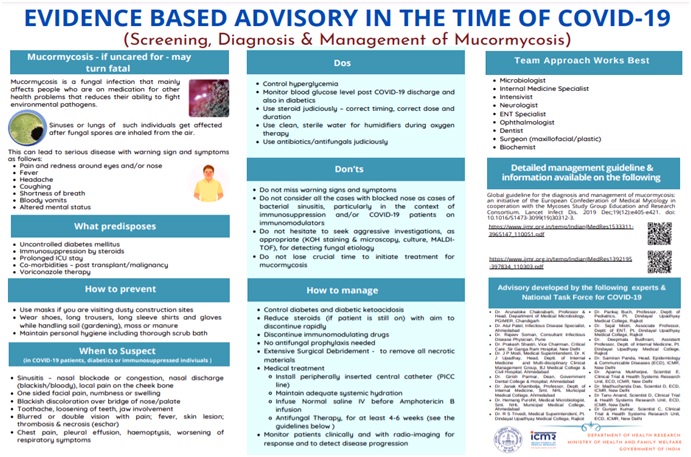
According to an advisory issued by the Indian Council of Medical Research, the following conditions in COVID-19 patients increase the risk of mucormycosis infection:


  1. Uncontrolled diabetes
  2. Weakening of immune system due to use of steroids
  3. Prolonged ICU/hospital stay
  4. Co-morbidities / post organ transplant / cancer
  5. Voriconazole therapy (used to treat serious fungal infections)
 

How it is related with COVID-19


The disease is caused by a set of micro-organisms known as mucormycetes, which are present naturally in the environment, seen mostly in soil and in decaying organic matter like leaves, compost and piles.


In normal course, our body’s immune system successfully fights such fungal infections. However, we know that COVID-19 affects our immune system. Moreover, the treatment of COVID-19 patients involves intake of drugs like dexamethasone, which suppress our immune system response. Due to these factors, COVID-19 patients face a renewed risk of failing the battle against attacks mounted by organisms such as mucormycetes.


In addition, COVID patients undergoing oxygen therapy in ICU, where humidifier is used, are prone to fungal infection because of exposure to moisture.

 
But this does not mean that every COVID patient will get infected by Mucormycosis. The disease is uncommon in those not having diabetes but can be fatal if not treated promptly. Chances of recovery depend upon early diagnosis and treatment.


What are the common symptoms?


Mucormycosis begins to manifest as skin infection in the air pockets located behind our forehead, nose, cheekbones, and in between the eyes and teeth. It then spreads to eyes, lungs and can even spread to the brain. It leads to blackening or discoloration over the nose, blurred or double vision, chest pain, breathing difficulties and coughing of blood.


The Indian Council of Medical Research has advised that not all cases of blocked nose should be considered as cases of bacterial sinusitis, particularly during/after the treatment of Covid-19 patients. One must seek medical help for detecting fungal infection.  

How is it treated?


While the infection may just begin with a skin infection, it can spread to other parts of the body. Treatment involves surgically removing all dead and infected tissue. In some patients, this may result in loss of upper jaw or sometimes even the eye. Cure may also involve a 4-6 weeks course of intravenous anti-fungal therapy.  Since it affects various parts of the body, treatment requires a team of microbiologists, internal medicine specialists, intensivist neurologists, ENT specialists, ophthalmologists, dentists, surgeons and others.


Controlling diabetes is one of the foremost prevention methods suggested by ICMR. Hence, COVID-19 patients who are diabetic need to take utmost care.


Self-medication and over-dosage of steroids can result in fatal events and hence doctor’s prescription should be strictly followed. Speaking about the adverse effects of inappropriate use of steroids, Member (Health), NITI Aayog, Dr. V.K. Paul says: “Steroids should never be administered at an early stage of COVID-19. It should be taken only after sixth day of infection. Patients should stick to appropriate doses of the drugs and take the drug for specific number of days as advised by the doctors. Rational use of medicines should be ensured to avoid adverse side effects of the drug.”


“Other than steroids, use of COVID-19 drugs such as Tocilizumob, Itolizumab also suppresses the immune system. And when these drugs are not used appropriately, it increases the risk, as our immune system fails to fight the fungal infection.” Dr. Paul adds.


ICMR in its guidelines has also advised COVID-19 patients to discontinue immunomodulating drugs, a substance that stimulates or suppresses immune system. The National COVID-19 Task Force has revised the dosage of Tocilizumab to prevent any such adverse effects. Maintaining proper hygiene can also help keep the fungal infection away.


For patients on oxygen therapy, it should be ensured that the water in the humidifier is clean and is refilled regularly. Attention should be paid to ensure there is no leakage of water (to avoid wet surfaces where the fungus can breed). Patients should maintain proper hygiene by keeping their hands as well as body clean.


Be on guard after COVID Recovery as well

After recovering from COVID-19, one should closely monitor and should not miss any warning signs and symptoms mentioned above, as the fungal infection is found to emerge even weeks or months after recovery. One should make judicial use of steroids as per doctor’s advice to avoid risk of infection. Early detection of the disease can ease the treatment of the fungal infection.