Monday, 11 January 2021

Know all about National Road Safety Week 2021


Know all about National Road Safety Week 2021

National road safety week is celebrated from 11th January to 17th January every year in our country India to create awareness about road safety and minimize road accidents & save life.

On this 2021 we are celebrating 32nd National Road Safety Week.

At first in the year 1989 awareness for the National Road Safety Week was celebrated and at that time about 36,000 had lost their lives. So this tragic story is related to the observation of this awareness week.

Later in the year, 2010 march 15 gave sanction to the National Road Safety policy by Cabinet Union of India which was recommended by the Sunder Committee through a written document in 2007 February.


Themes of this day:

Happy Road Safety Week 2021

30th National Road Safety Week 2019 theme, ‘road safety is life safety’. Safety of the roads depends upon us to follow every rule of traffic or to improve infrastructure, then only our life will be out accident risk.

31st National Road Safety week 2020 theme, ‘ No need to speed’. Severe accident issues or maximum accident cases are due to the speed of vehicles where people died on the spot.

Set it in the mind and do not speed your vehicle. It is better to arrive late than no arrival.

32nd National Road Safety Week 2021 theme, ‘ Safe yourself to save your family’. Apply all the safety measures while going through a vehicle and always follow the traffic rules.

If we do not safe ourself then it is more chance to be in problem. Only you and I know that how much important we are for our family. Keep it in mind and drive safe drive carefully.

What road safety measures should be taken for aged and physically handicapped persons

Concerning road safety, as we all know the problem of aged and physically handicapped persons are that they need some extra time to cross the road comparing to a normal being. So, in this case, we should be very humble and support them.

In the city like Singapore where automatic traffic systems ar generated, there is a scheme to extend time limits to crossing the road for these persons.

They are provided with a card (green Man card) and they have to scan it in a traffic machine wherever they want to cross the road to extend time limits.

This scheme is very helpful for them and they can able to cross roads safely & easily.

Although we have no such schemes or not so developed, I can say that without any scheme in this case simply we can help them by following traffic rules obediently wherever we may be i.e. expressway in India, the highway in India or in any way and helping them to cross the road in case of necessity.

Information you should know:

Here is below some important information lets take a look,

  • You will be very surprised to know that, India is in the 1st position comprising the highest accident deaths.
  • Approximately 4,67,000 accidents were happening per year in India and about 1,50,000/ year are dying of it.
  • According to WHO (World Health Organisation), the top 3 main reasons for traffic collision are, over speed limit driving, under the influence of driving, not wearing of seat belts & helmets.
  • It is identified that accidents in India put an impact on losing GDP by about 2%.

Road safety week celebration:

Expressway in India

National Safety Council of India organizes every year National Road Safety Week along with the Ministry of Road Transport and Highways.

On this occasion, they reveal the National Road Safety Week policies. Many nongovernment organisations also hold many events and celebrate this awareness week.

Students of many institutions take part in marathon, walkathon, awareness campaign and holding quotation cards aware people about the importance of road Safety.    

Summary:

In this year 2021, we are celebrating 32nd National Road Safety Week from 11th January to 17th January.

I think, here is mentioned briefly what we all need to know and take positive action for making better our celebration purpose.

Many organisations and government bodies are trying their best to sensitize public and to control completely the road accidents.

But the result is not so appreciable. It completely depends upon all of us to contribute personally to the success of our country’s vision.

At last, I will say, we all should follow the traffic rules, avoid distraction while on the road, not drunk driving & unsafe driving. If we all make safe ourselves then the whole country will be safe.

\

Frequently Asked Questions:

1. When we are celebrating National Road Safety Day?

Ans:- We are celebrating National Road Safety Week every day from January 11th to January 17th per year. Some organisations celebrate it for a month.

2. When this National Road Safety Week starts and ends?

Ans:- National Road Safety Week starts on 11th January and ends on 17th January.

3. Why are we celebrating this road safety week?

Ans:- We all are observing it to make people aware and do action concerning road safety. Through this awareness week celebration, we will be able to control casualties due to road accidents.

4. How do we improve this road safety awareness?

Ans:- We may improve this road safety awareness contributing in the group or also personally by educating and awaring the public through an awareness campaign, National Road Safety act or utilizing social media as an awareness platform.

5. Why is road safety being important?

Ans:- Everyday many peoples are getting injured and losing their valuable life in road accidents due to carelessness. Which is in our hand to save a life through road safety measures. So It is very much important to control accidental death.

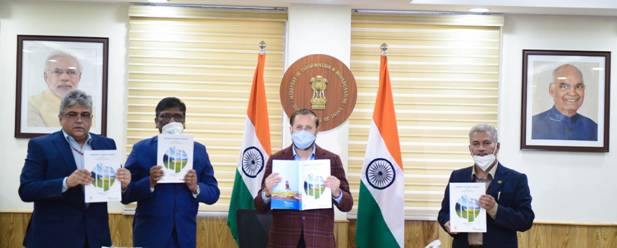
Environment Minister releases Management Effectiveness Evaluation (MEE) of 146 National Parks and Wildlife Sanctuaries


Environment Minister releases Management Effectiveness Evaluation (MEE) of 146 National Parks and Wildlife Sanctuaries.

Framework for Management Effectiveness Evaluation of Indian Zoos (MEE-ZOO) and of Marine Protected Areas also launched.

Posted On: 11 JAN 2021 6:51PM by PIB Delhi

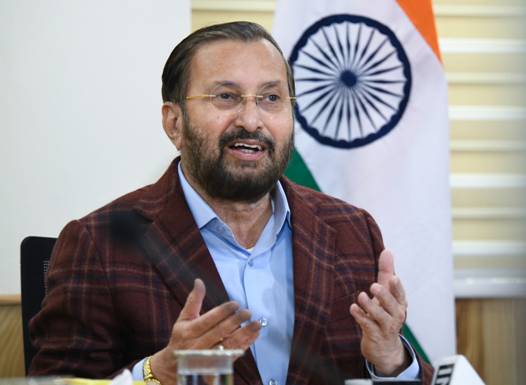
Minister for Environment, Forest and Climate Change, Shri Prakash Javadekar today released Management Effectiveness Evaluation (MEE) of 146 National Park and Wildlife Sanctuaries in the Country.At present, India has a network of 903 Protected Areas in the country covering about 5% of the total geographic area of the country. In order to assess the efficacy of Protected Areas, evaluation of management effectiveness is required.

WhatsApp Image 2021-01-11 at 16.12.39.jpeg


Speaking at the event Shri Javadekar said that what other countries could not achieve, India has achieved and today has a thriving biodiversity.70% of the global tiger population, 70% of asiatic lions and more than 60% of leopards population in India is a certificate of India's thriving biodiversity ,as these big cats sit at the top of food chain and their growing numbers shows the well being of the whole ecosystem.”, said the Environment Minister.


WhatsApp Image 2021-01-11 at 16.43.20.jpeg


Shri Javadekar also announced that from this year onwards 10 best National Parks, 5 coastal and Marine parks and top five Zoos in the country will be ranked and awarded every year.

Management Effectiveness Evaluation (MEE) of Protected Areas (PAs) has emerged as a key tool for PA managers and is increasingly being used by governments and international bodies to understand the strengths and weaknesses of the protected area management systems.

The results of present assessment are encouraging with overall mean MEE score of 62.01% which is higher than the global mean of 56%. With this round of evaluation, the Ministry of Environment,Forest and Climate Change(MoEFCC) successfully completed one full cycle of evaluating all terrestrial National Parks and Wildlife Sanctuaries of the country from 2006 to 2019.

 MEE is a very important document that provides valuable guidance on various aspects of wildlife and protected area expand MEE of Marine Protected Areas. A new framework for MEE of Marine Protected Areas has been also jointly prepared by WII and MoEF&CC and it will be very useful document to implement.

The Environment Minister also launched the Management Effectiveness Evaluation of Indian Zoos (MEE-ZOO) framework which proposes guidelines, criteria and indicators for evaluation of zoos of the country through Management Effectiveness Evaluation Process (MEE-ZOO) in a manner which is discrete, holistic and independent.

The assessment criteria and indicators look beyond the traditional concepts, include issues of animal welfare, husbandry and sustainability of resources and finance.The MEE-ZOO exercise is moving towards developing highest standards in Zoos across India and adhering to core values of accountability, transparency, innovation, use of technology, collaboration and integrity to achieve the mandate of conservation of endangered species.

Thursday, 7 January 2021

Air Pollution a serious problem and Government committed towards fighting it Shri Prakash Javadekar--press relases


#Press ReleasesUploaded On
1 Air Pollution a serious problem and Government committed towards fighting it Shri Prakash Javadekar 07-12-2020
2 Two new Zoos one each in Bihar and Uttar Pradesh granted recognition by Central government 07-12-2020
3 CPCB raises concern on Pollution and Frothing in River Yamuna 06-12-2020
4 Government constitutes High-level Ministerial Committee for implementation of Paris Agreement 02-12-2020
5 Voluntary participation of industries, crucial towards low carbon industries transition Shri Prakash Javadekar 01-12-2020
6 Single point information source on Climate Action “India Climate Change Knowledge Portal” launched 27-11-2020
7 India and Finland sign MOU for developing cooperation in the field of environmental protection and biodiversity conservation. 26-11-2020
8 India has moved to the Centre stage of International Energy Affairs International Energy Agency 19-11-2020
9 Commission for air quality reviews air quality scenario in National Capital Region and adjoining areas. 09-11-2020
10 Government working on all fronts to mitigate Air Pollution Shri Prakash Javadekar 06-11-2020
11 Declaration of the private sector on Climate Change a historic step Shri Prakash Javadekar 05-11-2020
12 Key Declaration on Climate Change to be signed at the India CEO Forum on Climate Change 04-11-2020
13 Government committed to landscape restoration for snow leopard habitat conservation. 23-10-2020
14 BSVI introduction a revolutionary step Shri Prakash Javadekar 18-10-2020
15 95 percent of Air Pollution in Delhi due to local factors only 4% by Stubble burning as on today Shri Prakash Javadekar 15-10-2020
16 Strict Vigil against Polluting Activities in Upcoming Winters 14-10-2020
17 Proud moment for India all 8 beaches recommended by government gets International Blue Flag Certification Shri Prakash Javadekar 11-10-2020
18 Cabinet approves Memorandum of Understanding between Zoological Survey of India and International Barcode of Life, a Canadian not-for-profit corporation 07-10-2020
19 Cabinet ratifies ban on seven chemicals that are hazardous to health & environment listed under Stockholm Convention. 07-10-2020
20 Wildlife Week an occasion to reaffirm the commitment towards conservation of wildlife and harmonious co-existence PM Shri Narendra Modi 06-10-2020
21 Government chalking out a plan for up gradation and expansion of Zoos across the country in PPP mode Shri Prakash Javadekar 05-10-2020
22 Urgent need to accelerate action to conserve biodiversity India at UN Biodiversity Summit 01-10-2020
23 A lot is done but more focused and collective action needed for mitigation of Air pollution Shri Prakash Javadekar 01-10-2020
24 India urges Nations to put Nature at the heart of recovery plan post COVID19 24-09-2020
25Central Pollution Control Board celebrates its 46th Foundation Day pledges to provide technical leadership for more science-based environmental management   


Dr Harsh Vardhan interacts with Health Ministers of States/UTs to review preparedness and seek their personal leadership in glitch-free Dry Run of 8th Jan


COVID-19 Vaccine Rollout

Dr Harsh Vardhan interacts with Health Ministers of States/UTs to review preparedness and seek their personal leadership in glitch-free Dry Run of 8th Jan

IInd nationwide Dry Run to be held in 736 districts across 33 States/UTs tomorrow

Dr. Harsh Vardhan requests all State Health Ministers to personally keep tab on Disinformation regarding the Approved Vaccines: “Miscreants might derail the whole exercise, set the clock back by years”

“Let us ensure effective National Immunization Day on 17th Jan to sustain India's Polio-Free status"

Posted On: 07 JAN 2021 5:10PM by PIB Delhi

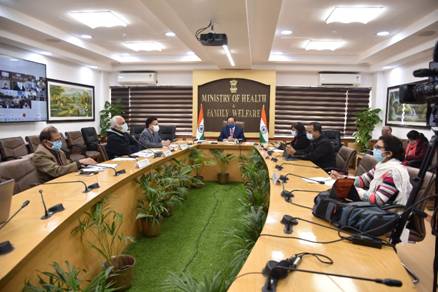
Dr. Harsh Vardhan, Union Minister of Health and Family Welfare today interacted with the Health Ministers and Principal Secretaries/ Additional Chief Secretaries of the States/UTs to review the preparedness for the nationwide Mock Drill on the COVID vaccination scheduled for tomorrow, 8th January, through video conference here today. He also urged for their keen overview and personal indulgence to lead the whole exercise. The second nationwide mock drill on the Covid19 vaccination will be held at three session sites of 736 districts across 33 States/UTs.

The objective of the mock drill on COVID19 vaccination is to simulate the actual vaccine administration event. The entire planning of the vaccination drive including beneficiary registration, microplanning and vaccination at the planned session site, will be tested under the leadership of District Collector/District Magistrate. The dry run will also familiarize the State, District, Block and Hospital level officers on all aspects of COVID-19 roll out. This activity will help administrators in strengthening the linkages between planning, implementation and reporting mechanisms, identification of any residual challenges prior to the actual implementation and to provide confidence to the programme managers at all levels to carry out a smooth implementation of the vaccination drive.

Shri Biplab Kumar Deb, Chief Minister (also holds Health portfolio), Tripura, Shri Alla Kali Krishna Srinivas, Dy. Chief Minister & Health Minister, Andhra Pradesh, Sh. Nitinbhai Patel, Dy. Chief Minister & Health Minister, Gujarat, Shri Mangal Pandey, Health Minister, Bihar, Dr. MK Sharma, Health Minister, Sikkim, Dr C Vijaybaskar, Health Minister, Tamil Nadu, Shri Etela Rajendra, Health Minister, Telangana,  Shri Rajesh Tope, Health Minister, Maharashtra, Shri Langpoklakpam Jayantakumar Singh, Health Minister, Manipur, Smt. K. K. Shailaja Teacher, Health Minister, Kerala, Shri Vishwajit Rane, Health Minister, Goa, Dr. Keshavareddy Sudhakar, Health Minister, Karnataka, Shri T.S. Singh Deo, Health Minister, Chhattisgarh, Shri Satyendra Kumar Jain, Health Minister, Delhi, Dr. Prabhuram Choudhary, Public Health and Family Welfare Minister, Madhya Pradesh, Dr. Raghu Sharma, Medical & Health Minister, Rajasthan, Shri Pratap Jena, Panchayati Raj & Drinking Water, Law, Housing & Urban Development Minister, Odisha, Shri Balbir Singh Sidhu, Health Minister of Punjab, and Shri Pijush Hazarika, Minister of State (Health), Assam attended the meet.


Dr. Harsh Vardhan started by reminding everyone that the country has completed a year of successfully battling the pandemic with the first meeting of the Joint Monitoring Group (JMG) of MoHFW on COVID being held on 8th of January, 2020. Restating his appreciation and unwavering support to the tireless work of the frontline workers who are working on the ground, he also mentioned how Prime Minister Shri Narendra Modi’s dynamic, and unwavering leadership has ensured that India not only the highest recovery rate in the world but also a beacon of hope for other countries who are dependent on India’s export of N95 masks, PPE Kits for their own containment efforts. He credited this shift in India’s trajectory to the Atmanirbhar Yojana led by the Hon. Prime Minister.

Dr Harsh Vardhan appreciated the tireless efforts being made by the multiple stakeholders including the central and state government officials and the medical community who have worked proactively in the last few months to compose and disseminate detailed guidelines on the upcoming vaccination drive, train the vaccine administrators. He also expressed gratitude to the scientific community who have worked tirelessly to bring the country two vaccines which have recently received the Emergency Use Authorization few days back.

The Health Minister highlighted the unique digital platform, Co-WIN, repurposed from the e-VIN platform that will provide real time information of vaccine stocks, their storage temperature and individualized tracking of beneficiaries of the COVID-19 vaccine. This platform will assist the program managers across all levels through automated session allocation for pre-registered beneficiaries, their verification and for generating a digital certificate upon successful completion of the vaccine schedule. More than 78 lakh beneficiaries have been already registered on the platform, he stated.

The Minister reassured all his State counterparts that the country’s cold chain infrastructure has been sufficiently upgraded to ensure last mile delivery and that adequate supplies of syringes and other logistics have also been provided for: “India has unparalleled experience in dealing with immunization and runs one of the largest universal immunization programs in the world which has been applauded by the world for its robustness”. He referred to India’s several successful immunization drives with respect to Polio, Rubella and Measles and also narrated his personal experience from the early nineties of having galvanized efforts of millions of Indians which eventually led to the eradication of Polio from the country. “The rich experience of the country from the UIP and the anti-polio campaign are being used to strengthen the processes of COVID19 vaccination”, he stated.

Following this, he reminded his state counterparts to also ensure that the National Immunisation Day (NID) scheduled on 17th Jan, 2021 is also given due importance. He requested the State/UT health ministers to ensure that non-COVID essential services are not adversely impacted. “It is with the collaborative efforts of the States/UTs and multiple partners that India and 11 other countries of the South East Asia region of WHO have been declared polio free. It should be our endeavour to sustain India’s Polio-free status”, he stated. Drawing attention to some neighbors still having cases of wild polio, he said that it is important that the NIDs are effectively rolled out.

Dr Harsh Vardhan stated that to strengthen the capacity of our human resource for COVID-19 vaccine introduction and roll-out, detailed training modules have been developed for different categories of vaccine handlers and administrators including medical officers, vaccinators, alternate vaccinators, cold chain handlers, supervisors, data managers, ASHA coordinators and all others involved in the implementation process at different levels. He said the entire operational planning and IT platform has been field tested on several occasions before the second national dry run of tomorrow. The earlier national mock drill of 2nd Jan 2021 helped to  iron out any glitches in the final execution and further refinement of the operational procedures. The feedback from most of the States/UTs was satisfactory conduct of the dry run.

Seeking their personal indulgence, leadership and keen oversight for tomorrow’s national dry run, Dr Harsh Vardhan requested the Health Ministers to be vigilant against rumours and disinformation campaigns regarding the safety and efficacy of the COVID19 vaccine. He rubbished the rumours being propagated on social media which are raising doubts in the mind of the public regarding the vaccine side-effects and said, “These miscreants might derail the whole exercise, set the clock back by years”. He urged the State health authorities to work with the multiple stakeholders and the youth to spread the right information and dispel rumours and mistruths being spread about the COVID19.

The State/UT ministers shared their feedback and experience from the past dry run exercises and the preparedness for the tomorrow’s exercise. They informed about the training sessions held for vaccinators, updation of the database of beneficiaries, cold chain management, session allocation, reporting of Adverse Event Following Immunization (AEFI) etc. Union Minister was also apprised that the meeting on the State level, district level and block level are being conducted regularly. Effective communication is being carried out in the States to disseminate the correct information about Vaccines.

Union Health Secretary Shri Rajesh Bhushan, Ms. Vandana Gurnani, AS & MD (NHM), Shri Manohar Agnani, Addl. Secretary (Health), Shri Lav Agarwal, Jt. Secretary (Health) and other senior officials of the Ministry were present at the meeting.

Central Pollution Control Board organizes Analytical Quality Control exercise of 145 Environmental Laboratories for 9 trace metal parameters.


Central Pollution Control Board organizes Analytical Quality Control exercise of 145 Environmental Laboratories for 9 trace metal parameters.

Posted On: 07 JAN 2021 3:33PM by PIB Delhi

The Instrumentation Laboratory of Central Pollution Control Board, Delhi has organized the 33rd Analytical Quality Control (AQC) exercise for trace metal parameters for Environmental Laboratories of Central and State Pollution Control Boards, Pollution Control Committee’s, and EPA Recognized Private Labs. The main objective of the AQC program is to continuously monitor the accuracy and reliability of the analytical data generated by these laboratories, to help to improve the infrastructure of laboratories and the quality of data.

The AQC exercise will help evaluate the performance of participating laboratories in terms of analytical activities, the robustness of instruments used for sample analysis and the expertise of manpower engaged in the laboratory. It will also help to ensure the reliability of the analyzed data, for an informed and conclusive decision for the prevention and control of pollution.

145 laboratories including all the Central and State Board laboratories, Pollution Control Committees and EPA approved laboratories are participating in the 33rd AQC program. The exercise is being conducted with in-house expertise and following the international norms with utmost care.

The laboratories would analyse AQC samples, and communicate the test results on or before the due date. The performance of each laboratory would be evaluated based on scores and the scorecards would be sent by the end of 31st of March 2021.

The metals included in the 33rd AQC exercise areTotal Arsenic (As), Cadmium (Cd), Total Chromium (Cr), Copper (Cu), Iron (Fe), Manganese (Mn), Nickel (Ni), Lead (Pb) and Zinc (Zn)for the assessment of pollution in air and water.

Tuesday, 5 January 2021

IMD issues aStatement on Climate of India during 2020


IMD issues aStatement on Climate of India during 2020

The year 2020 as the eighth warmest year on record since 1901

12 out of 15 warmest years were during the recent fifteen years (2006-2020)

Past decade (2001-2010/ 2011-2020) was also the warmest decade on record

Rainfall over the country as a whole during the SW monsoon season (June-September) was above normal (109 % of LPA)

The 2020 Northeast monsoon season (October-December) rainfall over the country as a whole was normal (101% of LPA)

During 2020, 5 cyclones formed over the North Indian Ocean. These are Super cyclonic Storm AMPHAN, Very Severe Cyclonic Storms NIVAR & GATI, Severe Cyclonic Storm NISARGA, and Cyclonic Storm ‘BUREVI’

The country also experienced other high impact weather events like, extremely heavy rainfall, floods, landslide, thunderstorm, lightning, cold waves, etc

Posted On: 05 JAN 2021 10:03AM by PIB Delhi

The Climate Research and Services (CRS)of the India Meteorological Department (IMD) has issued a Statement on Climate of India during 2020.


HIGHLIGHTS

The annual mean land surface air temperature averaged over India during 2020 was above normal. During the year, annual mean land surface air temperature averaged over the country was+0.290C above normal (based on the data of 1981-2010). The year 2020 was the eighth warmest year on record since nation-wide records commenced in 1901. However, this is substantially lower than the highest warming observed over India during 2016 (+0.710C). The monsoon and post-monsoon seasons with mean temperature anomalies (Actual temperature-Normal temperature) of +0.430C and +0.530C respectively mainly contributed to this warming. Mean temperature during the winter was also above normal with anomaly of +0.140C. However, during the pre-monsoon season temperature was below normal (-0.030C).

The Global mean surface temperature anomaly during 2020 (January to October as per WMO state of the global climate) is +1.20C (source: https://public.wmo.int/en/our-mandate/climate/wmo-statement-state-of-global-climate).

The 2020 annual rainfall over the country as a whole was 109% of its Long Period Average (LPA) based on the data of 1961-2010. The monsoon season rainfall over the country as a whole was above normal and was 109% of its LPA.


Temperatures

The 2020 annual mean land surface air temperature for the country was +0.290C above the 1981-2010 period average, thus making the year 2020 as the eighth warmest year on record since 1901 (Fig. 1).The five warmest years on record in order were: 2016 (+0.710C), 2009 (+0.550C), 2017 (+0.5410C), 2010 (+0.5390C), and 2015 (+0.420C). It may be mentioned that 12 out of 15 warmest years were during the recent fifteen years (2006-2020).Past decade (2001-2010/ 2011-2020) was also the warmest decade on record with anomalies of 0.230C /0.340C.The country averaged annual mean temperature during 1901-2020 showed an increasing trend of 0.620C/100 years (Fig.1) with significant increasing trend in maximum temperature (0.990C/100 years) and relatively lower increasing trend (0.240C/100 years) in minimum temperature.

The country averaged seasonal mean temperatures were also above the average during all the seasons except pre-monsoon season. The country averaged mean monthly temperatures were warmer than the normal during all the months of the year except March and June.

The mean temperatures exceeded the normal during September (by 0.720C, warmest since 1901), August (by 0.580C, second warmest), October (by 0.940C, third warmest), July (by 0.560C, fifth warmest), and December (by 0.390C, seventh warmest).

Rainfall

The annual rainfall over the country was 109 % of long period average (LPA) of 117.7 cms. Time series of percentage departure of annual rainfall over the country as a whole since 1901 is shown in Fig. 2. Rainfall over the country as a whole during the SW monsoon season (June-September), which is the principal rainy season of the country, was above normal (109 % of LPA of 88 cms). During this season, among the four broad geographical regions of the country, Central India, South Peninsular and East & Northeast India received seasonal rainfall of 115%, 129% and 106% of its LPA respectively, while Northwest India received seasonal rainfall of 84% of itsLPA.

The 2020 Northeast monsoon season (October-December) rainfall over the country as a whole was normal (101% of LPA). The seasonal rainfall during the northeast monsoon season over the core region of the south peninsula (comprising of 5 subdivisions viz. Coastal Andhra Pradesh, Rayalaseema, Tamil Nadu & Puducherry, South Interior Karnataka and Kerala), was also normal (110% of LPA). All the five subdivisions of the core region except Kerala received excess/normal rainfall.

Tropical Storms in the Indian Seas

During 2020, 5 cyclones formed over the North Indian Ocean. These are Super cyclonic Storm AMPHAN, Very Severe Cyclonic Storms NIVAR & GATI, Severe Cyclonic Storm NISARGA, and Cyclonic Storm ‘BUREVI’. Of these, NISARGA &GATI formed over Arabian Sea, while the remaining 3 cyclones viz. AMPHAN, NIVAR & BUREVI formed over the Bay of Bengal. Out of these five most devastating cyclones, the Super Cyclonic Storm AMPHAN formed in the pre-monsoon season and crossed West Bengal coast over Sundarbans on 20th May. It claimed 90 lives & about 4,000 livestock mainly in West Bengal. The Severe Cyclonic Storm NISARGA, formed in the Monsoon season, crossed Maharashtra coast on 3rd June claimed 4 lives & 2000 livestock in Maharashtra. The remaining three cyclones viz.NIVAR, BUREVI & GATI formed during the post monsoon season. The Very Severe Cyclonic Storm NIVAR crossed Tamil Nadu & Puducherry coasts close to north of Puducherry and claimed 12 lives & 10836 livestock in Tamil Nadu & Andhra Pradesh. The Cyclonic Storm BUREVI claimed 9 lives & 200 livestock in Tamil Nadu. The VSCS “GATI” made landfall over Somalia coast. All these weather systems and their remnants and other low-pressure systems caused above normal rainfall over central and peninsular India. The tracks of these cyclones formed during the year are shown in figure 3 (a) and3(b).

High Impact Weather Events

The country also experienced other high impact weather events like, extremely heavy rainfall, floods, landslide, thunderstorm, lightning, cold waves, etc. (Fig.4). A few are listed below. The causalities mentioned here are based on the media and government reports.

Bihar & Uttar Pradesh were the most adversely affected states during the year which reportedly claimed more than 350 deaths from each state mainly due to thunderstorm, lightning & cold wave events.

Heavy rainfall & flood related incidents reportedly claimed over 600 lives from different parts of the country during pre-monsoon, monsoon & post-monsoon seasons. Of these, 129 lives were reportedly claimed from Assam, 72 from Kerala [Specifically, 65 persons reportedly claimed dead in a single day from Pettimudi in Munnar, Idukki district of Kerala on 7th August due to landslide.], 61 from Telangana (while, 59 lives reportedly claimed only during the period 1st to 20th October), 54 lives from Bihar, 50 from Maharashtra, 48 Uttar Pradesh, & 38 from Himachal Pradesh. Thunderstorms and lightning reportedly claimed 815 lives from different parts of the country. Among these, 280 from Bihar, 220 from Uttar Pradesh, 122 from Jharkhand, 72 from Madhya Pradesh, 23 from Maharashtra and 20 from Andhra Pradesh were significant. Cold wave conditions mainly prevailed over central parts the country especially in the month of January. It caused deaths of about 150 people. Of these deaths, 88 deaths were reported from Uttar Pradesh alone, 45 from Bihar only on single day on 1st January & 16 from Jharkhand.

Monday, 4 January 2021

Department of Fertilizers


Department of Fertilizers


Availability of Fertilizers:

The availability of all the fertilizers viz. Urea, DAP, MOP & NPK has been comfortable all across the country. Despite increase in sales and lockdown due to COVID-19 outbreak, Department of Fertilizers ensured comfortable availability and smooth supply of all the fertilizers, particularly urea, especially during a productive agriculture season which has witnessed good monsoons. DoF has been importing Urea from time to time to address the field requirement adequately and timely.

Production of Fertilizers 1.4.2020 to 15.12.2020

(Fig in LMT)


Year

Urea

DAP

NPKS

SSP

P&K

Total

2020-21

(upto 15.12.2020

177.87

28.46

70.44

36.10

134.99

312.86


Import of Fertilizers from 1.4.2020 to 15.12.2020

(Fig in LMT)


Year

Urea

DAP

MOP

NPKS

P&K

Total

2020-21

(upto 15.12.2020

86.75

43.57

30.93

10.04

84.54

171.29


Sales of Fertilizers1.4.2020 to 15.12.2020

(Fig in LMT)


Year

Urea

DAP

MOP

NPKS

P&K

Total

2020-21

(upto 15.12.2020

243.31

95.92

23.39

88.54

207.85

451.16


Subsidy Release from 1.1.2020 to 11.12.2020


Nutrient Based Subsidy

(Rs in Crore)

Indigenous P&K

8514.71

Imported P&K

7257.71

City Compost

29.00

Total Nutrient Based Subsidy

15801.96

Urea Subsidy


Indigenous Urea

35077.95

Imported Urea

18867.54

DBT (Office Expenses)

0.99

DBT (Professional Service)

4.27

Total Urea Subsidy

53950.75


DBT for Fertilizer Subsidy Payments

DBT for fertilizer subsidy has been introduced w.e.f 01.03.2018. DBT version of 2.0 was introduced w.e.f May 2019. As part of this DBT 3.0 version, the fertilizers dashboard www.urvarak.nic.in was introduced, which gives real time data and quantities of fertilizers produced / imported, stock position at national, state, district and retailer level and supply and availability at all levels. Further modified version of DBT 3.1 version was introduced w.e.f 30.09.2020.

SMS gateway system has been developed (on 30.09.2020) where the farmer and general public can get the status of stock position with each and every retailer. On a pilot basis, home delivery of fertilizers has been introduced (on 30.09.2020) in the State of Andhra Pradesh. For this purpose, the State Government of Andhra Pradesh has established 11,641 (approx.) RythuBarosaKendras.

Impact:

  • A robust platform to track end to end movement, stock and sale position of various fertilizers.
  • Prevented diversion of fertilizers enroute till the retailer point.
  • It facilitated 100% online creation and submission of subsidy bills and their processing in a transparent manner.
  • It facilitated faster processing of payment of subsidy bills. The online tracking of the bills by the Fertilizer Companies is under development. This will eliminate personal contact of fertilizer companies with the bill processing functionaries of Department of Fertilizers.
  • Online and real time information to the farmers regarding availability of fertilizers through SMS gateway and Urvarak Dashboard.
  • Prevention of diversion by enquiring into the Top-20 buyers of each district and imploring the State and district authorities to take action against the defaulted retailers and companies under the FCO, 1985.

Efforts to Prevent Diversion and Leakage:

Fertilizers dashboard – e-urvarak

In order to provide real-time information about the position of supply/availability/ requirement of various fertilizers at National, State and District levels, DoF has developed various dash-boards. These dash-boards provide various reports namely Fertilizer Stock position (overall and production) at Ports, at plants, in States and at district levels. And proportionate requirement for the season and availability of stocks at various levels as well. It also provide information on top 20 buyers, frequent buyers and retailers not selling fertilizers

This is a new milestone in the Fertilizer Sector which will help in assessing the overall demand and supply, facilitate day to day decision making and take necessary corrective measures in streamlining the Fertilizer consumption vis-a-vis the demand. The dashboard also helps in end to end real-time monitoring of the availability and sale of fertilizers within the State.

Top 20 buyers – verification and analysis of District-wise consumption – special emphasis on border districts and districts having chemical units.

A campaign was launched with the help of the State Governments to verify district wise top 20 urea purchasers of Khariff 2020 in 22 major agricultural states in order to prevent hoarding, black marketing, over pricing and diversion.

Among the steps taken, top 20 buyers for each district are displayed on the dash board, DMs of all districts were mobilized, 22 Central Nodal Officers appointed to monitor the verification and 12866 top buyers were investigated. 5146 buyers (40%) were found genuine buyers (they purchased on behalf of other farmers), 5017 notices were issued to dealers and 376 black marketers were also issued notices, 1262 retailer licenses were cancelled / suspended and 227 FIRs were lodged.

The impact of the campaign was that the number of fertilizer buyers went up from 5.56 crore as on 1.4.2020 to 7.51 crore by end of October, 2020. There was reduction in consumption of urea in border districts (17.93% in UP and 18.34% in Bihar) against 17.5% nationwide. The prices of plywood went up due to application of costly Technical Grade Urea. A clear message that purchasers can be tracked and action can be taken against illegal purchase / use / export has been conveyed.

States have been asked to specially monitor the consumption of urea in districts with international border and district having chemical units which may use subsidized urea as an input. It has been made or ongoing exercise.

Removal of Ambiguities in the Modified NPS-III for Determination of Fixed Costs for the Urea Units

  • With the approval of CCEA, the Department vide notification dated 30th March, 2020 removed the ambiguities in the Modified NPS-III for determination of fixed costs for the urea units.
  • This will facilitate smooth implementation of Modified NPS-III which will result in grant of Additional Fixed Cost of Rs.350/MT to 30 Urea units and grant of special compensation of Rs. 150/MT to Urea units which are more than 30 years old and converted to gas which will incentivize these units to remain viable for sustained production.
  • It will also facilitate continued operations of the urea units resulting in sustained and regular supply of Urea to the farmers.

Policy for Re-Imbursement of Freight Subsidy for Coastal Shipping

  • To enhance the use of coastal shipping as an additional mode of transportation to supplement the rail and road movement, the policy for reimbursement of freight subsidy for distribution of subsidized fertilizers through coastal shipping or / and inland waterways was announced on 17.6.2019 and 18.9.2019.
  • During 2019-20, 1.14 LMT of fertilizers have been moved through coastal shipping.

Policy for Promotion of City Compost

Department of Fertilizers has introduced Policy on Promotion of City Compost 10.2.2016. Under the policy, Marketing Development Assistance (MDA) of Rs. 1500/- provided for marketing the City Compost through Urban Local Bodies. This promotes the Swatch Bharat Mission as well as organic fertilizers to reduce the adverse impact of chemical fertilizers in the country. Year-wise amount released and sales is given as under:


Year

Total sale (in MT)

MDA released

(in crore)

2016-17

96584.00

0.55

2017-18

199061.91

7.26

2018-19

306630.47

10.00

2019-20

324598.45

32.00

2020-21

(April-Oct)

199382.12

23.36


Joint Fertilizer Application Awareness Programme

With the objective of disseminating knowledge on optimum usage of fertilizer nutrients and to make farmers aware of new developments in the field of fertilizer usage and management, DoF, DAC&FW and DARE (ICAR) jointly organised Fertilizer Application Awareness Programme on 22nd October, 2019. 683 KVKs were involved and 1,12,553 farmers participated in the programme.

Due to Covid 19 pandemic, such awareness campaign has been redesigned as outreach programmes through Video Conferences with the State Agriculture Departments and other stakeholders.

Promoting New and Innovative Fertilizers

DoF in collaboration with DAC&FW and DARE is engaged in validating and ways to promote new and innovative chemical fertilizers. Candidate fertilizers are: controlled release urea, nitrogen solution and anhydrous ammonia, ammonium poly phosphate solution, water soluble and liquid fertilizers and nano fertilizers.In addition, there are non-chemical fertilizers / alternative / compostable / organic fertilizers like bio-fertilizers, compost, biogas slurry etc. These fertilizers have the potential to significantly reduce use of chemical fertilizers.For this purpose, an expert group under the banner of ChintanShivir under the chairmanship of Minister of State (C&F) was constituted on 4th May 2020. This expert group has finalised its recommendations.

Department of Chemicals and Petrochemicals

Scheme for setting up Plastic Parks

  1. The scheme aims at setting up of need based plastic parks, an ecosystem with state-of-the-art infrastructure and enabling common facilities through cluster development approach, to consolidate and synergize the capacities of the domestic downstream Plastic Processing industry. The larger objective of the scheme is to contribute to the economy by increasing investment, production, expo( in the sector and also generation of employment.
  2. Under the scheme, the Government of lndia provides grant funding up to 50% of the project cost, subject to a ceiling of Rs. 40 crore per project. The remaining project cost is funded by the State Government or state industrial Development Corporation or similar agencies of State Government, beneficiary industries and loan from financial institutions.
  3. Under the Scheme, 6 Plastic Parks have been approved in the states of Madhya Pradesh (two), Odisha, Jharkhand, Tamil Nadu and Assam. Out of these parks, two parks have almost achieved 100% progress in terms of development of physical infrastructure. The brief of these two parks is provided below:


    1. Tamot Plastic Park, Madhya Pradesh: The plastic park approved in 2013 with a total project cost of Rs. 108 cr. The plastic park has completed 100% physical infrastructure in 2020. The authorities has allotted 8 plots in the park to the industry and one unit is already functional in the plastic park.


    1. Paradeep Plastic Park, Odisha: The plastic park was approved in 2013 with a total project cost of approx. Rs. 107 cr. The plastic park has almost completed 100% physical infrastructure in 2020. The authorities has allotted 7 plots in the park to the industry.


Petroleum, Chemical and Petrochemical Investment Regions (PCPIRs)


  • At present, four Petrochemical Investment Regions (PCPIRs) policies are being implemented in the States of Andhra Pradesh (Vishakhapatnam), Gujarat (Dahej), Odisha (Paradeep) and Tamil Nadu (Cuddalore and Nagapattinam) to promote investment and industrial development in these sectors.
  • Once fully established, these four PCPIRs are expected to attract investment of around Rs. 7.63 lakh crore. As per data available from State Governments, investments worth Rs. 2.12 lakh crore approximately have been made / committed in these regions. The four PCPIRs are expected to generate employment for around 33.83 lakh persons. Around 3.50 lakh persons have been employed in direct and indirect activities related to PCPIRs. PCPIRs promotes the Petroleum, Chemical and Petrochemical sectors in an integrated and environmental friendly manner on a large scale. PCPIRs are envisioned with high-class common infrastructure and support services to provide a competitive environment conducive for setting up businesses.


Year End Review 2020 of Ministry of Agriculture & Farmer Welfare


Year End Review 2020 of Ministry of Agriculture & Farmer Welfare

Posted On: 02 JAN 2021 1:19PM by PIB Delhi

Despite economic liberalisation at the beginning of the nineties, agriculture sector was left out. The Government therefore had realised that pro farmer’s reforms were essential to uplift the sector i.e. polices to see that the sector goes from strength to strength.

The major highlights of the Ministry of Agriculture & Farmer Welfare during the year 2020 are as follows:

  1. Unprecedented Enhancement in Budget Allocation
  • In the year 2020-21, the Budget allocation has been increased by more than 6 times to Rs. 1,34,399.77 crore. The Budget allocation for Department of Agriculture in the year 2013-14 was only Rs. 21933.50 crore.
  1. Record foodgrains production
  • The foodgrains production has increased from 251.54 million tonnes in 2015-16 to 296.65 million tonnes in 2019-20 which is the highest ever foodgrains production.
  • As per third advanced estimates, horticulture production during 2019-20 is 319.57 MMT which is the highest ever for Indian horticulture.
  1. Determination of MSP at one-and-a half times the cost of production –
  • Government has increased the MSPs for all mandated Kharif, Rabi and other commercial crops with a return of at least 50 per cent over all India weighted average cost of production from the agricultural year 2018-19. 
  • MSP for Paddy has increased to Rs. 1868 per quintal in 2020-21 from Rs. 1310 per quintal in 2013-14 marking an increase of 43%.
  • MSP for Wheat increased from Rs. 1400 per quintal in 2013-14 to Rs. 1975 per quintal in 2020-21.
  1. Increase in procurement from farmers
  • MSP payment to farmers for paddy has  increased by 2.4 times during the last five years in comparison to the period from 2009-10 to 2013-14.  MSP payment of Rs 4.95 lakhs Crore has been made as against Rs 2.06 lakhs Crore of the previous 5 years 
  • MSP payment to farmers for wheat has increased by 1.77 times during last five years in comparison to the period from 2009-10 to 2013-14.   MSP payment of Rs 2.97 lakhs Crore has been made as against Rs 1.68 lakhs Crore of the previous 5 years.
  • MSP payment to   farmers for pulses has increased by 75 times during the last five years in comparison to the period from 2009-10 to 2013-14.  MSP Payment of Rs 49,000 Crore has been made as against Rs 645 Crore of the previous 5 years. 
  • MSP payment to farmers for oilseeds and copra has increased by 10 times during the last five years in comparison to the period from 2009-10 to 2013-14. MSP Payment of Rs 25,000 Crore has been made as against Rs 2,460 Crore of the previous 5 years. 
  • Paddy procurement for kharif 2020-21 has progressed smoothly and purchase of 356.18 lakh MT of paddy up to 8.12.2020 against 295.79 lakh MT of corresponding date of last year, showing increase of over 20%.
  • Punjab alone has purchased 202.77 lakh MT as on 30.11.2020 which is 56.93% of the total procurement.
  • About 37.88 lakh farmers have benefited from the ongoing Kharif Marketing Season (KMS) procurement operations with MSP outflow of Rs. 67,248.22 crore at MSP rate of 18,880 per MT.
  1. Income support to farmers through PM KISAN
  • Pradhan Mantri Kisan Samman Nidhi (PM-KISAN) was introduced by the central government in February 2019 under which Rs. 6,000 per year is transferred to the beneficiary farmer’s account per year in three instalments.
  • Since the inception of the Scheme, more than 1,10,000 crore rupees have been released so far and 10.59 crore farmer families have been benefitted.
  1. Pradhan Mantri Fasal Bima Yojana (PMFBY)
  • Pradhan Mantri Fasal Bima Yojana (PMFBY) has completed 4 years of its implementation covering over 23 crore farmer applications and benefitting over 7.2 Crore applicants. During this period nearly ₹17,450 crores were paid by farmers as their share of premium against which claims of over ₹87,000 Crores have been paid to them. This means that for every 100 rupees of premium paid by farmers, they have received ₹532 as claims.
  1. Institutional credit for agriculture sector
  • Increase from Rs. 7.3 lakh crore in 2013-14 to Rs. 13.73 lakh crore in 2019-20 with a target to reach Rs. 15 lakh Crore in 2020-21.
  • Rs 2 lakh crore concessional credit boost to 2.5 crore farmers through Kisan Credit Cards is envisaged.
  • A special drive has been undertaken since February 2020 to provide concessional credit to PM-KISAN beneficiaries through Kisan Credit Cards.  146.46 KCC applications sanctioned and Rs. 1,57,815 crore loan sanctioned as part of the drive.
  • Benefits of Interest Subvention have been extended to farmers for meeting short term working capital needs in allied activities like Animal Husbandry and Fisheries.
  1. Providing Soil Health Cards to farmers
  • A new Soil Health Card Scheme was introduced in the year 2014-15 to optimize usage of nutrients.
  • Soil health cards have been issued free of cost to 10.74 crore farmers in first cycle, i.e., 2015-16 to 2016-17 and 11.75 crore farmers in second cycle i.e. 2017-18 to 2018-19 under a nationwide programme.
  1. Promotion of organic farming in the country
  • Paramparagat Krishi Vikas Yojana was initiated in 2015-16 to promote organic farming in the country.
  • 30,934 clusters benefitted.
  • An area of 6.19 lakh ha has been covered and 15.47 lakh farmers have been benefitted.
  • 3.5 lakh farmers are registered on to the dedicated web portal- www.Jaivikkheti.in to market their produce.
  • Mission Organic Value Chain Development in North East Region (MOVCDNER) has been launched.
  • 169 Farmer Producer Companies have been formed comprising of 83,096 farmers and 79,445 ha area.
  • Export of ginger, turmeric, chillies, processed pineapple etc, to USA, UK, France, Dubai, Swaziland has been firmed up. Contract farming of black Thai ginger, medicinal plants has been initiated
  1. Neem Coating of Urea
  • Neem Coated Urea introduced since 2015-16 for reduced use of chemicals, improved soil health, overall increase in crop yields and reduction in the use of urea for non- agricultural purposes.
  1. Agri Infrastructure Fund
  • Agriculture Infrastructure Fund (AIF) was launched on 9th August 2020. The aim of the fund is to provide medium to long term debt financing for investment in viable projects for post-harvest management Infrastructure and community farming assets through interest subvention and financial support. The scheme shall be in effect for 10 years i.e. from FY 2020 to FY 2029.  As on date, 3,064 projects of Primary Agricultural Credit Societies worth a loan amount of Rs. 1,565 crores have been sanctioned by NABARD to 3,064 PACs under the scheme. PACs Projects worth Rs. 3,500 Crore have already been structured for financing under the scheme.
  1. Promotion of FPOs
  • Scheme for Formation and Promotion of 10,000 FPOs with a total budgetary provision of Rs. 6,865 Crore has been launched on 29.02.2020. Under the Scheme, formation of 10,000 FPOs across the country is targeted in five years period till 2023-24, while providing adequate handholding to each FPO for five years from the formation for which support will continue till 2027-28.
  • An amount of Rs. 40.16 crore has already been released in 2020-21 towards formation of FPOs.
  1. National Bee and Honey Mission
  • NBHM has been launched in 2020 as part of the Atma Nirbhar Bharat Abhiyan. Rs.500 crore for the period 2020-2021 to 2022-2023 has been allocated for the sector.  Projects worth Rs. 100 crore is targeted for December 2020.
  1. Pradhan Mantri Krishi Sinchai Yojana
  • Per Drop more Crops component of Pradhan Mantri Krishi Sinchai Yojana (PMKSY - PDMC) aims to increase water use efficiency at the farm level through precision micro irrigation technologies i.e. drip and sprinkler irrigation systems. Additional 50.1 lakh hectare area has been covered under micro irrigation from the year 2015-16 till date in the country. An amount of Rs. 13309 crores  as central assistance has been provided to states under PMKSY since 2015-16.


  1. Micro Irrigation Fund
  • A Micro Irrigation Fund of Rs 5,000 crore has been placed with NABARD. The objective of the fund is to facilitate the States in mobilising resources to increase the coverage under micro irrigation through special and innovation projects.
  • The Micro Irrigation Fund (MIF) and the Steering Committee of NABARD have approved projects worth Rs 3805.67 crore for covering 12.53 lakh hectares.


  1. Agricultural Mechanization

Agricultural mechanisation is extremely vital to modernise agriculture and reduce drudgery of farming operations.  The government is making several interventions in this regard. During the period from 2014-15 to 2020-21 an amount of Rs.3606.72 crores have been allocated for agricultural mechanisation. Out of these, 11,62,437 numbers of machines and equipments have been provided to farmers on subsidy, 10,209 custom hiring centres, 255 high-tech hubs and 7,828 farm machinery banks have been established.

  • A new central sector scheme was launched in 2018 for Haryana, Punjab, Uttar Pradesh and Delhi to manage crop residue.
  • During the year 2019-20, Punjab, Haryana, Uttar Pradesh and National Capital Territory of Delhi have provided assistance to individual farmers for distribution of 12,717 in-situ crop residue management machinery and 8,866 custom hiring centres.
  •  Crop residue burning incidents recorded in these states during the year 2019-20 were 18.8% and 31% lower as compared to the year 2018 and 2017 respectively.
  • "Farms" (Farm Machinery Solutions) App (CHC- Farm Machinery Mobile App Advanced Edition) -In order to bring together all the agricultural machinery custom service providers and farmers / users, a multilingual Android platform has been developed and launched.
  1. Changes in Disaster Relief Standards
  • Major changes were made in disaster relief standards such as the assistance amount of all categories was increased by one and a half times.
  • Where earlier compensation was payable only on crop loss of more than 50%, Now compensation is payable even if the loss is 33% only.
  • The amount received by the kin of the victims of natural disasters has been increased from Rs.1.5 lakh to Rs.4 lakh.
  • Assistance in all matters of admissibility has been increased from one hectare to two hectares.
  1. E-NAM extension
  • In 18 states and 03 UTs, 1000 markets have been integrated with the E-NAM Platform.
  • 1.68 crore farmers are registered on the platform as well as 1.52 lakh  traders.  A total volume of 3.94 crore metric tonnes has been traded on the platform for a total value of Rs. 1.15 lakh crore.
  • Farmer Product Organizations (FPO) were integrated with E-NAM Platform and trade started through the Platform.
  1. Improvement in farm produce logistics, Introduction of Kisan Rail.
  • A farmer friendly mobile application ' Kisan Rath ' app to facilitate the farmers and traders in search of transportation vehicles for primary and secondary transportation for the movement of agricultural and horticultural products.  
  • The country’s First Kisan Rail started between Deolali and Danapur station on 08.07.2020. Another Kisan Rail has been operated between Anantpur in Andhra Pradesh to Adarsh Nagar, Delhi.
  • Till 11.12.2020, 84 trips have been made by these Kisan Rails carrying 23,219 tonnes earning a revenue of Rs. 901.3 lakhs for the Government.
  1. Creation of a Start-up Eco system
  • 424 start-ups in the agriculture and allied sectors have been selected for funding for a sum of Rs. 45.38 crore in instalments and Rs.19.70 crore has been released as a 1st instalment for funding these start-ups. These start-ups were trained for two months at various agribusiness incubation centres i.e. Knowledge Partners (KPs) & RKVY-RAFTAAR Agribusiness Incubators (R-ABIs).