Tuesday, 3 November 2026

भारत अंताल्या में आयोजित यूएनएफसीसीसी सीओपी31 में समाधान-उन्मुख और न्यायसंगत जलवायु कार्रवाई को आगे बढ़ाएगा: श्री भूपेंद्र यादव


भारत अंताल्या में आयोजित यूएनएफसीसीसी सीओपी31 में समाधान-उन्मुख और न्यायसंगत जलवायु कार्रवाई को आगे बढ़ाएगा: श्री भूपेंद्र यादव


जलवायु वित्त की सुनिश्चित उपलब्धता, देशों के नेतृत्व में जलवायु शमन एवं अनुकूलन के ठोस परिणाम, प्रौद्योगिकी हस्तांतरण और न्यायसंगत परिवर्तन भारत की प्राथमिकताए होंगीः श्री भूपेंद्र यादव

प्रविष्टि तिथि: 03 NOV 2026 2:54PM by PIB Delhi

केंद्रीय पर्यावरण, वन और जलवायु परिवर्तन मंत्री श्री भूपेंद्र यादव ने 9 से 20 नवंबर 2026 तक तुर्की के अंताल्या में आयोजित होने वाले यूएनएफसीसीसी सीओपी31 के लिए भारत की प्राथमिकताओं को रेखांकित किया और सीबीडी सीओपी17 और यूएनसीसीडी सीओपी17 में भारत की भागीदारी के प्रमुख परिणामों पर प्रकाश डाला। श्री भूपेंद्र यादव ने आज नई दिल्ली में मीडिया को जानकारी देते हुए कहा कि भारत सीओपी31 में समाधान-उन्मुख दृष्टिकोण के साथ क्षमता विकास, ज्ञान साझाकरण और भूगोल-विशिष्ट समाधान पर ध्यान केन्द्रित करेगा। उन्होंने कहा कि भारत जी-77 और चीन, एलएमडीसी और बेसिक के साथ मिलकर काम करेगा।
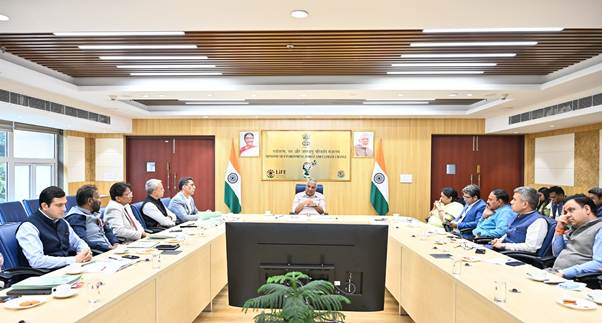
श्री यादव ने कहा कि भारत जलवायु सम्मेलन के उद्देश्यों और पेरिस समझौते के लक्ष्यों को प्राप्त करने के लिए वैश्विक प्रयासों में सकारात्मक योगदान देने के लिए प्रतिबद्ध है। उन्होंने कहा कि जलवायु वित्त एक प्रमुख प्राथमिकता होगी, भारत जलवायु वित्त कार्य कार्यक्रम शुरू करने के लिए सीओपी31 निर्णय की मांग कर रहा है। श्री यादव ने कहा कि वित्त अनुच्छेद 9.1 के अंतर्गत विकसित देशों का दायित्व है और इसे पूर्वानुमानित, बड़े पैमाने पर सार्वजनिक और रियायती होना चाहिए और ऋण के बोझ को नहीं बढ़ाना चाहिए। भारत एनडीसी की राष्ट्रीय स्तर पर निर्धारित प्रकृति का सम्मान करते हुए और न्यूनतम निर्धारित लक्ष्यों को खारिज करते हुए पक्ष-संचालित, सुविधाजनक और गैर-दंडात्मक बने रहने के लिए वैश्विक समीक्षा तंत्र पर भी जोर देगा।

श्री यादव ने कहा कि अनुकूलन भारत के लिए एक प्राथमिकता बनी रहेगी, अनुकूलन संकेतकों पर वैश्विक लक्ष्य स्वैच्छिक होगा और वित्त तक पहुंच को अनुबंधित नहीं करेगा। भारत एक पक्ष-संचालित तंत्र के माध्यम से न्यायसंगत परिवर्तन कार्य कार्यक्रम को जारी रखने का समर्थन करेगा, जो जलवायु न्याय, विकास के अधिकार और सस्ती ऊर्जा पहुंच के माध्यम से न्यायसंगत परिवर्तन को देखेगा। भारत इस बात पर जोर देगा कि प्रौद्योगिकी हस्तांतरण विकसित देशों का दायित्व है और लागत, आईपीआर और व्यापार से संबंधित बाधाओं को दूर किया जाना चाहिए। कार्बन बाजारों में भागीदारी स्वैच्छिक रहनी चाहिए। प्रेसीडेंसी एक्शन एजेंडा के अंतर्गत स्वैच्छिक पहल बातचीत से अलग रहनी चाहिए और एक समान वैश्विक लक्ष्य राष्ट्रीय परिस्थितियों के अनुरूप होने चाहिए।
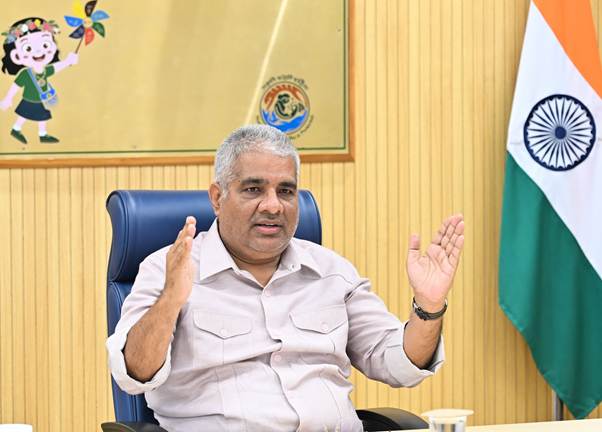
भारत कृषि, खाद्य सुरक्षा और छोटे और सीमांत किसानों की आजीविका में अनुकूलन की आवश्यकता के बीच संबंध पर भी प्रकाश डालेगा। सीओपी31 में स्वीडन के साथ लीडआईटी 3.0 शामिल होगा, तटीय लचीलेपन पर उच्च-स्तरीय कार्यक्रमों के अलावा, आईबीसीए और वनों पर पैनल भी शामिल होंगे। श्री यादव ने कहा कि भारत अंताल्या में रचनात्मक भूमिका निभाएगा, एक ऐसे परिणाम की तलाश करेगा जो प्रतिबद्धताओं से कार्यान्वयन और समर्थन की ओर बढ़े।

श्री यादव ने बताया कि येरेवन (आर्मेनिया) में सीबीडी सीओपी17 के दौरान, भारत ने कुनमिंग-मॉन्ट्रियल ग्लोबल बायोडायवर्सिटी फ्रेमवर्क (केएमजीबीएफ) के प्रभावी और न्यायसंगत कार्यान्वयन के लिए अपनी प्रतिबद्धता की पुष्टि की, जिसमें राष्ट्रीय प्राथमिकताओं, परिस्थितियों और विधायी ढांचे, सामुदायिक भागीदारी, निष्पक्ष और न्यायसंगत लाभ-साझाकरण, और पर्याप्त और पूर्वानुमानित वित्तीय संसाधनों, क्षमता-विकास और प्रौद्योगिकी हस्तांतरण के महत्व को रेखांकित किया गया। उन्होंने कहा कि भारत ने कन्वेंशन के अनुच्छेद 20 (2) के अंतर्गत विकसित देशों के दायित्वों को पूरा करने की पुरजोर वकालत की, योगदानकर्ता आधार के किसी भी अनिवार्य विस्तार या विकासशील देशों पर मौजूदा वित्तीय जिम्मेदारियों के बोझ का विरोध किया तथा सुलभ, पर्याप्त और न्यायसंगत जैव विविधता वित्त का आह्वान किया। श्री यादव ने डिजिटल अनुक्रम सूचना (डीएसआई) का उल्लेख करते हुए कहा कि भारत ने राष्ट्रीय पहुंच और लाभ-साझाकरण (एबीएस) ढांचे और संप्रभु अधिकारों का सम्मान करने के महत्व को रेखांकित करते हुए कैली फंड सहित बहुपक्षीय तंत्र के माध्यम से निष्पक्ष और न्यायसंगत लाभ-साझाकरण की आवश्यकता पर बल दिया है। उन्होंने कहा कि भारत ने राष्ट्रीय परिस्थितियों और प्राथमिकताओं द्वारा निर्देशित केएमजीबीएफ कार्यान्वयन की वैश्विक समीक्षा के लिए एक पक्ष-संचालित, सुविधाजनक, गैर-दखल देने वाले और गैर-दंडात्मक दृष्टिकोण की भी वकालत की और जैव विविधता संरक्षण और कार्यान्वयन के लिए संपूर्ण-सरकार और संपूर्ण-समाज दृष्टिकोण की आवश्यकता पर बल दिया है।
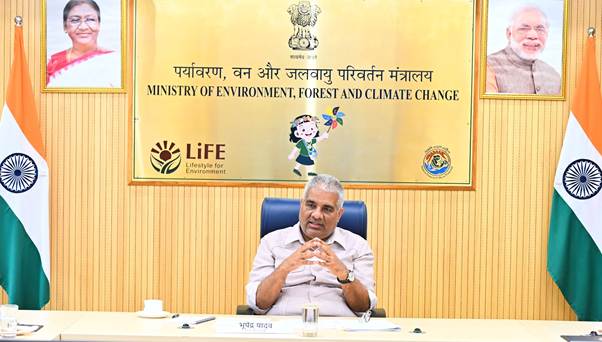
श्री यादव ने उलानबटार (मंगोलिया) में यूएनसीसीडी सीओपी17 का उल्लेख करते हुए कहा कि भारत ने खाद्य और जल सुरक्षा, जैव विविधता, आजीविका और ग्रामीण अर्थव्यवस्थाओं के केंद्र के रूप में भूमि बहाली पर जोर दिया। उन्होंने कहा कि एशिया-प्रशांत क्षेत्रीय समूह का अध्यक्ष चुने जाने के बाद, भारत ने वर्ष 2030 तक 26 मिलियन हेक्टेयर से अधिक भूमि को पुनर्स्थापित करने की अपनी प्रतिबद्धता और सूखे के लचीलेपन के लिए विविध, पर्याप्त, पूर्वानुमानित और निरंतर अंतरराष्ट्रीय वित्त का आह्वान किया। श्री यादव ने कहा कि भारत ने सूखे की प्रतिक्रिया से सूखे के लचीलेपन की ओर बदलाव की वकालत की है, रेंजलैंड की विज्ञान-आधारित और समुदाय के नेतृत्व वाली बहाली का समर्थन किया और पशुपालकों को संरक्षक और भागीदारों के रूप में रेखांकित किया। उन्होंने कहा कि भारत ने घासभूमि और अन्य खुले प्राकृतिक इको-सिस्टम के लिए अपनी पहली मार्गदर्शिका भी शुरू की, जिसमें पुनर्स्थापन के लिए अपने विज्ञान-आधारित, परिदृश्य-विशिष्ट दृष्टिकोण को रेखांकित किया गया है।

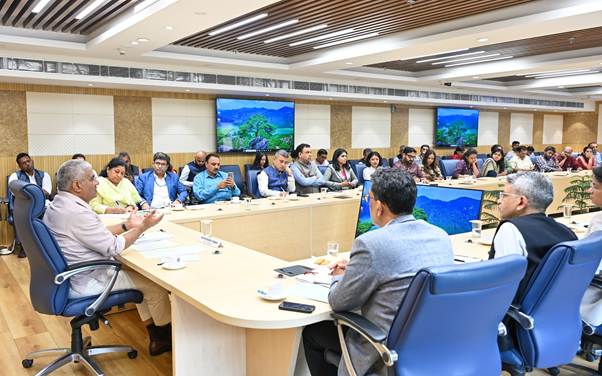
श्री यादव ने कहा कि तीनों प्रक्रियाओं में भारत की भागीदारी विशेष रूप से विकासशील देशों के लिए समानता, राष्ट्रीय परिस्थितियों, विज्ञान आधारित समाधानों और कार्यान्वयन के पर्याप्त साधनों के प्रति उसकी प्रतिबद्धता को दर्शाती है। भारत सीओपी31 में, कार्यान्वयन, समर्थन और अंतर्राष्ट्रीय सहयोग को मजबूत बनाने वाले संतुलित और व्यावहारिक परिणामों की दिशा में काम करेगा इस अवसर पर पर्यावरण, वन और जलवायु परिवर्तन मंत्रालय के सचिव, श्री नरेंद्र भूषण; अपर सचिव, डॉ. अमनदीप गर्ग और श्री आशुतोष अग्निहोत्री; संयुक्त सचिव, श्री रजत अग्रवाल और श्री उदय चौधरी; आईजी (वन), डॉ. क्लेमेंट बेन के अलावा मंत्रालय के अन्य वरिष्ठ अधिकारी उपस्थित थे।
Monday, 2 November 2026

This infographic breaks down 3 permits that people often confuse, but they do 3 totally different jobs. Think of it as Energy vs Activity vs Product.

 This infographic breaks down 3 permits that people often confuse, but they do 3 totally different jobs. Think of it as Energy vs Activity vs Product.


01. LOTO - Lockout Tag


out

Full form: Lockout Tagout

Purpose: To isolate hazardous energy so equipment cannot start unexpectedly while someone is working on it.

When required: Any maintenance, servicing, or repair of energized equipment - electrical, mechanical, hydraulic, pneumatic, thermal, stored pressure.


Who issues: Authorized energy isolation person / LOTO authorized person.


Key controls:

Lock: Physical lock on the isolator / breaker / valve

Tag: Tag with name, date, reason - "Do Not Operate"

Try (LTT): After lock and tag, you TRY to start it to prove it won't start

Zero energy verification: Check for residual energy - bleed pressure, discharge capacitors, confirm 0 voltage


Duration: Stays active until the job is fully complete and every lock is removed by the person who applied it.


Core focus: Energy Safety - Isolate, Control, Protect


LOTO is a physical control. No authorization paper alone can protect you if the energy is still there.


02. PTW - Permit to Work

Full form: Permit to Work


Purpose: Formal authorization that it is safe to do a high-risk, non-routine job.


When required: 

Hot work, Confined space, Work at Height, Electrical work, Breaking containment - exactly as shown in your image.


Who issues: Area Authority / Permit Issuer - the person who owns that area and knows the risks in it.


Key controls:

Risk assessment + JSA: Job Safety Analysis

Gas test: For flammable / toxic / oxygen levels, especially confined space

PPE: Specified for the task

Stand by person: Hole watch, fire watch, etc.


Duration: Shift-based, max 12 hours typically. Must be revalidated / renewed every shift, even if work continues.


Core focus: Activity Safety - Assess, Authorize, Monitor


PTW is a management system. It doesn't isolate energy by itself, it makes sure all hazards have been assessed before work starts.

In practice: A PTW for pump maintenance will often REQUIRE a LOTO to be completed first. LOTO is one of the controls listed inside the PTW.

### 03. Line Clearance Permit

Full form: Line Clearance


Purpose: To ensure the area and equipment is completely free from previous product, materials, rejects, and documents to avoid mix-up and cross-contamination.


When required: Between batches, product changeover, especially in Pharma and Food. Or before starting a new work / new product.


Who issues: QA and Production Supervisor - not Safety alone. This is a GMP requirement.


Key controls:

Cleaning verification: Area / machine cleaned and verified

Removal of leftovers: Previous product, packaging, labels removed

Documentation check: No old batch records, BMRs, or labels left behind


Duration: For each batch changeover only. Valid until the next product starts.


Core focus: Product Quality Safety - Clean, Verify, Document


This has nothing to do with personal injury directly. It's about preventing product contamination, which in pharma/food can be a major quality failure.


How they work together - the bottom part of your image


LOTO = Energy Safety

PTW = Activity Safety

Line Clearance = Product Quality Safety


Safer Together - that overlap in the middle is the point.


Example: You are changing a product on a tablet press in a pharma plant:

You need a Line Clearance from QA to prove the previous drug is fully removed.

If you need to open the machine for maintenance, you need a PTW for breaking containment.

Inside that PTW, you will need LOTO to lock out the main motor so it can't start while your hands are inside.


They are not interchangeable. One does not replace the other.


Quick memory aid from the image:

LOTO: Isolate, Control, Protect

PTW: Assess, Authorize, Monitor

Line Clearance: Clean, Verify, Document

🚨🌡️🏗️🚨🚥🚧🗼⛑️🦺🚦⚠️

#

It says good intentions are not enough. HSE fails when the system around people fails.

 This poster is a root cause map for why Health, Safety and Environment (HSE) programs fail even when everyone means well.


It says good intentions are not enough. HSE fails when the system around people fails.


The 10 failure points


The poster groups them into 10 common causes:


1. Lack of Management Commitment: When leaders do not fund, model, or prioritize HSE, workers learn it is optional.

2. Inadequate Training and Competence: Untrained or undertrained staff do not know the hazard or the correct control, so they make mistakes.

3. Poor Risk Management: Hazards are not identified, assessed, or controlled before work starts.

4. Non-Compliance: Ignoring procedures, permits, and legal requirements. Rules exist but are not followed.

5. Unsafe Behaviour: Carelessness, shortcuts, and risk taking, often because pressure or habit makes it feel faster.

6. Inadequate Communication: Critical HSE information does not reach everyone who needs it, across shifts, languages, or contractors.

7. Poor Supervision and Oversight: Lack of monitoring allows unsafe acts and unsafe conditions to continue uncorrected.

8. Workplace Pressure: Tight deadlines, high production targets, and lack of resources push safety aside.

9. Inadequate Resources: Insufficient Personal Protective Equipment (PPE, the gear that protects the body), tools, or safety systems. People cannot work safely without them.

10. Weak Safety Culture: When safety is not a core value, HSE will always struggle. Culture is what people do when no one is watching.


The result in the middle


The stressed worker in the center shows the human cost. The yellow circle says the result is accidents, injuries, loss, and a failure to protect people.


What to do


The bottom section flips each failure into an action:


Show strong leadership and commitment to HSE.

Provide regular training and build competence.

Assess and control risks effectively.

Follow procedures and obey safety rules.

Encourage safe behaviour and stop unsafe acts.

Communicate clearly and engage everyone.

Ensure adequate resources for HSE.

Build a positive safety culture.

Monitor, review, and improve continuously.


The final line is the point: A successful HSE program starts with every one. It is a shared responsibility, not just the safety officer's job. ⛑️🗼🌡️🏗️🚨🚥🚧🦺🚦⚠️

#viralreelschallenge #ConstructionSafety #facebookviral #SafetyCulture #viralreels #ToolboxTalk #fypシ #safetyfirst #fyp #safety

The Bharat Renewable Energy (RE) Summit & Expo 2026 was officially inaugurated by Prime Minister Narendra Modi at Bharat Mandapam, New Delhi.

 The Bharat Renewable Energy (RE) Summit & Expo 2026 was officially inaugurated by Prime Minister Narendra Modi at Bharat Mandapam, New Delhi. Coinciding with the 9th Session of the International Solar Alliance (ISA) Assembly and the 4th International Conference on Green Hydrogen, this multi-day mega-event serves as India's premier gathering for global policymakers, financial institutions, and renewable energy giants. [1, 2, 3]

Greenko Group's Presence at Bharat Mandapam
Greenko Group, one of India’s leading renewable energy developers and the nation's largest clean energy asset operator, is a core industrial participant at the event. [1, 2, 3]
  • Key Executive Representation: Dr. Paravastu Rambabu (Chief Sustainability Officer, Greenko Group) addressed the summit, emphasizing the company's status as a top-tier operator and its focus on driving the green transition via intelligent storage across the Global South. [1, 2]
  • Mega-Project Portfolios: Greenko is showcasing its landmark clean energy systems, notably its world-first/largest pumped storage hydropower projects (such as the flagship Pinnapuram IREP in Andhra Pradesh and the Saundatti Pumped Storage Project). [1, 2, 3]
  • Current Installed Capacity: Greenko features a massive operational footprint with 11 GW of current installed capacity across 15 Indian states, consisting of robust utility-scale portfolios:
    • Solar Portfolio: 2.2 GWp across 50 operating sites.
    • Wind Portfolio: 3.192 GW across 58 operational wind farms.
    • Hydro Portfolio: 1.789 GW operational storage across 25 sites. [1, 2, 3]

List of Major Renewable Energy Industries Present
The expo at Bharat Mandapam hosts over 400 exhibitors and corporate giants spearheading the clean energy supply chain, manufacturing, and grid-scale installations. Some of the most prominent industrial participants include: [1]
  • Greenko Group
    • Industry Focus: Large-scale dispatchable renewables, green hydrogen generation, and pumped hydro storage.
    • Key Pipeline: Aiming for 50 GW operational capacity by 2030. [1]
  • Suzlon Group
    • Industry Focus: Leading wind energy turbine manufacturing and turnkey wind farm installations. [1, 2]
  • Adani Green Energy Ltd
    • Industry Focus: Mega utility-scale solar and wind installations, operating some of the world's largest solar parks. [1]
  • ReNew
    • Industry Focus: Comprehensive solar, wind, and utility-scale hybrid decarbonization assets.
  • Avaada Group
    • Industry Focus: Solar manufacturing, EPC project execution, and specialized green ammonia/hydrogen portfolios.
  • GREW Solar
    • Industry Focus: High-efficiency Solar PV module manufacturing and technology supply chain solutions. [1]
  • EVREN (Brookfield Group)
    • Industry Focus: Scaled clean energy platforms backed by global infrastructure investment funds. [1]

The prestigious Bharat Renewable Energy Summit & Expo 2026 is being held from 2 to 5 November 2026 at the Bharat Mandapam Convention Centre in New Delhi. Formally continuing India's well-known RE-INVEST series, this mega event co-hosts three paramount clean-energy platforms: the 9th Session of the International Solar Alliance (ISA) Assembly, the 4th International Conference on Green Hydrogen (ICGH), and the flagship RE Expo itself.

 The prestigious Bharat Renewable Energy Summit & Expo 2026 is being held from 2 to 5 November 2026 at the Bharat Mandapam Convention Centre in New Delhi. Formally continuing India's well-known RE-INVEST series, this mega event co-hosts three paramount clean-energy platforms: the 9th Session of the International Solar Alliance (ISA) Assembly, the 4th International Conference on Green Hydrogen (ICGH), and the flagship RE Expo itself. 

The exhibition features over 400 global manufacturers, developers, and technology providers, with leading industries gathering to demonstrate capabilities across wind, solar, and hybrid infrastructure. 

Major Renewable Energy Industries at the Event
The comprehensive lineup of major industrial participants and stakeholders represented or participating at the event includes:
  • Greenko Group: India's pioneer in dispatchable renewables and largest clean energy storage operator, showcasing their signature gigawatt-scale pumped hydro storage projects.
  • Adani Green Energy: Presenting massive utility-scale solar and wind generation portfolios.
  • Tata Power Renewable Energy: Spotlighting extensive grid-tied solar, hybrid parks, and distributed clean tech.
  • NTPC Green Energy Ltd (NGEL): Public sector power giant scaling up solar and green hydrogen infrastructure.
  • ReNew: Demonstrating large-scale asset development across wind, solar, and corporate decarbonisation options.
  • Suzlon Energy & Inox Wind: Wind energy manufacturing pioneers leading the domestic supply-chain shift.
  • Sterling and Wilson Renewable Energy: Specialized global solar EPC and engineering heavyweights.
  • Avaada Energy & Azure Power: Independent power producers advancing global solar utility footprints.
  • Ampin Energy Transition & Hero Future Energies: Commercial & Industrial (C&I) decarbonisation specialists. 

Focus Feature: Greenko Group Profile
As a principal industry entity in India's energy transition, Greenko Group plays an anchor role in the themes driving the summit (Digitalisation, AI, and Storage). 
  • Current Operational Footprint: Commands an installed capacity of 11 GW, with an active pipeline aiming to hit 50 GW by 2030.
  • Storage Leadership: Currently manages over 20 GWh of daily operational storage capacity (expanding to 100 GWh by 2030), headlined by the world's largest integrated pumped hydro storage projects. 
  • Environmental Impact: Avoids an estimated 59.05 million tonnes of CO2 emissions annually while powering over 1.83 crore households across India. 
If you are attending the event or looking to interface directly with Greenko or other industrial booths, the prominent touchpoints include:
  • Greenko Group (HQ)
    • Core Role: Main corporate headquarters driving digitization, pumped storage, and carbon-free energy orchestration.
    • Location: Hitech City Layout, Madhapur, Hyderabad, Telangana. 
  • Greenko Group (Delhi Corporate Office)
    • Core Role: Strategic northern regional office coordinating key public-private partnerships, transmission projects, and G2G relations.
    • Location: 15th Floor, Hindustan Times House, KG Marg, New Delhi. 
    he complete exhibition layout for the Bharat Renewable Energy Summit & Expo 2026 is distributed across Halls 1 to 5 on the Ground Floor of Bharat Mandapam, spanning roughly 32,000 square metres. [1, 2, 3]
    As one of the anchor developers showcasing gigawatt-scale pumped storage and green hydrogen pathways, Greenko's massive custom raw space pavilion is centrally positioned within the primary industry zones. [1, 2, 3]
    The digital assets and interactive layouts are available directly through the official platform channels:
    🗺️ Visualizing the Floor Layout
    • Interactive Grid: You can navigate the complete zoning, check adjacent state/country pavilions, and track booth distributions using the Official BRE Summit Floor Plan. The desktop layout allows you to hover over specific blocks to zoom in on booth numbers and coordinates. 
    • PDF Schematic: For a blueprint showing technical details like structural columns, entry/exit gates, and cargo service roads, you can view the BRE Summit 2026 Floor Plan PDF. [
    📱 Live Navigation at Bharat Mandapam
    Because the event is currently active, booth layouts, live traffic, and company-specific desk setups are best tracked via mobile. You can download the official BRE Summit 2026 Mobile App available via the BRE Summit Floor Plan Page to pull up real-time indoor GPS navigation straight to Greenko's booth