
Wastewater is generated daily through domestic and urban activities. As towns and cities expand, the volume of sewage requiring collection, conveyance and treatment also increases. Effective treatment therefore requires different technological approaches depending on the nature of sewage, local conditions and available infrastructure. In urban areas, sewage flows through underground networks to centralised treatment plants. However, areas without complete sewer networks require solutions for wastewater collected through septic tanks and other on-site systems. Treatment requirements also vary with sewage characteristics, available land, discharge standards and opportunities for treated-water reuse. Addressing these differences needs a combination of conventional treatment systems and innovative technologies suited to specific situations.
This approach shapes the Namami Gange Programme (NGP), launched in 2014. It is an Integrated Conservation Mission with the twin objectives of effective abatement of pollution, conservation and rejuvenation of the National River Ganga. Main pillars of the Namami Gange Programme are Sewerage Treatment Infrastructure, River-Front Development, River-Surface Cleaning, Biodiversity, Afforestation, Public Awareness, Industrial Effluent Monitoring and Ganga Gram.
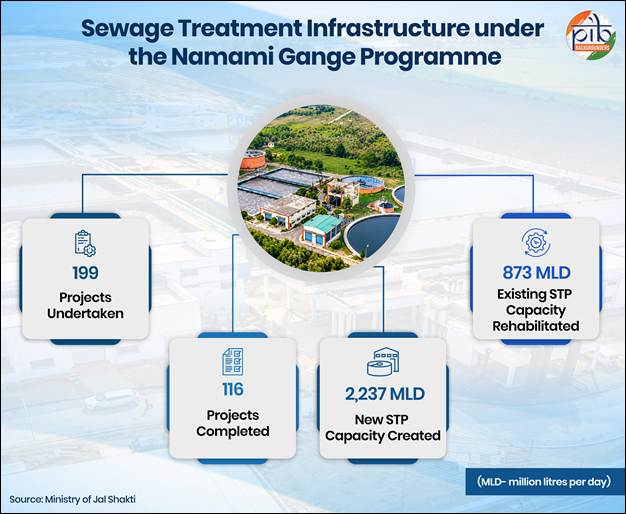
The programme places sewage treatment infrastructure at the centre of its pollution-abatement work. It combines the development of new treatment capacity, rehabilitation of existing facilities and the adoption of different treatment technologies. The programme has undertaken 199 sewerage infrastructure projects worth an estimated ₹31,327 crore, of which 116 have been completed. These projects aim to create 5,270 million litres per day (MLD) of new sewage treatment plant (STP) capacity, with 2,237 MLD created so far. The programme also targets the rehabilitation of 925 MLD of existing STP capacity, of which 873 MLD has been rehabilitated. These efforts expand treatment capacity while improving the performance of existing infrastructure.
Namami Gange’s Technology-Neutral Approach
The Namami Gange Programme follows a technology-neutral approach, selecting sewage treatment processes according to local requirements. Adopted technologies include the Conventional Activated Sludge Process, Upflow Anaerobic Sludge Blanket (and its combinations with aerated lagoons), Sequential Batch Reactor, Moving Bed Biofilm Reactor, Fluidized Aerated Bed, and Food Chain Reactor. Other solutions include electrocoagulation, constructed wetlands and packaged systems such as Johkasou.
Activated sludge refers to a mass of microorganisms cultivated in the treatment process to break down organic matter into carbon dioxide, water, and other inorganic compounds. Sequential Batch Reactor is a cyclic activated sludge treatment process which provides the highest treatment efficiency possible in a single-step biological process. |
This flexibility allows treatment infrastructure to address varied conditions, including large urban centres, small habitations, hilly terrain and land-constrained locations. The programme also incorporates innovations such as NEREDA, Soil Biotechnology, on-site Advanced Oxidation Process-based treatment, multi-storey STPs and decentralised systems. Faecal sludge and septage management further extends treatment options beyond conventional sewerage networks.

Food Chain Reactor
Food Chain Reactor (FCR) technology was introduced in India through the NGP. It improves upon the Activated Sludge Process and Sequential Batch Reactor by incorporating fixed artificial media and plant roots. Its advantages include a smaller footprint, lower power consumption and nutrient removal. The programme records five operational FCR-based STPs: two at Bhatpara, West Bengal and three at Prayagraj, Uttar Pradesh. Another plant at Bhagalpur in Bihar is under construction, with an approximate area of 175 square metres per MLD.
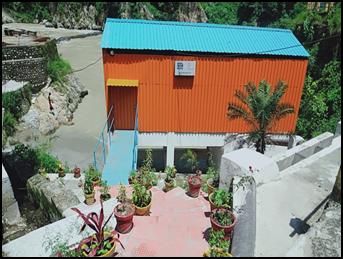
Electrocoagulation Technology Applied in Uttarakhand
Electrocoagulation and electro-oxidation represent another treatment approach introduced through the programme. Electrocoagulation is a non-biological treatment process that uses electric current and a coagulant metal anode to destabilise suspended and emulsified pollutants. These systems are suited to cold temperatures, hilly terrain and locations with limited access. Such systems have been implemented in Uttarakhand at locations like Badrinath and Chamoli, with 17 installations recorded. These include a 0.05 MLD STP at Police Chowki, a 1.19 MLD plant at Vivekanand Colony and a 1.25 MLD plant at Pokhari Bend. These systems can therefore extend treatment infrastructure to locations where conventional approaches may be difficult to implement.
The programme has also explored treatment solutions that can work closer to the source of wastewater. An Advanced Oxidation Process-based pilot at Varanasi’s Assi Drain was designed to treat excess wastewater onsite, avoiding long interception and diversion sewer lines. The approach uses systems with minimum civil infrastructure and faster execution. Treatment intends to improve water quality, increase dissolved oxygen, and eliminate odour. The model has an innovative financing arrangement. It links payments to the quantity of treated water and achievement of key performance indicators, with no upfront capital payment. This arrangement connects remuneration with treatment performance while allowing freedom in design and configuration.
Another example is the multi-storey sewage treatment plant at Muni Ki Reti, Chandreshwar Nagar. It is the country’s first four-storey STP for a municipality built under the NGP. Limited land, three sewage drains, a stormwater drain and the site’s location upstream of Rishikesh’s Triveni Ghat made conventional construction challenging. The 7.5 MLD plant occupies approximately 900 square metres, using vertical construction to overcome space constraints. Its land requirement is around 120 square metres per MLD with biological nutrient removal, compared with 400 square metres per MLD for the cited conventional alternative. These examples show how treatment design can adapt to site conditions while meeting wastewater-management requirements.
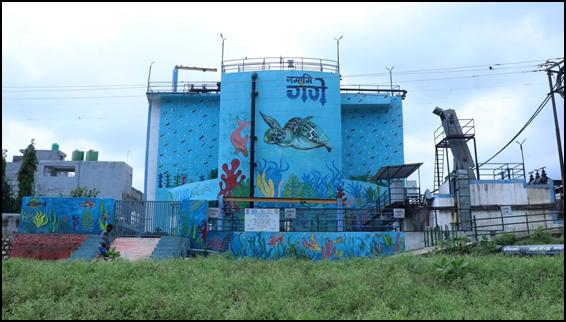
Multi-Storey Sewage Treatment Plant at Muni Ki Reti
Constructed Wetland Treatment
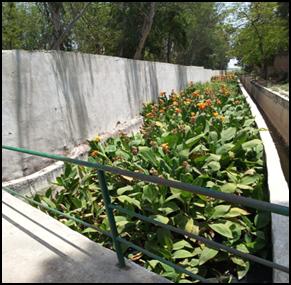
Not every settlement requires the same scale of sewerage infrastructure. In smaller habitations, conventional networks and sewage treatment plants can be expensive, while limited land creates additional challenges. Under NGP, decentralised and nature-based solutions offer alternatives suited to such locations. Constructed wetlands (CWs) are engineered systems that use natural processes to remove pollutants under controlled conditions. A CW system comprises water, plants, growing media (substrate), soil and microorganisms.
Bithoor in Uttar Pradesh demonstrates this approach. With a population of approximately 20,000, the Nagar Panchayat faced high costs for conventional sewerage infrastructure and a lack of suitable land for an STP. Constructed wetlands were selected following third-party appraisal as an emerging treatment technology. Six wetlands were developed directly on drains, providing in-situ treatment for approximately 2 MLD. This resulted in declining Biochemical Oxygen Demand (BOD) levels from around 75 mg/l at the inlet to below 10 mg/l in treated effluent. The technology is considered suitable for drains carrying small, dilute flows where sufficient length and width are available.
Johkasou provides another decentralised option for sewage treatment. It is a packaged treatment facility capable of treating domestic sewage to the desired regulatory and National Green Tribunal (NGT) norms. The system combines several sewage-treatment processes within a prefabricated, plug-and-play unit. Johkasou-based decentralised sewage treatment plants can be useful for low-flow applications, locations where civil construction is difficult and sites with limited space. It also includes locations where systems can be constructed underground. The systems have been used at multiple locations in Uttarakhand, with six installations recorded.
The systems reduce the need for full-time operators and daily sludge handling at the site. Multiple configurations, including cylinder-type and capsule-type options, cater to different flow requirements. Depending on the configuration, the treatment process includes screening, primary treatment, biological treatment, secondary settling, recirculation, disinfection and filtration. These features make Johkasou relevant to settlements where traditional sewerage infrastructure is difficult to build or supervise. Its use in Uttarakhand reflects the need to adapt decentralised sanitation solutions to local geography.
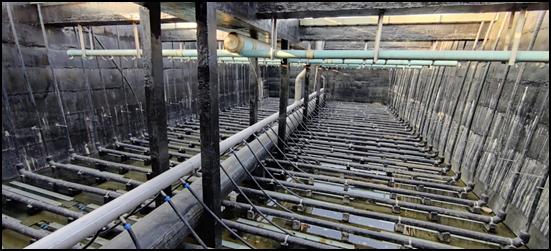
NEREDA is another biological wastewater treatment technology introduced through the NGP which uses aerobic granular sludge. It uses the same bacteria as conventional activated sludge but forms compact aerobic granules with good settling properties. The technology offers a smaller footprint, lower construction costs and reduced operating expenditure. It has also demonstrated power savings of approximately 50% compared with the Activated Sludge Process and 20% compared with the Sequential Batch Reactor (SBR).
A 60 MLD NEREDA-based STP at Pahadi Patna represents these advantages. Its bioreactor occupies approximately 1,900 square metres, compared with 5,400 square metres for the cited SBR bioreactor requirement. NEREDA shows how advanced biological treatment can reduce space and energy requirements in larger installations.
NEREDA Reactor
Soil Biotechnology and Faecal Sludge & Septage Management
Soil Biotechnology-based STP at Devprayag
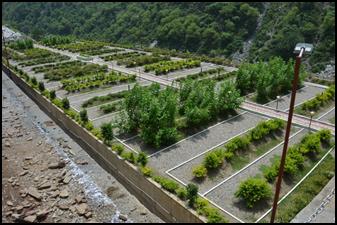
Soil Biotechnology provides a natural-treatment approach under the programme. This terrestrial wastewater-treatment system combines physical processes such as sedimentation and infiltration with biochemical processes. This removes suspended solids and organic and inorganic contents from wastewater. The system uses a suitable mineral constitution, native microflora, and bio-indicator plants as key components.
Also described as a Constructed Soil Filter, it can be built using Reinforced Cement Concrete (RCC), stone masonry, or soil bunds. Its elements include a raw-water tank, bioreactor containment, treated-water tank, piping and pumps. Depending on the desired water quality, the process can operate as a single-stage or multistage system. The approach minimises mechanical or moving equipment and facilitates easier operation. At Devprayag, a 1.2 MLD Soil Biotechnology-based STP was constructed, with effluent standards based on NGT parameters.
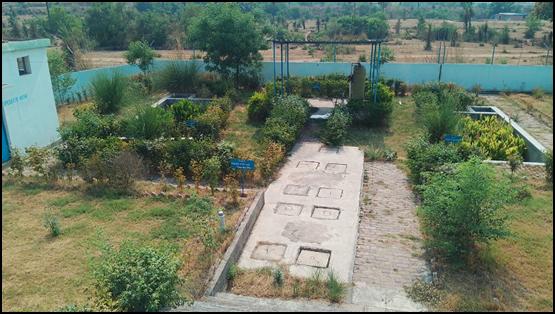
Faecal Sludge and Septage Management addresses another part of the sanitation chain. At Chunar, Uttar Pradesh, a 10 kilolitres per day (KLD) Faecal Sludge Treatment Plant (FSTP) pilot was sanctioned at a construction cost of ₹2.70 crore. Conventional interception and diversion networks and an STP were considered unfeasible due to high costs for the small habitation. Septic tanks and soak pits were prevalent, while drain flows remained low and some drains dried up. Following third-party appraisal, constructed wetlands or other nature-based solutions were identified as more suitable.
An FSTP does not replace an STP, as it treats periodic septage generated from soak pits. Co-processing enables septage from unconnected areas to enter the wider treatment system. It involves a receiving station for septage tankers and transferring the collected material into the network for treatment alongside city sewage.
Faecal Sludge and Septage Management
Energy Recovery, Sludge Management and Resource Use
Under Namami Gange, interventions focus on sludge management, energy recovery and reducing operational and resource requirements. Biogas generation through anaerobic digestion of sludge offers an opportunity for energy recovery. Anaerobic Digestion is the biological degradation of organic matter in the absence of oxygen. The biogas can be used for power generation. Varanasi’s 140 MLD Dinapur STP records an actual flow of approximately 110 MLD and actual total power consumption of 4,20,000 units per month. Biogas-based generation reached around 2,20,000–3,00,000 units monthly, representing approximately 52% to 72%. At the 80 MLD Naini STP in Prayagraj, biogas generation accounted for around 50% of daily power consumption. Other examples include projects at Jajmau in Kanpur and Bhagalpur, while a 220 MLD STP at Meerut is identified for Bio-CNG generation.
Sludge dewatering also contributes to operational efficiency. Dewatering is the separation of solids and liquids to increase the solid content of sludge by removing a portion of the liquid fraction. Volute Press (a sludge-dewatering device) was introduced at the 50 MLD Ramana STP to meet guaranteed energy-consumption and land requirements. Its energy efficiency and compact footprint have prompted consideration of replication. Together, these interventions extend wastewater management beyond pollutant removal to include residual sludge treatment and more efficient plant operation.
The long-term performance of sewage treatment plants depends on treatment standards, efficient operation and sustainable resource use. Under Namami Gange, several initiatives promote green and energy-efficient STPs.
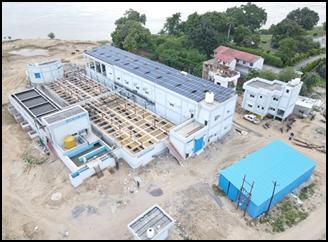
Onsite Solar Power at an STP
On-site solar power was initially introduced at the 42 MLD Naini STP to comply with guaranteed energy consumption. Its 1,000 KW solar plant generates approximately 3,850 units daily against a requirement of 5,700 units. At the 80 MLD Naini STP, solar generation contributes around 1,400 units daily, while biogas supplies another 4,500 units against a total requirement of about 8,900 units. Other installations and projects include the 16 MLD Jhunsi and 14 MLD Phaphamau STPs, alongside projects at Bareilly, Bhagwanpur, Vrindavan, Hathras, Shamli and Saharanpur.
A 220 MLD Meerut STP has also been proposed as a Green STP, with 100% solar power envisaged for the plant and associated facilities. A 10 MW offsite solar plant was being considered by the concessionaire, with electricity supply proposed under the Government of India’s Open Access Policy.
Sludge treatment also contributes to sustainability. A sludge incineration pilot at Rishikesh explores thermal stabilisation and volume reduction. Dewatered municipal sludge containing about 20% solids can be dried to around 90% solids using hot air. The dried sludge is then oxidised in a hot-air generator. The resulting dry ash is not bio-manure, but stabilised ash can be considered for making fire bricks or concrete. At Muni Ki Reti, the pilot was intended to address sludge disposal challenges arising from limited land availability. Together, these efforts combine renewable energy, efficient equipment and improved sludge management to strengthen the environmental and operational sustainability of STPs.
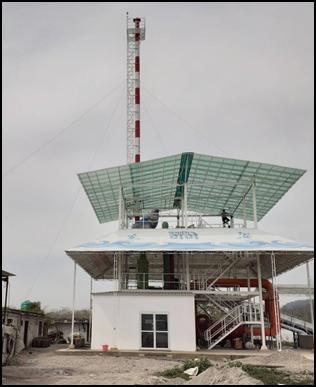
Creating new treatment capacity must be complemented by rehabilitating existing STPs and trunk sewers. Ageing equipment, non-compliance with treatment standards and missing tertiary-treatment components can necessitate upgrades. Under Namami Gange, rehabilitation works address these issues across multiple locations. Examples include the 80 MLD Naini STP in Prayagraj, with electro-mechanical works, biogas power and OCEMS. The 130 MLD Jajmau STP in Kanpur received civil and electro-mechanical rehabilitation, biogas power, chlorination and OCEMS.
Trunk sewer rehabilitation is similarly critical as it addresses siltation, damage and punctures in ageing networks. In Varanasi, a 7-km old brick trunk sewer, up to 2,400 mm in diameter, was taken up using a Glass Reinforced Pipe liner. In Kanpur, 9.3 km of old brick trunk sewer, up to 2,250 mm in diameter, was taken up using Machine Wound Spiral Lining.
The programme also uses the Hybrid Annuity Model (HAM)- based Public-Private Partnership (PPP) and One City/Cluster–One Operator model to integrate new and existing sewage infrastructure. Construction-linked payments are combined with performance-linked payments over 15 years, promoting accountability and sustained operation. Under this model, 31 projects covering 1,955 MLD were taken up. Of these, 11 projects covering 454 MLD have been completed, while 6 projects covering 235 MLD are in an advanced stage of completion. The focus on rehabilitation, operation and maintenance makes wastewater treatment a continuing service rather than a one-time infrastructure activity.
From Sewage Treatment to Sustainable Wastewater Management
Namami Gange’s approach to wastewater treatment combines infrastructure, diverse technologies, decentralised solutions, rehabilitation and long-term operation. Conventional and advanced treatment processes, nature-based systems and emerging technologies address varied local requirements. Performance-based operational models, resource recovery, energy efficiency, sludge management and treated-water reuse strengthen the overall treatment framework. Ultimately, the objective extends beyond building STPs to creating sustainable wastewater-management systems that ensure effective treatment, reliable performance and resource recovery across the river basin.
References
Ministry of Jal Shakti
https://nmcg.nic.in/NamamiGanga.aspx
https://ejalshakti.gov.in/misc/Innovative_LRT_S.aspx/1000
https://nmcg.nic.in/pdf/NGP-At%20a%20Glance%20(Final%20Version%20Printed).pdf
Others
https://www.niti.gov.in/node/306
****
PIB Research
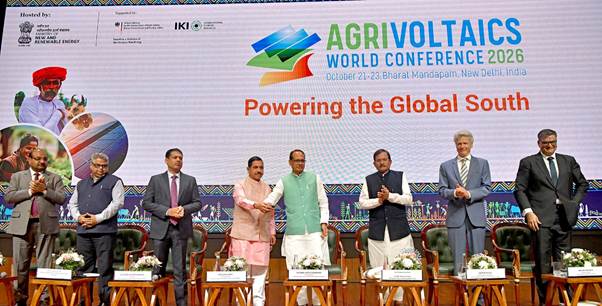
The 7th edition of the AgriVoltaics World Conference (AWC) 2026 commenced today at Bharat Mandapam, New Delhi, marking a definitive milestone in the country's efforts to integrate agriculture and renewable energy. This premier global summit is being hosted in the Global South for the first time in India, firmly reinforcing India's expanding stewardship in concurrently advancing global food security, energy self-reliance, and sustainable development.
The prestigious three-day conference is being hosted by the Ministry of New and Renewable Energy (MNRE), with support from the Federal Ministry for the Environment, Climate Action, Nature Conservation and Nuclear Safety (BMUV), Germany, and organised in partnership with Conexio-PSE under the theme "Powering the Global South."
The conference embodies the foundational vision of "From Power to Empower" championed by Hon’ble Prime Minister Shri Narendra Modi. He noted that India's clean energy transition is actively redefining the agrarian paradigm, enabling farmers to transcend traditional boundaries as raw-food producers (Annadatas) and emerge as pioneering clean-energy producers (Urjadatas).Hon’ble Prime Minister emphasised that India’ clean energy transition has unlocked unprecedented avenues to expand rural entrepreneurial ecosystems, optimise financial models, and cultivate long-term economic resilience across the country and called upon international stakeholders, scientists, and industry leaders to collaboratively scale precision agrivoltaics solutions that multiply farmer incomes whilst accelerating the transition to clean energy.
The opening ceremony on Day 1 began with the welcome of dignitaries and lighting of the ceremonial lamp, followed by welcome and opening remarks by Shri Santosh K. Sarangi, Secretary, Ministry of New and Renewable Energy (MNRE). A conference video was screened, setting the context for the three-day gathering and its focus on “Powering the Global South.”
The opening ceremony programme included addresses by Shri Shivraj Singh Chouhan, Union Minister for Agriculture and Farmers Welfare and Shri Pralhad Joshi, Union Minister for New and Renewable Energy, Education and Consumer Affairs, Food and Public Distribution, followed by a video message from Mr. Carsten Schneider, Federal Minister for Environment, Climate Action, Nature Conservation and Nuclear Safety, Germany. Special closing remarks from Dr. Jasper Wieck, Ambassador of Germany to India and Bhutan. Present on the occasion was Shri Shripad Yesso Naik, Minister of State for New & Renewable Energy and Power.
The formal launch segment featured three knowledge resources: the Decision-Making Tool developed by the India Agrivoltaics Alliance (IAA), the Book of Abstracts developed by the International Water Management Institute (IWMI), and the AgriPV Policy Handbook from MNRE.
The conference has brought together over 1200+ delegates, including 150+ foreign participants, comprising international experts, policymakers, researchers, industry leaders, innovators, start-ups and development partners. The event provides a platform for knowledge exchange, technology collaboration and South-South cooperation. The above participation demonstrates a highly integrated governance strategy to align energy self-reliance with agricultural security.
The event featured Comprehensive Ecosystem Integration with regard to Science, Policy, and Innovation. Under this, the programme includes a dedicated India Focus Track alongside two parallel scientific tracks. Discussions across the conference will address innovation, state leadership, crop productivity, policy frameworks, financing models, technology deployment, climate resilience and farmer-centric business models.
Furthermore, a dedicated startup and innovation platform – featuring an interactive AgriVoltaics Pitch Hub - is actively showcasing next-generation technological solutions, bridging the gap among clean-tech innovators, start-ups, venture capitalists, and global industry leaders.
Agrivoltaics offers a transformative opportunity to mitigate rural underemployment, foster local entrepreneurship, increase farmers’ incomes, protect crop microclimates, and secure sustainable livelihoods against the escalating vagaries of climate change through the dual use of land for food and clean energy. Delegates at the conference highlighted the role of agrivoltaics in building climate-resilient agriculture and creating sustainable livelihoods in rural India.
The proceedings collectively underscored that the future of agriculture lies at the intersection of clean energy and digital technology. Agrivoltaics represents a monumental transition in India from conventional agriculture to techno-agriculture, combining solar energy with precision farming, smart irrigation, digital technologies, and innovative business models.
The 7th AgriVoltaics World Conference is expected to decisively accelerate international collaboration, cementing India’s role at the vanguard of engineering a resilient, sustainable future for global food and energy systems.
***
NS/LL
A review meeting was held today under the Co-Chairmanship of Shri Rajesh Verma, Chairperson, Commission for Air Quality Management in NCR and Adjoining Areas (CAQM), and the Chief Secretary, GNCTD, with concerned agencies of the Delhi Government to review dust pollution issues and strengthening coordinated action for effective air pollution mitigation in Delhi in the coming days.
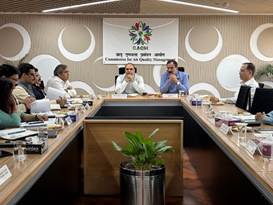
The Commission emphasized that all concerned agencies must strictly comply with its Statutory Directions issued from time to time and ensure their strict implementation. MCD was specifically directed to strengthen dust mitigation measures on roads and open areas under its jurisdiction.
The review was held in continuation of the Commission’s ongoing assessment of dust mitigation measures in Delhi. Earlier, vide Notice dated 07.10.2026, MCD had been directed to appear before the Commission along with all its Deputy Commissioners on 12.10.2026 and submit a detailed zone-wise presentation on efforts undertaken/being undertaken for removal of dust and garbage from roads.
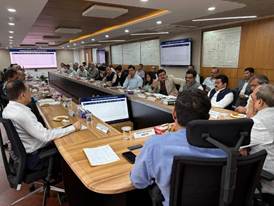
During today’s meeting, DPCC was directed to ensure close coordination among all concerned agencies for effective air pollution mitigation. Further, it has come to the notice that many agencies and departments involved in construction across Delhi are not ensuring dust mitigation measures like installation of wind barriers, dust screens, etc. and most importantly for digging work which leads to accumulation of dust. The concerned departments were directed to take prompt action on identified dust pollution issues and take strict action against the concerned officials and project proponent/ implementing agencies in cases of violation and ensure compliance.
The Commission reiterated that strict action would be taken against officials failing to implement the Statutory Directions, particularly with regard to dust mitigation measures. The District Magistrates of GNCTD would monitor compliance and ensure that measures are implemented on the ground in their respective jurisdictions.
The Ministry of Agriculture & Farmers Welfare will launch the nationwide ‘Khet Bachao Abhiyan- Rabi 2026’ from 22 October to 30 November 2026 to promote sustainable agriculture, improve soil health and encourage the judicious use of agricultural resources. Shri Shivraj Singh Chouhan, Union Minister of Agriculture & Farmers Welfare, will launch the campaign from Karnal, Haryana.
The campaign aims to create awareness among farmers about the balanced and judicious use of fertilizers and other agricultural inputs based on soil testing. It will promote crop diversification through oilseed, pulse and horticulture missions, encourage the effective utilization of fallow fields after paddy harvesting and promote proper crop residue management. The campaign will also focus on training farmers in the appropriate use of organic and bio-based agricultural products and promoting natural farming through awareness programmes, training sessions and field demonstrations. In addition, it will emphasize water conservation, rainwater harvesting and groundwater recharge, while encouraging sustainable agricultural practices to conserve natural resources and ensure the long-term sustainability of agriculture.
The campaign will focus on improving soil health, promoting the balanced use of fertilizers and other agricultural inputs, enhancing water-use efficiency, and encouraging the adoption of resource-efficient and climate-resilient farming practices. Special emphasis will be placed on creating awareness about the appropriate use of fertilizers, including green ammonia, and biological products; water conservation; crop diversification and intercropping with suitable crops and varieties; efficient utilization of rice fallows; natural farming; and integrated farming systems. Capacity building, farm mechanization and field demonstrations of improved technologies, including regenerative agriculture practices, will also form key components of the campaign.
Key themes will include crop residue management, integrated pest management, soil health management, climate-resilient agriculture, promotion of oilseeds and pulses, and seed distribution. The campaign will also facilitate the creation of Farmer IDs, promote awareness about crop insurance under the Pradhan Mantri Fasal Bima Yojana (PMFBY), expand coverage under the Kisan Credit Card (KCC) scheme through saturation efforts, and disseminate information about the benefits and opportunities arising from trade agreements.
As part of the campaign, awareness programmes, farmers’ conferences, Kisan Chaupals, training sessions and field demonstrations will be organized at the State, district, block and Gram Panchayat levels. State Agriculture Departments, Krishi Vigyan Kendras (KVKs), ICAR institutes, State Agricultural Universities and Agricultural Technology Management Agencies (ATMA) will collaborate to ensure the active participation of agricultural scientists, ATMA functionaries, Farmer Producer Organizations (FPOs), cooperatives, Self-Help Groups (SHGs) and progressive farmers. Publicity through local-language materials, radio, Doordarshan, social media and other IEC activities will further strengthen outreach and ensure wider dissemination of information among farmers.
The campaign targets reaching approximately one crore participants through ATMA and ICAR and total of 4,150 teams involving KVKs and ATMA are envisaged, with more than 12,000 scientists and ATMA functionaries expected to contribute to the campaign.
The Department of Agriculture & Farmers Welfare will coordinate with State Governments, ICAR institutions and other stakeholders to ensure effective implementation and regular monitoring of the campaign, with particular emphasis on farmers’ participation and the adoption of sustainable agricultural practices.
Through the ‘Khet Bachao Abhiyan’, the Government seeks to strengthen soil and water conservation, promote efficient and cost-effective farming practices, improve agricultural sustainability and contribute to the long-term prosperity of farmers and the vision of Viksit Bharat.
***
SS/DK
Union Minister for Agriculture and Farmers’ Welfare, and Rural Development, Shri Shivraj Singh Chouhan has said that under the visionary leadership of Prime Minister Shri Narendra Modi, Indian farmers are set to become not merely ‘annadatas’ (food providers), but, by adopting solar energy, will truly emerge as both ‘annadatas and urjadatas’ (food and energy providers). Addressing the inaugural session of the three-day 7th AgriVoltaics World Conference as the keynote speaker at Bharat Mandapam in New Delhi on Wednesday, Shri Chouhan said that integrating agriculture with solar energy was opening up a new pathway towards global welfare and greater economic prosperity for farmers. He stressed that the AgriVoltaics policy must be designed to work effectively on the fields of the country’s 85 per cent small and marginal farmers, ensuring that the benefits of this technology reached those who needed them most.
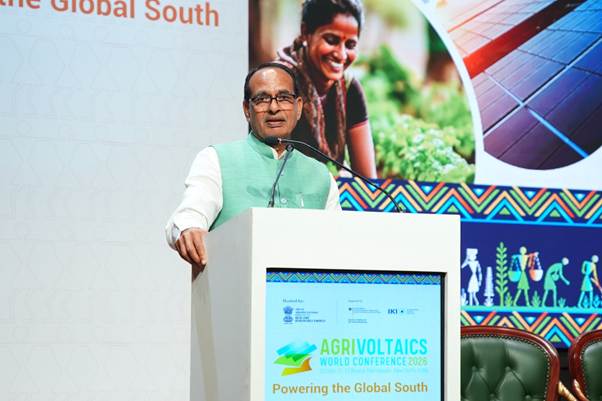
Welcoming delegates from India and abroad, along with the large number of farmers who had gathered at the venue, Union Agriculture and Farmers’ Welfare Minister Shri Shivraj Singh Chouhan explained that AgriVoltaics technology would enable solar panels to generate electricity above the ground while crops continued to flourish beneath them. Explaining the concept in simple, familiar terms, he described it as a model that delivers the best of both worlds, invoking the Hindi expressions ‘aam ke aam aur guthliyon ke daam’ and ‘hing lage na fitkari, rang bhi chokha’ to illustrate the multiple benefits of using the same land for agriculture and energy generation. He observed that while the traditional saying was ‘Rahiman paani raakhiye’ (preserve water), the needs of the modern age called for ‘Rahiman bijli raakhiye’ (preserve electricity), because modern life and agriculture would come to a standstill without power. Integrating energy production with farming, he said, was therefore one of the most important steps that could be taken in the interests of farmers.
Union Agriculture Minister Shri Shivraj Chouhan proudly highlighted India’s transformation from a country dependent on foodgrain imports to meet its food security requirements to one whose granaries were now overflowing with wheat and rice, thanks to the hard work and dedication of its farmers. Indian agriculture continues to maintain a robust growth rate of 4.5 per cent, which is a significant achievement in itself. Exports of agricultural products have reached a new record of US$52.55 billion, while sowing for the 2026–27 rabi season has recently commenced, with particular emphasis on pulses and oilseeds. He noted that these achievements reflected the progress made by Indian agriculture and underscored the importance of developing new approaches to sustain farmers’ prosperity while meeting the country’s evolving needs.
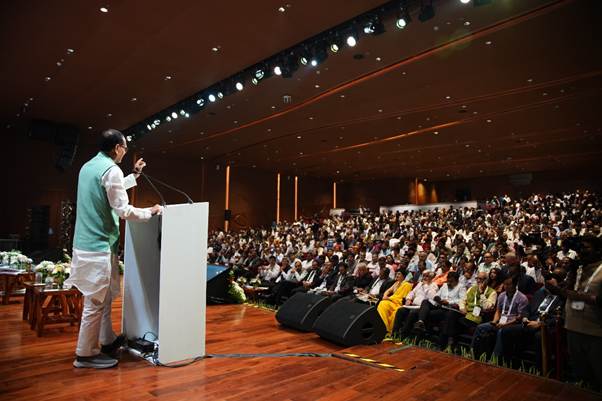
Presenting the realities on the ground before scientists and policymakers, Shri Shivraj Singh Chouhan pointed out that India’s average landholding was just 0.96 hectares and that more than 85 per cent of farmers were small and marginal farmers. Such farmers did not have enough land to abandon cultivation and install solar power plants exclusively on their holdings. He emphasised that while laboratories and government institutions could receive funding for experiments, farmers had to invest their hard-earned money. Therefore, the model must be practically viable on small farmers’ fields, and agricultural production must not be disrupted under any circumstances. He said the objective could not be achieved merely by planting a few crops beneath solar panels. Instead, the height of the panels, the distance between supporting structures and the arrangements for ploughing must be carefully designed to allow farmers to cultivate their land efficiently. The system should also enable them to choose different crops and change their crop cycles according to their preferences every year, without compromising agricultural productivity.
Emphasising the need to address practical challenges before projects were implemented, Shri Chouhan said that robust arrangements must be made for the safe drainage and collection of rainwater falling from solar panels. This would prevent soil erosion in agricultural fields and ensure that every drop of water was put to productive use. He also called for reliable arrangements for purchasing the electricity generated, connecting projects to the power grid and ensuring transparent and timely payments to farmers. He suggested that Farmer Producer Organisations (FPOs) should be actively involved in the initiative and that local rural youth and women should receive training in operating, repairing and maintaining the equipment. This would create substantial employment opportunities within villages themselves. He further made it clear that appropriate safeguards and responsibilities must be established from the outset to ensure that farmers did not bear any financial or physical burden if a company abandoned a project midway or if solar panels had to be removed upon the expiry of a contract. The interests of farmers, he stressed, must remain protected throughout the project’s lifecycle.
Shri Chouhan expressed his appreciation for the leadership of Union Minister for New and Renewable Energy Shri Pralhad Joshi and assured him that the Ministry of Agriculture would work hand in hand and shoulder to shoulder with the Ministry of New and Renewable Energy to ensure the success of this initiative. He emphasised that close coordination between the two ministries would be essential to develop a model that simultaneously supports agricultural production, promotes renewable energy and improves farmers’ economic well-being.
On the occasion, Union Minister for Consumer Affairs, Food and Public Distribution and New and Renewable Energy, Shri Pralhad Joshi, said that the seventh edition of the conference was the largest and most historic of the international conferences held so far. Record participation had necessitated arrangements for additional halls to accommodate the attendees. He noted that, at a time when countries across the world were facing economic challenges, India continued to be the world’s fastest-growing major economy, recording GDP growth of 7.8 per cent in the first quarter of the current financial year. Shri Joshi stated that India’s total electricity generation capacity, which stood at approximately 249 GW before 2014, had now increased to more than 560 GW. Of this, installed non-fossil energy capacity had crossed 308 GW, with 100 GW added in just the past two and a half years. He further highlighted the significant reduction in the cost of non-fossil electricity, which had fallen from ₹11 per unit in 2012-13 to just ₹2.60 per unit today, owing to large-scale production. These developments, he said, demonstrated India’s growing strength in renewable energy and the opportunities available to expand its use in agriculture.
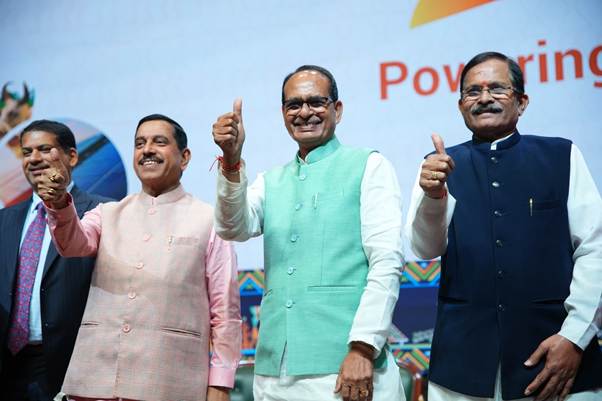
Citing a study by The Energy and Resources Institute (TERI), Union Minister Shri Pralhad Joshi said that, of India’s 116 million hectares of agricultural land, 47.5 million hectares – approximately 30 per cent – were technically suitable for AgriVoltaics. Maharashtra, Rajasthan, Andhra Pradesh, Madhya Pradesh, Karnataka and Uttar Pradesh together accounted for 50 per cent of this suitable land. He emphasised that if AgriVoltaics installations were established on just 10 per cent of this suitable area, India could meet its entire projected electricity demand up to 2050 through this approach alone. In addition to generating electricity, the technology had also been found to increase crop yields by 10 to 20 per cent. He highlighted the potential of AgriVoltaics to support the country’s long-term energy requirements while allowing agricultural land to continue producing crops, thereby creating a dual benefit for farmers and the wider economy.
Shri Joshi stated that, under the PM-KUSUM scheme, 30 lakh (3 million) agricultural pumps had so far been connected to solar energy. This had relieved farmers of the risks and difficulties associated with irrigating their fields at night while enabling them to access uninterrupted electricity during the day. He announced that the government would soon launch the world’s most ambitious AgriVoltaics programme under the next phase of PM-KUSUM. According to studies, the sector had the potential to generate approximately 3.32 lakh full-time local jobs. These employment opportunities would help rural youth find work in their own communities, reducing the need to migrate to district headquarters or major cities in search of livelihoods. The initiative, he said, could thus contribute to both the expansion of renewable energy and the creation of sustainable rural employment.
The inaugural session was attended by several distinguished dignitaries on the dais, including Union Minister of State for New and Renewable Energy Shri Shripad Yesso Naik; Dr Jasper Wieck, Ambassador of Germany to India and Bhutan; Shri Santosh Kumar Sarangi, Secretary, Ministry of New and Renewable Energy; Shri Atish Chandra, Secretary, Department of Agriculture and Farmers’ Welfare; Dr Mangi Lal Jat, Secretary, Department of Agricultural Research and Education and Director General of the Indian Council of Agricultural Research (ICAR); and Shri Ashish Khanna, Director General of the International Solar Alliance (ISA).
During the inaugural session, important technical tools and communication materials related to AgriVoltaics were also formally released and launched. These resources are intended to help farmers and other stakeholders make informed and precise decisions at the field level, supporting the practical implementation of AgriVoltaics and enabling more effective integration of agricultural activities with solar energy generation.
***
SS/DK/MK
