Friday, 18 September 2026

Swachh Sagar Surakshit Sagar Has Evolved into a Whole-of-Government, Whole-of-Society Movement for Clean Coasts and Safe Seas: Dr. Jitendra Singh


Swachh Sagar Surakshit Sagar Has Evolved into a Whole-of-Government, Whole-of-Society Movement for Clean Coasts and Safe Seas: Dr. Jitendra Singh


Union Minister Dr. Jitendra Singh Leads Coastal Clean-Up Drive at Juhu Beach on Eve of International Coastal Cleanup Day, highlights India's unexplored ocean wealth and refers to Deep Ocean Mission launched by PM Sh Narendra Modi as the torchbearer of India's Blue Economy

India’s Coastal Clean-Up Campaign Unites Government, Citizens and Public Figures for Cleaner Seas: Dr. Jitendra Singh

From 75-Day Campaign to Nationwide Movement: Swachh Sagar Surakshit Sagar Expands Public Participation in Ocean Conservation: Dr. Jitendra Singh

Campaign Mobilises Coastal States and Union Territories, Central Agencies, Students, Volunteers, NGOs, Celebrities and Sporting Personalities Across the Country

Posted On: 18 SEP 2026 4:39PM by PIB Delhi

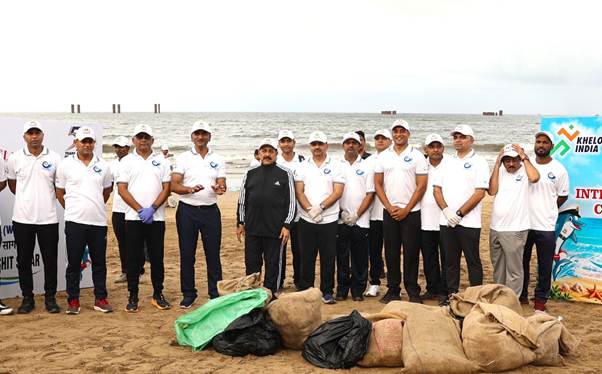
 Leading the coastal clean-up drive at Juhu Beach on the eve of "International Coastal Cleanup Day" being observed across the world tomorrow, Union Minister of State (Independent Charge) for Science & Technology and Earth Sciences, and MoS in the Prime Minister’s Office, Personnel, Public Grievances, Pensions, Atomic Energy and Space, Dr. Jitendra Singh highlighted India's unexplored ocean wealth and referred to Deep Ocean Mission launched by PM Sh Narendra Modi as the torchbearer of India's Blue Economy.

The Minister said that the ‘Swachh Sagar Surakshit Sagar’ campaign, launched in 2022 during the celebrations of India’s 75th year of Independence, has evolved into a whole-of-government and whole-of-society movement for cleaner coasts and safer seas.

What began as a 75-day inter-ministerial campaign has grown into an annual nationwide initiative around International Coastal Cleanup Day, observed on the third Saturday of September, bringing together government institutions and citizens in a collective effort to protect India’s coastal and marine environment. The 2026 campaign is being conducted from September 12 to 19.

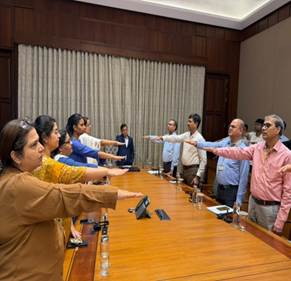
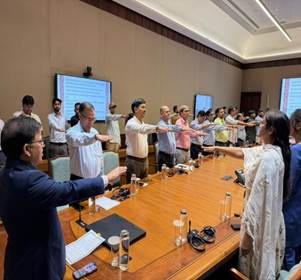
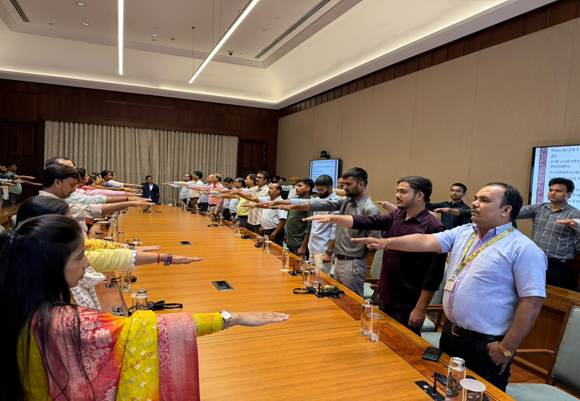
Dr. Jitendra Singh led the coastal clean-up programme at Juhu Beach, Mumbai, organised on the eve of International Coastal Cleanup Day. Secretary, Ministry of Earth Sciences, Dr. T. Srinivasa Kumar Tummala, and BCCI President Mithun Manhas were among those present, along with Directors and senior officials of the Ministry of Earth Sciences and its institutions, public representatives, celebrities, volunteers and other participants. The programme included a mass Ocean Pledge, followed by a hands-on clean-up activity in which Dr. Jitendra Singh joined officials and volunteers in removing plastic and other waste from the shoreline.

The campaign has brought together coastal States and Union Territories, State Governments, Central Government departments and agencies, the Indian Coast Guard, Indian Navy, students, NGOs, volunteers and local communities. Celebrities, public representatives and sporting personalities have also joined the initiative, giving the campaign a wider social reach. The participation of BCCI President Mithun Manhas at Juhu Beach this year further reflected the effort to bring diverse sections of society together for ocean conservation.

The initiative is rooted in India’s growing engagement with its vast maritime domain. Following Prime Minister Narendra Modi’s announcement of the Deep Ocean Mission from the Red Fort, India has been strengthening its scientific and technological capabilities to explore the deep ocean and understand its resources and ecosystems. The oceans hold significant potential in terms of metals and minerals, fisheries, marine biodiversity and bioresources, making scientific exploration, responsible use and conservation of marine resources important for India’s long-term development.

The Minister said that the benefits of India’s maritime resources can be realised only alongside protection of the health of marine ecosystems. Cleaner beaches, reduced plastic pollution and greater public awareness are therefore essential to maintaining healthy oceans and ensuring sustainable use of marine resources. The campaign seeks to turn this awareness into sustained citizen participation and collective action.

India’s coastline of about 11,098 km extends across its coastal States and Union Territories and supports diverse ecosystems, communities and economic activities. Its scale calls for coordinated action by governments, scientific institutions, coastal communities and citizens to address marine litter and protect fragile coastal ecosystems.

The 2026 edition of ‘Swachh Sagar Surakshit Sagar’, being conducted from September 12 to 19, features coastal clean-up drives and a range of public-engagement activities across the country. The campaign is bringing together citizens, students, coastal communities, educational institutions, NGOs, volunteer organisations and government agencies as part of a nationwide effort to promote ocean conservation and responsible environmental practices. The Ministry of Earth Sciences and its institutions are supporting the campaign through scientific and public-outreach initiatives related to marine litter and coastal environmental protection.

Citizen participation is also being strengthened through the Sagar Prahari platform, which enables public engagement with the campaign and supports documentation of marine litter. The initiative complements the larger objective of combining scientific understanding with public participation in addressing marine pollution and protecting coastal ecosystems.

The Juhu Beach programme brought together government representatives, sporting personalities, public figures, volunteers and citizens in a common effort to protect India’s coastline. The mass pledge and clean-up activity reinforced the message that keeping India’s shores clean and its seas safe is a shared responsibility, requiring sustained participation well beyond a single day or campaign.

The ‘Swachh Sagar Surakshit Sagar’ campaign continues to build on the spirit of collective action with which it was launched during India’s 75th year of Independence, strengthening public participation for cleaner beaches, healthier oceans and a more sustainable maritime future.
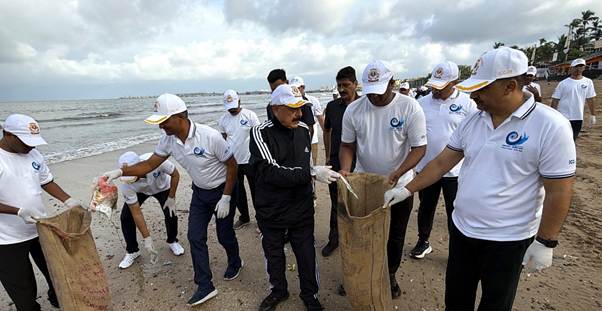
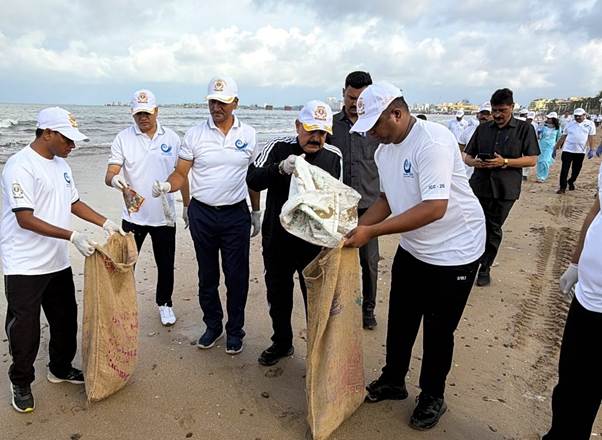
PHOTO - Union Minister Dr Jitendra Singh during a coastal clean-up drive at Juhu Beach, Mumbai on Friday.

****

Kakinada District and Municipal Corporation (KMC) have launched a massive, coordinated push under District Collector M.N. Harendhira Prasad and the state's Swarna Andhra – Swachha Andhra initiative to manage plastic waste and eliminate single-use plastics.

 Kakinada District and Municipal Corporation (KMC) have launched a massive, coordinated push under District Collector M.N. Harendhira Prasad and the state's Swarna Andhra – Swachha Andhra initiative to manage plastic waste and eliminate single-use plastics. [1, 2, 3, 4]

The top 20 latest initiatives and action items implemented by the local administration in 2026 include:
Infrastructure & Technical Interventions
  1. Kakinada Waste-to-Energy (WtE) Plant Expansion: Accelerated completion of the localized Waste-to-Energy plant to process massive dry and combustible plastic waste before upcoming major local festivals. [1, 2]
  2. Establishment of Rural Plastic Waste Management Units: Setting up rural Plastic Waste Management Units across various mandals of the Kakinada district under SBM(G). [1]
  3. Bio-Mining of Legacy Waste: Massive legacy waste clearance drives using advanced bio-mining to recover lands clogged with aged plastic and multi-layered trash. [1, 2]
  4. Plastic-to-Bitumen Road Construction: Scaling up the utilisation of shredded, non-recyclable multi-layered plastic waste as a substitute for bitumen in laying internal city roads. [1]
  5. Mandatory Recycled Content Audits: Alignment with the national Plastic Waste Management Rules 2026 to ensure rigid plastic manufacturing units within the district transition toward incorporating 40% recycled content. [1]
  6. Micro-Pocket Division Management: Systematising all 50 city wards into 382 manageable "micro pockets" where sanitation teams inspect individual households for plastic dumping. [1]
Enforcement & Bans
  1. Single-Use Plastic Ban Enforcement: Imposition of a zero-tolerance policy against single-use plastic bottles, cups, plates, sachets, and carrier bags.
  2. District-Wide "Plastic-Free Kakinada" Campaign: High-visibility public drives under the personal leadership of District Collector M.N. Harendhira Prasad.
  3. Traceable Identifier Audits: Enforcing rule compliance where all plastic packaging circulated by commercial establishments must carry verifiable and traceable digital codes.
  4. "Operation Clean Sweep": Joint field inspections by municipal commissioners and collectors targeting illegal dumping of commercial plastics into drains, canals, and public layout plots.
  5. Bulk Waste Generator (BWG) Enumeration: Enumerating and mapping large commercial spaces (hotels, function halls) to mandate internal plastic segregation systems. [1, 2, 3, 4, 5, 6, 7]
Incentive & Community Programs
  1. The "Rice-for-Plastic" Scheme: Promoting a civic trade initiative where citizens and informal pickers exchange 1 kg of clean plastic waste for 1 kg of usable rice.
  2. SHG-Led Jute Alternative Distribution: Funding and engaging local women's Self Help Groups (SHGs) to manufacture and distribute organic jute carrier bags as affordable replacements for single-use plastics.
  3. NTR Beach Cleaning & Bio-Fencing Drives: Organising intense weekend clean-ups at Kakinada Beach/NTR Beach to retrieve thousands of kilograms of plastic fishing nets, bottles, and tourist litter.
  4. Eco-Bricks Public Promotion: Teaching educational institutions and communities how to safely pack multi-layered plastic wrappers tightly into discarded PET bottles to make building blocks.
  5. "Returning Garbage to Source" Drive: A strict penalty-cum-awareness initiative where illegally dumped household trash bags are traced back and returned to the respective houses. [1, 2, 3, 4]
Awareness & Capacity Building
  1. Awareness Rallies & Plastic-Free Pledges: Conducting community-led city rallies pushing messages on keeping waste out of local water bodies and roads. [1, 2]
  2. SHG "Waste-to-Wealth" Composting & Sorting Training: Equipping community leaders with knowledge on sorting organic matter cleanly from plastic-heavy kitchen bins. [1]
  3. Oil & Curd Packet Disposal Mandate: Distributing digital instruction guides to train citizens to cut consumer packets correctly without detaching small plastic tabs (which slip through standard recycling nets). [1]
  4. Swachh Survekshan Brand Ambassadors: Felicitating and naming local climate activists and sanitation workers to spearhead door-to-door plastic separation verification. [1]

PM to inaugurate International Conference on “The Future of Environment and Climate Dynamics” on 19 September


PM to inaugurate International Conference on “The Future of Environment and Climate Dynamics” on 19 September


Conference to facilitate dialogue on critical environmental and climate challenges and explore ways to strengthen environmental governance

Conference to witness participation of eminent Judges and judicial representatives from 17 countries and distinguished participants from India

Posted On: 18 SEP 2026 3:08PM by PIB Delhi

Prime Minister Shri Narendra Modi will inaugurate the International Conference on “The Future of Environment and Climate Dynamics” on 19 September 2026 at around 10 AM at Vigyan Bhawan, New Delhi.

The two-day Conference is being organised by the National Green Tribunal on 19 and 20 September 2026. It will witness the participation of environmental experts, Judges of the Supreme Court of India and High Courts, District Court Judges, Secretaries of various Ministries, senior government officials, representatives of State Judicial Academies, State Legal Services Authorities, State Expert Appraisal Committees (SEACs), State Environment Impact Assessment Authorities (SEIAAs), State Wetland Authorities and other stakeholders. It will also bring together eminent Judges and judicial representatives from 17 countries.

The Conference will provide a platform for the exchange of judicial approaches, scientific knowledge, environmental governance practices and institutional experiences across jurisdictions. It will facilitate dialogue on critical environmental and climate challenges, including gaps in policy formulation, implementation and enforcement, and explore ways to strengthen environmental governance and institutional cooperation.

 9 Emergency Evacuation Rules — Explained


1. Know the evacuation plan

Know your nearest emergency exits, escape routes, alarm points, and designated assembly area before an emergency occurs.


2. Recognize the alarm

Understand your workplace emergency signals. When an evacuation alarm sounds, take it seriously and act immediately.


3. Leave immediately and calmly

Stop work, secure yourself if safe to do so, and evacuate without running, pushing, or stopping to collect unnecessary belongings.


4. Use designated escape routes

Follow marked emergency exit signs and approved escape routes. Never use elevators/lifts during a fire or emergency unless specifically authorized.


5. Help others when it is safe

Assist people who may need help, but do not put yourself in danger or delay your own evacuation.


6. Stay low if there is smoke

Smoke can reduce visibility and contain toxic gases. Keep as low as practical, protect your breathing, and move toward a safe exit.


7. Never re-enter

Once outside, do not go back into the affected area to retrieve belongings or search for someone. Leave rescue operations to trained emergency personnel.


8. Go to the assembly point

Proceed directly to the designated muster/assembly area. Report to your supervisor or emergency coordinator so personnel can be accounted for.


9. Follow emergency instructions

Listen to emergency responders, fire wardens, safety personnel, and supervisors. Follow their instructions until the all-clear is officially given.


Key message: Stay calm → raise the alarm → evacuate → go to the assembly point → account for everyone → wait for the all-clear. 🚧⚠️💥🚥🎯✅🚨🦺💡🌡️⛑️🔥📝

#fyp #safetytips #viralpost #safety #viral #SafetyCulture #fypシ #safetyfirst #viralreels

Thursday, 17 September 2026

Secretary, MSDE inaugurates Skills4Future (Shell India) EV & Green Skills Lab at NSTI Bengaluru


Secretary, MSDE inaugurates Skills4Future (Shell India) EV & Green Skills Lab at NSTI Bengaluru


EV & Green Skills Lab under Shell’s Skills4Future programme marks a step towards strengthening the vocational training ecosystem through industry-aligned training in electric vehicle technologies and sustainable mobility

The initiative is a collaborative effort of Shell India, Directorate General of Training (DGT), under the aegis of MSDE for equipping students and faculty with future-ready capabilities in green energy and e-mobility

Skills4Future programme has impacted over 290 institutes, trained more than 70,000 learners, and established 20 Green Skills EV lab across five states

Posted On: 17 SEP 2026 6:22PM by PIB Delhi

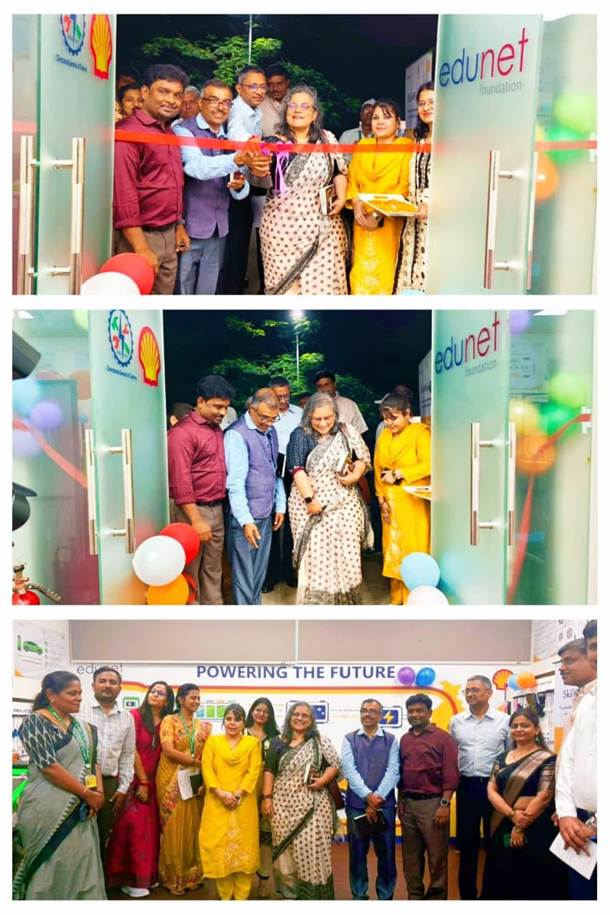
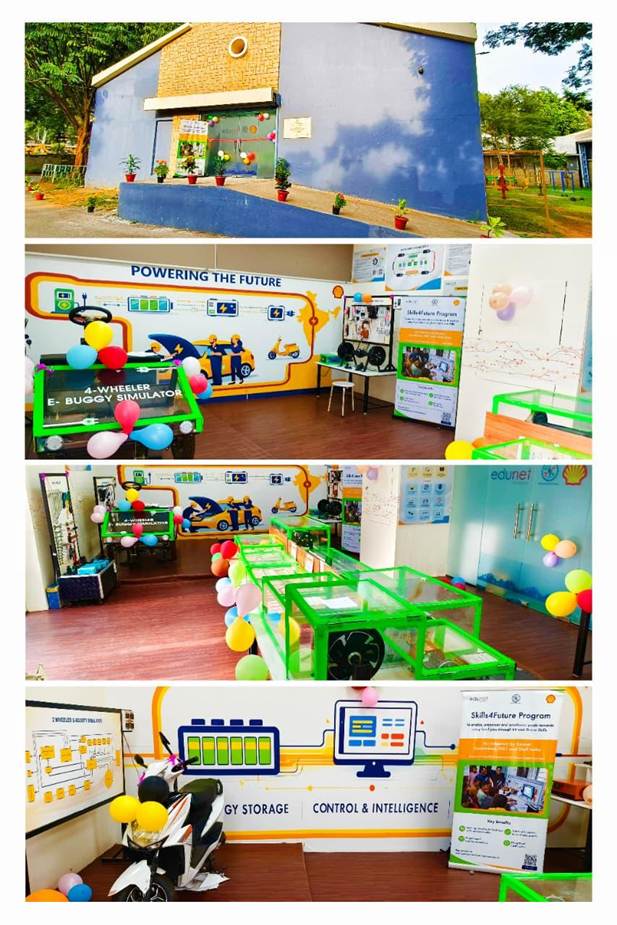
In a significant step towards strengthening India's green skilling ecosystem, Ms. Debashree Mukherjee, IAS, Secretary, Ministry of Skill Development and Entrepreneurship (MSDE) inaugurated the Skills4Future EV & Green Skills Lab at the National Skill Training Institute (NSTI), Bengaluru recently. The lab has been established under the Skills4Future programme, a collaborative initiative of Shell India, Directorate General of Training (DGT), Ministry of Skill Development and Entrepreneurship (MSDE) and Edunet Foundation, aimed at equipping youth with future-ready skills in Electric Vehicles (EVs) and green technologies.

During her visit, Secretary, MSDE, interacted with students, trainers and industry representatives, and witnessed quality infrastructure and practical learning modules on EV technology. The facility has been designed to provide learners with hands-on exposure to Electric Vehicle systems, battery technologies, diagnostics, safety practices and other emerging green technologies, thereby enhancing their employability in rapidly growing sectors of sustainable mobility and clean energy.

Speaking on the occasion, Ms. Debashree Mukherjee, IAS, Secretary, MSDE, emphasized the importance of industry-government collaboration in creating a workforce equipped for the jobs of the future. She noted that initiatives such as the Skills4Future programme play a crucial role in preparing young people for emerging opportunities in green mobility, renewable energy and sustainable technologies while supporting India's vision for inclusive and sustainable economic growth.

The Skills4Future programme has emerged as a significant intervention in advancing green and EV skilling across the country. Through partnerships among government, industry and implementation agencies, the programme has already reached more than 290 institutes across five states, trained over 70,000 learners, upskilled over 258 faculty members and established 20 Green Skills EV lab, thereby creating a multiplier effect throughout the vocational education and skilling ecosystem.

In Karnataka alone, the programme has impacted 101 Industrial Training Institutes (ITIs), trained 9,113 students, demonstrating its contribution towards creating industry-ready talent for the state's growing green economy. The newly inaugurated EV & Green Skills Lab at NSTI Bengaluru further strengthens this ecosystem by providing advanced training infrastructure and experiential learning opportunities for trainees.

The Skills4Future initiative is aligned with the Government of India's vision of fostering a skilled workforce capable of supporting the country's transition towards green mobility and sustainable development. By integrating industry-relevant curriculum, practical learning infrastructure and placement-linked opportunities, the programme seeks to bridge skill gaps and enable youth to participate meaningfully in emerging sectors of the economy.

The inauguration of the EV & Green Skills Lab at NSTI Bengaluru marks another milestone in the ongoing partnership between MSDE, DGT and Shell India, reaffirming their shared commitment to empowering youth with future-focused skills and supporting India's journey towards a greener and more sustainable future.

***

Ministry of Parliamentary Affairs aligns with countrywide rollout of Swachhata hi Sewa campaign 2026


Ministry of Parliamentary Affairs aligns with countrywide rollout of Swachhata hi Sewa campaign 2026

Posted On: 17 SEP 2026 6:08PM by PIB Delhi

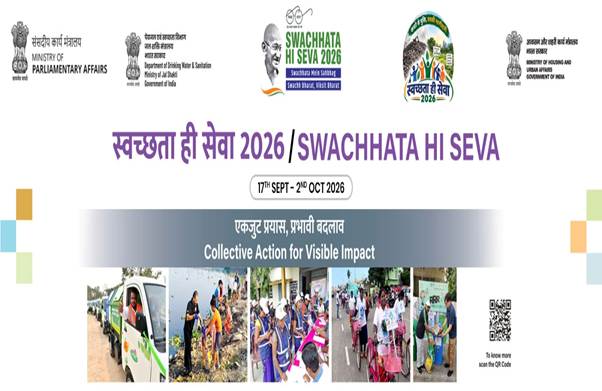
Today, the Ministry of Parliamentary Affairs (MoPA) actively participated in the countrywide launch of the Swachhata Hi Seva Campaign 2026. Spanning a fortnight from 17th September to 2nd October 2026, this initiative is being observed by every department and ministry under the Government of India. The campaign seeks to reinforce the spirit of cleanliness, hygiene, civic responsibility and citizen participation towards realizing the vision of a Swachh Bharat.

To kick off the event, MoPA Secretary, Shri Nikunj Bihari Dhal led Ministry officials in taking the cleanliness pledge. In his opening remarks, he urged that cleanliness and hygiene should not be viewed merely as a campaign-bound activity, but as a continuous, year-round responsibility and a collective way of life.

In observance of the campaign and with a view to promoting sustained awareness about cleanliness and hygiene, the Ministry has drawn up a day-to-day activity plan for the period from 18 September to 1 October 2026. The planned activities will provide opportunities for the participation of officers, officials, Safai Mitras, thereby fostering a sense of collective ownership towards cleanliness. The range of activities include cleanliness drives in office premises/corridors, awareness and sensitization activities for school students, felicitation of Safai Mitra, awareness campaigns and citizen engagement initiatives through social media platforms and plantation activities under ‘Ek Ped Maa Ke Naam’.

The Ministry will also participate in the nationwide Shramdaan initiative under the call “Ek Din, Ek Ghanta, Ek Saath” on 1st  October 2026, further reinforcing the message that cleanliness is a shared responsibility requiring collective action.

Through these initiatives, the Ministry of Parliamentary Affairs reaffirms its commitment to the objectives of the Swachhata Hi Seva Campaign 2026 and to promoting a sustained culture of cleanliness, hygiene, environmental responsibility and dignity of labour. The Ministry remains committed to actively contributing towards the vision of our Prime Minister for Swachh Bharat through continuous and meaningful efforts.

Dr. Mansukh Mandaviya Calls for Collective Efforts to Advance Social Justice for a Sustainable Future


Dr. Mansukh Mandaviya Calls for Collective Efforts to Advance Social Justice for a Sustainable Future


Economic Growth and Social Progress Must Move Together: Dr. Mansukh Mandaviya at the Global Coalition for Social Justice Annual Forum 2026

Union Minister Dr. Mansukh Mandaviya Sets Out Three Priorities for the Global Coalition for Social Justice

Global Coalition for Social Justice Annual Forum 2026 Brings Together Global Partners to Advance Social Justice and Decent Work; India Takes Over Co-Chairmanship

Posted On: 17 SEP 2026 1:59PM by PIB Delhi

The Global Coalition for Social Justice Annual Forum 2026 is being held virtually on 16–17 September 2026, bringing together governments, employers’ and workers’ organisations, international and regional organisations, development institutions, the private sector, academia and civil society to strengthen cooperation and accelerate collective action for social justice and decent work. The Official Opening of the Forum was graced by Dr. Mansukh Mandaviya, Union Minister for Labour & Employment and Youth Affairs & Sports, Mr. Gilbert F. Houngbo, Director-General, International Labour Organization (ILO), Ms Jacqueline Mugo, President, International Organisation of Employers; Mr Luc Triangle, General Secretary, International Trade Union Confederation and Mr Luiz Marinho, Minister of Labour and Employment, Brazil.

Addressing the gathering, Union Minister, Dr. Mansukh Mandaviya, called for collective efforts to place social justice at the heart of endeavours, in order to build a more inclusive, resilient and sustainable future. The shared objective of the global community, the Minister said, should be to translate cooperation into opportunities, growth into shared prosperity and commitments to social justice into tangible change. He said India brings to the Forum its experience of delivering transformation at scale and its commitment to building a more inclusive world of work. Emphasising the need for economic growth and social progress to move together, the Minister said that growth must create decent jobs, technology must promote inclusion and innovation must contribute to improving people’s lives.

Dr. Mandaviya said that India is preparing for the future of work through technology, skills and international cooperation. He underlined that the changing world of work requires renewed focus on skills, employability and labour mobility. In this context, he highlighted India’s partnership with the ILO to pilot an International Reference Classification of Occupations across India, Brazil and Germany to support smoother international mobility. He also referred to the New Delhi Declaration 2026 adopted under India’s BRICS Presidency and the BRICS CONNECT initiative, as well as the consensus on an International Digital Platform for Remote Employment to create new virtual employment opportunities for youth across the Global South.

Highlighting India’s reform-led approach, the Minister said that the country continues to focus on transformative reforms, targeted welfare and digital innovation, ensuring that the benefits of economic growth reach the last mile. He drew attention to the consolidation of 29 central labour laws into four modern Labour Codes, stating that the reforms strengthen workers’ protection while creating an enabling environment for enterprises. He also noted that India has become one of the leading countries to provide legal recognition to gig and platform workers. Dr. Mandaviya further emphasised the role of sustained reforms and digital delivery in expanding social protection, noting that India’s social protection coverage has increased from 19 per cent in 2015 to 68.4 per cent in 2026, bringing more than one billion people within the social protection framework.

The Minister highlighted the role of Digital Public Infrastructure in strengthening social protection delivery. He said that the e-Shram portal, with nearly 320 million registered unorganised workers, is the world’s largest digital database of its kind and connects workers with welfare schemes across national and State Governments. Referring to the National Career Service (NCS), he said that the platform connects jobseekers with domestic and international opportunities, with India also sharing the NCS framework with Mauritius.

Dr. Mandaviya said that India stands ready to deepen partnerships across the Global South in areas including digital public infrastructure, social protection, skills and employment services. He said that sharing successful experiences can help translate national achievements into shared progress and reiterated India’s commitment to strengthening the voice of South-South Cooperation in shaping the future of work and advancing social justice. He also noted that as India assumes the Co-Chairmanship of the Coalition’s Coordinating Group, it would build on the leadership provided by Brazil during the important phase of the Coalition.

As Co-Chair, Dr. Mandaviya outlined three priorities for the Coalition. First, he called for translating collective commitments into action at the country level, in line with national priorities and circumstances. Second, he emphasised the need to strengthen knowledge and experience sharing, intensify cooperation and bring more enterprises into the social justice agenda. Third, he stressed that social justice should inform the choices that shape development beyond 2030. He said that with more than 400 partners, the Coalition has unique collective strength, while its objective should not be to prescribe one pathway for all, but to ensure that social justice remains an integral part of the choices countries make about their future.

Dr. Mandaviya reaffirmed India’s commitment to working with all members to make the Global Coalition for Social Justice a strong platform for international cooperation, shared learning and practical action.

Background

The Global Coalition for Social Justice, established by ILO in 2023, is a global platform aimed at strengthening multistakeholder cooperation and accelerating collective action for decent work and social justice. With more than 400 partners comprising governments, employers’ and workers’ organisations, international and regional organisations, development banks, the private sector, academia and civil society, the Coalition seeks to promote coherent and integrated approaches to advance social justice, expand opportunities, foster shared prosperity and contribute to resilient societies.

The Global Coalition for Social Justice Annual Forum 2026 is being held virtually on 16–17 September 2026, ahead of the High-Level General Debate of the 81st session of the United Nations General Assembly. The Forum provides a platform for partners to share experiences and lessons learned, review progress, identify opportunities for collaboration and shape future collective action.