Friday, 20 November 2026

*THE LAKSHMAN REKHA OF SAFETY*

 *THE LAKSHMAN REKHA OF SAFETY* 

Every workplace has its own Lakshman Rekha. In safety management, it represents a clearly defined boundary between safe work and potential harm. The message is simple: Know it, Understand it, Respect it, and Never Bypass it.

The story of the Lakshman Rekha from the Ramayana provides a powerful analogy for modern safety practices. Just as the protective line was established to safeguard Sita from danger, safety controls in workplaces are designed to protect people from hazards and prevent serious incidents.

In industrial facilities, solar Plant and project sites, safety boundaries exist in many forms: barricades, restricted areas, interlocks, lockout-tagout and tryout (LOTOTO) systems, warning signs and permit-to-work requirements. These controls separate people from hazardous energy, electrical risks and other dangerous operations.

However, incidents often occur not because safety controls are absent, but because they are ignored, bypassed or removed. Production pressure, urgency, over confidence and familiarity with a task can create a false sense of security. Statements such as 'it will only take a minute' or 'I have done this many times before' are common precursors to unsafe acts.

The moment a worker crosses a safety boundary without authorization, the line between safe work and a potential accident becomes very thin. An interlock is not merely a switch. A LOTO procedure is not simply paperwork. Each one is a life-saving barrier designed to prevent injury, equipment damage and loss.

For solar plants, safety boundaries are especially important around energized DC strings, inverters, HT Panels, transmission lines, work-at-height locations and restricted operational areas. No employee or contractor should enter, operate or bypass these controls without proper authorization, competency, and risk assessment.

Safety Awareness Message: Before starting any task, identify the Lakshman Rekha of your workplace. Ask yourself: What safety barrier protects me? What could happen if I cross or remove this protection? Am I following the approved safe system of work?

Remember: Every workplace has its own Lakshman Rekha. Know it. Understand it. Respect it. Never Bypass it. A safety boundary can protect us only when we stay on the safe side of the line.

🌿 Respiration in Plants

 🌿 Respiration in Plants


How Do Plants Produce Energy?


1. Introduction


Respiration is a vital biological process in which plants break down glucose to release energy in the form of ATP (Adenosine Triphosphate).


Plants need this energy for growth, development, cell division, nutrient absorption, and other metabolic activities.


Important: Plants respire both during the day and at night.


2. Types of Respiration in Plants


There are two major types:


A. Aerobic Respiration


Occurs in the presence of oxygen.


Completely breaks down glucose.


Produces carbon dioxide, water, and energy.


Mainly occurs in mitochondria.


Equation:


C₆H₁₂O₆ + 6O₂ → 6CO₂ + 6H₂O + Energy (ATP)


B. Anaerobic Respiration


Occurs without oxygen.


Glucose is incompletely broken down.


Produces less energy.


Occurs in the cytoplasm.


In plant cells, anaerobic respiration can produce ethanol and carbon dioxide.


3. Main Stages of Cellular Respiration


There are three major stages:


1. Glycolysis


Occurs in the cytoplasm.


One glucose molecule breaks into two pyruvate molecules.


Produces a net gain of 2 ATP.


2. Krebs Cycle


Occurs in the mitochondrial matrix.


Pyruvate is first converted into acetyl-CoA.


Acetyl-CoA enters the Krebs cycle.


Produces NADH, FADH₂ and ATP (or GTP).


3. Electron Transport Chain (ETC)


Occurs in the inner mitochondrial membrane.


Electrons pass through a series of protein complexes.


Oxygen acts as the final electron acceptor.


Produces most of the ATP.


4. Importance of Respiration in Plants


1. Provides energy for plant growth.


2. Supports seed germination.


3. Helps in active transport of minerals.


4. Supports cell division.


5. Provides energy for root development.


6. Supports synthesis of proteins and other biomolecules.


7. Maintains essential metabolic activities.


5. Difference Between Photosynthesis and Respiration


Photosynthesis Respiration


Stores energy Releases energy

Uses CO₂ Releases CO₂

Produces O₂ Uses O₂ (aerobic)

Occurs in chloroplasts Mainly occurs in mitochondria

Requires light indirectly through photosystems Does not require light


6. Important Scientific Facts


Mitochondria are known as the powerhouse of the cell.


ATP is the energy currency of the cell.


Respiration occurs in both green and non-green plant cells.


Roots obtain oxygen from air spaces in the soil.


Respiration continues throughout the day and night.


📝 10 Important MCQs


1. Where does glycolysis occur? A. Nucleus

B. Cytoplasm

C. Chloroplast


2. Which organelle is mainly responsible for aerobic respiration? A. Mitochondria

B. Ribosome

C. Golgi body


3. What is the energy currency of the cell? A. DNA

B. ATP

C. RNA


4. Which gas is required for aerobic respiration? A. Nitrogen

B. Oxygen

C. Carbon dioxide


5. Where does the Krebs cycle occur? A. Mitochondrial matrix

B. Cytoplasm

C. Chloroplast


6. How many ATP molecules are produced directly during glycolysis (net)? A. 2

B. 4

C. 8


7. Which process occurs without oxygen? A. Aerobic respiration

B. Anaerobic respiration

C. Photosynthesis


8. Which gas is released during aerobic respiration? A. Oxygen

B. Carbon dioxide

C. Nitrogen


9. Which stage produces most ATP in aerobic respiration? A. Glycolysis

B. Krebs cycle

C. Electron transport chain


10. Does plant respiration occur at night? A. Yes

B. No

C. Only in roots


🌿 RESPIRATION IN PLANTS – HOW DO PLANTS PRODUCE ENERGY?


Did you know that plants also breathe and release energy just like other living organisms?


Plant respiration is an essential metabolic process in which glucose is broken down to produce ATP, providing energy for growth, development, and survival.


🔬 Learn about:

✅ Aerobic and anaerobic respiration

✅ Glycolysis

✅ Krebs cycle

✅ Electron Transport Chain

✅ Importance of respiration


🌱 Knowledge of plants is knowledge of life!


#Botany #PlantRespiration #PlantPhysiology #Photosynthesis #biology #viral

The infographic illustrates the electric train power system, detailing the four main components and sequential energy flow that converts high-voltage overhead electricity into mechanical motion.

 The infographic illustrates the electric train power system, detailing the four main components and sequential energy flow that converts high-voltage overhead electricity into mechanical motion.


1. Core Components & Power Flow


• Pantograph (Current Collection). Mounted on the roof of the locomotive, this spring-loaded mechanical arm maintains constant contact with the overhead catenary wire to draw high-voltage alternating current (typically 25 kV AC in India and many global networks, or 15 kV AC in parts of Europe).

• Main Transformer (Step-Down). The high-voltage AC travels through a rooftop circuit breaker into the main step-down transformer, which reduces the dangerously high voltage (e.g., 25 kV) down to a lower, usable AC voltage suitable for onboard power electronics.

• Rectifier / Converter (Power Conditioning). Modern three-phase electric locomotives process this stepped-down power in two stages inside the traction converter cabinet:

 • Rectifier. Converts the low-voltage AC into direct current (DC) to feed a steady DC link.

 • Inverter. Converts that DC back into variable-frequency, variable-voltage 3-phase AC, allowing precise control over train speed and torque.

• Traction Motor (Mechanical Drive). The 3-phase AC powers the traction motors mounted near the bogies (wheel assemblies). These motors convert electrical energy into rotational mechanical energy, driving the axles via gears to move the train forward.


2. Additional Operational Note: Regenerative Braking


In modern AC traction systems like the one depicted, this power flow works in reverse during braking. When slowing down, the traction motors act as generators, converting the train's kinetic energy back into electrical energy. The converter sends this electricity back through the transformer and pantograph into the overhead line to power other trains on the network.

If you'd like to explore further, I can explain:

• How regenerative braking feeds power back into the grid

• The difference between older DC traction motors and modern 3-phase AC systems

• Specific locomotive models used on Indian Railways (like the WAP-7 or WAG-9)

⚡ EARTHING SYSTEM TESTING – EARTH RESISTANCE MEASUREMENT & SAFETY VERIFICATION


⚡ EARTHING SYSTEM TESTING – EARTH RESISTANCE MEASUREMENT & SAFETY VERIFICATION


Do you know how electrical engineers verify whether a substation earthing system can safely dissipate fault current into the ground?


Earthing system testing is an essential electrical commissioning and maintenance activity. It verifies the effectiveness of the grounding system and helps ensure personnel and equipment safety during electrical faults.


1. WHAT IS EARTHING SYSTEM TESTING?


Earthing system testing involves measuring earth resistance, soil resistivity, grounding continuity and, where required, ground potential rise and touch and step voltages.


2. COMMON EARTHING TESTING METHODS


1. Three-Point Fall-of-Potential Test


- Uses three electrodes.

- Measures earth electrode resistance.

- Commonly used for individual earth electrodes.


2. Four-Point Soil Resistivity Test


- Uses four equally spaced electrodes.

- Measures soil resistivity.

- Helps determine grounding grid design requirements.


3. Clamp-On Earth Resistance Test


- Uses a specialized earth resistance clamp meter.

- Measures loop resistance without disconnecting the grounding conductor.

- Requires a suitable closed grounding loop.


4. Earth Continuity Test


- Checks electrical continuity between equipment and the earthing network.

- Identifies loose or damaged connections.


3. EARTH RESISTANCE CALCULATION


Assume the following illustrative test readings:


- Test Voltage (V) = 10 V

- Injected Current (I) = 5 A


Formula:


R = V / I


Where:


- R = Earth Resistance (Ω)

- V = Test Voltage (V)

- I = Injected Test Current (A)


STEP 1: Substitute Values


R = 10 / 5


R = 2 Ω


<badge color="success">MEASURED RESISTANCE: 2 Ω</badge>


4. SOIL RESISTIVITY CALCULATION


For the Wenner four-electrode method, assuming electrode spacing is large compared with electrode depth:


ρ = 2πaR


Where:


- ρ = Soil Resistivity (Ω·m)

- a = Electrode Spacing (m)

- R = Measured Resistance (Ω)


Example:


- Electrode Spacing = 2 m

- Measured Resistance = 10 Ω


ρ = 2 × 3.1416 × 2 × 10


ρ = 125.66 Ω·m


5. WHY IS EARTHING TESTING IMPORTANT?


✅ Verify grounding system effectiveness.


✅ Reduce electrical shock hazards.


✅ Identify damaged earthing connections.


✅ Support substation commissioning.


✅ Verify grounding system performance.


✅ Improve electrical installation safety.


6. IMPORTANT ENGINEERING TESTS


1. Earth electrode resistance measurement.

2. Soil resistivity testing.

3. Earth continuity testing.

4. Ground grid resistance measurement.

5. Touch voltage assessment.

6. Step voltage assessment.

7. Ground potential rise evaluation.

8. Grounding conductor inspection.


7. APPLICABLE INTERNATIONAL STANDARDS


- IEEE 81 – Measurement of Earth Resistivity, Ground Impedance and Earth Surface Potentials.

- IEEE 80 – Safety in AC Substation Grounding.

- IEC 60364-6 – Verification of Low-Voltage Electrical Installations.

- IEC 61936-1 – Power Installations Exceeding 1 kV AC.


💡 ENGINEERING INSIGHT:


A low earth resistance value alone does not guarantee a safe earthing system.


Substation grounding design must also consider fault current magnitude, fault-clearing time, soil resistivity, ground potential rise, touch voltage and step voltage.


⚠️ The example uses an illustrative V/I calculation. Actual earth resistance testing should use an approved test method and suitable calibrated equipment.


💬 TEST YOUR KNOWLEDGE:


Which instrument is commonly used to measure earth electrode resistance using the three-point fall-of-potential method?


Comment your answer below! 👇


#ElectricalEngineering #EarthingSystem #EarthResistance #GroundingSystem #SubstationTesting #IEEE81 #IEEE80 #ElectricalSafety #Commissioning #ElectricalMaintenance


✅ 5S is more than a clean workplace!


An effective 5S audit helps identify gaps in workplace organization, standards, and sustainability.


The real value comes from turning audit findings into continuous improvement.


#5S #Lean #ContinuousImprovement #WorkplaceAudit

Thursday, 19 November 2026

Union Environment Minister directs Delhi-NCR Civic Bodies to adopt Zero-tolerance Approach towards Air Pollution Violations; Calls for Strict Penal Action against Defaulters


Union Environment Minister directs Delhi-NCR Civic Bodies to adopt Zero-tolerance Approach towards Air Pollution Violations; Calls for Strict Penal Action against Defaulters


Daily Monitoring, Accountability of Ward-level Officials and Time-bound Enforcement of Pollution Control Measures to be Prioritised: Shri Bhupender Yadav

Posted On: 19 NOV 2026 2:10PM by PIB Delhi

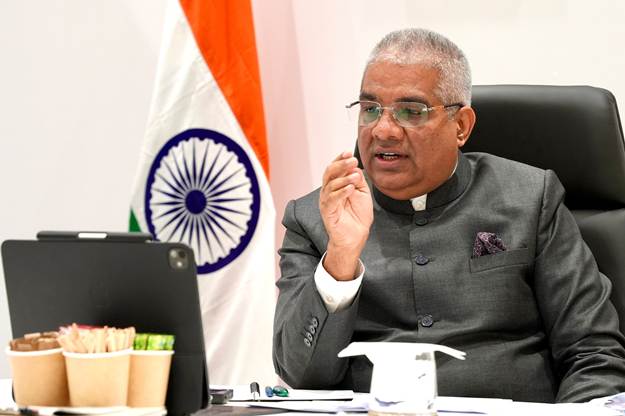
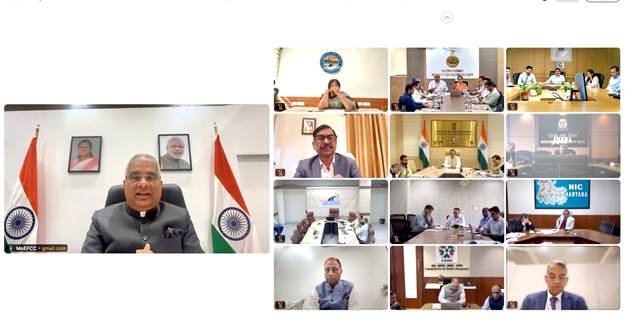
Union Minister for Environment, Forest and Climate Change (EFCC), Shri Bhupender Yadav, today chaired a review meeting virtually from Antalya (Türkiye), with the civic bodies of Delhi, Ghaziabad, Noida, Gurugram and Faridabad to assess preparedness and implementation of their Winter Action Plans for control of air pollution in Delhi-NCR. Emphasising that the current winter period demands visible and sustained action on the ground, the Minister requested the concerned public representatives and officials to ensure strict enforcement, daily monitoring and clear accountability at every level. He stressed that governance should increasingly be citizen-centric and facilitative, while ensuring that citizens are not subjected to unnecessary panic while taking pollution control measures.

The meeting was attended by Union Minister of State (MoEFCC), Shri Kirti Vardhan Singh; Secretary (MoEFCC), Shri Narendra Bhooshan; Chairperson (CAQM), Shri Rajesh Verma; Secretary (Department of Capital Development, MoHUA), Smt. D. Thara; Director General and Special Secretary (MoEFCC), Shri Santosh Tewari; Additional Secretary (MoEFCC) and Chairperson (CPCB), Dr. Amandeep Garg; Mayors and Commissioners of the respective Municipal Corporations, along with CEO Noida Authority and senior officials of respective State Governments. Shri Tarun Pithode, Member Secretary, CAQM, presented the progress made by respective NCR cities, while the Chairperson, CAQM, gave an overview of the on-ground implementation of their action plans and measures yet to be taken on different fronts.

Taking a strong stance against violations, Shri Yadav directed Municipal Corporations to adopt a zero-tolerance approach towards open burning of municipal waste, dry leaves and biomass, and ensure prompt penal action against violators. He called for operationalising Quick Response Teams in every ward to respond to complaints within hours, and fixing accountability of concerned officers for enforcement failures. He also called for immediate corrective measures for complete processing daily waste generated and time-bound accelerated legacy waste remediation, particularly at Bhalswa and Okhla dumpsites. Stressing the need for coordinated and decentralised governance, the Minister called for regular ward-level reviews by Mayors and dedicated WhatsApp groups with designated nodal officers for time-bound grievance redressal. He urged civic bodies to learn from and replicate successful initiatives across NCR, including MC Delhi's Malba App, MC Faridabad's Pothole Ambulance, MC Gurugram's survey-based identification of sanitation workers and Ghaziabad Nagar Nigam's shareable Construction and Demolition (C&D) waste portal.

On road dust management, Shri Yadav directed civic bodies to expedite road repairs, augment the capacity of Mechanical Road Sweeping Machines (MRSMs) on a war footing and ensure their full utilisation, including double-shift operations during winter. He called for GPS-enabled monitoring, ICCC-based supervision and daily removal of roadside dust, silt and construction debris. The Minister also stressed the need for advance planning of road development and dust mitigation measures in Gurugram, including greening of identified open spaces to address PM10 pollution. He directed strict compliance with dust mitigation norms at C&D sites, operationalisation of wheel-washing facilities and regular inspections, with stringent enforcement action, including closure of seriously non-compliant sites. The objective, he emphasised, must be to ensure 'No Visible Dust' in and around construction sites. The Minister further called for ensuring enhanced awareness about Solid Waste Management Rules, with proactive identification of bulk waste generators, as demonstrated by Delhi.

Reviewing hotspot mitigation and GRAP implementation, Shri Yadav directed civic bodies to assign dedicated nodal officers and prepare hotspot-specific action plans, which should be regularly reviewed by Mayors and the designated officers. He called for strict implementation of all measures applicable under the prevailing stage of GRAP, without exception. Emphasising institutional accountability, the Minister directed Collectors to regularly review the performance of municipalities and take corrective action against lagging bodies. He further called upon the Secretaries of MoEFCC and MoHUA, besides Chairpersons of the CAQM and CPCB, to review the performance of respective Municipal Corporations and municipalities across NCR cities to ensure effective implementation of the directions on the ground.

Stressing that accountability must translate into measurable outcomes, the Minister requested the concerned officials to monitor public grievances in real time and close complaints only after physical verification and resolution. He also called for intensive public awareness campaigns involving concerned stakeholders. Emphasising the need for sustained efforts throughout the winter season, Shri Yadav said every ward must demonstrate visible action every day, backed by strict enforcement, continuous monitoring, citizen participation and accountability.

Wednesday, 18 November 2026

Parvat Manthan Conclave 2026 concludes with recommendations to strengthen climate resilience, ecological planning and municipal finance in Himalayan cities


Ministry of Housing & Urban Affairs
azadi ka amrit mahotsav

Parvat Manthan Conclave 2026 concludes with recommendations to strengthen climate resilience, ecological planning and municipal finance in Himalayan cities


Two-day Regional Conclave brings together representatives from 11 Himalayan states to address integrated water and sanitation management, climate resilience and ecosystem-based urban development

Ten initiatives, publications and learning resources launched; 18 innovative urban solutions recognised under अrban Learnathon 2.0

Posted On: 18 NOV 2026 6:51PM by PIB Delhi

The Parvat Manthan Conclave 2026, convened by the National Institute of Urban Affairs (NIUA), concluded today in Dehradun, Uttarakhand, with recommendations to strengthen urban resilience, ecological planning and sustainable service delivery across the Indian Himalayan Region. The two-day Conclave, held from 17 to 18 November 2026, brought together policymakers, representatives from Himalayan states, urban local bodies, technical experts, academia, civil society organisations and development partners to deliberate on the distinct challenges of mountain urbanisation and identify practical approaches for resilient and sustainable urban development.
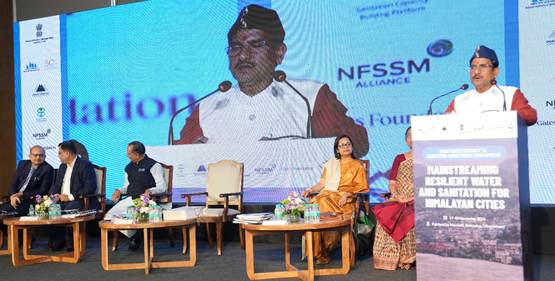
The Conclave was inaugurated on 17 November 2026 by Shri Tokhan Sahu, Hon’ble Minister of State for Housing and Urban Affairs, Government of India, under the theme ‘From Water Security to Ecosystem-Based Urban Development: Mainstreaming Resilient Water and Sanitation for Himalayan Cities’.

Delivering the inaugural address, Shri Tokhan Sahu emphasised the importance of regional cooperation, institutional capacity building and knowledge-sharing in addressing the challenges faced by Himalayan cities. Stating that “by pooling knowledge, strengthening local capacities and learning from each other, we can advance solutions for water security, inclusive urban services and dignified sanitation, recognising that challenges do not stop at geographical boundaries”, he called for stronger collaboration among governments, institutions and regional stakeholders. Highlighting the importance of replicating successful urban innovations, he observed that “a solution confined to one city benefits only that city, but a solution shared and replicated has the potential to transform a hundred cities”.

Shri Nitesh Jha, Secretary, Urban Development, Government of Uttarakhand noted that as the source of the Ganga, the Yamuna and other major rivers, Uttarakhand bears a responsibility to every town and village downstream. For this reason, he said, the state treats the management of used water and faecal sludge as a commitment rather than a municipal chore. Tracing the state-led partnership with NIUA since 2019, he highlighted the Septage Management Protocol of 2017 and the co-treatment of septage at existing sewage treatment plants in Ganga towns. He also cited Rudrapur’s faecal sludge treatment plant, the first standalone facility in the state, which was built with support from NIUA. He called on partners, Union ministries and hill states to help design norms and financing that recognise the realities of mountain terrain.
Ms Nameeta Prasad, Joint Secretary, Ministry of Environment, Forest and Climate Change (MoEFCC), described the Himalayan region as the water tower of Asia, observing that its water crisis stems not from scarcity but from declining springs, pollution, inadequate infrastructure and growing urban demand. Emphasising that Himalayan cities cannot be water secure unless their surrounding ecosystems are healthy, she called for water security to be addressed within a wider ecological framework rather than through centralised infrastructure alone. She highlighted the National Mission on Himalayan Studies (NMHS) as a key platform in this effort, noting that it has supported over 255 projects, including more than 40 on water resource management.

Prof. (Dr) Debolina Kundu, Director, NIUA, highlighted the evolution of Parvat Manthan into a community of practice that brings together mountain states, institutions and regional partners to exchange knowledge, strengthen capacities and develop practical solutions. She noted that the platform has facilitated peer learning, regional cooperation and policy dialogue to support more responsive approaches to the unique challenges of mountain urbanisation.

Shri Vinod Goswami, Director, Urban Development Department, Government of Uttarakhand, emphasised the need for long-term, integrated and regionally coordinated planning. He observed that urbanisation must be understood beyond municipal boundaries, recognising its implications for surrounding rural areas and the wider region. He also highlighted the importance of strengthening the financial sustainability of urban local bodies by effectively utilising available resources and financing opportunities, including the 16th Finance Commission and the Urban Challenge Fund.

Key Areas of Technical Deliberation

The Conclave featured four technical sessions examining disaster resilience, integrated water management, ecological carrying capacity and municipal finance, with a focus on strengthening sustainable urban development in the Indian Himalayan Region.

Session 1: Living on the Edge: Disaster Risk, Fragility, and the Future of Hill Infrastructure

The session examined the vulnerability of Himalayan settlements to natural disasters, climate-related risks and increasing infrastructure pressures. Discussions focused on the need to integrate disaster risk assessments into urban planning, strengthen the resilience of critical infrastructure, adopt development practices suited to fragile mountain environments and improve institutional preparedness for climate-related and geological hazards.

Session 2: Water Beyond Boundaries: Integrated Water Management for Ecosystem Health in Hill Cities

The session focused on the need for integrated water resource management that extends beyond municipal boundaries and recognises the interdependence of urban settlements, watersheds and surrounding ecosystems. Discussions highlighted source sustainability, watershed conservation, integrated water and sanitation planning, improved coordination among institutions and the importance of ecosystem-based approaches to long-term water security.
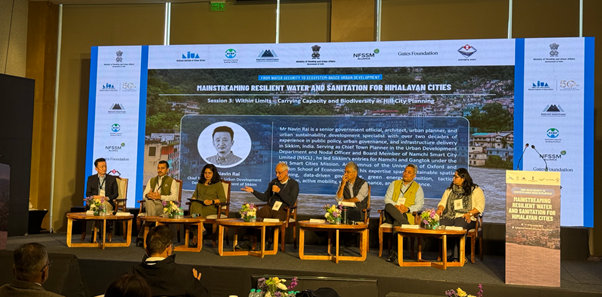
/Users/niua/Library/Containers/com.microsoft.Word/Data/tmp/Content.MSO/8B332316.tmp

Session 3: Within Limits: Carrying Capacity and Biodiversity in Hill City Planning

The session recommended institutionalising carrying capacity assessments within statutory master plans, establishing common planning parameters across Himalayan states and integrating water availability, biodiversity conservation and ecological sensitivity into land-use planning. Discussions emphasised regional planning beyond municipal boundaries, transparent environmental monitoring, sustainable mobility and construction practices appropriate to fragile mountain environments.

Session 4: Strengthening Municipal Finance for Sustainable Service Delivery in Hilly Regions

The session recommended predictable fiscal transfers, differentiated infrastructure costing for hill cities, lifecycle financing and stronger municipal own-source revenues. Discussions highlighted tourism-linked revenue instruments, cluster-based planning, project aggregation, institutional capacity building and greater transparency in municipal budgets, accounts and audits to strengthen financial sustainability and service delivery.

Launches and Releases

The inaugural session witnessed the launch of ten initiatives, publications and learning resources focused on sustainable urban development, water and sanitation management, climate resilience, inclusive service delivery and institutional capacity building.

  1. Carrying Capacity Assessment of Haridwar: A Ganga Town in Uttarakhand

The report examines the implications of tourism and population pressures on urban infrastructure and services, offering recommendations for sustainable land-use planning, resource management and urban development.

  1. Roadmap for Transitioning Towards Integrated Citywide Sanitation for Darjeeling Municipality

The report presents a phased approach for strengthening water supply, wastewater management, solid waste management and drainage through integrated planning suited to the geographical and environmental conditions of hill towns.

  1. Built for All: Let's Talk GEDSI in Sanitation

An interactive comic highlighting the importance of gender equity, disability and social inclusion in the planning and delivery of safe, accessible and dignified sanitation services.

  1. Four Seasons, One City: A Year of Climate Change

A story illustrating the impacts of climate-related disasters on urban water and sanitation systems, highlighting practical measures for improving community preparedness and infrastructure resilience.

  1. Himalayan Resilience: Darjeeling – Beyond Postcard

A coffee table book documenting the water, sanitation and waste management challenges experienced in Darjeeling, alongside community initiatives and priorities for sustainable urban development.

  1. Occupational Health and Safety (OHS) E-course

Launched on the National Urban Learning Platform (NULP), the course provides urban officials and sanitation practitioners with practical knowledge to improve workplace safety and promote dignified working conditions for sanitation workers.

  1. Gender, Equity, Disability and Social Inclusion (GEDSI) E-course

Launched on NULP, the course supports urban planners, engineers and government officials in incorporating equity, accessibility and inclusion into sanitation infrastructure planning and service delivery.

  1. Water and Sanitation: Sustainable and Resilient Urban Futures E-course

Launched on NULP, the course provides guidance on climate risk assessment, flood and drought preparedness, and the development of resilient and inclusive urban water and sanitation systems.

  1. Training Manual on GIS-based Spatial Mapping for Water and Sanitation Infrastructure Integrating Kobo Toolbox

The manual provides practical guidance on geotagged field data collection, spatial analysis using QGIS and the preparation of maps to support evidence-based water and sanitation planning.

  1. Himalayan Urban Bio-Sheds (HUBS) Initiative for Advancing Ecosystem-based Urban Development
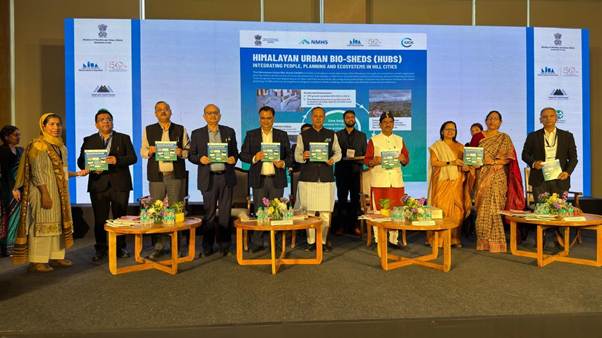
Undertaken by NIUA with support from the Ministry of Environment, Forest and Climate Change and the National Mission on Himalayan Studies (NMHS), in partnership with the International Union for Conservation of Nature (IUCN), the initiative seeks to integrate water, waste, biodiversity and ecosystem health into a unified urban planning framework. Planned for pilot implementation in three towns across Himachal Pradesh, Uttarakhand and Sikkim, HUBS aims to promote urban development approaches that respect ecological boundaries while strengthening essential urban services.

अrban Learnathon 2.0: Recognition of Innovative Urban Solutions

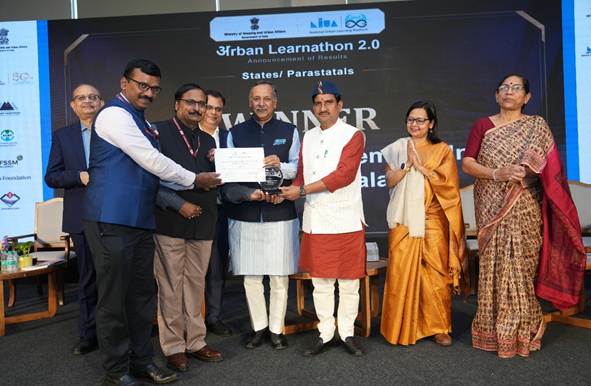
The inaugural session also marked the announcement of the results of अrban Learnathon 2.0, with the awardees felicitated by Shri Tokhan Sahu, Hon’ble Minister of State for Housing and Urban Affairs.

Launched on 08 January 2025 during the Capacity for Change Conclave 2025 by Shri Manohar Lal, Hon’ble Union Minister of Housing and Urban Affairs, अrban Learnathon 2.0 was designed to identify and recognise innovative solutions to urban challenges. The initiative received 201 entries, of which 84 were shortlisted and 18 solutions were selected for awards across categories covering government bodies, academia, industry and special mentions.

The second edition expanded participation to academia and industry, recognising the importance of collaboration among urban local bodies, research institutions and enterprises in developing innovative and replicable urban solutions. The results are available on the National Urban Learning Platform at https://nulp.niua.org/.
Delivering the closing remarks, Shri Rajiv Ranjan Mishra, Chief Advisor, NIUA, observed that institutional capacity had emerged as a common concern across the Conclave's four technical sessions. He highlighted the importance of genuine decentralisation, integrated planning, sustainable infrastructure financing and recognising the ecological sensitivity of Himalayan settlements. He emphasised that technical studies and knowledge products, including carrying capacity assessments prepared by NIUA, must inform policies, programmes and implementation practices.

Shri Vinod Kumar, Assistant Director, Urban Development Department, Government of Uttarakhand, acknowledged the contributions of NIUA and participating institutions towards strengthening regional cooperation on mountain urbanisation. Highlighting the distinct development challenges of Himalayan settlements, he called for continued collaboration among states, innovation and the adoption of technologies appropriate to mountain environments. He stated, “May the spirit of Parvat Manthan inspire us to deepen cooperation among the Himalayan states, encourage innovation and promote the adoption of appropriate technologies for mountain settlements. Our ultimate objective must be to ensure prosperity and a better quality of life for the people living in these regions.”

Dr Mahreen Matto, Team Lead, NIUA, acknowledged the long-standing partnership of the Government of Uttarakhand and the participation of representatives from 11 Himalayan states. She emphasised the importance of continued collaboration in translating the Conclave's deliberations into actionable knowledge and institutional learning. Stating that “we will ensure that the deliberations of this conclave are carried forward into our forthcoming knowledge products and reports”, she informed participants that the outcomes would be documented and shared for their suggestions and feedback.

The recommendations emerging from the two-day Parvat Manthan Conclave 2026 will inform subsequent efforts to strengthen sustainable urban development across the Indian Himalayan Region.

About Parvat Manthan

Launched by NIUA in 2023, the Parvat Manthan Hill Forum is a regional platform for dialogue, knowledge exchange and collaboration on sustainable mountain urbanisation. Building on earlier editions that addressed decentralised water and sanitation services, waste management and sustainable settlements, Parvat Manthan Conclave 2026 expanded the discussions to include disaster resilience, ecological carrying capacity, biodiversity conservation and long-term infrastructure financing, with the objective of supporting sustainable and resilient urban development in the Indian Himalayan Region.

****

SK


    India calls for an Open, Transparent and Equitable Second Global Stocktake under Paris Agreement; Presses for Accountability on Climate Finance and Technology Transfer, at COP31 in Antalya (Türkiye)


    Ministry of Environment, Forest and Climate Change
    azadi ka amrit mahotsav

    India calls for an Open, Transparent and Equitable Second Global Stocktake under Paris Agreement; Presses for Accountability on Climate Finance and Technology Transfer, at COP31 in Antalya (Türkiye)


    GST-2 must take Comprehensive View of Climate Action, recognise Implementation Gaps and deliver Solution-oriented Outcomes: Shri Bhupender Yadav

    Posted On: 18 NOV 2026 8:14PM by PIB Delhi

    Antalya (Türkiye), 18th November, 2026

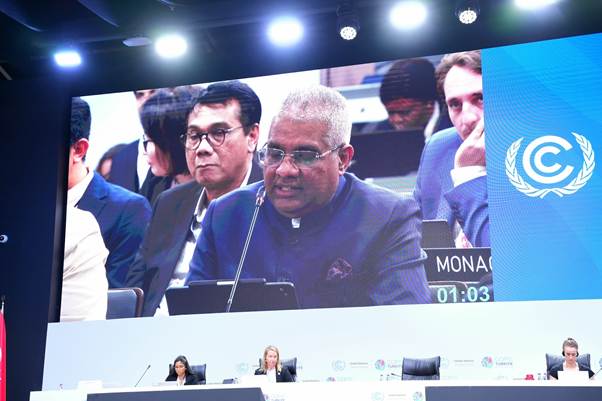
    Union Minister for Environment, Forest and Climate Change, Shri Bhupender Yadav, has called for the Second Global Stocktake (GST-2) under the Paris Agreement to be an open, transparent and inclusive process, grounded in the best available science and equity, and delivering balanced outcomes across all aspects of climate action.

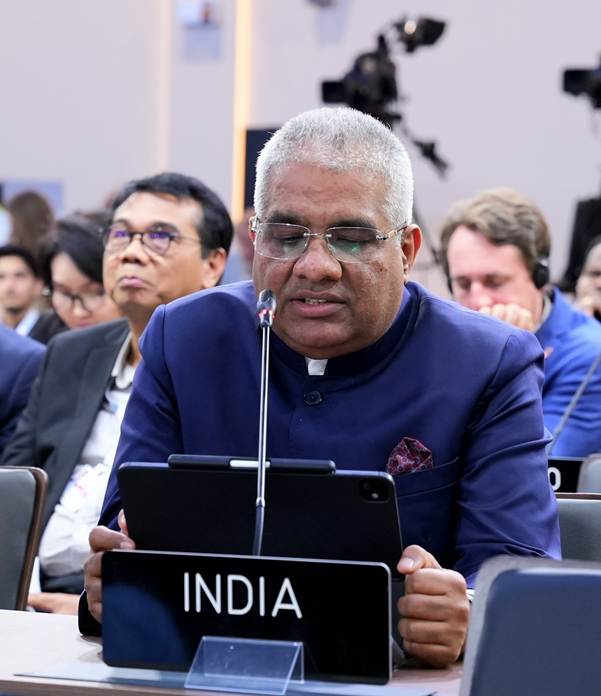
    Addressing the High-Level Event on the Second Global Stocktake at UNFCCC COP31 in Antalya, Türkiye, the Minister said that the GST must take a comprehensive 360-degree view of the Paris Agreement and its implementation, taking stock of both achievements and existing gaps. He emphasised that the process must be guided by the principles of equity, Common but Differentiated Responsibilities and Respective Capabilities (CBDR-RC), with developed countries taking the lead in the light of national circumstances.

    Shri Yadav highlighted that the Second GST provides an opportunity to assess progress across key areas, including updated Nationally Determined Contributions (NDCs), Biennial Transparency Reports, international cooperation under Article 6, the Global Goal on Adaptation and the Just Transition Mechanism. He also stressed the importance of recognising scientific assessments and reports, particularly those emerging from developing countries, alongside IPCC reports.

    The Minister emphasised that the GST-2 must examine why, despite progress in climate action, the world remains at risk of crossing the 1.5°C warming threshold in the coming years. He called for solution-oriented outcomes that guide Parties in updating their NDCs and address gaps in the means of implementation, particularly climate finance and technology transfer. He underlined that actual delivery in these areas has fallen far below the obligations and responsibilities of developed countries.

    Concluding his address, Shri Yadav expressed India's expectation that the Second Global Stocktake would be conducted successfully and provide a balanced assessment of global climate action and implementation.

    *****


      Ministry of Environment, Forest and Climate Change azadi ka amrit mahotsav India positions CDRI as a key Global Platform for Climate-resilient Infrastructure; Calls for translating Commitments into Action at COP31, in Antalya (Türkiye)


      Ministry of Environment, Forest and Climate Change
      azadi ka amrit mahotsav

      India positions CDRI as a key Global Platform for Climate-resilient Infrastructure; Calls for translating Commitments into Action at COP31, in Antalya (Türkiye)


      CDRI provides a Global Platform for Strengthening Disaster-resilient Infrastructure through International Cooperation: Shri Bhupender Yadav

      Posted On: 18 NOV 2026 4:23PM by PIB Delhi

      Antalya (Türkiye), 18th November, 2026

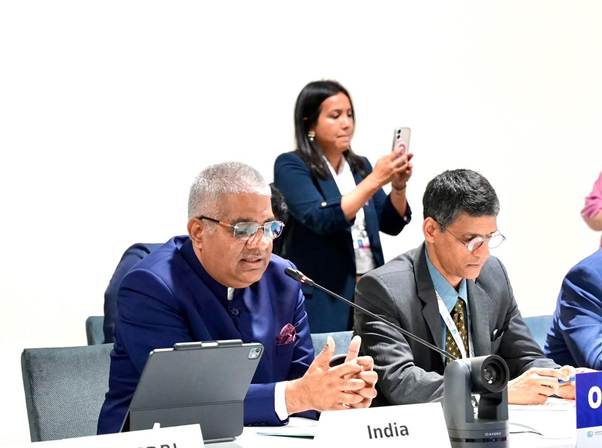
      Union Minister for Environment, Forest and Climate Change, Shri Bhupender Yadav, today highlighted India's leadership in advancing global cooperation on disaster-resilient infrastructure at the CDRI Ministerial Dialogue on ‘Disaster Resilient Infrastructure for Climate Adaptation’ at UNFCCC COP31 in Antalya, Türkiye. He emphasised that climate action must go hand in hand with climate negotiations, with the success of international commitments ultimately measured by their translation into concrete action on the ground.

      Shri Yadav stressed the need for practical outcomes in adaptation, mitigation and resilience, backed by stronger international cooperation and collective efforts. He highlighted the importance of knowledge sharing, technical expertise and capacity building, particularly for developing countries, to strengthen institutional capabilities and facilitate access to proven technologies. The Minister underscored that affordable and sustainable finance, complemented by strong institutional frameworks and technical capacities, is essential for developing resilient infrastructure.

      Describing the Coalition for Disaster Resilient Infrastructure (CDRI) as a unique global initiative, Shri Yadav highlighted its role in bringing together governments, international institutions, development partners and technical experts to promote collaboration, exchange best practices and strengthen infrastructure resilience. He noted that discussions at COP31 had reinforced resilience as a key priority and called for translating shared commitments into collaborative initiatives and tangible outcomes.

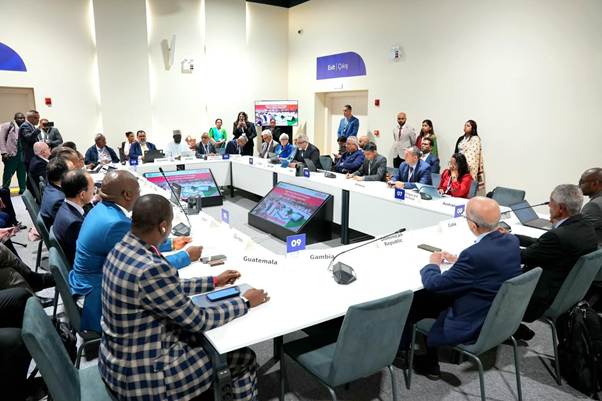
      Representatives from participating countries highlighted their respective priorities and challenges. Trinidad and Tobago stressed the importance of grant and affordable finance, risk assessment tools and cooperation with the Government of India in agro-processing. Namibia highlighted the severe impact of drought on rural livelihoods and called for adequate funding to strengthen infrastructure resilience. Japan emphasised accelerating the deployment of Early Warning Systems, sharing disaster risk reduction expertise and strengthening regional networks in vulnerable countries. Guatemala underscored the need for affordable finance, while Jordan called for greater cooperation in facilitating access to finance and strengthening infrastructure planning.


      print page button Ministry of Environment, Forest and Climate Change azadi ka amrit mahotsav India calls for Equity, Climate Justice and Fulfilment of Climate Finance Obligations at UNFCCC COP31, at Antalya (Türkiye)


      Ministry of Environment, Forest and Climate Change
      azadi ka amrit mahotsav

      India calls for Equity, Climate Justice and Fulfilment of Climate Finance Obligations at UNFCCC COP31, at Antalya (Türkiye)


      Global South cannot be made to Bear Burden of Historical Emissions in name of ‘Higher Ambition’: Shri Bhupender Yadav

      India stresses Equitable Access to Remaining Carbon Budget and firmly anchors Climate Action in CBDR-RC

      Posted On: 18 NOV 2026 1:22PM by PIB Delhi

      Antalya (Türkiye), 18th November, 2026

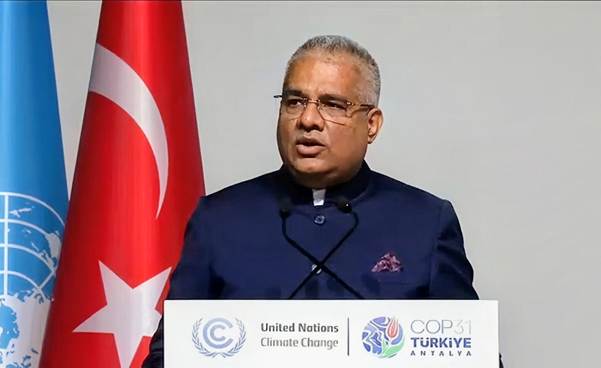
      Union Minister for Environment, Forest and Climate Change, Shri Bhupender Yadav, delivering India's National Statement at the UNFCCC COP31 in Antalya, Türkiye, called for climate action rooted in equity, climate justice and the principle of Common but Differentiated Responsibilities and Respective Capabilities (CBDR-RC). Emphasising the COP31 theme of ‘Dialogue, Consensus and Action’, the Minister said that honest dialogue, equity-based consensus and urgent action must guide global climate efforts.

      Highlighting the historical responsibility for climate change, Shri Yadav stated that the planet's warming is the consequence of two centuries of industrialisation and economic growth in some countries, fuelled by unabated greenhouse gas emissions. Expecting the Global South to bear the burden of addressing the consequences of these historical emissions in the name of ‘higher ambition’ is unjustified, he asserted. The Minister underlined that developing countries cannot be asked to choose between climate action and their legitimate right to development, decent living standards, health and education, adding that equitable access to the remaining carbon budget is non-negotiable.

      Shri Yadav stressed that COP decisions and their implementation must be firmly grounded in equity and CBDR-RC. He called for the Mitigation Work Programme (MWP) to remain facilitative and non-prescriptive, the Global Stocktake (GST) to continue serving as an instrument for informing Parties, and the Just Transition Mechanism (JTM) to be anchored in equity. The Minister also cautioned against unilateral trade measures that penalise developing countries under the guise of climate action and called upon developed countries to honestly and expeditiously fulfil their climate finance obligations.

      Highlighting India's climate commitments under the leadership of Prime Minister Shri Narendra Modi, Shri Yadav said that India's Nationally Determined Contributions (NDCs) are aligned with the vision of achieving ‘Viksit Bharat’ by 2047 in a sustainable manner. He also emphasised the need to account for climatic and demographic changes and technological advancements while shaping contemporary cooperation. Stressing that the success of COP31 must be assessed through tangible implementation, the delivery of resources to those who need them and the scaling up of proven solutions, Shri Yadav called for dialogue to build trust, consensus to uphold equity and action to deliver climate justice.

      ***


      Tuesday, 17 November 2026

      TYPES OF HYDROGEN


      Ministry of Environment, Forest and Climate Change azadi ka amrit mahotsav CAQM Revokes GRAP III in Delhi-NCR, Moves to GRAP II as AQI improves


      Ministry of Environment, Forest and Climate Change
      azadi ka amrit mahotsav

      CAQM Revokes GRAP III in Delhi-NCR, Moves to GRAP II as AQI improves

      Posted On: 17 NOV 2026 7:46PM by PIB Delhi

      The Sub-Committee on Graded Response Action Plan (GRAP) of the Commission for Air Quality Management in NCR and Adjoining Areas (CAQM) today decided to revoke GRAP STAGE III vide its order dated 17th November 2026. In view of the improving trend in Delhi's Air Quality Index (AQI), the CAQM Sub-Committee on GRAP met today to review the prevailing air quality scenario in  the region. The Sub-Committee also examined the meteorological conditions and air quality forecasts provided by IMD/IITM.

      During the review, the Sub-Committee observed that Delhi's AQI has shown an improving trend and was recorded at 204 on 17.11.2026. The IMD/IITM forecast indicates that the AQI is likely to remain in the ‘Poor/Very Poor’ category in the coming days. The Sub-Committee, accordingly, decided to revoke its order dated 06.11.2026, for invoking actions under Stage-III (‘Severe’ Air Quality) of extant Schedule of GRAP, with immediate effect.

      The Commission order dated 30.10.2026, restricting the dust generating demolition and outdoor construction activities in the entire NCR barring exempted projects would, however, continue to remain in force (as available on caqm.nic.in ). The order directed State Government and private offices to operate with upto 50% of the staff strength attending physically in the NCT of Delhi and nearby districts as per para 6(i) and 6(ii) of the order respectively for the period 5th November to 20th November. Agencies would keep strict vigil and especially intensify measures under Stages I & II of the extant schedule of GRAP to obviate the need for re-imposition of Stage-III of extant GRAP in NCR.

      The Sub-Committee also urged citizens to adhere to the following specific steps listed in Citizen Charter of Stage-I along with Stage-II of GRAP and assist in effective implementation of the GRAP measures aimed towards sustaining and improving air quality in the region, as under:

      ●       Check AQI from SAMEER App and stage of GRAP in force from CAQM website.

      ●       Keep engines of your vehicles properly tuned.

      ●       Maintain proper tyre pressure in vehicles.

      ●       Keep PUC certificates of your vehicles up to date.

      ●       Do not idle your vehicle, also turn off the engine at red lights.

      ●       Do not ply end-of-life / visibly polluting diesel or petrol vehicles.

      ●       Prefer public transport or pooling of vehicles for commuting and minimize use of personal vehicles.

      ●       Prefer EVs to control vehicular pollution.

      ●       Ensure segregation and proper disposal of municipal solid waste.

      ●       Do not litter / dispose waste, garbage in open spaces.

      ●   Ensure disposal of waste only in designated collection points provided by municipal authorities, especially in markets and public places.

      ●       Ensure immediate removal of C&D waste and compliances of dust mitigation measures.

      ●       Plant more trees and cover open spaces with grass and shrubs.

      ●       Avoid using DG sets except for essential activities.

      ●       Celebrate festivals in an eco-friendly manner – avoid firecrackers.

      ●       Report air polluting activities through 311 App, Green Delhi App, SAMEER App etc.

      ●  Participate in Information Education and Communication (IEC) activities and spread awareness about air pollution mitigation measures among fellow citizens through various means including social media channels.

      ●       Use technology and take less congested route even if slightly longer.

      ●       Ensure proper parking, lane driving and clearance to pedestrian footpaths.

      ●       Regularly replace air filters at recommended intervals in your vehicles.

      ●       Avoid dust generating construction activities during the months of October to January.

      ●       Ensure cleaning of kitchen chimney filters at regular intervals.

      ●       Avoid outdoor smoke generating cooking and heating activities in residential areas and public spaces.

      ●       Avoid accumulation and open burning of solid waste and biomass.

      ●       People, whose positions allow working from home, may work from home 

      The Commission is closely monitoring the situation and will review the air quality scenario on a regular basis in the coming days. The extant GRAP order is available on the Commission’s official website and may be accessed via:

      https://caqm.nic.in/FileUploadDomain/WebsiteDocument/GRAP/GRAP%20Orders/b91570de-8cc1-4735-8879-28f2bc1550f2.pdf

      *****

      VM/SK


      (Release ID: 2337619) Visitor Counter : 332
      Read this release in: Urdu , हिन्दी