Monday, 28 September 2026

India Reaffirms Commitment to Conservation of Whales and Other Cetaceans at IWC-70 in Hobart, Australia


India Reaffirms Commitment to Conservation of Whales and Other Cetaceans at IWC-70 in Hobart, Australia


Science-based conservation, international cooperation and practical measures essential to address threats to cetaceans, stresses India

Posted On: 28 SEP 2026 5:10PM by PIB Delhi

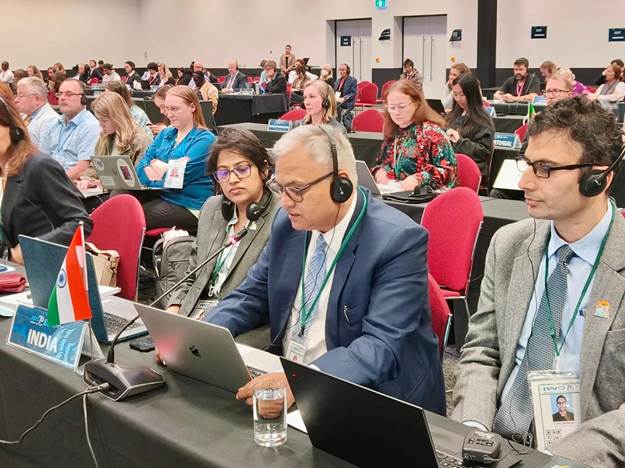
India today underlined the need for conservation of whales and other cetaceans at the 70th meeting of the International Whaling Commission (IWC-70), being held in Hobart, Australia, from 28.09.2026 to 02.10.2026.

In its Opening Statement at IWC-70, India emphasized the importance of continued collaboration among range countries, scientific institutions and relevant international organisations for effective cetacean conservation. India highlighted that improved scientific information on population status, distribution, movements, breeding ecology and threats is essential for strengthening conservation measures and supporting informed decision-making.

India reaffirmed its support for scientific studies and evidence-based approaches to ensure that the conservation and management of cetaceans remain grounded in sound scientific understanding. It also emphasized the importance of greater cooperation among governments, researchers and local communities in developing practical and locally appropriate approaches to address threats to cetaceans.

The meeting assumes special significance as it coincides with the 80th anniversary of the signing of the International Convention for the Regulation of Whaling.

The International Whaling Commission (IWC) was set up under the International Convention for the Regulation of Whaling, signed in Washington DC on 02.12.1946, as the global body responsible for management of whaling and conservation of whales. Its membership includes 89 governments from all over the world. India has been a member of the International Whaling Commission since 1981 and has played a proactive and prominent role in the conservation of whales.

Cetacean species occurring in Indian waters receive the highest level of legal protection under the Wild Life (Protection) Act, 1972. Several Marine Protected Areas have also been notified in the country to provide protection to the rich marine biodiversity, including whales, dolphins, dugongs, sharks, rays, turtles and corals.

The Government of India has further initiated Project Dolphin, adopting a holistic approach towards the conservation of dolphins, whales, porpoises and associated aquatic ecosystems. India also attaches particular importance to the conservation of the Arabian Sea humpback whale, which has been identified among the 25 species for focused conservation efforts.

India reiterated that the future work of the International Whaling Commission should continue to be guided by science-based conservation priorities, international cooperation and practical measures for addressing the diverse threats faced by whales and other cetaceans.

India showcases Forest and Landscape Restoration Initiatives at COFO 28, in Rome


India showcases Forest and Landscape Restoration Initiatives at COFO 28, in Rome


International Cooperation must support Country-driven Implementation, Capacity Development, Technology Transfer and Measurable Outcomes on Ground: India

Posted On: 28 SEP 2026 8:21PM by PIB Delhi

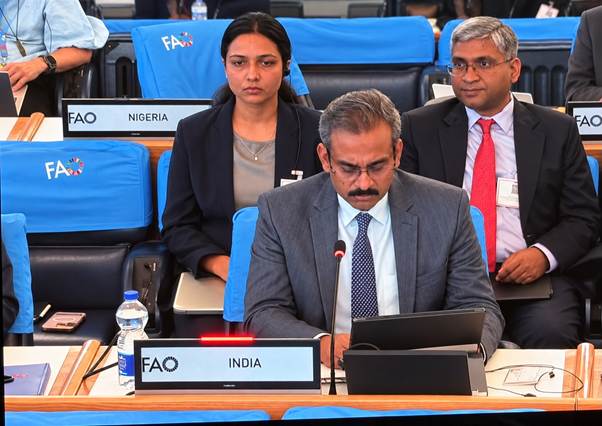
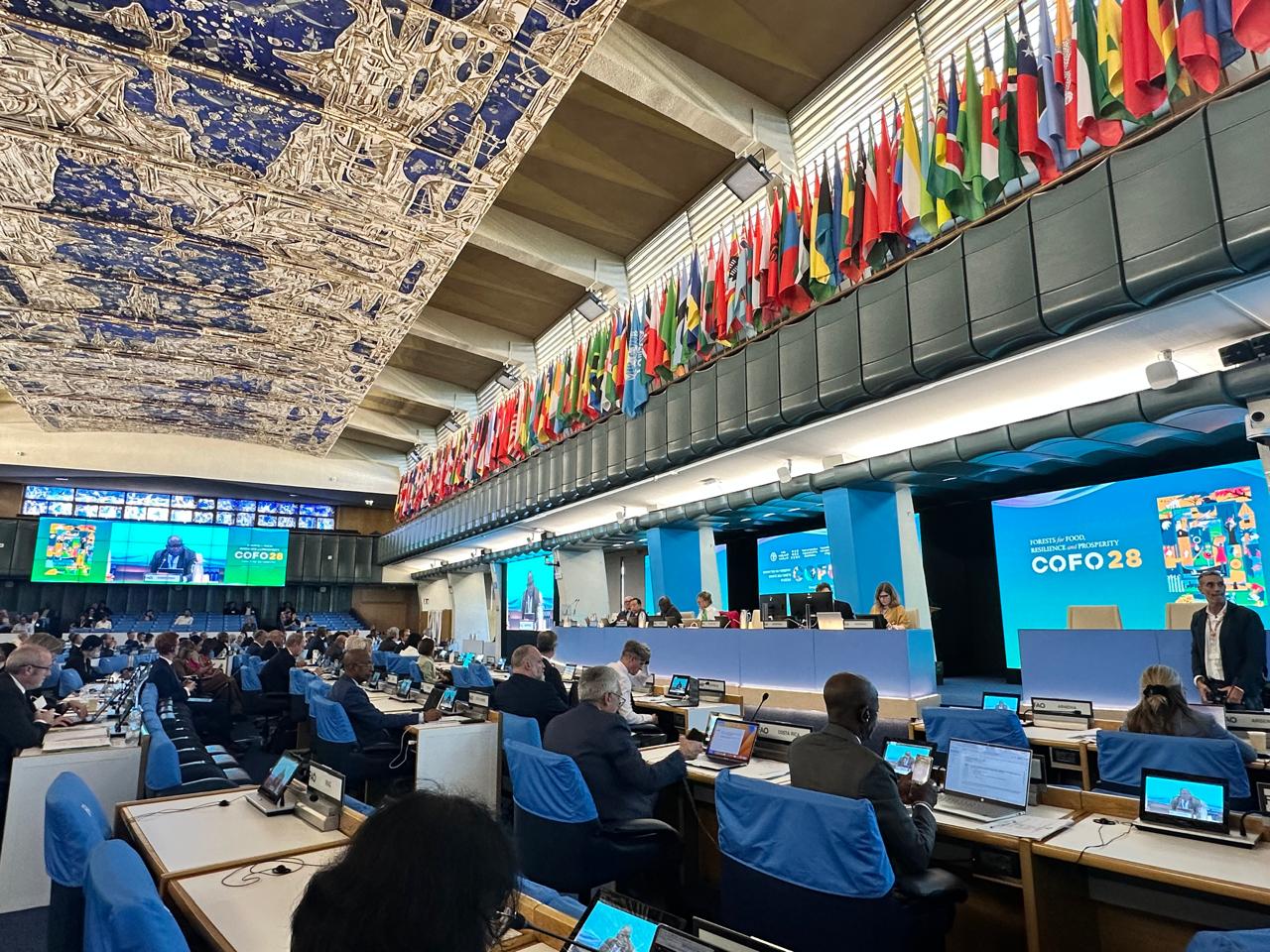
India highlighted its significant achievement in forest and landscape restoration and reaffirmed its commitment to sustainable forest management, climate action and resilient forest landscapes at the Twenty-eighth Session of the FAO (Food and Agriculture Organization) Committee on Forestry (COFO 28), being held in Rome from 28th September to 2nd October 2026. Delivering its Statement during COFO 28, India welcomed FAO’s focus on Forest and Landscape Restoration, and emphasised that sustainable forest management provides an integrated framework for addressing restoration at the landscape level while responding to national circumstances and the needs of local communities.

India highlighted the consistent progress made in enhancing its forest resources. The country’s forest and tree cover stands at 82.74 million hectares, constituting 25.17% of its geographical area. The FAO Global Forest Resources Assessment 2025 ranks India 9th globally in forest area and 3rd in net annual forest area gain. Forests and trees also remain central to India’s climate commitments. India has created an additional carbon sink of 2.29 billion tonnes of CO₂ equivalent by 2021 and has enhanced its ambition to create an additional carbon sink of 3.5–4.0 billion tonnes of CO₂ equivalent by 2035, compared with 2005 levels.

The Statement further highlighted its commitment under the Bonn Challenge to restore 26 million hectares of degraded and deforested land by 2030, of which 21.76 million hectares have already been brought under restoration. Further, major landscape restoration initiatives being undertaken were showcased. Under the Aravalli Green Wall, approximately 6.45 million hectares of degraded land have been identified for restoration. In coastal landscapes, the MISHTI initiative is advancing mangrove restoration while strengthening climate resilience and supporting local livelihoods. India also highlighted that the number of Ramsar Sites in the country has reached 101.

The country also showcased Ek Ped Maa Ke Naam – Plant4Mother, a whole-of-government and whole-of-society initiative under which more than 3.5 billion saplings have been planted. India emphasised that international cooperation must move beyond global commitments to support country-driven implementation, capacity development, technology transfer and measurable outcomes on the ground. It underlined the need for effective and sustainable financing, particularly for developing countries, and encouraged FAO to strengthen support for accessing climate, biodiversity and blended finance and for developing long-term restoration programmes.

India also called for stronger coherence between FAO’s forestry work, the Global Forest Goals and other forest-related international processes, along with enhanced South-South and triangular cooperation for sharing knowledge, best practices and scalable solutions. The country reaffirmed its commitment to working with FAO and Member States in shaping the proposed UN Decade for Afforestation and Reforestation in line with Sustainable Forest Management, 2027–2036, with the objective of building a coherent continuum from restoration of degraded ecosystems to resilient, productive and inclusive forest landscapes.

*****

The 10 rules covered

 Here's your Safety Golden Rules infographic — clean, print-ready, and perfect for toolbox talks, posters, or your HSE pages:

The 10 rules covered:


Work at Height - Harness, anchor points, inspection

Confined Space Entry - Permit, gas test, ventilation

Energy Isolation / LOTO - Lock out, zero energy, test

Permit to Work - Valid, approved, follow conditions

Safe Lifting Operations - Inspect gear, clear suspended loads

Hot Work Control - Fire watch, remove combustibles

Line of Fire - Stay clear of moving equipment

Do Not Bypass Safety Controls - Never disable guards/alarms

Safe Driving - Speed limits, no phone, seatbelt

PPE is Mandatory - Wear, inspect, replace. ⛑️📝🎯🚥🚧✅⚠️💯🌡️🏗️🦺🚨

#viralreels #safetyfirst #viralpost #SafetyCulture #safetytips #fypシ #safety #viral #fyp

the 4 Pillars - One Goal: Protecting People


the 4 Pillars - One Goal: Protecting People

🔴 HIRA - Hazard Identification & Risk Assessment
Identifies hazards, assesses risks and establishes suitable control measures. It's the big picture - covers the entire workplace, all activities. Proactive, done before work starts and reviewed periodically. Output: Risk Register.

🔵 SOP - Standard Operating Procedure
Defines the standard method for performing a task safely and consistently. For routine, repetitive jobs. Focus is consistency, quality + safety. Output: SOP Manual. Eg: Operating forklift, using fire extinguisher.

🟢 SWP - Safe Work Procedure
Provides practical requirements and precautions for carrying out a specific work activity safely. For high-risk / non-routine activities. Focus is PPE, permits, precautions. Output: Safe work instructions.

🟡 JSA - Job Safety Analysis
Breaks a job into steps, identifies hazards at each step and defines the required controls. Done immediately before the job at the worksite - last check. Output: JSA Sheet.

Simple memory aid from the field:
HIRA → Identify & assess the risk
SOP → Define the standard method
SWP → Explain the safe way to perform the task
JSA → Analyse the job step by step
Workflow: HIRA → SOP / SWP → JSA → Safe Execution

Imagine turning waste plastic into a roof


NITROGEN FIXING


CHELATED MICRONUTRIENTS


Check the Worksite, Not Just the Paperwork

 Check the Worksite, Not Just the Paperwork! 🛑👷‍♂️👷‍♀️


Even with a fully approved Job Safety Analysis (JSA/JHA) and Work Permit, conditions on the ground can change in an instant. A Last Minute Risk Assessment (LMRA) is your final line of defense right before work begins.  

3 Steps to a Quick LMRA:

STOP & LOOK: Scan the task, equipment, personnel, and surrounding environment.  

THINK & ASSESS: What has changed? Identify new hazards (e.g., unexpected spills, blocked access routes, or barrier gaps).  

CONTROL & CONFIRM: Resolve concerns and verify that all necessary safety controls and authorizations are active before starting.  

Ask Before You Act:

Do I fully understand the task and its limits?  

Are tools, guards, and isolations verified?  

Are escape routes and access paths safe and clear?  

Are planned controls working as intended?  

Does the entire team understand the precautions?  

⚠️ Remember: If conditions change or work is interrupted, repeat your LMRA. An LMRA supports your safety documentation—it never replaces it.  

If you are unsafe or unsure, stop work and speak to your supervisor immediately. Only proceed when all risks are controlled.  

#SafetyFirst #OccupationalHealth #HSE #LMRA #SafetyCulture #RiskAssessment #WorkplaceSafety #IndustrialSafety #SafetyManagement

Union Environment Minister reviews Delhi’s Air Pollution Mitigation Plan with CM Smt. Rekha Gupta; Calls for Time-bound, Coordinated Action and Public Participation

 Ministry of Environment, Forest and Climate Change

azadi ka amrit mahotsav

Union Environment Minister reviews Delhi’s Air Pollution Mitigation Plan with CM Smt. Rekha Gupta; Calls for Time-bound, Coordinated Action and Public Participation


Clear Hotspot-specific Targets, Coordinated Enforcement, Citizen Engagement and Continuous Review key to improving Air Quality: Shri Bhupender Yadav

Posted On: 28 SEP 2026 2:54PM by PIB Delhi

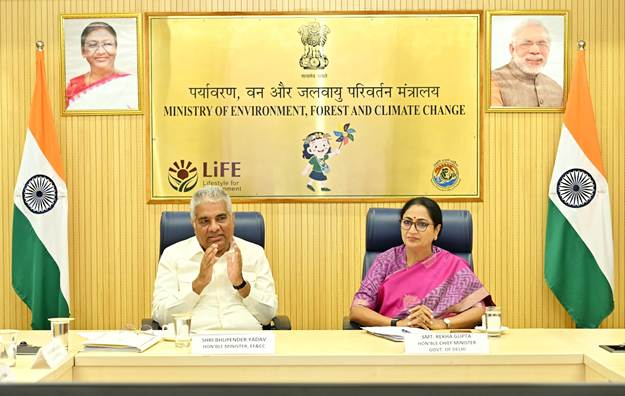
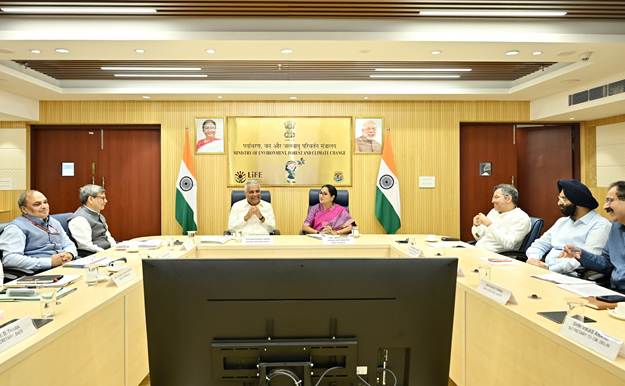
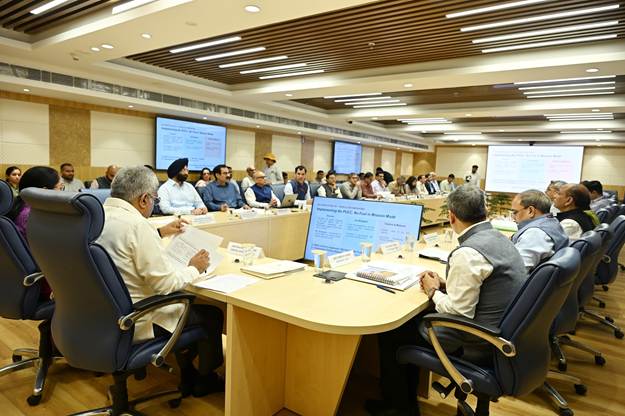
Union Minister for Environment, Forest and Climate Change (EFCC) Shri Bhupender Yadav today chaired a high-level meeting with Chief Minister (NCT Delhi) Smt. Rekha Gupta to review the Delhi Government’s Air Pollution Mitigation Action Plan and assess the progress of measures undertaken to prevent and control air pollution in the national capital. The meeting reviewed the measures already undertaken, progress achieved on the ground and additional interventions required before and during the winter season. Dignitaries present at the meeting included Delhi Minister for Environment, Forest and Wildlife Sardar Manjinder Singh Sirsa and Delhi Minister for Public Works Department Shri Pravesh Sahib Singh, besides senior officials from the MoEFCC and the Government of NCT, Delhi.

Addressing the meeting, Union Minister Shri Bhupender Yadav called for organising Jan Bhagidari events at the 37 identified hotspots in Delhi by October 10, involving relevant stakeholders. Shri Yadav directed that actionable points be identified for each hotspot and their implementation closely monitored. Public representatives would be visiting these hotspots and reviewing the implementation of air pollution mitigation measures on the ground. These area-specific interventions, he said, would contribute to a cumulative outcome in countering different sources of pollution.

The Minister also stressed the need for coordinated action to address pollution from agricultural activities, including through a meeting with the Union Agriculture Minister and the Agriculture Ministers of the NCR States. Shri Yadav called for converting the discussions held with Delhi and other NCR authorities into concrete action points, with the action plans for NCR areas to be finalised before October 10. He emphasised the need for coordinated enforcement and action across different sectors and sources of air pollution. Shri Yadav called for greater awareness generation and ensuring citizen engagement to ensure that people understand the measures being taken and become active participants in improving air quality. The Union Minister stressed that the focus should remain on continuous improvement and giving people a tangible sense of relief and positive change.

Chief Minister of Delhi Smt. Rekha Gupta said the Delhi Government has undertaken several measures to improve air quality and stressed the need to ensure that decisions taken and action points identified translate into effective implementation on the ground. The CM called for stronger coordination among agencies, particularly in enforcement and traffic management, and greater use of technology, including cameras at construction sites, to monitor compliance. She also highlighted the need to explore technological solutions to reduce emissions from cremation grounds and promote awareness about electric cremation facilities, including their availability for economically weaker sections.

Based on detailed deliberations at the high-level meeting chaired by the Union Minister, a comprehensive, outcome-oriented strategy was finalized to combat air pollution during the coming winter season. The strategy with targeted action points would intensify action on vehicular emissions, road and construction dust, waste and biomass burning, industrial emissions, public transport, greening, and pollution and traffic hotspots. Citizens, Resident Welfare Associations (RWAs), market associations, industries and public representatives would be brought into the campaign as active partners.

Following targeted action points were identified during the meeting:

  1. ‘No PUCC, No Fuel’ in Mission Mode

It was decided to implement ‘No PUCC, No Fuel’ in mission mode through a city-wide awareness and enforcement campaign at all 500 ANPR-enabled fuel stations, with action against defaulting pumps.

  1. Public Transport First - last mile connectivity

To promote public transport, a city-wide campaign for adoption of the Delhi Metro Sarthi App to be undertaken during October 1–10, including download camps with RWAs and public representatives. It was informed that last-mile connectivity is available at all 228 Metro stations, while Delhi’s bus fleet has reached 6,840, including 5,088 e-buses.

  1. Hotspot Action Plan

For air-quality and traffic hotspots, public representatives would undertake regular field visits with officials, RWAs, traders and traffic police. As on date, 42 hotspots have been rectified, with eight more targeted by October. In consultation with Delhi Traffic Police, one-way traffic and decongestion trials would be undertaken at hotspots.  Further, citizens would be encouraged to flag encroachments, illegal parking and dumping points. It was informed by Delhi Government that 8 identified road stretches have been made signal-free and the remaining 7 are targeted for completion by October 2026.

  1. Road Redevelopment and Dust Mitigation

Further directions were given to accelerate road redevelopment with 1,193 km already completed as on date and the balance targeted for completion by November 15. It was also stressed to ensure end-to-end paving of footpaths with focus on walkability and dust mitigation. Complaints are to be closed within 72 hours as per the SOP.

  1. Prevent Open Waste Burning

The meeting decided to intensify deep cleaning, effective waste management and zero-burning measures, including ward-level monitoring, stronger market waste collection and enforcement of Solid Waste Management Rules, 2026. Delhi Government informed that MRSMs have increased to 98 from 76 last year. A city-wide ‘Zero Burning’ pledge campaign would be carried out and dedicated ward- and district/subdivision-level monitoring teams would be deployed by October 15 to prevent waste burning. Further, heating booths would be established on a pilot basis as part of the winter action plan. Special focus would be given to unauthorized regularized  colonies and JJ clusters.

  1. Focus on Greening

The meeting laid stress on survival and greening of brown areas. The Delhi Government informed that it has already achieved 71 lakh plantations and greened 433 of 434 acres of identified brown areas.

  1. Waste to Wealth

The meeting laid stress on making registrations on the Malba App as a mandatory condition for building plan sanction. The Delhi Government informed that for construction and demolition dust control, a ban would be in force on dust generating demolition activity and outdoor civil construction activity from November 1 to January 31, with a complete ban on construction and demolition activities from December 10 to January 20.

  1. Winter Protocol

Advance winter measures were decided during the meeting that include restrictions on polluting vehicles, doubled parking charges, staggered office timings and 50 per cent work-from-home arrangements. It was also decided to restrict entry of all vehicles registered outside Delhi and below BS-VI emission standards, except CNG and EV vehicles, with effect from 01.11.2026.

  1. Parivartan Yojana and EV Outreach

The meeting decided to promote EV Policy 2026, increasing incentives for scrapping old vehicles and a mission-mode registration drive for Parivartan Scheme. It was further directed to run Jan Bhagidari Camps in October-November to expedite the drive.

  1. Mitigating Industrial Pollution

Decision was taken to strengthen industrial enforcement, operationalise an AI-enabled Command and Control Centre, increase monitoring stations from 47 to 60, and deploy 334 enforcement teams to enforce strict action against non-conforming polluting industries. Citizen participation, grievance redressal, daily AQI bulletins and coordinated NCR-level airshed action will be further strengthened.

The meeting was attended by the Secretary (MoEFCC) Shri Tanmay Kumar; Chairman, Commission for Air Quality Management (CAQM), Shri Rajesh Verma, senior officers from MoEFCC and Government of NCT Delhi. Also present in the meeting were senior officers from CPCB, Delhi Pollution Control Committee (DPCC), MCD, NDMC, DDA, Delhi Transport Department, Delhi Metro, Delhi Police and PWD.

Frequently Asked Questions (FAQs) under Battery Waste Management Rules, 2022

 Frequently Asked Questions (FAQs) under Battery Waste Management Rules, 2022 

Q. What is Battery? Answer: ‘Battery' means new or refurbished cell and/or Battery and/or their component, including accumulator, which is any source of electrical energy generated by direct conversion of chemical energy and includes disposable primary and/or secondary battery. 

Q. What does ‘Waste Battery’ includes? Answer: Waste Battery includes: (i) Used and/or End of Life Battery and/or its components or spares or parts or consumables which may or may not be hazardous in nature; (ii) Pre-consumer Off-Spec Battery and its components or spares or parts or consumables; (iii) Battery whose date for appropriate use has expired; (iv) Battery which have been discarded by the user. 

Q. What is the meaning of EPR? Answer: EPR stands for ‘Extended Producer Responsibility’ which means responsibility of any Producer of Battery for Environmentally sound management of Waste Battery.

Q. What are EPR target for Producers/Manufacturers? Answer: EPR targets is the quantity of battery placed in the market by the Producer/Manufacturers. Details are given in Schedule II of the Battery Waste Management Rules, 2022. 

. Who all comes under the definition of ‘Producer’? Answer: ‘Producer’ means an entity who engages in: (i) manufacture and sale of Battery including refurbished Battery, including in equipment, under its own brand; or (ii) sale of Battery including refurbishr suppliers; (iii) import of Battery as well as equipment containing Battery. 

Q. Does manued Battery, including in equipment, under its own brand produced by other manufacturers ofacturers of Battery needs to obtain registration from CPCB? Answer: As per Rule 4 (4), The person or an entity involved in manufacturing of Battery shall have to register through the online centralised portal as Producer in Form 1(A). The certificate of registration shall be issued in Form 1(B). 

Q. Does importer of battery needs to obtain registration from CPCB? Answer: As per rule 3(1) (u), Importer of Battery as well as equipment containing Battery will be called 'Producer'. The Importer has to obtain registration from CPCB to carry out import activities related to battery. 

Q. Which entities shall register on the online portal developed by CPCB? Answer: The following entities shall register on the online portal developed by CPCB: (i) Producer (Importers comes under the definition of Producer as per Rules) (ii) Manufacturers of Battery (iii) Recyclers and Refurbishers 

Q. What are the documents required for KYC for registration of Producers/Manufactures? Answer: PDF copy of Company’s PAN, CIN & GST of the Producer/Manufacturers. 

Q. Is the registration provided by CPCB to the importers of lead acid batteries under Batteries (Management and Handling) Rules, 2001 still valid? Answer: No, importers have to obtain fresh registration from CPCB to carry out any import activities related to battery as well as equipment containing battery. 

Q. Which type of batteries are covered under The Battery Waste Management Rules, 2022? Answer: All types of batteries regardless of chemistry, shape, volume, weight, material composition and use. Q. In case of Proprietorship/Partnership, under company details, what should be provided in PAN? Answer: PAN of the authorized person is to be provided. 

Q. When will the Importer be liable for EPR obligations? Answer: Importers shall have EPR Obligations under the following conditions: a. Importers who sale the imported battery in the market under their own brand name. b. Importers supplying the imported battery to other manufactures/dealers and the manufacturers/dealers is selling those batteries in the market under the brand name provided by the importer. c. Importers supplying the imported battery directly to bulk consumers. d. Importers selling the imported battery in the market under the name of the brand imported. 

Q. When will the Importer NOT liable for EPR obligations? Answer: Importers shall not have EPR Obligations under the following condition: a. Importers supplying the imported battery to other manufactures/dealers and the manufacturers/dealers is selling those batteries in the market under their own brand name.

 Q. Do the Dealers of Battery have to register with CPCB/SPCB? Answer: a. If the dealer purchases the battery from a manufacturer or a producer and sales the battery under its own brand name, in this case, the dealer will be called a Producer and will have to register with CPCB. The Dealer will also have EPR obligations as per rules. b. If the dealer purchases or supplies the battery from manufacturer/s or a producer and sale them under the brand name provided by the manufacturer or producer, then the Dealer is not required to obtain CPCB or SPCB." 

Q. Do the exporters of battery needs to register with CPCB and have any EPR obligations? Answer: If the company/brand is not placing the Battery in the Indian market, it will not have EPR obligations. 

Q. Do manufacturers of products using battery as a component (e.g. manufacturers of UPS, inverters, medical equipment, emergency lights, Instruments, Signage, Printers, etc.) fall under definition of Producer under Para 3 (u) (i) & (ii) page 29 of the BWM Rules, 2022? Answer: a. If a company/manufacturer is using a battery as a component in equipment’s, then the manufacture will have EPR obligation and have to register as producer if it is making batteries under its own brand name. b. If a company/manufacturer is using battery provided by other battery manufacturer/producer, then it will not have any EPR obligations."

 Q. Where can I find the EPR Registration Certificate? Answer: There is no separate registration certificate for EPR. Registration is only granted under Form 1(B) of the Rules. 

Q. We at XYZ industry/brand/company are engaged in manufacturer of Battery and supply of battery to different manufacturers in India. We do not supply any battery to direct consumer or through dealer. Do we need to obtain registration from CPCB? Answer: As per rules 4(4), Manufacturer of the battery has to register as producer by CPCB. 

Q. Do the manufacturers of Battery have any EPR obligations? Answer: I. Manufactures shall have EPR Obligations under following conditions: a. Manufactures who sale the battery in the market under their own brand name. b. Manufactures supplying battery to other manufactures/dealers and the other manufacturers/dealers is selling those batteries in the market under the brand name provided by the Original manufactures. c. Manufacturers supplying battery directly to bulk consumers. II. Manufacturers shall have not EPR Obligations under following conditions: a. Manufacturers supplying battery to other manufactures/dealers and the manufacturers/dealers is selling those batteries in the market under their own brand name. 

Q. As per the new Batteries Waste Management Rules 2022, whether battery user or consumer is required to submit annual or half yearly return? Answer: Consumers/users of battery are not required to submit annual or half yearly returns. However, if any brand/company/industry/User is involved in import of any battery for in-house use, then it is mandatory to obtain registration from CPCB and they will be liable for EPR obligations. In this case, they will have to submit annual returns by 30th June."

 Q. Where can I find the list of registered recyclers and refurbisher? Answer: The list of registered Recyclers and Refurbishers can be obtained through SPCBs/PCCs. 

Q. We at XYZ company are involved in Refurbishment of battery and after refurbishing the battery we are selling the battery under our own brand name. Will we have EPR obligations? Answer: If a company, be it a refurbishment unit is involved in selling of battery under its own brand name, then as per rules they will be called 'Producer'. They will have to register with CPCB and will have EPR obligations." 

Q. What documents are to be submitted by the Producer while applying for grant of registration? Answer: Refer SoP given on CPCB website. 

Q. In form 1 (A), under type(s) of Battery placed in the market with brand name(s), what brand name(s) to be written in case of imported Battery? Answer: Importer shall mention their own brand name(s) and not the brand name(s) of the battery imported.

HSE Colour Coding Chart — Explained

 HSE Colour Coding Chart — Explained


Colour coding is a visual safety communication system. It helps workers quickly identify hazards, required actions, emergency equipment, safe conditions and other safety information. ISO 3864 establishes principles for safety identification colours and signs, while ISO 7010 specifies registered workplace safety signs. 


1. 🚦 Safety Sign Colours


Colour / Main meaning / Typical examples


🔴 Red / Prohibition / Fire equipment / No smoking, no entry, fire extinguisher, fire alarm

🟡 Yellow / Warning / Hazard / Electrical hazard, slippery floor, overhead load

🔵 Blue / Mandatory action / Wear helmet, wear PPE, eye protection required

🟢 Green / Safe condition / Emergency / Emergency exit, first aid, assembly point, eyewash


These meanings are based on the ISO safety-sign system. 


2. 🔴 Red — Prohibition & Fire


Red communicates danger requiring immediate attention in specific safety-sign contexts.


Examples:


🛑 No smoking


🚫 No entry


🔥 Fire equipment


🧯 Fire extinguisher


🚨 Emergency stop/fire alarm


Fire hose/reel


Remember: Red does not simply mean "danger" everywhere; the exact meaning depends on the applicable sign system.


3. 🟡 Yellow — Warning


Yellow is commonly used to indicate caution or a physical hazard.


Examples:


⚡ Electrical hazard


⚠️ General warning


Slippery surface


Trip/fall hazard


Moving machinery


Overhead hazards


Chemical hazards


OSHA's physical-hazard colour requirements specifically identify yellow as the basic colour for caution and physical hazards such as striking, stumbling, falling, tripping and caught-between hazards. 


4. 🔵 Blue — Mandatory Action


Blue generally tells the worker:


> "You MUST do this."


Examples:


🪖 Wear safety helmet


🥽 Wear eye protection


🧤 Wear gloves


👂 Wear hearing protection


😷 Wear respiratory protection


🥾 Wear safety footwear


Use required fall protection


5. 🟢 Green — Safe Condition


Green communicates safe conditions, emergency escape or first-aid information.


Examples:


🚪 Emergency exit


🏃 Escape route


🩹 First-aid station


👁️ Eyewash station


🚿 Emergency shower


📍 Assembly point


Safe-condition information


6. 🟠 Orange — Important Warning/Warning Tags


Orange is commonly encountered in systems such as OSHA warning tags, where OSHA's recommended colour coding uses orange predominantly for WARNING. 


Examples:


Machinery hazards


Serious warning information


Certain biological-hazard markings


Do not confuse this with the ISO basic safety-sign colour system, where yellow is the standard warning colour.


7. ⚫ Black / ⚪ White — Contrast & Identification


Black and white are frequently used as contrast, text, boundaries and general identification/housekeeping markings.


Examples:


Equipment boundaries


Storage areas


Traffic/housekeeping markings


Text and symbols on safety signs


Black/yellow hazard striping


The exact application depends on the site's marking standard.


8. 🟨⬛ Yellow/Black — Physical Hazard Marking


Commonly used for:


Steps and edges


Low headroom


Moving equipment hazards


Openings


Collision hazards


Areas where people could be struck, caught or fall


The precise marking scheme should follow the applicable national/site standard.


9. 🟩🟥🟦 Floor & Area Markings


A common workplace practice is:


🟩 Green — safe walkways/escape routes


🟥 Red — fire equipment/emergency areas


🟨 Yellow — caution/restricted or hazard areas


🟦 Blue — designated work/equipment areas


🟨⬛ Yellow/black — physical hazards


⚠️ Important: Floor-marking colours are not one universal global HSE code. Your facility's approved colour-marking procedure takes precedence.


10. 🧯 Fire Extinguisher Colours


Extinguisher body colours vary by country, manufacturer and standard. Therefore, don't identify an extinguisher solely by colour.


Identify it by:


Label


Extinguishing medium


Fire class


Operating instructions


Manufacturer's markings


For example, an extinguisher may contain water, foam, dry chemical powder, CO₂ or wet chemical, but its external colour scheme is not universally identical.


11. 🛢️ Pipe & Process Identification


Pipe identification is a separate subject from the basic ISO safety-sign colours. ISO 20560-1:2024 specifies safety information for the contents and hazards of above-ground piping systems. 


Common site schemes may use colours to distinguish:


Water


Steam


Compressed air


Fuel/oil


Natural gas


Firewater


Chemicals


Nitrogen/inert gas


Waste/effluent


Never assume a pipe colour without checking the facility's pipe-identification standard and flow-direction markings.


12. 🗑️ Waste Colour Coding


Waste colour schemes are not universally identical. A site may establish colours for:


General waste


Recyclables


Organic waste


Hazardous waste


Chemical waste


Medical waste


E-waste


Always follow the site's approved waste-management procedure.


⭐ Easy Memory Rule


🔴 RED = STOP / FIRE

🟡 YELLOW = BE CAREFUL

🔵 BLUE = MUST DO

🟢 GREEN = SAFE / ESCAPE

🟠 ORANGE = WARNING in applicable systems

⚫/⚪ BLACK & WHITE = IDENTIFICATION / CONTRAST / MARKING


⚠️ HSE Golden Rule


Colour coding is not universal across every HSE application. Safety-sign colours have internationally standardized meanings, but pipe identification, waste bins, PPE colours, extinguisher bodies, floor markings and tank colours can vary by country, industry, manufacturer or site procedure. Always verify the applicable standard before relying on a colour alone. ISO 7010 is currently the published reference for registered safety signs, while a new ISO/DIS 7010 revision is under development. ⛑️🚨📝🚧🏗️🚥🎯💯🦺🌡️✅

#viralpost #SafetyCulture #viralreels #SafetyFirst #fyp #viral #safetytips #fypシ #safety

Sunday, 27 September 2026

Power from Waste


Power from Waste


Inside Swachh Bharat Mission Waste-to-Energy Story

Posted On: 27 SEP 2026 11:57AM by PIB Delhi

Across India, organic waste is finding a second life as fuel, electricity and valuable manure. Under the Swachh Bharat Mission, launched in October 2014, scientific management of municipal solid waste has remained a core objective. As the Mission evolved, organic waste has been recognised as a valuable resource to produce clean energy. Biogas, produced through the anaerobic decomposition of organic waste, is among the most viable, economical and environmentally friendly cooking fuels available. The by-product slurry is rich in nitrogen and serves as an effective organic fertilizer. It reduces dependence on chemical inputs, lowers costs and helps maintain soil fertility. This delivers a dual benefit from a single initiative.

Waste-to-energy, under Swachh Bharat Mission-Urban 2.0, takes different forms across India, depending on the available waste and community needs. A vegetable market in Hyderabad lights its own streetlights with rotten vegetables. In Prayagraj, a multi-feedstock bio-CNG plant converts different types of organic waste into clean fuel and compost. An educational institution in Gandhinagar cooks for more than 500 people a day without depending on LPG cylinders. A gaushala in Gwalior turns cow dung into compressed biogas. Different feedstocks, different scales, but the same underlying shift. These initiatives showcase how cities and institutions are emerging as frontrunners in the journey towards sustainability. By adopting innovative, circular approaches to waste management, they are reducing environmental impact and unlocking the value of waste as a resource.


Gandhinagar: An Educational Campus Eliminating LPG Dependence

At the Shrimati Manekba Vinay Vihar Educational Complex, near Adalaj in Gandhinagar, Gujarat, the kitchen cooks for more than 500 people every day. Around 250 hostel students receive two meals daily, alongside 15 staff families living on campus. The kitchen, however, has eliminated its dependence on LPG and transitioned to a biogas-based cooking system.

The Vasumati Charitable Trust, which manages the campus, operates two biogas plants with a combined capacity of 90 cubic metres per day. The feedstock includes dung from 222 cows housed in the trust's cowshed. It is supplemented by kitchen waste and agricultural residue from nearby fields. The gas meets the campus's entire cooking-fuel requirement, without which 30 LPG cylinders would have been required every month.

The institution demonstrates how innovative and scientific waste management can drive energy self-reliance and sustainability. The institutional mechanisms such as the Gujarat government’s Institutional Biogas Plant Scheme and Gujarat Energy Development Agency (GEDA) provided the policy and financial support to make this transition.
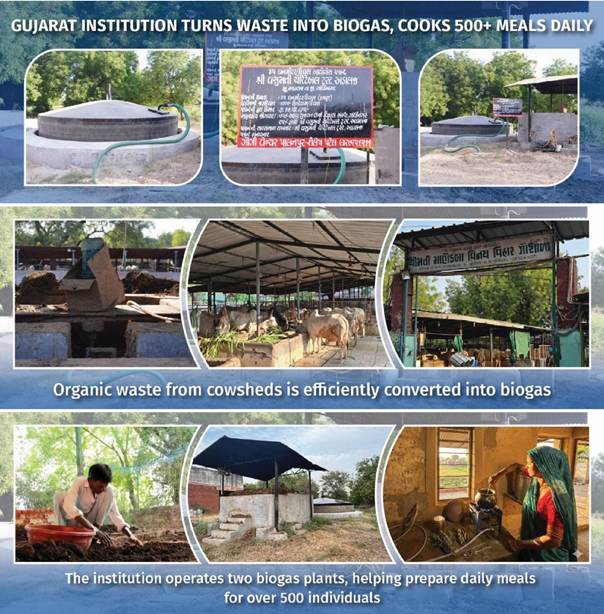
Image 1: Biogas plants at the Shrimati Manekba Vinay Vihar Educational Complex, Adalaj, Gujarat

Gujarat continues to advance alternative energy and sustainable development, reducing pollution and achieving energy self-sufficiency. It also enables the scientific disposal of organic waste from gaushalas and educational institutions alike.


Prayagraj: One Plant, Four Feedstocks

Prayagraj's bio-CNG facility is a waste-to-energy plant designed to process diverse forms of organic waste.
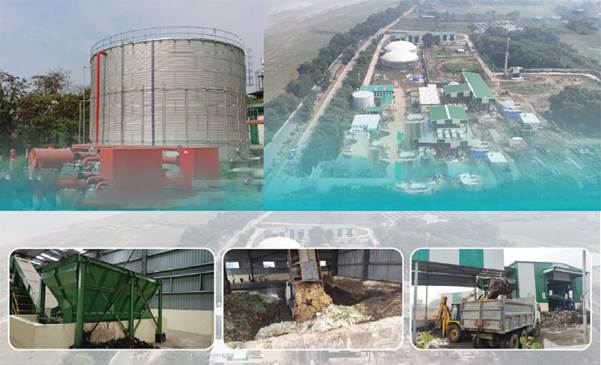
Image 2: Bio-CNG Plant at Prayagraj, Uttar Pradesh

With the launch of the plant, Uttar Pradesh has established a significant milestone in green energy and waste management. The project represents a forward-looking step towards environmental conservation while advancing the mission of turning waste into a valuable resource.

The plant can process 343 tonnes of organic waste a day and produce around 21 tonnes of bio-CNG. Its multi-feedstock model uses wet waste, paddy straw, cattle dung and poultry litter, creating productive uses for agricultural residues while helping address stubble burning.

The facility operates under a public-private partnership model and absorbs bulk organic waste from hotels, restaurants and apartment complexes. Daily wet-waste supply has increased from just 7–8 tonnes initially to around 125 tonnes, strengthening waste utilisation in the city. The bio-CNG produced is sold under the Compressed Bio-Gas (CBG) - City Gas Distribution (CGD) Synchronisation Scheme, reaches users through the fuel cascade route, and currently supports city transport.

The process also produces 28 tonnes of high-quality compost daily, which is made available to local farmers, supporting regenerative farming. Looking ahead, the project is expected to extend clean energy access to around 45,000 households through piped gas and reduce carbon emissions by approximately 57,000 tonnes annually.


Gwalior: A Gaushala That Became a Power Plant

At Adarsh Gaushala in Laltipara, Gwalior’s largest cowshed, more than 10,000 cattle call it home. In October 2024, the gaushala gave its daily dung a new purpose with the inauguration of a 100-tonnes-per-day (TPD) Compressed Bio-Gas (CBG) plant. The facility made Adarsh Gaushala India’s first modern, self-sufficient gaushala built around a state-of-the-art CBG plant.
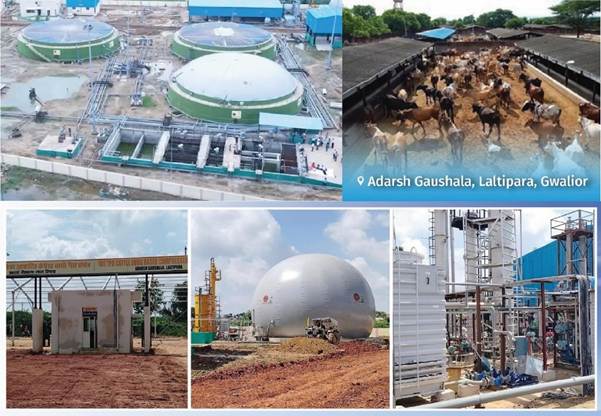
Image 3: Cattle dung-based Compressed Bio-Gas (CBG) plant, Laltipara, Gwalior, Madhya Pradesh

The plant’s design goes beyond cattle dung alone. It is Madhya Pradesh’s first CBG plant built to also process vegetable and fruit waste collected from markets and homes. Spread over 5 acres, the ₹31-crore project was developed in collaboration with Indian Oil Corporation. Every day, it converts 100 tonnes of cattle dung into two tonnes of compressed biogas. It also produces 10–15 tonnes of dry bio-manure daily, providing an affordable input for farmers in nearby districts and encouraging organic farming.

The benefits extend beyond the gaushala. The CBG provides a cleaner, eco-friendly alternative to fossil fuels, while converting dung into energy helps reduce carbon emissions and contributes to climate change mitigation. The project has also created local employment opportunities, promoting skills in green energy and sustainable practices and contributing to the local economy.

The CBG plant is more than an industrial facility. It represents collaboration between society and government and demonstrates how waste can be converted into useful resources.


Bowenpally: What a Vegetable Market Can Power

Among these four stories, the vegetable market story at Bowenpally tells about one of the most innovative waste management systems. At Hyderabad’s Bowenpally Vegetable Market, roughly 10 tons of vegetable and fruit waste are collected every day. This waste previously went to landfills. Since a biogas plant was set up on-site, nearly all the waste collected from the market is put to use. It generates around 400–500 units of electricity and 30 kg of biofuel a day. The electricity generated is used to run the market’s streetlights, stalls, administration building and water-supply network. The biofuel is supplied to the market’s commercial kitchen, helping keep the marketplace clean and pollution-free.
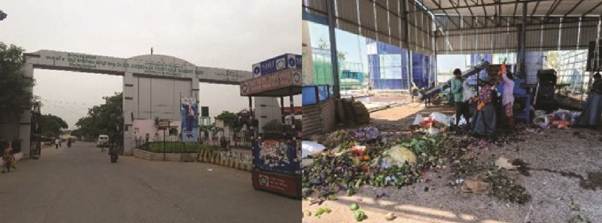
Image 4: Bowenpally Vegetable Market and Bowenpally’s Biogas Plant, Hyderabad

Inside the biogas plant, vegetables are chopped, shredded and ground into slurry. The slurry then feeds into anaerobic digesters, while the resulting gas is stored in balloons until further use. The leftover slurry produces liquid bio-manure, which is used by farmers as fertiliser. Biogas is also collected in a separate tank and sent through a pipeline system for cooking. The biofuel is supplied to a 100% biogas generator, which powers the cold storage rooms, water pumps, shop and streetlights.

The plant has cut the market’s electricity bill by roughly half, from an earlier average of about ₹3 lakh a month. Following its impact, five more such plants at other market yards have been funded. These include Gudimalkapur, Gaddiannaram, Erragadda, Alwal and Saroornagar, with capacities suited to the waste generated at each yard.
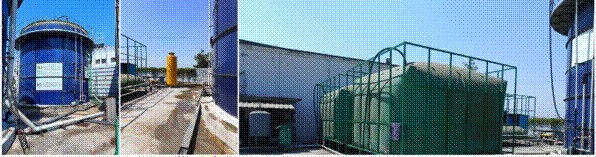
Image 5: Bowenpally’s Biogas Plant

The plant has also created steady work for women in the market. They sort and segregate waste, operate machinery, and handle administrative roles. This plant offers women workers a steady income and skill development.

Image 6: Rukamini Devamma, a woman employee at the Bowenpally vegetable market

Rukmini Devamma’s words on the biogas plant: “Since the biogas plant was set up, we are being paid well for our work. We are also provided with all the necessary safety gear, such as masks, gumboots and gloves. With a safe working environment, we are encouraging others to join us and work with us as well.”


What Ties These Stories Together

Across these four stories, the feedstock changes, but the principle remains the same: waste is no longer the end of the cycle. They demonstrate what happens when waste management is designed around resource recovery. Under the Swachh Bharat Mission, this approach is expanding the role of urban waste infrastructure beyond collection and disposal, towards processing, energy generation and productive use of by-products. Cow dung, kitchen waste, crop residue and discarded vegetables are being converted into fuel, electricity and manure. Multiplied across India's cities, campuses, gaushalas and markets, this approach moves beyond isolated projects. From generating clean energy to promoting organic practices, these efforts highlight a scalable pathway for urban India, where scientific waste management, community participation, and forward-looking policies together pave the way for cleaner, greener, and more self-reliant cities.