Thursday, 1 October 2026

अपशिष्ट में नये उपयोग की तलाश


अपशिष्ट में नये उपयोग की तलाश


रसोई के कचरे से लेकर शहर के स्थानों तक कचरे पर पुनर्विचार

प्रविष्टि तिथि: 01 OCT 2026 1:40PM by PIB Delhi

वर्ष 2014 में शुरू किया गया स्वच्छ भारत मिशन (एसबीएम) स्वच्छता, अपशिष्ट प्रबंधन और व्यवहार में बदलाव लाने के लिए एक व्यापक आंदोलन के रूप में विकसित हुआ है। इस मिशन में स्वच्छता ही सेवा (एसएचएस) के माध्यम से व्यापक नागरिक भागीदारी के लिए जगह भी बनाई गई, जिसे 2017 में सामूहिक स्वच्छता कार्रवाई के लिए एक वार्षिक अभियान के रूप में शुरू किया गया था। अभियान में प्लास्टिक अपशिष्ट प्रबंधन, दृश्य स्वच्छता और कचरा मुक्त सार्वजनिक स्थानों पर अपना ध्यान केंद्रित किया गया है।

इस अभियान के साथ ही, वेस्ट टू वेल्थ यानी अपशिष्ट से संपदा का विचार  पूरे भारत में कचरे के प्रति देखने का नजरिया और उसे उपयोगी बनाने के तरीके को बदल रहा है। यह फेंकी गई सामग्री को एक ऐसे संसाधन के रूप में देखता है जिसे पुनर्प्राप्त किया जा सकता है, उसका फिर से उपयोग किया जा सकता है और उसे नई उपयोगी वस्तु में परिवर्तित  किया जा सकता है। सरकार ने इस दृष्टिकोण को चक्रीयता, संसाधन दक्षता और टिकाऊ अपशिष्ट प्रबंधन से जोड़ा है। स्वच्छ भारत मिशन - शहरी 2.0 के तहत, शहरों को कचरे के स्रोत पर ही उसका पृथक्करण, अपशिष्ट प्रसंस्करण और कचरे को उपयोगी वस्तु में बदलने के लिए प्रोत्साहित किया जाता है। यह बदलाव न केवल बड़े प्रसंस्करण संयंत्रों में, बल्कि घरों, समुदायों और स्थानीय संस्थानों में भी दिखाई दे रहा है।

छोटे खाद डिब्बे से घरों में बदलाव शुरू
Vijaywada AP k Subbalakshmi senior citizen.jpg

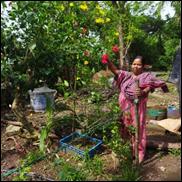
कई भारतीय घरों के लिए, रसोई के कचरे को खाद में बदलना कोई नई बात नहीं है। यह एक ऐसा व्यवहार है जो आज की अपशिष्ट प्रबंधन प्रणालियों में एक नई जगह पा रहा है। आंध्र प्रदेश के विजयवाड़ा में, वरिष्ठ नागरिक के. सुब्बलक्ष्मी ने बताया है कि इस आदत को घरों में कैसे अपनाया जा सकता है।

नगर निगम ने हाल ही में नागरिकों को घरेलू खाद बनाने के लिए प्रोत्साहित करने में अपना अनुभव साझा किया। उसकी रसोई में उत्पन्न गीले कचरे को खाद में बदल दिया जाता है जिसका उसके बगीचे में उपयोग किया जाता है, जिसे पहले खुले में फेंक दिया जाता था।
siddipet telangana swachh badi composting.jpg

ऐसा ही एक प्रयास चंडीगढ़ में कोविड-19 महामारी के दौरान शुरू हुआ। चंडीगढ़ निवासी कमलजीत कौर देओल ने  घर पर गीले रसोई के कचरे से खाद बनाना शुरू कर दिया। एक घरेलू आदत के रूप में जो शुरू हुआ वह धीरे-धीरे दूसरों को घरेलू खाद बनाने के लिए प्रोत्साहित करने के लिए जागरूकता गतिविधियों में बदल गया। उनके प्रयासों ने नागरिकों को एक स्वच्छ और हरित शहर की दिशा में योगदान करने के लिए प्रेरित करने में मदद की है।

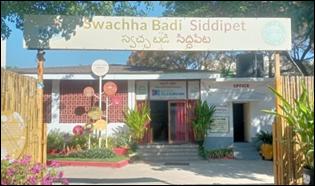
जैसे-जैसे घरेलू खाद बनाने के इन व्यक्तिगत प्रयासों ने व्यापक भागीदारी को प्रोत्साहित करना शुरू किया, इस विचार को संगठित सामुदायिक शिक्षा में भी जगह मिलने लगी। तेलंगाना के सिद्दीपेट में, समर्पित अपशिष्ट प्रबंधन शिक्षण केंद्र 'स्वच्छ बाड़ी' युवाओं को घरेलू खाद बनाने से लेकर सामुदायिक स्तर की खाद बनाने तक व्यावहारिक अपशिष्ट प्रबंधन तरीकों के बारे में जानकारी प्रदान कर रहा है। इस दृष्टिकोण के आधार पर, 141 नगरपालिका क्षेत्रों में इसी तरह के केंद्रों की योजना बनाई गई है, जो जिम्मेदार अपशिष्ट प्रबंधन पर समुदायों में जागरूकता लाते हैं और सीखने में व्यावहारिक बनाते हैं।

इसलिए एक छोटे खाद डिब्बे से जो शुरू होता है उसका व्यापक प्रभाव हो सकता है। यह गीले कचरे की नियमित धारा को लैंडफिल से दूर रखते हुए पौधों को नया जीवन देता है। इसके साथ ही, सबसे खास बात है कि यह बतलाता है कि जहां अपशिष्ट स्वयं उत्पन्न होता है वहीं अपशिष्ट प्रबंधन कैसे शुरू हो सकता है।

जब खरपतवार भी अवसर बन जाता है

घरेलू कचरे के अलावा, समुदाय उन सामग्रियों का भी उपयोग ढूंढ रहे हैं जिनका प्रबंधन करना लंबे समय से मुश्किल रहा है। असम में मोरीगांव जिले के बोरचिला गांव में, इस दृष्टिकोण को एक ऐसे पौधे पर लागू किया जा रहा है जो जल निकायों के आसपास रहने वाले समुदायों के लिए एक लगातार चुनौती बन गया है। जलकुंभी, जिसे स्थानीय रूप से 'पानी मेटेका' के नाम से जाना जाता है, एक आक्रामक जलीय पौधा है जो जल निकायों में तेजी से फैलता है। अपनी सौंदर्य अपील के बावजूद, जलकुंभी एक समस्याग्रस्त खरपतवार बन गया है, जो नदियों, तालाबों और झीलों जैसे मीठे जल निकायों को बोझिल बना रहा है। इसकी अतिवृद्धि मछली पकड़ने, परिवहन और मनोरंजन जैसी गतिविधियों को बाधित करती है, जिससे इन जल स्रोतों का उपयोग कम हो जाता है।

हालांकि, बोरचिला गांव की महिलाओं ने जलकुंभी को एक अवसर में बदलने का एक नया तरीका ढूंढ लिया है। इस पौधे को केवल जल निकायों में अवांछित वृद्धि के रूप में देखने के बजाय, उन्होंने इसे हस्तशिल्प में बदलना शुरू कर दिया है। असम राज्य ग्रामीण आजीविका मिशन के तहत समर्थित, इस पहल ने भाग लेने वाली महिलाओं के लिए आय का एक अतिरिक्त स्रोत बनाया है, जो  इस काम के माध्यम से प्रति माह कम से कम 10,000 रुपये कमाती हैं। जिसे कभी जल निकायों के लिए एक समस्या के रूप में देखा जाता था, उसे अब आजीविका और उद्यम के संसाधन में बदल दिया जा रहा है। अनुभव बताता है कि मूल्य और आजीविका के अवसर पैदा करने के लिए संसाधन पुनर्प्राप्ति अपशिष्ट प्रबंधन से परे बढ़ सकती है। बोझ बनी रह सकने वाली उन सामग्रियों को उपयोगी उत्पादों में बदलकर ऐसी पहल संसाधनों के अधिक टिकाऊ उपयोग को बढ़ावा देते हुए स्थानीय उद्यम का समर्थन कर सकती हैं।

नारियल कचरे को नया बाजार मिला

एक  तेजी से फैलने वाले पौधे को ग्रामीण आजीविका के स्रोत में बदलने से, अब शहरी कचरे के बोझ में योगदान देने वाली एक अन्य सामग्री पर ध्यान केंद्रित किया गया है। पटना में, नारियल के छिलके, फाइबर और अन्य अवशेषों को पुनर्प्राप्त किया जा रहा है और उनसे उपयोगी उत्पाद बनाए जा रहे हैं। पटना शहर में हर दिन लगभग 25-30 मीट्रिक टन नारियल का छिलका उत्पन्न होता है, जो पहले लैंडफिल साइटों पर डाल दिया जाता था जिससे कचरे का पहाड़ बन जाता था। इस अपशिष्ट धारा से निपटने के लिए, पटना नगर निगम ने दानापुर क्षेत्र में एक प्रसंस्करण केंद्र स्थापित किया है, जिससे फेंके गए नारियल अवशेषों को उत्पादक वस्तुओं में बदलने का मार्ग खुल गया है।
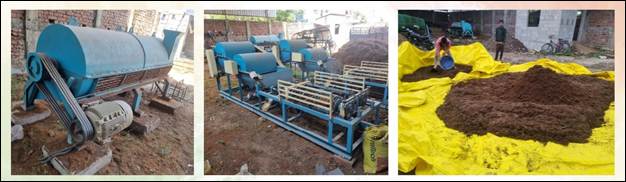
पटना में नारियल अपशिष्ट प्रसंस्करण संयंत्र

यह पहल स्वच्छ भारत मिशन के तहत प्रचारित अपशिष्ट प्रबंधन के लिए व्यवस्थित दृष्टिकोण को दर्शाती  है, जहां कचरे को केवल निपटान के लिए एक सामग्री के बजाय एक संसाधन के रूप में देखा जा रहा है। इस प्रसंस्करण केंद्र को नारियल कचरे से उपयोगी घटकों को निकालने और उन्हें कृषि, बागवानी और अन्य व्यावसायिक उपयोगों में अनुप्रयोगों के साथ उत्पादों में बदलने के लिए डिज़ाइन किया गया है। प्रति दिन 10 टन की प्रारंभिक प्रसंस्करण क्षमता के साथ, संयंत्र को कई पारियों में संचालित करने और प्रति दिन 30 टन  तक बढ़ाने की योजना है।

 नारियल के अपशिष्ट रेशों से बनी रस्सियां

नारियल कचरे के विभिन्न घटकों को प्राप्त किया जा सकता है और उनका उत्पादक उपयोग किया जाता है। गीले अवशेषों को उच्च गुणवत्ता वाले जैविक खाद में बदला जाता है, जबकि नारियल के रेशों को निर्माण, पैकेजिंग, चटाई और हस्तशिल्प में अनुप्रयोगों के साथ कॉयर रस्सियों में बदला जाता है। कोकोपीट एक और मूल्यवान उत्पादन है, जिसमें नर्सरी और छत के बगीचों सहित कृषि और बागवानी में अनुप्रयोग हैं, जहां बढ़ते माध्यम के रूप में इसका उपयोग महत्व प्राप्त कर रहा है।

इन सामग्रियों को पुनर्प्राप्त और संसाधित करके, यह पहल निपटान की आवश्यकता वाले नारियल कचरे की मात्रा को कम करती है और अपशिष्ट से बने उत्पादों को उपयोगी वस्तुओं की श्रेणी में ला दिया जाता है। यह दृष्टिकोण स्थानीय आजीविका और रोजगार के अवसर को बढ़ाते हुए चक्रीय अर्थव्यवस्था में तेजी लाता है।

जब कचरा सार्वजनिक पसंद बन जाता है

वेस्ट टू वेल्थ यानी अपशिष्ट से संपदा का विचार यह भी दिखा रहा है कि शहर फेंकी गई सामग्री  का कैसा इस्तेमाल करता है। रद्दी को केवल कचरे के रूप में मानने के बजाय, शहर सार्वजनिक स्थानों और सामुदायिक सुविधाओं में इसका पुन: उपयोग करने के तरीके खोज रहे हैं। ऐसा ही एक दृष्टिकोण वेस्ट टू वंडर पार्क का निर्माण है, जहां फेंकी गई सामग्री को सार्वजनिक स्थानों और आकर्षणों के हिस्से के रूप में एक नया महत्व दिया जाता है। यह दृष्टिकोण एक चक्रीय अर्थव्यवस्था के सिद्धांतों को दर्शाता है, जो निरंतर उपयोग के लिए ऐसी सामग्रियों को कम करने, पुन: उपयोग, मरम्मत और पुनर्नवीनीकरण करने के लिए प्रोत्साहित करता है।

चंडीगढ़ इस दृष्टिकोण का एक प्रारंभिक उदाहरण पेश करता है। इसका रॉक गार्डन औद्योगिक और घरेलू कचरे का उपयोग करके बनाया गया था जो दर्शाता है कि सार्वजनिक स्थान पर फेंकी गई सामग्री का रचनात्मक रूप से पुन: उपयोग कैसे किया जा सकता है। चंडीगढ़ में 1.75 एकड़ में फैला वेस्ट टू वंडर पार्क भी विकसित किया गया है। पार्क में संरचनाएं लोहे की चादरें, छड़, पंखे और ऑटोमोबाइल पार्ट्स जैसी बेकार सामग्री से बनाई गई हैं।
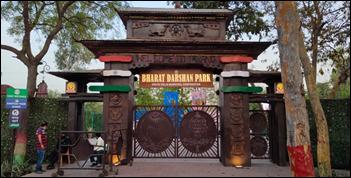
दिल्ली ने अपने वेस्ट टू वंडर पार्क के माध्यम से इसी तरह का नजरिया पेश का है, जहां औद्योगिक अपशिष्ट, रद्दी धातु और लैंडफिल से प्राप्त छोड़े गए ऑटोमोबाइल भागों को प्रतिकृतियां और अन्य संरचनाएं बनाने के लिए फिर से तैयार किया जाता है। मनोरंजन और शहरी सौंदर्यीकरण के अलावा, ऐसे स्थान दर्शाते हैं कि कैसे बेकार सामग्री को उत्पादक और सार्वजनिक उपयोग के बुनियादी ढांचे में जोड़ा जा सकता है। शहरी सौंदर्यीकरण के अलावा, पार्क स्वच्छ ऊर्जा बुनियादी ढांचे को एकीकृत करता है, जिसमें 50 किलोवाट की संयुक्त क्षमता वाले सौर पेड़ और छत पर सौर पैनल शामिल हैं। उत्पादित बिजली की आपूर्ति बिजली वितरण कंपनियों को की जा सकती है, जिससे अपशिष्ट और नवीकरणीय ऊर्जा के उत्पादक उपयोग को बढ़ावा देते हुए राजस्व सृजन के लिए एक अतिरिक्त अवसर पैदा होता है।

अपशिष्ट से संसाधन तक

इन उदाहरणों से पता चलता है कि कैसे फेंकी गई सामग्री को पुनर्प्राप्त किया जा सकता है, पुन: उपयोग किया जा सकता है, और अंतिम निपटान के लिए सीधे भेजे जाने के बजाय उसे उत्पादक उपयोग में वापस लाया जा सकता है। ऐसी सामग्रियां जो अन्यथा कचरे के बोझ को बढ़ाएंगी, उन्हें सार्वजनिक स्थानों, रचनात्मक आकर्षणों और, कुछ मामलों में, आर्थिक मूल्य के स्रोतों के घटकों में बदला जा सकता है।

 अपशिष्ट से धन दृष्टिकोण परिप्रेक्ष्य में बदलाव के साथ शुरू होता है, कचरे को त्यागने वाली चीज के रूप में देखने से लेकर संसाधन के रूप में इसकी क्षमता को पहचानने तक। उचित पृथक्करण, पुनर्प्राप्ति और प्रसंस्करण के माध्यम से, छोड़ी गई सामग्री को उपयोगी उत्पादों में बदला जा सकता है, जो स्वच्छ समुदायों, संसाधन दक्षता और एक चक्रीय अर्थव्यवस्था की ओर बदलाव का समर्थन करता है।

संदर्भ

आवास एवं शहरी कार्य मंत्रालय

https://www.pib.gov.in/PressReleaseIframePage.aspx?PRID=2067772&lang=2&reg=3

https://www.pib.gov.in/PressReleasePage.aspx?PRID=2210020&lang=1&reg=6

https://www.pib.gov.in/PressReleasePage.aspx?PRID=2075883&lang=2&reg=3

पीआईबी बैकग्राउंडर

https://www.pib.gov.in/PressNoteDetails.aspx?NoteId=160036&ModuleId=3&reg=48&lang=1


Union Minister of Petroleum and Natural Gas Shri Hardeep Singh Puri launched the Gobardhan Scheme to accelerate the development of India's compressed biogas sector.


Union Minister of Petroleum and Natural Gas Shri Hardeep Singh Puri launched the Gobardhan Scheme to accelerate the development of India's compressed biogas sector.


Assured procurement, stable pricing, capital support, pipeline connectivity, credit support and ecosystem development brought under an integrated framework under the Integrated Central Sector Scheme.

Release of Gobardhan Booklet and launch of Integrated Gobardhan Portal to help in streamlined implementation of the scheme.

Entry Date: 01 OCT 2026 8:27PM by PIB Delhi

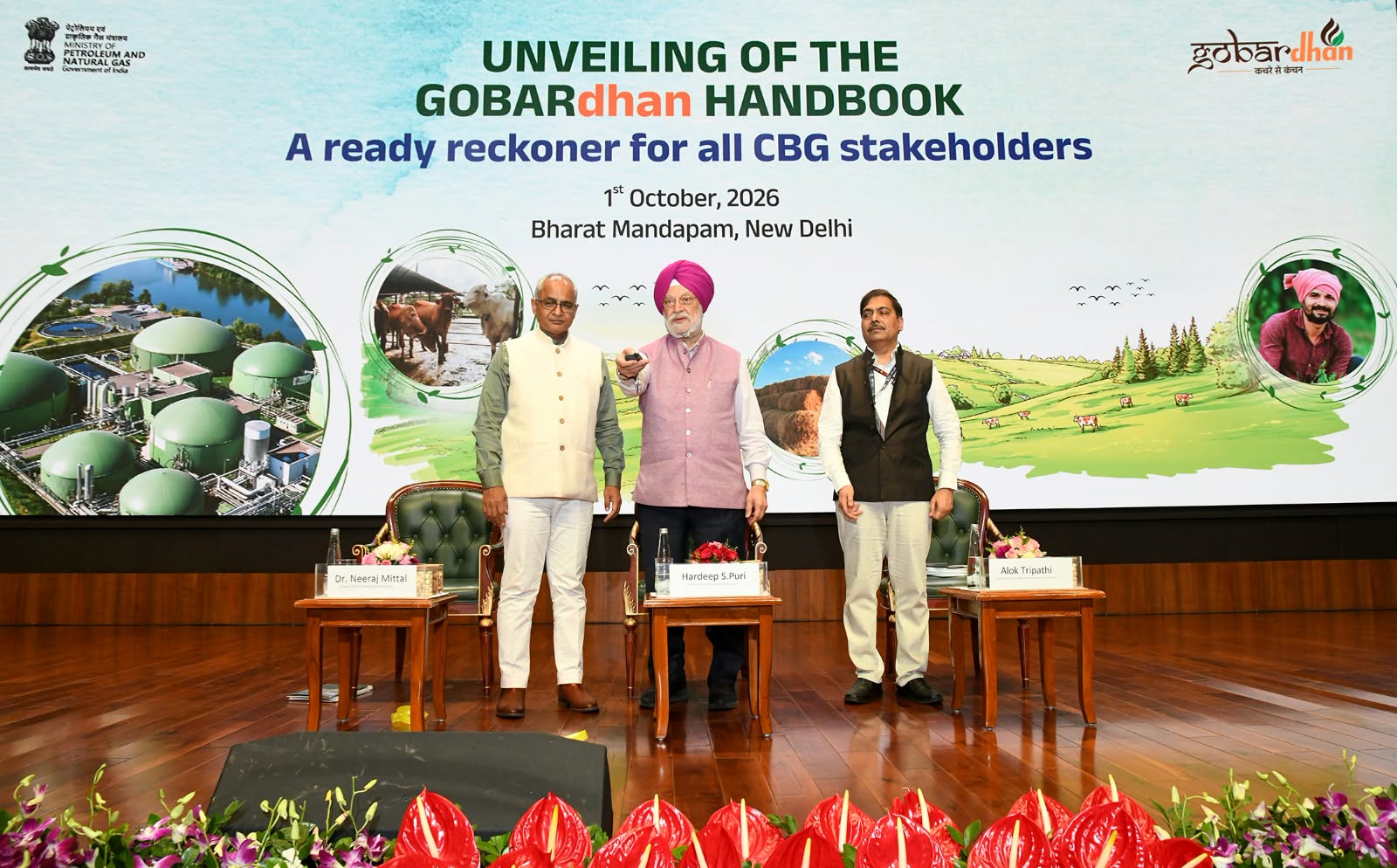
Union Minister of Petroleum and Natural Gas Shri Hardeep Singh Puri today launched the Central Pool Scheme 'Gobardhan' for development of Compressed Bio Gas (CBG) sector.

The scheme, approved by the Union Cabinet on August 6, 2026, with an outlay of ₹23,731 crore, provides a 10-year framework, from FY 2026-27 to FY 2035-36, to accelerate the development of CBG in India. The scheme aims to increase domestic CBG production by nearly 10 times (to approximately 5 mmscmd), with a long-term framework that provides greater certainty to investors and lenders.  

The launch event was attended by various stakeholders from the CBG ecosystem, including representatives from Central Ministries, State Governments, CBG developers, Oil & Gas Companies, City Gas Distribution Utilities, Financial Institutions, Cooperatives, Technology Providers and other stakeholders.

https://static.pib.gov.in/WriteReadData/userfiles/image/2026/oct/WhatsAppImage2026-10-01at8.18.12PM_20261001202834_8faa32.jpeg

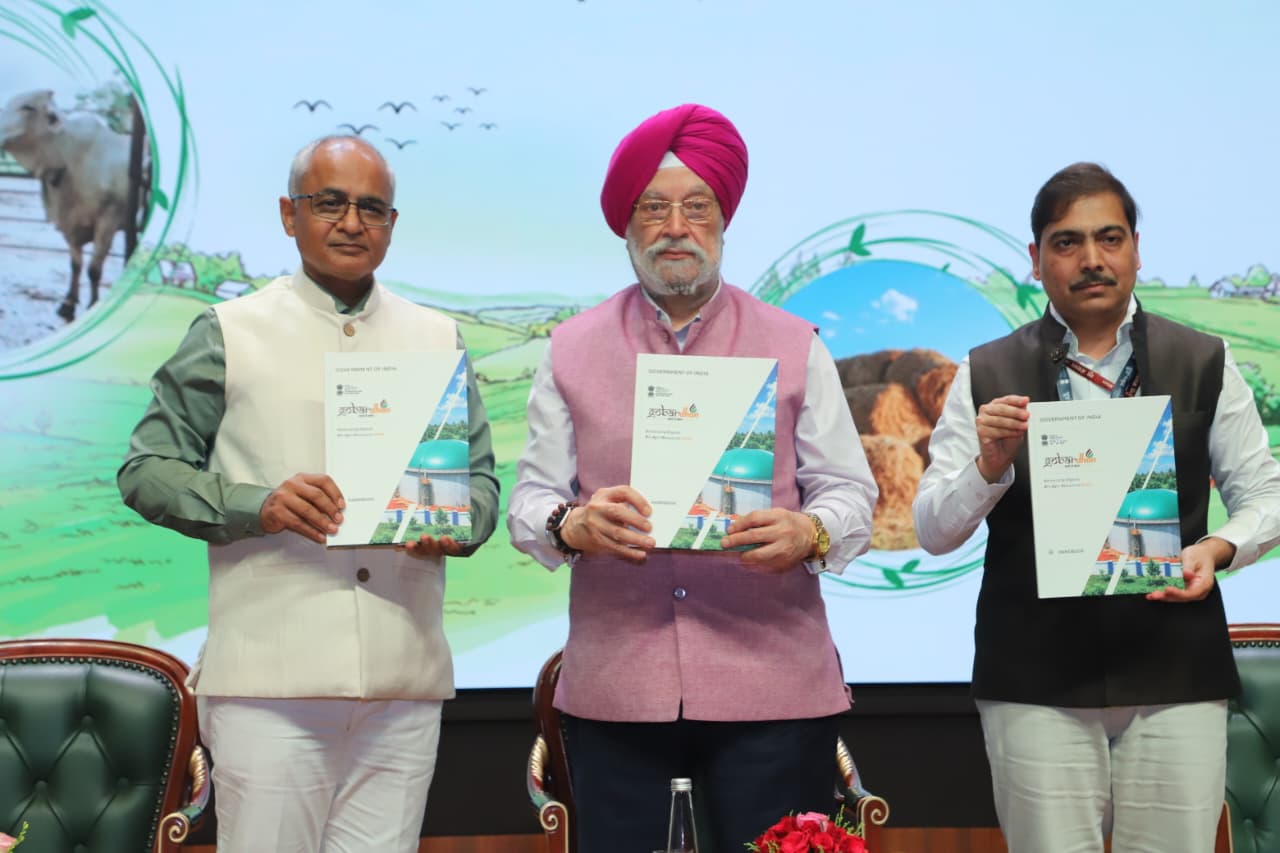
The occasion also saw the release of the Gobardhan Booklet, a comprehensive reference guide to assist stakeholders, project developers, state governments, and financial institutions in understanding the scheme and availing its CBG-related provisions. The Integrated Gobardhan Portal, a centralized digital platform, was also launched. It has been developed to streamline the application process, eliminate the need to apply through multiple channels, and enhance transparency during application processing and scheme implementation.

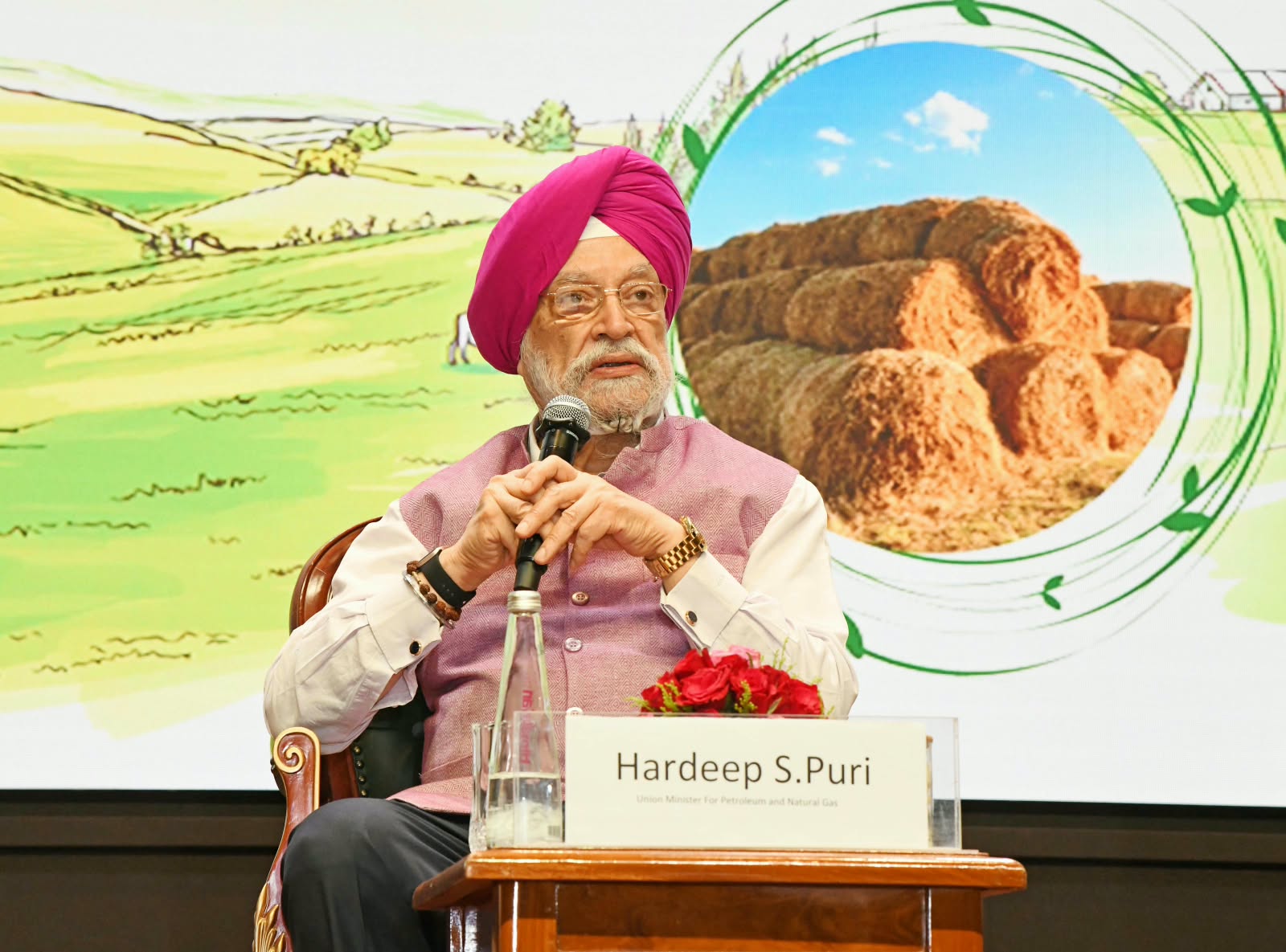
Speaking on the occasion, Shri Hardeep Singh Puri said that India's growing energy needs must be met through the combined objectives of availability, affordability and sustainability, which requires emphasis on optimal development of the energy resources available in the country.

He said that CBG is of particular importance to India because it can convert crop residues, animal dung, and other organic resources into clean domestic energy, while also producing organic fertilizer and creating new economic opportunities in rural areas. Farmers, cooperatives, cow shelters, and local entrepreneurs can participate in various activities such as feedstock collection, aggregation, transportation, and processing, further strengthening the cyclical relationship between agriculture and energy.

https://static.pib.gov.in/WriteReadData/userfiles/image/2026/oct/WhatsAppImage2026-10-01at8.19.25PM_20261001202847_e39552.jpeg

He called upon the industry , financial institutions, states, cooperatives, technology providers and other stakeholders to translate this framework into operational plants and sustainable CBG production, thereby enhancing India's energy security and rural prosperity and furthering the Prime Minister's vision of 'Waste to Wealth' and 'Annadata to Urjadata'.

Addressing the gathering, Dr. Neeraj Mittal, Secretary, Ministry of Petroleum and Natural Gas, said that India currently meets almost half of its natural gas requirement through imports and CBG provides an opportunity to convert domestic organic waste into a domestic gas resource.

He said that sector experience has also revealed constraints related to volatile revenues, fragmented support, lack of long-term policy clarity, assured availability of feedstock, procurement of organic fertilizers, and access to finance. Gobardhan addresses these issues by making the Ministry of Petroleum and Natural Gas the sole nodal ministry, providing predictable pricing, assured gas procurement, enhanced capital support, integrated processes, and more extensive use of digital monitoring.

Secretary Dr. Neeraj Mittal also highlighted the important role of state governments in translating the national framework into projects on the ground. This includes enabling state-level CBG policies, assessing feedstock, providing suitable land banks, providing quick approvals, and providing infrastructure support.

An integrated framework for the CBG sector

A presentation on Gobardhan outlined the scheme's framework and the shift from multiple, siloed initiatives to an integrated framework for the sector. Gobardhan comprises six key initiatives: CBG procurement assurance, CBG pricing framework, capital support for CBG projects, pipeline infrastructure development, credit guarantee support, and the CBG Ecosystem Challenge Fund.

Under the procurement framework, CBG plants will be linked to identified City Gas Distribution (CGD) geographical areas or CBG clusters, ensuring a reliable channel to reach the market. Under the CBG Obligation (CBO), City Gas Distribution (CGD) entities will be responsible for procuring CBG. This procurement requirement for CNG (transport) and PNG (domestic) sectors has been fixed at 3% in FY 2026-27, 4% in FY 2027-28 and 5% from FY 2028-29 onwards.

Under this scheme, an administered CBDG price of ₹2,110 per mmBtu has been set, providing greater clarity to producers regarding revenue. Eligible greenfield projects can receive capital assistance of up to ₹2 crore per TPD of CBDG capacity installed. This includes assistance for plant machinery, feedstock aggregation, and equipment related to FOM/LFOM processing and compost value addition.

https://static.pib.gov.in/WriteReadData/userfiles/image/2026/oct/WhatsAppImage2026-10-01at8.19.04PM_20261001202902_3ff840.jpeg

To address the bottlenecks related to gas evacuation, assistance is available up to 80 per cent of the eligible capital expenditure for pipelines connecting CBG clusters to the main pipeline network and up to 50 per cent for connecting independent plants to the CGD network.

Under a dedicated credit guarantee mechanism for eligible MSME-led CBG projects, up to 85 percent of the outstanding amount will be guaranteed in the event of default, subject to prescribed project limits. The maximum guarantee limit is ₹20 crore per project for general MSME projects and ₹25 crore per project for women-led MSME projects. This will better support women entrepreneurs in the CBG sector.

The CBG Ecosystem Challenge Fund will support technology development, capacity building, feedstock assessment and aggregation, ecosystem development at the district level and value addition of organic manure.

With over 217 plants and an installed capacity of over 1,700 TPD (tonnes per day) by August 2026, India's CBG ecosystem has already laid a strong foundation for further growth. The plan aims to increase domestic CBG production by approximately tenfold over its ten-year implementation period.

The scheme is expected to deliver significant economic and environmental benefits, including foreign exchange savings of over ₹40,000 crore, a contribution of over ₹75,000 crore to the Gross Domestic Product (GDP), and the creation of over 150,000 jobs. It is also expected to replace 10 million tonnes of fossil fuels with clean gas, reduce carbon dioxide (CO₂ ) emissions by over 40 million tonnes , and produce 250 million tonnes of organic fertilizer .

Union Jal Shakti Minister Shri C.R. Patil hosted water conservation warriors from across India at his residence


Union Jal Shakti Minister Shri C.R. Patil hosted water conservation warriors from across India at his residence


Grassroots activists shared inspiring stories of river conservation, water conservation and community mobilization

Shri Patil called for targeted action, measurable results and widespread public participation

Smt. Archana Verma, Secretary, Department of Water Resources, River Development and Ganga Rejuvenation, appreciated the role played in mobilizing communities on collective action on water issues

Entry Date: 01 OCT 2026 6:42PM by PIB Delhi

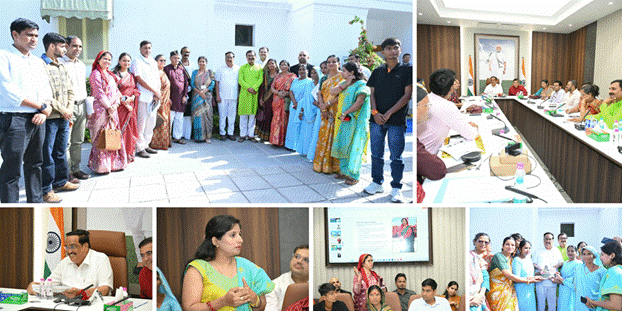
Union Minister for Jal Shakti, Shri C.R. Patil, today interacted with Jal Sanrakshan Yoddhas and Nadi Sanrakshan Yoddhas from various parts of the country who are leading grassroots initiatives in the areas of water conservation, river and waterbody protection, and environmental conservation. Organized by the National Mission for Clean Ganga (NMCG) under the Namami Ganga Abhiyan, the interaction provided a platform for these grassroots warriors to share their experiences, learn from each other, and discuss ways to strengthen successful community-led models and implement them across the country.

Participants shared their firsthand experiences restoring rivers and ponds, volunteering, promoting rainwater harvesting, removing plastic and other waste from near water bodies, leading tree-planting drives, and mobilizing women, youth, volunteers, and local communities. Their stories highlighted how individual initiative, combined with collective action and community participation, can lead to visible and lasting improvements at the grassroots level.

Among those who shared their work was Ramveer Tanwar, also known as "India's Pond Lover." He spoke about reviving over 100 ponds and establishing 10 small urban forests. Kamini Kumari from Bihar highlighted her initiative to organize 500 women to build 500 self-filling water pits in a single day along the Baya River, linking water conservation with groundwater recharge, sustainable agriculture, and livelihood opportunities for women.

Surendra Singh Chaudhary, popularly known as "Bittu Tabahi," shared his journey of cleaning the polluted Ajnar River in Biaora, Rajgarh district, Madhya Pradesh. The young BSc student began this effort on January 26, 2026, and on his own initiative, removed plastic, weeds, sludge, and other debris from the river. What began as a local effort has garnered widespread public attention and inspired greater participation in the cleaning and restoration of local water bodies.

Anand Malligad from Bengaluru spoke about his work reviving 33 lakes and planting over one lakh native trees. Jagdish Singh Negi from Uttarakhand shared his work in water conservation, forest restoration, and converting plastic waste into eco-friendly bricks. Shubham Kumar highlighted the role of youth and volunteers in river cleanup and his efforts to mobilize communities to remove over 2.47 lakh kilograms of garbage from the banks of the Ganga and its tributaries.

The dialogue also highlighted the role of water volunteers and community groups in maintaining clean rivers and ghats. Akash Yadav from Uttar Pradesh shared how his 15-member volunteer group contributed to the restoration of four ghats on the Ganga and the removal of over a ton of plastic waste. Dr. Sanjivani Sharma from Kanpur spoke about mobilizing over 900 volunteers for the Ganga Conservation Campaign and removing over 120 metric tons of waste, as well as promoting livelihood opportunities for women through plastic recycling, reuse of waste materials, and community-led waste management.

Other water warriors included Ms. Kusum Gildiyal, Mr. Jagdish Negi, Ms. Rama Tiwari, Dr. Suman Pandey, Ms. Kumari Sunita Singh, Mr. Sanjay Kumar Singh, Mr. Ajay Kumar Tiwari, Mr. Nitish Kumar Singh, Mr. Kamlesh Bhai Shastri, Mr. Sandeep Chaudhary, Ms. Sirkunwar, Ms. Phoolbati, and Mr. Vivek Bhat. The work of these warriors was highly appreciated by the Honorable Minister of Jal Shakti.

Addressing the gathering, Smt. Archana Verma, Secretary, Department of Water Resources, River Development and Ganga Rejuvenation, commended the role of Jal Warriors in taking the message of water conservation and sanitation to communities beyond government programs. She praised their ability to mobilize people near rivers, ponds, and other water bodies and organize collective action, emphasizing that such citizen-led participation is essential for sustaining water conservation and river protection efforts in the long term.

Addressing the participants, Mr. C.R. Patil congratulated them for their commitment and said that hearing their experiences firsthand was an opportunity to understand the scale, diversity, and impact of grassroots work underway across the country. He acknowledged that many of them worked in difficult local conditions and yet succeeded in mobilizing people for water and environmental conservation. Referring to the broader national movement, Mr. Patil said that under the visionary leadership of the Honorable Prime Minister, Mr. Narendra Modi, water conservation has transformed into a nationwide mass movement based on public participation. He said that the Prime Minister's constant emphasis on conserving every drop of water has inspired citizens and communities across the country to take responsibility for water conservation, and the work of the Water Warriors reflects this spirit of collective action.

The Minister emphasized that the next step should be to channel this energy into targeted, measurable, and sustained results. He encouraged participants to identify specific rivers, ponds, ghats, and other water bodies, set clear goals, and demonstrate visible improvements on the ground. He also stressed the importance of involving women, youth, schoolchildren, senior citizens, and other sections of society, so that water conservation and sanitation become a sustainable mass movement rather than one-time activities.

Mr. Patil encouraged water warriors to stay connected, regularly share their work, and learn from successful models being implemented in different parts of the country. He said that good local initiatives should not be limited to one location, but should be adopted and expanded wherever they can help communities face similar challenges.

The water warriors expressed their delight at being invited to the Minister's residence and the opportunity to share their stories directly with him. They also valued the opportunity to interact with other grassroots activists from different parts of India, exchange experiences, understand different approaches to community mobilization, and explore ways to stay connected and collaborate in the future.

This dialogue confirmed that river protection and water conservation are not possible solely through infrastructure and government programs. Sustained public participation, volunteerism, responsible community behavior, and committed grassroots leadership are equally important. Experiences shared during the meeting demonstrated that citizens, volunteers, and local communities can be powerful partners in national efforts for clean rivers, protected water resources, and a cleaner and more sustainable environment.

Shri Narendra Bhushan assumes charge as Secretary, Union Ministry of Environment, Forest and Climate Change Entry Date: 01 OCT 2026 11:21AM by PIB Delhi

 Ministry of Environment, Forest and Climate Change

Amrit Mahotsav of Independence

Shri Narendra Bhushan assumes charge as Secretary, Union Ministry of Environment, Forest and Climate Change

Entry Date: 01 OCT 2026 11:21AM by PIB Delhi

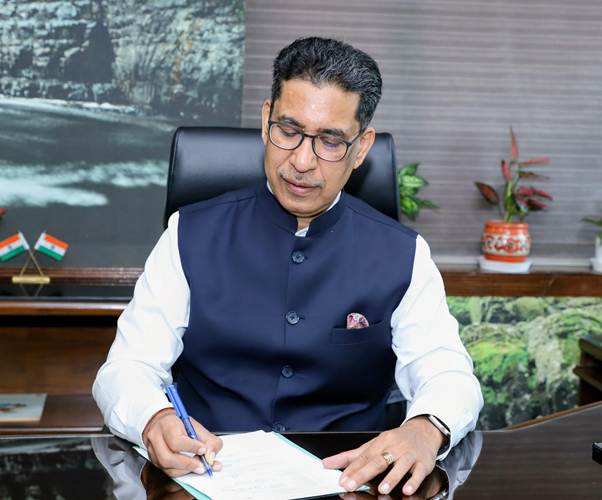
Shri Narendra Bhushan, a 1992 batch Indian Administrative Service (IAS) officer of Uttar Pradesh cadre, has assumed charge as Secretary in the Ministry of Environment, Forest and Climate Change (MoEFCC), Government of India.

Mr. Bhushan has over three decades of administrative experience in the central and state governments. He has extensive experience in the areas of energy, infrastructure, industry, agriculture, urban development, finance, and land resource management. His appointment as Secretary in the Ministry of Environment, Forest and Climate Change follows his tenure as Secretary, Department of Land Resources, Ministry of Rural Development.

Career Details

During his service in the Uttar Pradesh cadre, Mr. Bhushan held several senior positions, including Additional Chief Secretary in the Departments of Energy and Additional Energy Sources and Technical Education. Prior to this, he served as Principal Secretary in the PWD, Infrastructure and Industrial Development, IT and Electronics, Science and Technology, and Panchayati Raj departments. He also held other important positions, including Chief Executive Officer (CEO) of the Greater Noida Authority. Mr. Bhushan also has extensive field experience; he has served as District Magistrate of Mathura, Firozabad, and Udham Singh Nagar.


At the Government of India level, Mr. Bhushan has served as Deputy Director General at the Unique Identification Authority of India (UIDAI), Mission Director at the National Food Security Administration, and Joint Secretary at the Department of Agriculture and Cooperation. He has also served as Officer on Special Duty (OSD) at the India Trade Promotion Organization (ITPO) under the Ministry of Commerce and Industry.

Mr. Bhushan holds a bachelor's degree in electronics and a master's degree in international development policy from Duke University in the United States. His professional training includes programs in public finance, infrastructure, and climate-change preparedness.

ICAR and FCI signs MoU for Safe and Sustainable Foodgrain Storage


ICAR and FCI signs MoU for Safe and Sustainable Foodgrain Storage

Posted On: 01 OCT 2026 5:47PM by PIB Delhi

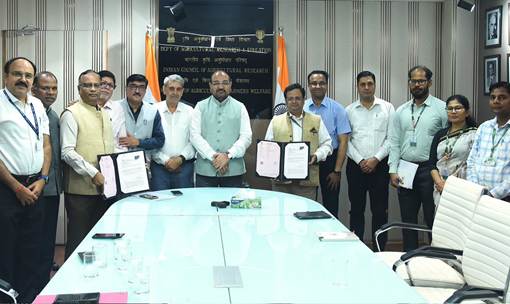
The Indian Council of Agricultural Research (ICAR) and the Food Corporation of India (FCI) signed a Memorandum of Understanding (MoU) on 30 September 2026 to undertake research on alternative fumigation technologies for safe and sustainable management of storage pests in wheat and rice. The research study is supported by the Department of Food & Public Distribution (DFPD), Ministry of Consumer Affairs, Food & Public Distribution.

The two-year Phase-I project will be implemented by ICAR–Central Institute of Post-Harvest Engineering and Technology (CIPHET), Ludhiana.

For decades, India's critical grain reserves have relied heavily on aluminium phosphide (ALP) and malathion for post-harvest pest control. However, widespread and repeated use has led to severe consequences, including pest resistance frequencies reaching 72-100% in key Indian states and escalating fumigation cycles that drive up operational costs. Furthermore, current chemical methods pose significant respiratory threats to workers and long-term ecological risks. This initiative seeks to directly address these challenges by standardizing the commercial use of nitrogen gas, carbon dioxide (CO2), and a synergistic combination of CO2 and phosphine. The following three major trials will be conducted in Phase-I:

  • Nitrogen gas (>99%) fumigation for effective management of storage pests in wheat stored in metal silos.
  • Combined carbon dioxide and phosphine gas fumigation for managing/controlling storage pests in wheat and rice stored in bags at FCI/CWC warehouses.
  • Carbon dioxide fumigation for managing/controlling storage pests in wheat and rice in bags enclosed in hermetic covers.

Following the two-year Phase-I pilot, Phase-II will expand into a one-year multi-location trial across varied agro-climatic zones to establish region-specific Standard Operating Procedures (SOPs).

The initiative aims to develop scientifically validated, scalable and sustainable alternatives to conventional chemical fumigation, addressing concerns related to increasing pest resistance, occupational exposure, environmental impacts and fumigant residues.

The MoU was signed in the presence of the Dr. M. L Jat, Secretary, DARE & Director General, ICAR; Dr. Rajbir Singh, Deputy Director General (Agricultural Engineering), Dr. D.K. Yadav Deputy Director General (Crop Science), Dr. K. Narsaiah, Assistant Director General (Processing Engineering); ICAR. The MoU was signed by Dr. Nachiket Kotwaliwale, Director, ICAR-CIPHET and Dr. A.K. Sinha, Executive Director (Quality Control), FCI. The event was also attended by Ms. Priya Jacob, Director, DFPD, Sh. Rajagopal General Manager QC-FCI, Dr. Devinder Dhingra, Pr. Scientist, ICAR; Dr. Sandeep Mann Pr. Scientist and Lead Investigator of project, ICAR-CIPHET; Shri Gautam Kumar, Deputy General Manager (Quality Control), FCI; Sh CP Saharan and Ms. Sarika Pritam, Assistant General Manager (Quality Control), FCI.

🔥 STAGES OF FIRE

 🔥 STAGES OF FIRE — INFOGRAPHIC LETTERING


1️⃣ IGNITION / INCIPIENT STAGE

🔥 What happens: Fire starts from an ignition source.

• Small flame

• Limited heat and smoke

• Oxygen is readily available

• Early detection can prevent escalation


⬇️


2️⃣ GROWTH STAGE

🔥 What happens: Fire begins spreading and increasing in intensity.

• More materials ignite

• Heat rises rapidly

• Smoke production increases

• Fire may spread to nearby combustibles


⚠️ Flashover can occur near the end of this stage.


⬇️


3️⃣ FULLY DEVELOPED STAGE

🔥 What happens: Fire reaches maximum intensity.

• Most available combustibles are burning

• Extreme heat

• Heavy smoke and toxic gases

• Structural damage may occur

• Conditions can become unsurvivable


⬇️


4️⃣ DECAY STAGE

🔥 What happens: Fire intensity decreases as fuel or oxygen becomes limited.

• Flames reduce

• Heat and smoke may remain dangerous

• Smouldering materials can continue burning

• Re-ignition is possible if oxygen is introduced


🚨 REMEMBER:


DETECT EARLY → RAISE THE ALARM → EVACUATE → ONLY FIGHT THE FIRE IF TRAINED, EQUIPPED AND IT IS SAFE TO DO SO. 💯⛑️🚨🚧🦺🎯🚥🏗️🌡️⚠️📝

#viralreels #safetyfirst #viralpost #safetytips #viral #safety #fyp #SafetyCulture #fypシ

This infographic is a perfect summary for a toolbox talk, management presentation, or LinkedIn post. Here's how to explain it section by section

 This infographic is a perfect summary for a toolbox talk, management presentation, or LinkedIn post. Here's how to explain it section by section:


The Big Idea


Title: Why ISO 45001 Certification Should Be a Priority for Every Organization


The core message is at the top and bottom: Safe People Build Successful Businesses. 


ISO 45001 is not just a certificate on the wall. It's a smart investment in people, safety, and business success. The 3 outcomes are: Healthier people, Safer workplaces, Stronger organizations.


1. What is ISO 45001?


ISO 45001 is the international standard for Occupational Health & Safety (OH&S) Management Systems.


In simple terms: It's a globally recognized framework that helps any organization - factory, construction site, office, hospital - to:

Prevent work-related injuries and ill-health

Create systematically safer workplaces

Improve overall business performance


And as the infographic says on the right: It's not just about compliance. Compliance is ticking a box for the inspector. ISO 45001 is about protecting people, reducing risk, and building a business that lasts.


2. Top 7 Reasons Why It Should Be a Priority


This is the main body. In the center is the ISO 45001 management system badge, and around it are 7 business benefits:


1. Protects People's Health and Safety

This is the first purpose. Instead of reacting after an accident, you identify hazards and control risks before they cause harm. It prevents injuries, work-related illnesses, and fatalities.


2. Reduces Risks and Prevents Incidents

It moves you from reactive to proactive. You build better risk assessment, better controls, and a proactive safety culture. Result: fewer accidents, near-misses, and emergencies.


3. Improves Productivity and Performance

Safety is directly linked to productivity. Fewer accidents = fewer work stoppages, less absenteeism, less damaged equipment, and a healthier, more motivated workforce. That means higher efficiency.


4. Builds a Strong Reputation

Certification is a public signal. It tells your clients, partners, regulators, and community that you value people and operate responsibly. In tenders and bids, this is a huge competitive advantage.


5. Ensures Legal and Regulatory Compliance

ISO 45001 helps you systematically identify and meet all applicable OH&S laws - both national and international. This drastically reduces the risk of fines, prosecution, shutdowns, and lawsuits.


6. Supports a Positive Safety Culture

This is a key change from old standards. ISO 45001 requires worker consultation and participation. Safety stops being just the HSE Manager's job and becomes everyone's responsibility.


7. Drives Long-Term Sustainability

This connects everything. When you have healthy people + safe operations + responsible practices, you get business continuity, lower costs, and a sustainable future. You can't be sustainable if your people are not safe.


How to close it


The footer ties it all together:

ISO 45001 - A SMART INVESTMENT IN PEOPLE, SAFETY AND SUCCESS!

Safer Workplaces | Healthier People | Better Performance | A Sustainable Tomorrow

Simple 30-second pitch you can use for management:

"ISO 45001 is not just about getting a certificate to satisfy clients. It's a system to protect our people, prevent incidents before they happen, stay compliant with the law, improve productivity, and build our reputation. The cost of certification is small compared to the cost of one serious accident, a legal fine, or losing a major contract because we are not certified." ⛑️🚨🌡️📝⚠️✅🏗️😅🦺🚧🚥🎯

#viralpost #SafetyCulture #viralreels #safetytips #viral #safetyfirst #fyp #safety #fypシ