This is a full HSE Management System on one page. Think of it as 20 building blocks that turn the slogan at the top — Safe People | Healthy Workplaces | A Sustainable Future — into daily actions.

The bottom line says it all: Healthy People + Safe Operations + Clean Environment = A Sustainable Tomorrow
Here is how the 20 fit together:
1. The foundation that makes everything else work
1. Leadership & Commitment: Safety doesn't start on the shop floor, it starts with management. Set the vision, fund it, lead by example, and build the culture.
2. Risk Assessment & Management: The core engine of HSE. Identify what can hurt people or the environment, evaluate how bad and how likely, put controls in place, then review it again. Everything else flows from this.
13. Health & Safety Communication: Share info, train people, encourage reporting without blame, and actually act on what you hear.
15. Legal & Regulatory Compliance: Know the laws, standards and permits that apply, keep records, and be ready to prove it in an audit.
2. Protecting people directly
3. Safe Work Practices: Follow SOPs, no shortcuts, stop work when it's unsafe.
4. Personal Protective Equipment (PPE): Last line of defense. Select the right type, wear it correctly, maintain it, replace it.
5. Work at Height: Plan it, use proper fall protection, inspect scaffolds/ladders, keep people out of drop zones below.
6. Machinery & Equipment Safety: Guards in place, inspections done, operators competent, and LOTO - Lockout/Tagout when servicing so it can't start unexpectedly.
7. Fire Safety & Emergency Response: Prevent fires first, then know how to fight them, know evacuation routes, and practice with drills.
8. Occupational Health: Not just accidents. Manage long-term health risks, do medical surveillance, support mental well-being.
9. Hazardous Materials & Chemical Safety: Know what you're handling, store it safely, label everything with SDS available, and be ready for spills.
3. Protecting the environment
10. Environmental Protection: Reduce emissions/waste, conserve resources, prevent pollution, protect biodiversity.
11. Waste Management: The classic hierarchy - reduce, reuse, recycle. Segregate correctly and dispose safely.
12. Noise, Air & Water Quality: Monitor exposure, control noise, prevent contamination of air and water, and meet legal limits.
20. Sustainability & Community: The big picture. Reduce carbon footprint, use resources responsibly, support local communities, leave a legacy beyond compliance.
4. The system that keeps it alive
14. Inspection & Audit: Check if what we say we do is what we actually do. Find gaps, fix them, track progress.
16. Contractor & Visitor Management: Pre-qualify contractors, give everyone an HSE induction, monitor them - anyone on your site is your responsibility.
17. Change Management: Every change - new chemical, new machine, new procedure - can introduce new risk. Assess it, update documents, train people before you implement.
18. Incident & Accident Management: Report immediately, investigate root cause not just symptoms, implement corrective actions to prevent recurrence.
19. Continuous Improvement: Learn from audits, incidents, and near-misses. Set measurable KPIs, innovate, and keep strengthening the HSE culture.
In practice, most companies use a poster like this for toolbox talks, inductions, or gap assessments. You can go through the 20 and ask: "Where are we strong? Where are we just ticking a box?" If 1, 2, 13, 14, 18 and 19 are weak, the other 14 will never stick. 🗼🌡️🦺⚠️⛑️🚥🏗️
What Is NIFPS❓ (Nitrogen Injection Fire Protection System)

NIFPS stands for Nitrogen Injection Fire Protection System. It is an automatic fire prevention and extinguishing system used in oil-filled power transformers in electrical substations.
Its main purpose is to prevent transformer tank explosions and suppress fires caused by serious electrical faults.
🔥 1. Why Is NIFPS Used in Transformers?
Power transformers contain insulating oil that provides both insulation and cooling.
When a serious internal fault occurs, such as a winding short circuit or an electrical arc, it can cause:
🌡️ Rapid temperature rise.
💥 Sudden pressure buildup inside the transformer tank.
🔥 Ignition of transformer oil.
⚠️ Tank rupture and fire spreading to nearby equipment.
NIFPS helps reduce these risks by rapidly controlling the fault-related fire hazard.
⚙️ 2. How Does NIFPS Work?
The system typically operates automatically in the following sequence:
🔹 Step 1: Fault Detection
🔸 Transformer protection devices detect a dangerous fault.
🔸The NIFPS control system receives the required trip or activation signals.
🔹 Step 2: Transformer Isolation
🔸The transformer is disconnected from the electrical supply according to the approved protection logic.
🔹 Step 3: Oil Drainage
🔸A designated valve drains a predetermined quantity of oil from the transformer tank to reduce pressure and help control the fire.
🔹 Step 4: Conservator Isolation
🔸The conservator is isolated from the main transformer tank to prevent additional oil from flowing into the affected tank.
🔹 Step 5: Nitrogen Injection
🔸Nitrogen gas is injected into the transformer tank, creating a stirring effect that helps cool the oil and suppress combustion.
These actions follow the system's designed operating sequence, commonly described as the “Drain and Stir” principle. The exact sequence depends on the manufacturer's design.
🔧 3. Main Components of NIFPS
🔸Component : Nitrogen cylinder
🔸Function: Stores nitrogen gas
🔸Component : Control panel
🔸Function: Controls automatic system operation
🔸Component : Oil drain valve
🔸Function: Drains a predetermined quantity of oil
🔸Component : Conservator isolation valve
🔸Function: Isolates the conservator
🔸Component : Nitrogen injection valve
🔸Function: Controls nitrogen entry
🔸Component : Pressure and temperature sensors
🔸Function: Help detect abnormal conditions
🔸Component : Connecting pipes
🔸Function: Carry oil and nitrogen as designed
🏭 4. Where Is NIFPS Used?
NIFPS is commonly installed on selected oil-filled power transformers and reactors in:
🔸 High-voltage electrical substations.
🔸Transmission substations.
🔸Power generation stations.
🔸Major industrial power facilities.
✅ Key Advantages
🔸Helps prevent transformer tank explosions.
🔸Suppresses transformer oil fires.
🔸Reduces the risk of damage to nearby equipment.
🔸Operates automatically when the required activation conditions are met.
🔸Does not rely on water or carbon dioxide as the extinguishing medium.
📌 Important: NIFPS is a supplementary protection system. It does not replace transformer differential protection (87T), Buchholz protection, pressure relief devices, or other required electrical protections.
⚡ Remember This
NIFPS = Fault detection + Transformer isolation + Controlled oil drainage + Nitrogen injection = Reduced risk of transformer fire and explosion.
#NIFPS #NitrogenInjection #TransformerIsolation
This is a classic HSE emergency response poster. It summarizes what to do in the first few minutes of any incident - before the full emergency team arrives. Here's the breakdown:

The Big Idea
EMERGENCY AND IMMEDIATE CONTROL MEASURES - Act Fast, Stop the Threat, Protect Lives, Minimise Damage
The top right corner says it all: "The first few minutes can make a big difference." Immediate control measures are not the full rescue operation. They are the quick actions anyone at the scene takes to stop things getting worse.
1. What is an emergency?
An unexpected situation that poses an immediate risk to life, health, property or the environment and requires urgent action.
2. Common Types of Emergencies
The left column lists 7 you will see in any workplace:
FIRE: Uncontrolled fire, smoke or explosion
MEDICAL: Serious injury, illness, collapse or heart attack
SPILL / LEAK: Chemical, fuel, oil or hazardous substance release
ENVIRONMENTAL: Pollution, air/water/soil contamination
SECURITY: Burglary, violence, theft, unauthorised access
NATURAL HAZARD: Flood, storm, earthquake, extreme weather
STRUCTURAL: Building collapse, equipment failure, power outage
3. The 6 Immediate Control Measures - In Order
This is the core in the middle:
1. RAISE THE ALARM
Alert others immediately, activate fire alarm / emergency notification system, call for help e.g. emergency services.
2. STOP THE SOURCE
If safe to do so - shut down equipment, isolate energy sources like electrical, fuel, gas, stop the release or spread of the hazard.
3. CONTROL THE HAZARD
Contain spills and leaks, use fire-fighting equipment if trained and safe to do so, ventilate / remove toxic fumes.
4. PROTECT PEOPLE
Move to a safe area, assist injured or vulnerable persons, use PPE and respiratory protection where needed.
5. COMMUNICATE
Inform emergency responders, keep management and control room updated, give clear and accurate information.
6. GIVE FIRST AID
Attend to injured persons if trained, do not move seriously injured victims unless in immediate danger.
4. Key Principles - Right Side Top
How to act during those 6 steps:
Stay calm and act quickly
Put safety first - your life and others
Follow emergency procedures and alarms
Use the right equipment and resources
Communicate clearly and keep others informed
5. Examples of Immediate Control Measures
Practical examples of what control looks like:
Use fire extinguisher / fire hose reel if safe
Isolate electrical supply and lockout if safe
Stop gas / chemical leak and use spill kit
Block drains and contain spills
Set up barricades and exclusion zone
Increase ventilation and remove fumes
Evacuate the area when necessary
Use PPE - hard hat, gloves, respirator, etc.
6. Bottom Banners
REMEMBER: Immediate control measures save lives, prevent further harm and reduce the impact of an emergency.
BE PREPARED - Know the plan | BE TRAINED - Build confidence | BE ALERT - Spot the risks | WORK SAFELY - Every day
In short, for a toolbox talk: Don't wait. Alarm, isolate, contain, protect people, communicate, and give first aid only if you are trained and it is safe to do so. Everything else comes after. 🚦🗼🏗️🚥🚧🦺⛑️⚠️🌡️
This poster is a job site safety toolbox talk in one page. The message is simple: Small mistakes can lead to big incidents — and all 10 of these are preventable.

Here's what each one means in practice:
1-4: The physical basics that people skip when they're in a hurry
1. NOT WEARING PROPER PPE: Not wearing a hard hat, vest, glasses, gloves, or wearing damaged/wrong PPE. One hit, one splash, one inhalation can be life-changing. The fix: right PPE for the task, in good condition, every single time.
2. POOR HOUSEKEEPING: Cables, boards, debris, oil spills left on the floor. That's how you get slips, trips, falls, and fires. The fix: clean as you go, remove waste, keep walkways clear.
3. WORKING AT HEIGHT WITHOUT FALL PROTECTION: Falls are the #1 killer in construction. No harness, bad anchor, or skipping procedures. The fix: proper harness, checked anchor points, and follow the work-at-height procedure.
4. IMPROPER TOOL AND EQUIPMENT USE: Using a spanner as a hammer, or using a cracked grinder disc. The tool fails and you get injured. The fix: right tool for the job, inspect before use, tag out and remove anything damaged.
5-6: The planning failures
5. LOCKOUT/TAGOUT NOT FOLLOWED: Someone starts a machine or energizes a circuit while another person is working on it. That unexpected release of energy causes electrocution, crushing, severe injury. The fix: follow LOTO, verify zero energy, use proper locks and tags.
6. IGNORING HAZARDS AND RISK ASSESSMENTS: Starting work without a JSA / risk assessment. If you didn't identify it, you can't control it. The fix: identify hazards early, do the risk assessment, put controls in place before work starts.
7-8: The human factor
7. POOR COMMUNICATION: Vague instructions, language barriers, people not speaking up. Leads to wrong actions. The fix: clear and simple instructions, ask questions, keep everyone informed of changes.
8. DISTRACTIONS AND RUSHING: Phone use on site, rushing to beat deadline, mental distraction. You lose focus for 2 seconds and make a mistake. The fix: stay task-focused, no phones while working, take the time to do it safely.
9-10: The culture killers
9. NOT REPORTING NEAR MISSES: That block that fell but missed someone — if you don't report it, you don't learn from it. Near miss is a free lesson. The fix: report all near misses, investigate, prevent the next one.
10. CUTTING CORNERS: The shortcut that saves 10 minutes today creates the incident next week. Skipping steps, not following SOP. The fix: follow the safe way, not the quick way. Safety is not optional.
The bottom line:
SEE IT + REPORT IT + FIX IT is the behavior they want. It's not just a poster to hang. For your HSE work, this is perfect for:
A 10-minute toolbox talk — pick one number per day
A site inspection checklist — spot these 10
A safety culture shift — from "it won't happen to me" to "safer people, stronger worksites"
All 10 connect. Poor housekeeping + rushing + poor communication + cutting corners = exactly how major incidents happen, not from one big mistake but from several small ones lining up. 🚧🚥🏗️🗼🌡️🦺⚠️⛑️🚦🚨
#ConstructionSafety #viralreelschallenge #SafetyCulture #facebookviral #ToolboxTalk #viralreels #safetyfirst #fyp #safety #fypシ
This is the standard 5-step Risk Assessment cycle you use in HSE — it's the ISO 31000 logic in one picture. It's not a straight line, it's a loop. You keep going round it.

Here is what each box means:
1. IDENTIFICATION
Find and list potential risks & hazards. What could go wrong?
This is the starting point. You walk the site, review tasks, talk to workers, check incident history, look at chemicals, equipment, environment.
Question you are asking: What is the hazard, where is it, and who could be harmed?
2. ANALYSIS
Assess the likelihood and impact. Analyze risk data.
Once you have the list, you analyse each risk on two scales:
How likely is it to happen?
What is the impact if it does happen?
This is where the RISK SEVERITY MATRIX on the right comes in. That's the tool for Analysis.
The Risk Severity Matrix
Vertical axis = CONSEQUENCE: Insignificant > Minor > Moderate > Major > Critical / Catastrophic
Horizontal axis = LIKELIHOOD: Rare > Unlikely > Possible > Likely > Almost Certain
Where they cross gives you the risk rating and colour:
L = Low — green. Acceptable, manage with routine controls.
M = Medium — yellow / light green. Needs attention and controls.
H = High — orange. Not acceptable without significant controls.
E = Extreme — red. Stop work, immediate action required.
Example: A Minor injury that is Possible = M Medium. A Critical injury that is Almost Certain = L Low in this particular matrix? No — that would normally be Extreme. The matrix in the image is simplified for illustration, but in practice most companies rate Critical x Almost Certain as E Extreme. Always use your company's approved matrix.
The green arrow from Analysis goes to the Matrix, then the Matrix points to Step 3. So you analyse with the matrix, then you evaluate.
3. EVALUATION
Compare risk levels against criteria. Determine risk acceptability.
Now you decide: Is this risk acceptable or not?
You compare the L/M/H/E score you got against your legal requirements, company standards, and ALARP principle. This is the decision gate. If it's Low, you may accept it. If it's High or Extreme, you must go to Treatment.
4. TREATMENT
Develop mitigation strategies and implement controls.
This is where you act. The 4 classic options listed:
Reduce: Lower likelihood or consequence — engineering controls, PPE, procedures, training. This is hierarchy of controls.
Avoid: Eliminate the hazard completely — do it a different way.
Transfer: Share it — insurance, contractors, outsourcing.
Accept: Keep it as is, but only if it's truly Low and monitored.
After you put controls in, note the orange arrow going back up to Evaluation — you must re-evaluate the residual risk. Did your control bring an Extreme down to Medium?
5. MONITORING & REVIEW
Track risks and control performance. Continuously re-evaluate and update.
Risk assessment is never finished. You track if controls are working, audit, inspect, review incidents and near-misses, and update the register when tasks, people, or equipment change.
That then feeds back into Identification again. That's why the whole diagram is drawn as a cycle.
In practice, a quick way to use it:
Task: Working at height to change a light.
1. Identify: Fall from height, electrocution.
2. Analysis: Fall = Major consequence x Possible = H High.
3. Evaluation: High is not acceptable per our criteria.
4. Treatment: Reduce — use scaffold, harness, LOTO, competent person. Re-evaluate — now Minor x Unlikely = Low.
5. Monitor: Check harness inspection, toolbox talk done, review after job. 🚨⚠️⛑️🦺🚧🚥🏗️🗼🚦🌡️
#viralreelschallenge #ConstructionSafety #facebookviral #SafetyCulture #viralreels #ToolboxTalk #fyp #safetyfirst #fypシ #safety
The Union Minister of State for Power and New & Renewable Energy, Shri Shripad Yesso Naik, led the Indian delegation to the Singapore International Energy Week (SIEW) 2026, held at the Marina Bay Sands Expo and Convention Centre, Singapore, from 26th to 28th October 2026.
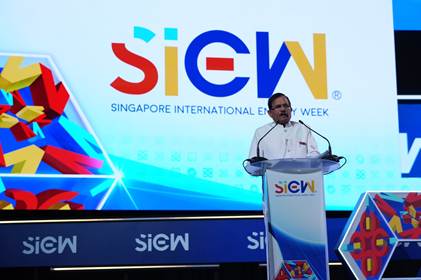
SIEW 2026 coincided with the 25th year of Singapore's Energy Market Authority. The Summit was expanded into a two-day event this year and featured the Singapore-IEA Forum, the Singapore-IRENA Forum, and the IAEA at SIEW. Shri Naik participated and delivered a keynote on Day 1 and the Opening Remarks for the 2nd day of the event.
Addressing sessions on the first two days of the event, Shri Naik said India’s installed electricity capacity stood at 558.9 GW as of 30 September 2026, of which about 308 GW, or 55 per cent, came from non-fossil sources. He noted that India achieved 50 per cent non-fossil installed capacity in June 2025, five years ahead of its 2030 NDC target, and is now working towards 500 GW of non-fossil capacity by 2030. Highlighting progress under the flagship schemes, he said that around 53 lakh rooftop solar systems had been installed under PM Surya Ghar Muft Bijli Yojana, benefiting about 63 lakh households. Under PM-KUSUM, nearly 12 lakh standalone solar pumps have been installed, and more than 17 lakh grid-connected agricultural pumps have been solarised, adding about 16.7 GW of decentralised renewable energy capacity and benefiting around 30 lakh farmers.
Shri Naik also held bilateral meetings with the following countries/organisations on the sidelines of SIEW 2026:
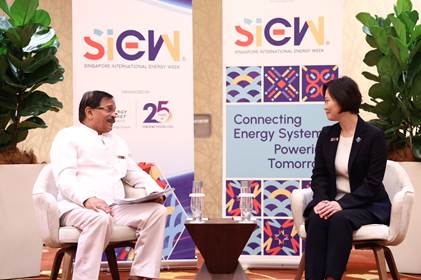
Singapore: Shri Naik met Ms Gan Siow Huang, Minister of State for Foreign Affairs, Energy and Trade and Industry, Republic of Singapore. The two sides discussed energy cooperation under the India-Singapore Comprehensive Strategic Partnership, including the proposed cross-border electricity interconnection between the two countries. Shri Naik invited long-term Singaporean investment in transmission, pumped storage, battery storage and renewable energy in India. Cooperation in green hydrogen and ammonia, energy efficiency, and partnerships between Indian power equipment manufacturers and Singapore's utilities was also discussed.

Bhutan: Shri Naik met H.E. Lyonpo Sonam Tashi, Minister for Energy and Natural Resources, Royal Government of Bhutan, and congratulated him on assuming office. The two Ministers reviewed progress on the 1200 MW Punatsangchhu-I Hydroelectric Project, where dam works have progressed steadily since concreting resumed in April 2026, and noted the satisfactory operations of the 1020 MW Punatsangchhu-II project. They also discussed the other projects that are under discussion in partnership with Indian entities, along with the cross-border transmission planning up to 2040.
IRENA: Shri Naik met Mr Francesco La Camera, Director-General, International Renewable Energy Agency (IRENA). He appreciated IRENA's work as a platform for international cooperation on renewable energy and discussed deeper cooperation under the Strategic Partnership Agreement signed between MNRE and IRENA in January 2022. The discussions covered affordable finance for renewable energy in developing economies, long-term energy planning, green hydrogen and capacity building, including in the ASEAN region.
IEA: Shri Naik met Dr Fatih Birol, Executive Director, International Energy Agency (IEA). Shri Naik welcomed the forthcoming launch of the IEA's India Renewable Energy Market Report 2026 at the Bharat Renewable Energy Summit and the India Critical Minerals Report at India Mining Week.
On the third day of his visit, the Minister visited Sembcorp's 326 MWh Battery Energy Storage System Plant at Jurong Island. Comprising of 800 large-scale lithium-ion phosphate batteries, the Sembcorp Energy Storage System on Jurong Island is the largest utility-scale battery energy storage system (ESS) in Singapore and Southeast Asia.
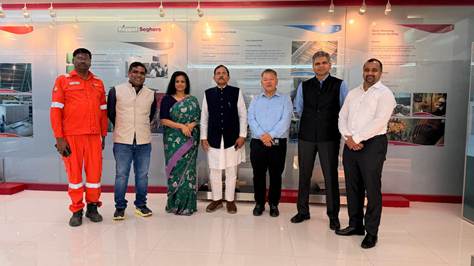
The tour concluded with a visit to Keppel's 800 TPD 22 MW Waste to Energy Plant in Tuas Region.
The visit provided an opportunity to share India's progress in the power and renewable energy sectors and to carry forward India's energy partnerships with Singapore and other partner countries and agencies.
The Union Government has taken serious note of the death of a 19-month-old male Cheetah (KNG22) of Kuno National Park, Madhya Pradesh, due to firearm pellet injuries. Viewing the matter with utmost gravity, the Centre has deputed a high-level team for an on-ground investigation into the incident, given the critical importance of Project Cheetah and the need to ensure the highest standards of protection for the reintroduced population of the Big Cat.
The Central team comprises the Inspector General of Forests, National Tiger Conservation Authority (NTCA), Additional Director, Wildlife Crime Control Bureau (WCCB), and Regional Deputy Director, WCCB. The team has been tasked with undertaking a thorough investigation into the circumstances leading to the death of the Cheetah, examining all available evidence and coordinating closely with the Madhya Pradesh Forest Department to ensure strict and swift action in the matter.
The Cheetah, an offspring of Cheetah Nirva, was found injured on 25th October 2026 in the territorial forests of Morena, outside the protected area of Kuno National Park. As reported by the Madhya Pradesh Forest Department, it was rescued from the Sheopur Territorial Forest Division the same day and provided intensive veterinary care and emergency surgery at the veterinary facility in Jabalpur. During the surgery, five firearm pellets were recovered from its body. Despite the medical intervention, the Cheetah succumbed to its injuries on 27th October 2026. Medical examinations corroborated multiple internal injuries associated with the recovered firearm pellets.
The State Government has already constituted a Special Task Force (STF), comprising Forest and Police officers, to investigate the incident. The Central team deputed by the MoEFCC would work in coordination with the State machinery. It would also examine the implementation of security protocols, as well as monitoring and protection measures being undertaken to avoid any such incident in future. The Central team would submit its findings and recommendations to the Ministry for further directions to the State Government and field authorities.
*****
VM
Why Green Hydrogen
Hydrogen is an energy carrier that stores energy and delivers it for varied uses. In a fuel cell, it reacts with oxygen to produce electricity, leaving only water and heat as by-products, and no polluting compounds or greenhouse gases. Although pure hydrogen is not found in large quantities in nature, it can be extracted from compounds such as water or natural gas. Its environmental impact therefore depends on how it is made. Conventional methods rely on fossil fuels and release carbon emissions.
Production using renewable electricity from solar and wind power can cut this footprint substantially. Hydrogen made by splitting water using renewable power is called green hydrogen. Unlike fossil-based routes, this process emits far less carbon. India’s abundant solar and wind resources make domestic production feasible. This diversifies the country’s energy sources and strengthens energy security. It also supports India’s goal of net-zero emissions by 2070.
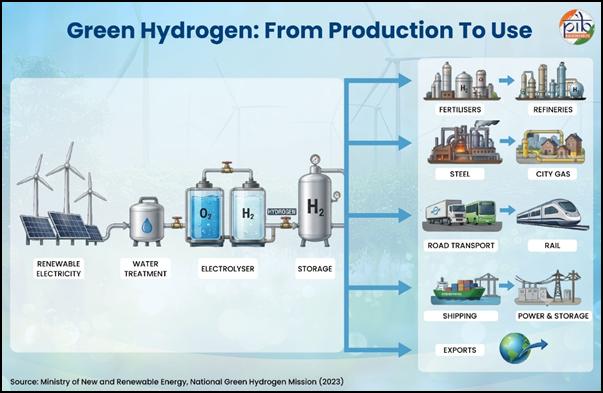
Green hydrogen matters most in sectors where cutting emissions is difficult. Reasons include high-temperature heat needs, chemical processes and few alternatives to fossil fuels. These hard-to-abate sectors include fertiliser, petroleum refining, iron and steel, heavy-duty road transport and shipping. Fertiliser and refining plants already use hydrogen, so green hydrogen can replace the fossil-based supply. It can also support lower-emission steelmaking, selected transport uses and energy storage. It is especially useful where direct electrification is difficult or less practical.
For India, wider adoption could reduce dependence on imported fossil fuels. It would also lessen exposure to global fuel price swings. The sector could open opportunities in manufacturing, draw investment, create jobs and expand exports. Building capabilities across the value chain would strengthen domestic supply chains and spur industrial innovation. Green hydrogen can thus support self-reliance, sustainable industrial growth and a low-carbon future.
How Is Green Hydrogen Produced?
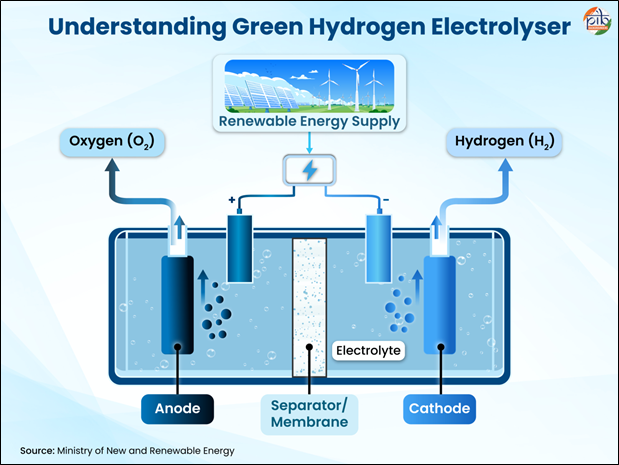
Green hydrogen is produced mainly through water (H₂O) electrolysis. Electrolysis uses electricity to split a compound into simpler substances. Here, renewable electricity splits water into hydrogen (H₂) and oxygen (O₂), with minimal emissions.
2H2O → 2H2 + O2
The key equipment is the electrolyser. It contains two electrodes, a cathode and an anode, connected to a power source. They operate within an electrolyte, which helps ions move through the cell. A diaphragm keeps the gases apart while allowing ions to pass. When current flows, hydrogen forms at the cathode and oxygen at the anode. The gases are collected separately for further usage. An electrolyser thus turns renewable electricity and water into a low-emission fuel for industry, transport and other uses.
Applications of Green Hydrogen
India’s Green Hydrogen Policy Architecture
NGHM: A mission for the whole ecosystem
MNRE is implementing the NGHM to make India a global hub for green hydrogen and its derivatives. The Union Cabinet approved the Mission in January 2023 with an outlay of Rs19,744 crore. It targets production capacity of at least 5 million metric tonnes (MMT) annually by 2030. With export demand, this could reach 10 MMT per year. The Mission has the following components.
SIGHT: Support on both sides of the market
The Strategic Interventions for Green Hydrogen Transition (SIGHT) Programme is a key NGHM component. Its outlay is Rs17,490 crore up to 2029–30. It offers incentives for two purposes: domestic electrolyser manufacturing and green hydrogen production. Together, they strengthen indigenous capability and speed up production.
Pilot Projects
The NGHM supports pilots that replace fossil fuels and feedstocks in hard-to-abate sectors. These include steel, heavy-duty mobility and shipping. The pilots aim to identify technological, regulatory and infrastructure gaps. They will also test supply chains and technology integration. Their findings will guide commercial-scale deployment and the policy support needed. The Mission has earmarked Rs455 crore for low-carbon steel up to 2029–30. It has also earmarked Rs496 crore for mobility and Rs115 crore for shipping up to 2025–26.
Green Hydrogen Hubs and Hydrogen Valley Innovation Clusters (HVIC)
Hydrogen is difficult to transport. To address this, the Mission promotes hubs and HVICs. This cluster approach brings production, consumption and infrastructure together. It improves project viability and enables economies of scale. Projects in designated hubs can also access Central and State scheme benefits. The Mission has an outlay of Rs 400 crore up to 2025–26 for hubs and related projects. These initiatives aim to attract green investment and accelerate innovation.
Enabling Policy Framework
The Mission follows a whole-of-government approach to make green hydrogen affordable. MNRE coordinates with Central and State departments on benefits and project facilitation. Key measures include waiving interstate transmission charges and facilitating renewable energy banking. They also include time-bound Open Access and grid connectivity. The Government will coordinate planning for renewable capacity, transmission, banking and storage. Solar Parks, Manufacturing Zones and Special Economic Zones (SEZs) may be extended to hydrogen facilities. The Mission will also explore international green finance, green bonds and innovative financing.
Regulations and Standards
The Mission is building regulations and standards aligned with industry needs. The aim is to enable sector growth and harmonise with international norms.
Research and Development
The Mission supports research and development (R&D) to make green hydrogen more affordable, efficient, safe and reliable. The Strategic Hydrogen Innovation Partnership (SHIP) is a public-private framework, with a dedicated R&D fund from industry and Government. Scheme guidelines for R&D were notified in March 2024, with an outlay of Rs 400 crore. As of June 2026, an initial R&D roadmap worth Rs 113 crore is supporting approved projects across hydrogen production, storage, and safety technologies.
Skilling
A coordinated skill development initiative is under way. The Mission aims to generate over 6 lakh jobs across the value chain by 2030. So far, 8,149 candidates have been trained and 7,248 certified in hydrogen-related qualifications across 14 States and Union Territories. Training spans renewable power for electrolysers, electrolysis, storage, transport, safety standards and end use such as steel, mobility and refining. For innovation, Rs 100 crore has been allocated to start-ups working on green hydrogen technologies. The first nine start-ups have been approved, with total funding of Rs22 crore.
International Cooperation
The Mission promotes partnerships to develop technology, mobilise investment, build export markets and align standards.
State-level Initiatives
Six States have notified dedicated green hydrogen policies, complementing the National Green Hydrogen Mission. Gujarat, Andhra Pradesh, Maharashtra, Uttar Pradesh, Rajasthan and West Bengal are the States with notified dedicated policies.
Four more States are finalising their dedicated green hydrogen policies. Haryana, Punjab, Bihar and Keralam are working on the draft policies.
Seven States have integrated hydrogen into their existing industrial and renewable energy policy frameworks. These include Himachal Pradesh, Madhya Pradesh, Odisha, Telangana and Chhattisgarh.
The Road Ahead
The National Green Hydrogen Mission marks an important step towards building a cleaner, more self-reliant and globally competitive energy economy. By 2030, India aims to develop 5 million metric tonnes (MMT) of annual green hydrogen production capacity. This transition can reduce dependence on imported fossil fuels and strengthen the country’s long-term energy security. The Mission is expected to reduce cumulative fossil fuel imports by approximately Rs1 lakh crore by 2030.
Beyond energy security, the Mission seeks to create new opportunities for industrial growth, investment and employment. It is expected to mobilise over Rs8 lakh crore in investments and generate more than 6 lakh jobs across manufacturing, infrastructure, research and project development. The production and use of the targeted green hydrogen quantum could also help avert nearly 50 MMT of carbon dioxide emissions annually. Through these efforts, the Government aims to accelerate industrial decarbonisation, strengthen domestic manufacturing and position India as a global hub for green hydrogen production, use and exports. This will contribute to India’s broader vision of Viksit Bharat by 2047 and its commitment to achieving net-zero emissions by 2070.
References
Cabinet
Ministry of New and Renewable Energy (MNRE)
Ministry of Chemicals and Fertilisers
Ministry of Ports, Shipping and Waterways
Ministry of Railways
Ministry of Power
Ministry of Petroleum and Natural Gas (HPCL)
Ministry of Science and Technology (CSIR)
Parliament of India
Press Information Bureau (PIB)
Other sources
PIB Research